
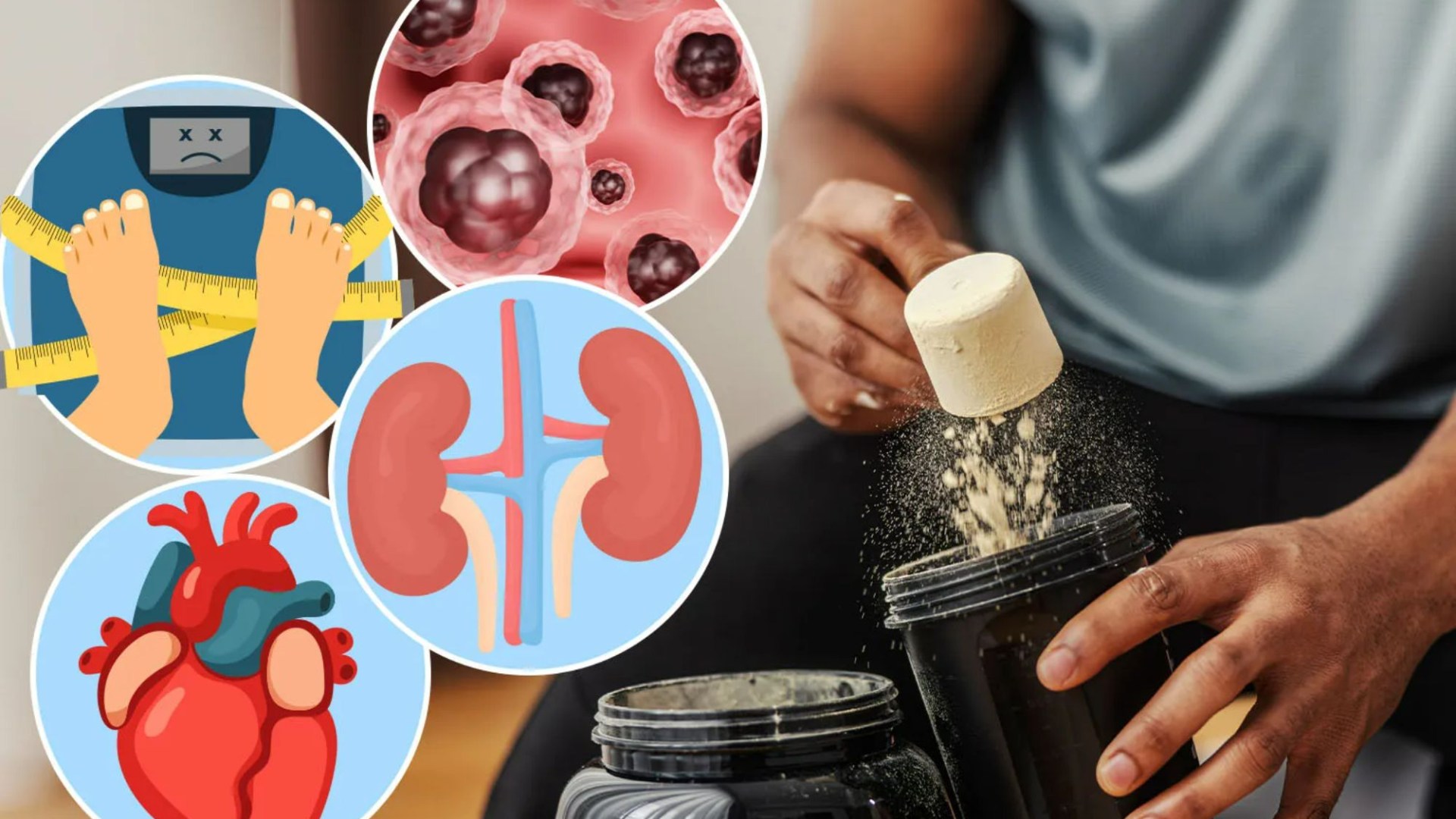
FROM protein-packed snacks and drinks filling supermarket shelves, to social media creators sharing ‘proteinmaxxing’ hacks, hype for the nutrient has been hard to escape. But packing in as much protein as possible might not always be the key to good health – with a major review suggesting the muscle-boosting trend could shorten your life. Protein can give you energy and help with weight loss – especially if you’re exercising regularly Credit: Getty But protein shakes and bars probably aren’t doing your health many favours Credit: Getty Protein is an essential macronutrient that provides the body with energy and helps it repair itself. Once a buzzword for athletes and gym bros, protein has now become mainstream. Sign up for the Health newsletter Thank you! There’s been a huge emphasis on eating enough of the nutrient in recent years, with brands rolling out ‘high-protein’ bars, yoghurts, cheese, cereal and even water. Meanwhile, recipes for concoctions like ‘protein smash’ will probably have cropped up on your TikTok or Instagram feed. Aside from boosting muscles, loading up on protein is also said to help with weight loss, as it can help you feel full for longer. It’s especially beneficial when combined with exercise. But more isn’t always better – at least not according to a new review of 350 studies that analysed links between protein intake and ageing. The findings, published in the journal Cell Press, showed eating less protein could contribute to a longer life for some. Most read in Health The researchers said restricting protein could improve metabolism, limit cellular damage, and help cells maintain normal function. Meanwhile, too much of the nutrient could increase the risk of obesity, inflammation, and other conditions associated with ageing – especially in people who don’t exercise much. Dudley Lamming, from the University of Wisconsin-Madison who co-authored the research, said: “It’s absolutely crystal clear that there are benefits of protein to muscle growth and exercise response of active individuals. “But because most people are relatively sedentary, many people are likely consuming more protein than they actually need, which probably has negative health consequences.” Here, we discuss how much of the nutrient you should aim to have daily and the possible health risks of having too much. How much protein should you eat? Aim for 15 to 20g of protein at every meal Credit: Getty Protein is made up of amino acids that play crucial roles in immune function, muscle growth and fat metabolism. Without these essential amino acids, our body would struggle to grow and repair, make healthy hair and nails or strong bones and muscle. Gram for gram, pure protein also has less than half the calories of pure fat and can help you fill up. Adults need about 0.75g of protein per kg of bodyweight. The average woman needs around 45g a day and a man 55g, dietitian Azmina Govindji tells Sun Health. “Research suggests we should split our protein throughout the day, rather than have our biggest portion at dinner. “I advise people to aim for 15 to 20g protein with each meal.” A good rule of thumb is that the protein portion you have at every meal should fit into the palm of your hand. Get your protein from meat, eggs, fish, dairy, beans, lentils, peas, sweetcorn, nuts, soya, seeds, meat substitutes and dairy-free drinks, she advises. How much protein is in my food? Grilled 100g chicken breast without skin – 32g Lean 100g pork or beef steak, grilled – 31g Grilled 100g salmon fillet – 25g Baked cod – 24g Canned tuna – 25g One boiled egg – 14g 120g low-fat plain yoghurt – 5.8g 125ml semi-skimmed milk – 4.4g 30g cheddar – 7.6g Can you have too much protein? With a range of ‘high-protein’ yoghurts, bagels and shakes to choose from in supermarkets, eating enough can seem like no biggie. But Azmina warns: “These products are no more effective at building your muscles than the protein you get from ordinary food.” This is echoed by Helena Gibson-Moore, a nutrition scientist at the British Nutrition Foundation, says: “In the UK, on average, we are eating more than enough protein so we don’t need extra from supplements or products with added protein.” In the UK, men are eating about 85g of protein a day on average and women about 67g, according to the BNF. Some people do need to top up on the protein – for example, older adults who face muscle loss and pregnant women. But for many sedentary adults, protein-fortified foods may not offer the health advantages they expect. Authors of the recent review suggested regular exercise directs protein toward the development and maintenance of strong, healthy muscle, rather than contributing to weight gain or disease. Dr Lamming said: “Recent recommendations have encouraged people to eat more protein, but they’ve also encouraged people to exercise more. “We probably need to personalise protein recommendations based not just on age, but also on how physically active people are.” So, what are the risks of eating too much of the nutrient? 1. Heart problems Heart-healthy nuts and seeds are a good alternative to red meat Credit: Getty Red meat is rich in protein, but eating it regularly – even in small amounts – has been linked to an increased risk of heart disease and stroke, according to research at the Harvard T.H. Chan School of Public Health. This is especially an issue with processed meat – think ham, sausages and bacon. The British Heart Foundation advises you incorporate plant based sources of protein in your diet. This includes nuts, beans, lentils and wholegrains. 2. Bowel cancer Red and process meat has also been linked to bowel cancer Credit: Getty Eating a lot of red meat can also increase your risk of bowel cancer, evidence shows. This includes bacon, ham, salami and sausages – which you should avoid as much as possible as well as beef, pork, lamb and goat. If you eat red meat, try to cut down to 70g (cooked weight) or less of red meat each day to reduce your risk, Bowel Cancer UK advises. And if you eat more than 70g one day, try to eat less on the next day, or have a meat free day that week, supplementing with pulses, such as beans and lentils, and some fish, chicken, eggs or tofu. 3. Kidney failure Too much protein can be hard work on the kidneys if you already have issues Credit: Getty When you eat protein, it’s broken down into amino acids, while waste products need to be filtered out of the blood by the kidneys. So having too much of it – more than 2g per kg each day – can put strain on the kidneys. This is particularly a problem for people who have kidney issues or at higher risk of them, such as those with diabetes. A review published in the Journal of the American Society of Nephrology warned that high protein diets could damage renal function and cause conditions leading to chronic kidney disease and permanent kidney damage in people both with and without prior kidney problems. 4. Diabetes Some forms of protein can also increase the risk of type 2 diabetes Credit: Getty A number of studies have linked red meat and the development of type 2 diabetes. A 2011 study found that people who ate diets high in red meat, especially processed red meat, had a higher risk of type 2 diabetes than those who rarely ate red or processed meat. Each additional daily serving of red or processed red meat increased participants’ risk of the condition by 12 and 32 per cent, respectively. Investigators also found that replacing a serving of red meat with one serving of nuts, low-fat dairy products, or whole grains each day was associated with an estimated 16 to 35 per cent lower risk of type 2 diabetes. Comment now
The 4 dangers of eating too much protein – as major review finds ‘muscle-boosting’ trend could shorten your life
Full Article
Original Source
Read the full article at Thesun →KhanList aggregates and links to publicly available news content. We do not host full articles from third-party sources. Always verify important information with original sources.