
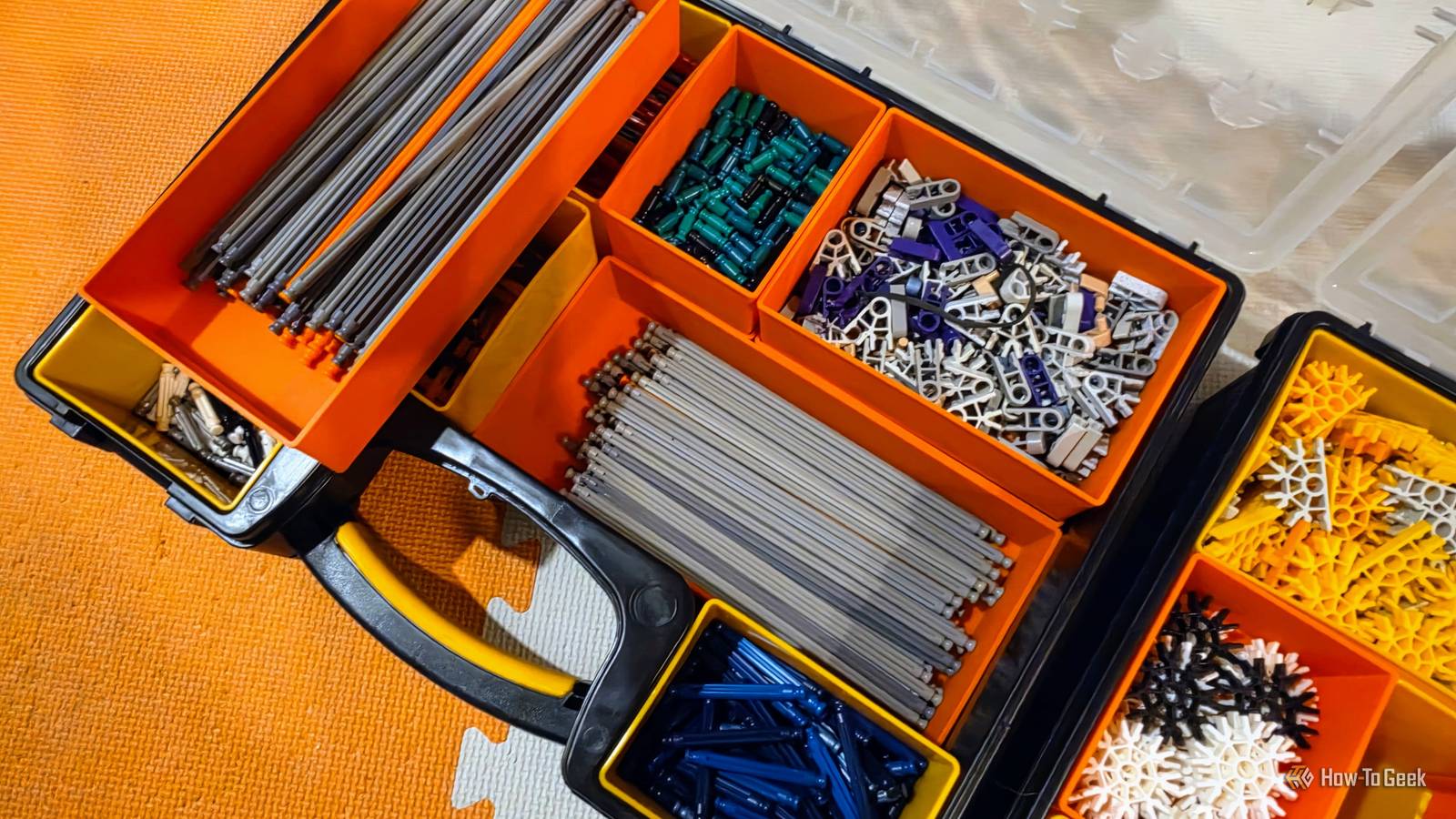
Published Sep 15, 2026, 12:30 PM EDT Joe Fedewa has been writing about technology for over a decade. Android and the rest of the Google ecosystem have been a focus for years, as well as reviewing devices, hosting podcasts, filming videos, and writing tutorials. Joe loves all things technology and is also an avid DIYer and food blogger. He has written thousands of articles, hundreds of tutorials, and dozens of reviews. Before joining How-To Geek, Joe worked at XDA-Developers as Managing Editor and covered news from the Google ecosystem. He got his start in the industry covering Windows Phone on a small blog, and later moved to Phandroid where he covered Android news, reviewed devices, wrote tutorials, created YouTube videos, and hosted a podcast. From smartphones to Bluetooth earbuds to Z-Wave switches, Joe is interested in all kinds of technology. After several years of jailbreaking and heavily modifying an iPod Touch, he moved on to his first smartphone, the HTC DROID Eris. He's been hooked ever since. When you’ve owned a 3D printer for a while, it’s easy to fall into the trap of thinking it’s the solution to every problem. This is especially true when it comes to storage and organization. However, as much as it may hurt to admit, there are times when it just doesn’t make sense. I have definitely fallen victim to this way of thinking. As the saying goes, if all you have is a hammer, everything looks like a nail. When it comes to 3D printed storage solutions, it’s often not worth the printing time and costs of filament. There are, however, situations when it does make sense. The size you need doesn’t exist The most obvious situation Let’s start with the best reason to use 3D printed storage solutions. In fact, it’s probably the best reason to own a 3D printer in general: the thing you need doesn’t exist. For storage, that usually means it’s impossible to find an ultra-specific size and shape. Last winter, when I was stuck inside for months, I decided to organize my son’s KNEX collection. I bought a couple of parts storage cases from Harbor Freight, but some of the included bins were too small and too big for certain KNEX pieces. So, I modeled up a few custom bins, and everything fit perfectly. It was extremely satisfying. Sometimes it’s not about size as much as shape. For example, there are hundreds (if not thousands) of trash bag dispensers on Amazon. However, very few are large enough for Costco’s massive roll of Kirkland trash bags. A problem easily solved with this wall-mounted 3D model. It’s small enough that it doesn’t matter Even if it already exists, a small print is worthwhile Custom sizes are a good reason for 3D printed storage, but the value proposition starts to deteriorate when an object gets too large. They take too long to print and use so much filament that it’s simply not worth it. On the other hand, small prints are almost always justifiable. Credit: Joe Fedewa / How-To Geek One common situation that is perfect for 3D printed storage is desktop organization. There’s no shortage of existing products to fill this space, but you can almost certainly save money by printing your own. This little 3-inch-tall set of drawers is only $9 on Amazon, but I designed and printed a custom MCM-inspired version with less than $3 of filament (and I didn’t have to wait for shipping). It’s the same story for something like drawer organization. You can very easily find small, plastic trays in a variety of sizes and colors in most big box stores. However, it’s also super cheap and quick to print your own. I used the Gridfinity system for a few drawers in my house, but you can easily print free-floating, customizable drawer bins. Working with existing storage options Combining existing products with 3D printing Sometimes, the best option isn’t using an existing product or a custom 3D printed object — it’s both. Buying a product doesn’t have to mean you don’t need your 3D printer at all. A perfect example is dividers. Printing a clone of the classic Home Depot tote in its smallest size would probably not be a good use of time or filament. However, printing your own dividers or smaller bins to go inside would be useful. People have already shared models for this very purpose. Going back to the topic of desktop organization, I put this philosophy into practice with some cheap stackable trays from Target. I had them loose under a shelf on my desk for a long time, and they always ended up getting pushed around. One day, I had the idea to print brackets to turn them into drawers. I added a little pull tab to each one, and now they’re super easy to access. Oh, and I printed little bins to go inside, too. It’s okay to admit “defeat” sometimes Look, I get it — whenever I come across a problem, my first thought is usually about how I can design a solution with my 3D printer. But sometimes, I have to admit it’s not the right tool for the job. Pre-made storage solutions are often more cost-effective, and manufacturing processes like injection molding and vacuum forming are more durable than what an FDM printer is capable of.
The 3D printed storage trap: When it actually makes sense to print your own
Full Article
Original Source
Read the full article at Howtogeek →KhanList aggregates and links to publicly available news content. We do not host full articles from third-party sources. Always verify important information with original sources.