
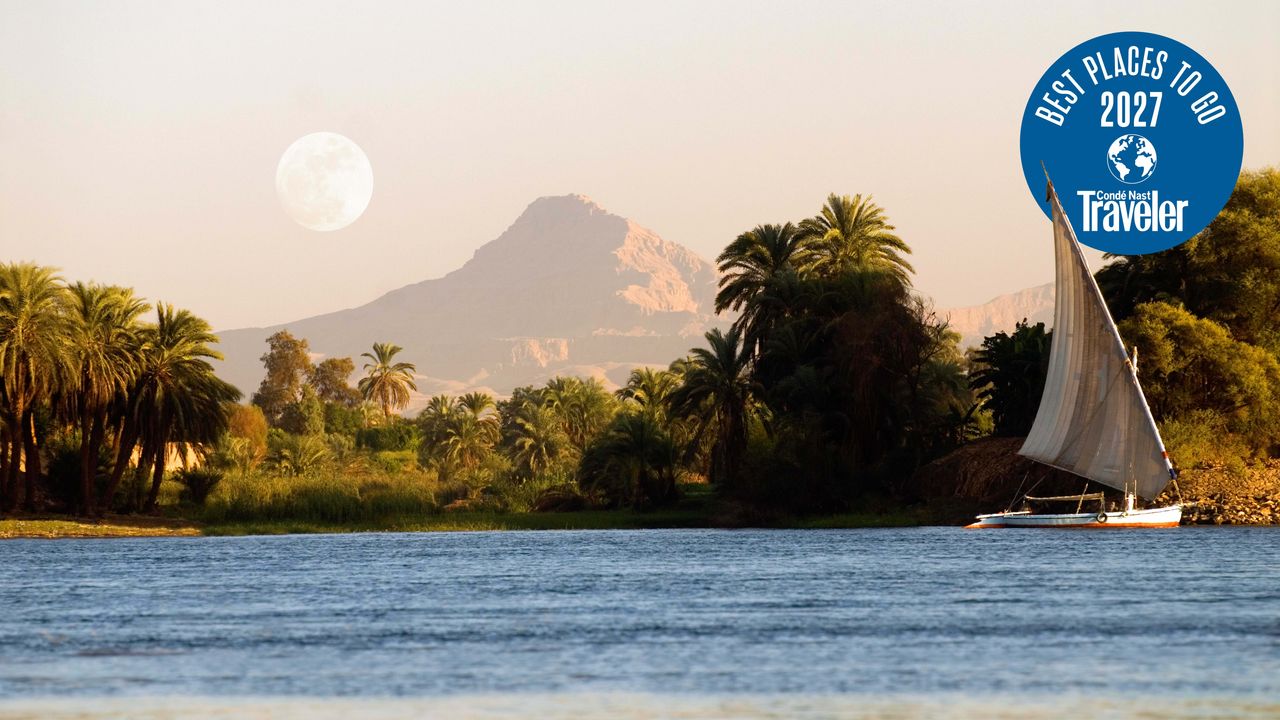
As travel-magazine editors, we are forever asking—and answering—the same question: Where to next? The choices are, fortunately, endless. So once a year we call upon our savviest writers, travel specialists, and global editors to help us land on a definitive guide to the Best Places to Go in the year ahead. For months we research, whittle down, and poke and prod everything that crosses our desks in the hunt for the latest and greatest experiences. Now we lift the veil.Our resulting list of The 27 Best Places to Go in 2027 is more than a roll call of fantastic destinations. It is a reflection of how and why we are traveling now. There is the timeless Luxor, Egypt, the gateway to several new Nile cruises, which in August 2027 will fall beneath the “eclipse of the century,” an epic sequel to this past year’s fanfare-inspiring celestial event. The evolution of Shanghai, meanwhile, proves that Chinese cities are prioritizing both business and pleasure in 2027: In November the Shanghai Biennale will honor a wave of new gallery openings in West Bund, just across the water from the new, Snøhetta-designed Shanghai Grand Opera House. And in Jamaica, which just passed the one-year mark since Hurricane Melissa, the strongest to ever hit the country, hotels are once again welcoming travelers and inviting them to be part of the island’s recovery—a reminder of how powerful a mere vacation can be.And then there are the places that urge us to slow down and allow the connection between host and visitor to deepen—whether that be on a new hiking route in Armenia or while sailing among the postcard-worthy Cook Islands. We know we’ll continue to chase great food and wine experiences, but this year we’re ready to buck the drops-at-midnight restaurant reservations in favor of meals with a straight-from-the-earth mindset and long-held culinary traditions. Finally, a desire to really, truly escape those Euro summer crowds means more of us will see the appeal of cooler climes, whether that’s a new riviera farther north in Denmark or in the Southern Hemisphere for off-season ice trekking in Argentine Patagonia.With the whole world at our fingertips, these are the 27 places topping our lists for the year to come. Read on for our complete guide to the Best Places to Go in 2027. —Arati Menon & Megan SpurrellThis is part of our global guide to the Best Places to Go in 2027—find more travel inspiration here.The 27 Best Places to Go in 2027Albanian AlpsArmeniaBeninChile's Wine ValleysBodrum, TurkeyClayoquot Sound, CanadaCook IslandsCorsica, FranceDanish RivieraDartmoor, UKGalápagos, EcuadorGuatemalaJaipur, IndiaJamaica's South CoastKavango-Zambezi Conservation AreaLuxor and AswanMemphisNiigata, JapanPenang, MalaysiaPrea, BrazilSan DiegoShanghai, ChinaSouthland, New ZealandSunshine Coast, AustraliaTunis, TunisiaYunnan, ChinaZanzibarGo for: untamed wilderness and peaceful pocketsA boat sails on Komani Lake in Northern Albania, where turquoise rivers, inn-to-inn hiking, and snow-dipped peaks are increasingly calling to travelers. Getty ImagesAs Albania’s allure continues to grow, travelers flock to the Adriatic beaches of the south. But in the northern alpine region, the scenery offers a different type of drama—jagged snow-dipped peaks, turquoise rivers, inn-to-inn hiking—and in place of shiny seaside hotels, Albanian-owned wooden B&Bs welcome alpinists for home-cooked meals after long, satisfying days on the many surrounding trails. This area was largely isolated during the communist era, given its strategic location along the borders with Montenegro and Kosovo, which means that it has been slower to open its arms to the world (that’s also why you’ll stumble into countless abandoned bunkers from this period on your hike). The feeling here is that you can still show up to a guesthouse without a reservation, you can still camp wherever you find a spot, and, yet, there is also the sense that if you aren’t seeing this place now, or within the next couple years, you’ll miss the precious moment when it still feels like a secret to be let in on.Start your trip in the charming city of Shköder, known as the gateway to the Alps, where bikepackers cycle through the city, and restaurant patios spill over with guests enjoying glasses of Albanian wine. From there, many travelers plan stops in the villages of Theth and Valbona (a stunningly scenic one-day through-hike links the two of them), or embark on ambitious multi-day journeys on routes like the Peak of the Balkans, which traces a two-week-long loop crossing into Kosovo and Montenegro. Infrastructure improvements have made roads and trails to access this region better in recent years, with much more where that came from. What was once only known by residents and those who purchased their paper guides now exists online, meaning it is also possible to base yourself in, say, the Eden-like Valbona Valley, and embark on a new route each day. Increasingly, there are elevated places to stay that preserve the soul of this place, opening in a slow trickle like Valbona Resort and Spa (2024) and SeSam Villas in Theth (2025). There may be folklore calling these the Accursed Mountains, but only because they are so vast and dramatic that their geography has historically kept intruders out. For hikers, that means a literal playground, with Albanian hosts leading the way. —Megan SpurrellGo for: nature, history, and slow travel on footThe Historic Tatev Monastery, perched on a cliff edge above the Vorotan Gorge, is the type of sight promised along Armenia's long-distance trails—which will be easier than ever to navigate in 2027, thanks to new maps, signage, and trekking services. Obie Oberholzer/laifBuilt among the peaks and valleys of the Caucasus, Armenia’s ancient roots and mountainous landscapes reward slow travel. Along the country’s two long-distance trails, the Armenian National Trail (ANT) and the Transcaucasian Trail (TCT), medieval monasteries rise above dramatic gorges, Silk Road-era caravansaries dot historic mountain routes, and ancient caves recall thousands of years of winemaking history. In Yerevan, one of the world's oldest continuously inhabited cities, historic fortresses and pale pink stone buildings sit side by side with a colorful café and restaurant scene.In 2027, Armenia's growing outdoor scene makes it especially exciting for adventurous travelers. The TCT, which will eventually span nearly 1,900 miles across Armenia, Georgia, and Azerbaijan, is becoming easier to tackle with new downloadable maps, updated trail sections and signage, and trekking services offering itinerary planning and luggage transfers. The Armenian section of the TCT extends from Arevik National Park in the south, past Syunik’s cave dwellings and the Tatev Monastery rising against deep river gorges, through the volcanic massifs of the Gegham Mountains, the forests of Dilijan National Park, and ending at Lake Arpi National Park near Georgia.Meanwhile, the ANT, a 620-mile network that will eventually connect more than 100 villages, opened its first sections in June 2026 with more to come next year. Trails currently extend through Tavush and Lori, and soon Vayots Dzor, where visitors can birdwatch in alpine steppes, stay with families, and cook herb-filled meals with local hosts, while sampling lavash (Armenia's UNESCO-listed flatbread) baked in a deep, clay oven, and regional bounties like forest berries, mushrooms, cornelian cherry, and rosehip soup. Collectively, the trails offer a new way to experience Armenia's landscapes and communities on foot. —Alicia EricksonGo for: a museum boom and a vibrant cultural milieuHistory and culture run deep in Benin, and a host of new museum openings in 2027 will put both its past and present on dazzling display. Getty ImagesBenin is a place where history runs deep: It’s home to the ancient Kingdom of Dahomey, the spiritual traditions of Vodun, and Ouidah—one of West Africa’s significant ports in the transatlantic slave trade. Now the country is turning that history into a new era of cultural tourism, while creating ways for travelers, particularly people of African descent, to reconnect with their heritage.Ouidah, an especially important destination for those tracing their ancestry, is central to that effort. In 2025 the government announced plans to invest $1.4 billion in tourism and cultural development, including for infrastructure, heritage restitution, and indigenous traditions. In 2027 that transformation is expected to become more visible with a host of new museum openings, like the Museum of Modern Art in Cotonou; the International Museum of Memory and Slavery in Ouidah; and the Museum of the Epic of the Amazons and Kings of Dahomey in Abomey. The latter of which is expected to house 26 royal artifacts repatriated by France in 2021.Vodun Days, an eight-day celebration of Benin’s indigenous spiritual traditions taking place January 2–9, 2027, will showcase ceremonies, music, and dance. Meanwhile, Villa Karo in Grand-Popo—a bridge between artists and researchers from Finland, Sweden, and West Africa—will continue its residency program, which brings artists to its seaside research center to connect with the local community through workshops, concerts, and exhibitions. The famous stilt village of Ganvié, meanwhile, remains open to visitors as its Reinventing the Lakeside City of Ganvié project upgrades tourism infrastructure. Benin is also beginning to make appearances on cruise itineraries. Two new Swan Hellenic sailings in 2027 sailings feature the country, including an April voyage from Luanda to Accra and an October sailing from Ghana to Angola. —Harriet AkinyiGo for: chef-led experiences, new Cachapoal Valley bungalows, and up-and-coming wine scenesIn 2027, Chile's wine valleys will be home to new chef-led experiences, bottles worth seeking out, and, at the country's most extravagant wine hotel, VIK, an art-filled wellness center. Cristobal PalmaChile’s central wine valleys have long been defined by their vines—emerald rows sprawling along riverbanks, blanketing a terrain reminiscent of the Mediterranean, yet hemmed between towering Andes and a thrashing Pacific. Recently, dynamic chefs from Santiago have begun adding their touch to the region, crafting new culinary tours and elevating the work of emerging bodegas and wineries. Kurt Schmidt is among them. He first rose to fame crafting nine-course tasting menus at Santiago’s 99 Restaurante, built around the traditional foodways of Chilean viticultural regions. In 2027 he’ll be teaming up with the rural tourism cooperative Ruta de los Abastos (“The Supply Route”) on menu-to-territory day tours that will begin at 99 and expand out to wine valleys like Huasco, Maule, and Aconcagua, where Schmidt has spent years building relationships with vintners, cheesemakers, foragers, and fisherfolk (later multiday itineraries are in the works). Conveniently, Santiago lies just south of the Maipo Valley, which is famed for bold Cabernet Sauvignons and also home to the striking new Centro del Vino from Concha y Toro, Latin America’s largest wine producer. The 129,000-square-foot facility features contemporary art installations, barrel-side tasting rooms, and an interactive wine museum, plus access to manicured gardens and (for an additional fee) the 19th-century mansion of founder Don Melchor.If you have days to spare, consider heading three hours south to the Cachapoal Valley. Here, Chile’s most extravagant wine hotel, VIK, expanded in 2026 with eight glass-mirrored bungalows and an art-filled wellness center. Five cabins are next, set to open in an oak forest on the property, where winemaker Cristián Vallejo ages natural wine in clay amphorae. Continuing south, you can explore the next generation of experimental and low-intervention vino emerging from the neighboring Maule and Itata valleys, where Millennial and Gen Z winemakers are injecting fresh energy into one of South America's oldest regions at bodegas like González Bastías and Carter Mollenhauer. Add it all up and it makes for an epic wine country road trip.As if that weren’t enough to keep you busy, know that excellent vino isn’t the only reason to dedicate your big vacation to Chile this year. Once you wrap up in Santiago, consider hopping over to Rapa Nui (Easter Island) for some extreme set-jetting. This remote Chilean territory in the Southeastern Pacific is the backdrop of Academy Award winner Martin McDonagh’s new film, Wild Horse Nine, and it’s sure to become a rising star on more travelers’ itineraries this year. —Mark JohansonGo for: a coveted summer destination at its sweet spotLuxury openings, like Oku, have made Turkey's scenic Bodrum peninsula a buzzing euro-summer hotspot—with even more on the horizon. Ana Lui PhotographyFor the past few summers, the glittering Bodrum peninsula has welcomed a wave of luxury openings, transforming this once-sleepy harbor town into one of the Aegean's most coveted corners. Aman, Mandarin Oriental, and homegrown Maçakizi were early champions of the scene and remain firmly at the heart of its appeal, but a new generation of hotels, restaurants, and beach clubs has since made Bodrum one of Europe’s most sought-after summer escapes.Mayfair and Knightsbridge restaurant favorites Zuma, Bagatelle, and Novikov have all made the journey east in recent years, accompanied in 2026 by oh-so-chic arrivals from Dubai, Paris, and Marbella (Gaia, Gigi Rigolatto, and Maison Revka). Together they have helped recast Bodrum as a playground for the international jet set, bringing with them a distinctly cosmopolitan, see-and-be-seen energy.This summer also brought the long-awaited arrival of the adults-only hideaway Oku, the latest in the brand's collection of design-led retreats in Ibiza, Kos, and Andalusia. Throw in annual beach-club takeovers from the likes of Jacquemus and Alo, as well as boutique openings by brands like Cartier, and it seems there’s barely a name in luxury that isn’t lining up to plant its flag here.But 2027 promises to be the sweet spot. With fewer headline-grabbing launches, the peninsula settles into a quieter rhythm, and openings such as Yahşi Bay’s NG Sign Bodrum, a villa hotel of sun-filled, glass-walled residences with two to six bedrooms, put privacy ahead of spectacle. It's the summer to explore Bodrum at its most relaxed. Reservations are likely to be easier to come by as last year’s hottest tables settle in for the new season and the eyes of trend followers will be trained elsewhere, leaving the regulars to do what they’ve always done: dance as the sun sets on the wooden deck of Maçakizi, wander the meyhane-lined promenade of fishing village Gümüşlük, stopping for fresh seafood as they go; or hop between the coastline’s secluded bays, tucking into late-afternoon picnics beneath the pine trees.Enjoy it while it lasts. In 2028, all eyes will return to the peninsula as Bvlgari opens its sprawling hillside resort above yacht-speckled Paradise Bay, giving Europe's luxury travel crowd fresh reason to return. —Sophie PrideauxGo for: wild coastal landscapes and a new Indigenous-owned luxury lodgeAdventurers have long known about Vancouver Island's wild western edge. But now, the beloved Clayoquot Wilderness Lodge (above) will be joined by the Ahousaht First Nation-owned Wahous. Clayoquot Wilderness LodgeClayoquot Sound has long drawn adventurous travelers to Vancouver Island’s wild western edge—a maze of forested islands, secluded inlets, and old-growth rainforests. But now, Indigenous-owned hospitality is giving this remote luxury escape a deeper sense of place, shaped by the First Nations that have stewarded its lands and waters for generations.A UNESCO-designated biosphere region spanning nearly 864,868 acres of land and sea, Clayoquot Sound is already home to the much-lauded Clayoquot Wilderness Lodge. But the July 2026 opening of Wahous Wilderness Lodge in secluded Quait Bay introduces a different kind of high-end stay. Owned and operated by the Ahousaht First Nation, the 16-room floating lodge and four forest cabins were reacquired in 2022 by the Nation’s hereditary chiefs through the Maaqutusiis Hahoulthee Stewardship Society (MHSS). Guests are welcomed into Ahousaht territory with tide-to-table dining, a shoreline spa, and a ceremonial welcome in the cedar longhouse. A stay begins and ends in the longhouse, concluding with a traditional klup-chus-tapčas, or salmon barbecue, in an evening that brings together food, storytelling, and cultural exchange in a final gathering rooted in Ahousaht tradition.The three-Michelin-key Clayoquot Wilderness Lodge is evolving too. Set on 600 acres at the mouth of the Bedwell River, the off-grid retreat is known for its 25 safari-style canvas tents, cedar-plank boardwalks, and wilderness adventures. Newer experiences in 2026 include after-dark bioluminescence kayaking, a floating sauna, and a guided walk across Flores Island through Ahousaht territory.New experiences and places to stay aside, Clayoquot Sound remains remote enough to preserve its deep sense of seclusion. This vast coastal labyrinth is best explored by water and on foot: Paddle between forested islands, walk beneath ancient cedars on Meares Island, hike Flores Island’s remote Wildside Trail, or soak in the geothermal pools at Hot Springs Cove. From March to October, join a whale-watching trip to spot orcas, humpbacks, or grey whales. Elsewhere, wildlife may simply find you: Black bears forage along the shoreline at low tide, and sea otters paddle through the inlets. Some excursions can be arranged directly through the lodges, while Tofino-based operators, such as Ahousaht-owned Ahous Adventures or Tofino Water Taxi, make the wider sound accessible. —Ashleigh StewartGo for: paradise islands, ancient history, and a new five-star stayCrystal-clear turquoise waters and white sandbars of the Aitutaki Lagoon are just part of what makes the Cook Islands the type of hideaway we're seeking in 2027. The Cook Islands’ 15 isles stipple roughly 849,000 square miles of the South Pacific, but total less than 100 square miles of land. Most first trips center on a southern pair of islands: Rarotonga and Aitutaki. On the one-hour propeller flight between two, the entire country arrives in flashes: a volcanic ridge inside a white reef, miles of open Pacific, then a blue lagoon with motu gathered along its rim. Rarotonga’s 20-mile coast road threads between reef and pleated peaks, while Aitutaki is defined by its broad lagoon.On the west side of the island Rarotonga, a narrow road climbs from the lagoon into Maungaroa Valley, where a canopy of multi-trunked mato trees covers the remains of a centuries-old settlement. Taken together, the surviving sites form a cultural landscape that will appear before UNESCO’s World Heritage Committee in 2027 as the Cook Islands’ first nomination. At Highland Paradise, a cultural site within the old settlement and managed by descendants of Chief Tinomana, the Tapu’ae Day Tour follows those paths past chiefly house sites and sacred ground as guides explain how the stonework organized life here.On Aitutaki, customary stewardship extends well below the waterline. In 2025 three lagoon zones came under ra’ui, a traditional temporary closure that allows coral and fish populations to recover, with protections scheduled to rotate in 2027. Aitutaki Coral Restoration takes small groups beyond the usual motu-and-sandbar circuit to its underwater nursery and a planting site, where guests clean a dead coral base and secure a naturally broken fragment. Part of each tour fee supports the restoration work.Tourism is growing alongside the conservation push. In March 2027 a new, locally owned hotel, Grand Resort, billing itself as the island’s first five-star hotel, is scheduled to open with 61 adults-only suites on Rarotonga’s west coast. The Destination Stewardship Plan 2026–2030, meanwhile, shifts the focus from mainly growing tourism to managing its impact with protections for culture and the environment with a greater share flowing to island communities. —Paul JebaraGo for: rugged landscapes and cinematic coastlinesHotel Basgi Basgi in the north of Corsica is drawing an increasingly design-conscious crowd. Amaury LaparraIn 2027, the Orient Express Corinthian yacht will call on Corsica's spectacular coastline. Martin DarzacqWhen Simon Jacquemus chose Phare de la Pietra, a 19th-century lighthouse on a rocky Corsican peninsula, as the backdrop for his Spring 2027 fashion show this summer, it was easy to see why. The designer, long inspired by the interplay of place, light, and raw emotion, described his show Le Bonheur (meaning “happiness” or “bliss”) as “a cliff that I add colors on top. An impressionist painting.”It's true. Corsica is a place where cinematic elegance meets rugged natural beauty. It's why the island was once named Kallisté, meaning “most beautiful,” by the ancient Greeks. Here, dramatic mountains meet wild hinterlands and fiery red rockfaces jut against turquoise waters, making for breathtaking hiking through UNESCO-listed landscapes such as the Scandola Nature Reserve.The island long slipped under the radar compared with neighboring Sardinia and the French Riviera. But Jacquemus’ arrival, coupled with a flurry of recent smart hotel openings, suggests that may not be the case for much longer. Leading the charge is A Mandria di Murtoli, a 10-room retreat spread across five restored stone buildings in the Ortolo Valley, which is a little sister to epicurean Domaine de Murtoli, where farm-to-table living is the order of the day. Elsewhere, Hotel Mylos on the west coast and Basgi Basgi in the north are drawing an increasingly design-conscious crowd.Adding to the island’s momentum is the maiden voyage of the Orient Express Corinthian, a sailing yacht with 2027 itineraries calling at Bonifacio, Calvi, and Saint-Florent, opening up Corsica's fishing ports, medieval citadels, and spectacular coastline to a new wave of travelers. —Ashleigh SpiliopoulouGo for: a coolcation destination with Michelin statusThe Danish Riviera is a 60-mile stretch of fishing villages and sandy beaches that still remains under the international radar. Anthony BogdanMany of the region's charming seaside hotels date back to the late 19th century—but in 2027, there will be plenty of fresh energy, too. Anthony BogdanWith rising summer temperatures across Europe, the Danish Riviera has emerged as the continent's favorite coastal coolcation destination. This 60-mile coastal stretch in Northern Zealand brings travelers the aesthetic appeal and culinary credibility of Copenhagen in a relaxed setting of fishing villages, sandy beaches, forests, and historical seaside resorts that remain largely undiscovered by international visitors.The Louisiana Museum of Modern Art in Humlebæk marks the southern end of the riviera, but many visitors staying in Copenhagen don't venture any further north to seaside towns. Many of the region's charming seaside hotels date back to the late 19th century. But a new generation of stays is rejuvenating the landscape with contemporary design. Cori in Hornbæk brings barefoot energy to a beautifully repurposed former hospital, and Hôtel de Ville in Gilleleje transforms an old town hall into an eclectic boutique spa hotel. MasterChef Denmark judge Thomas Castberg recently opened Hotel Villa Lejet in a restored 19th-century building with modern summerhouse vibes and sharing-style Nordic dining.Exceptional gastronomy abounds, with Michelin-starred standouts such as Jordnær, The Samuel, and Parsley Salon representing New Nordic Cuisine at its finest. For something more casual, recently opened Betty Beach combines beachfront dining, street food, and a brewery for sun-kissed imbibing. Denmark's first official wine route launched last year in North Zealand and Odsherred, with nine wineries offering tours and tastings of cold-climate grape varietals such as Solaris and Rondo. —Amber GibsonGo for: wild Austen-esque adventures and spa stays galoreThe stately Boringdon Hall Hotel and Spa captures the Austen-esque allure of Dartmoor. Courtesy of Boringdon Hall Hotel and SpaCountryside dining is hardly simple at Àclèaf, the Michelin-starred restaurant in Boringdon Hall Hotel and Spa. Courtesy of Boringdon Hall Hotel and SpaDartmoor has always lent itself to drama. Wild ponies pick their way through heather, granite tors loom out of the mist, and the ever-changing weather plays a starring role. Now it’s getting its close-up as the backdrop of Georgia Oakley’s new Sense and Sensibility adaptation in theaters in September 2026. The film was shot around Princetown, Tavistock, and Gutter Tor, and its release coincides with Dartmoor National Park’s 75th anniversary. As the Austen connection pulls focus to Dartmoor, 2027 is the year to stay a little longer and explore a little further.It’s unusually special in the depths of winter, when the weather gets wild. Misty mornings walking the ancient tracks and climbing tors, afternoons yomping across moorland in conditions that demand retreating somewhere cozy for a hot bath and a roaring fire. For a hands-on experience, book one of the free conservation days running on selected Sundays in 2027 to learn more about Dartmoor’s prehistoric archaeology, wildlife, and rare species, while helping to preserve its future. Don’t miss Tavistock, the old market town on Dartmoor’s western edge. Its handsome Pannier Market is bursting with antiques and curiosities, ideal for a spot of treasure hunting. For a change of pace, visit 11th-century Buckfast Abbey, where the Benedictine monks still make their famous tonic wine to a secret recipe.To feel like a main character in your own period drama, book a room at Boringdon Hall. This show-stopping historical hotel on the edge of the moor combines roaring fires and old-world grandeur with one of Devon’s best spas. Its Michelin-starred Àclèaf restaurant retained its star in 2026, a quietly heroic achievement in a world obsessed with shiny new openings. There is nothing like spending the wildest part of the year getting wind-beaten on Dartmoor, then retreating for a spa treatment, proper grub, and a fire. —Zoe CookGo for: new conservation-minded cruises, stargazing experiences, and an endless parade of wildlifeIt's been a busy couple years for National Geographic–Lindblad Expeditions, who celebrate their 60th anniversary of taking travelers to the Galápagos Islands in 2026, and will launch a new Ultimate Galápagos 13-day itinerary in January 2027. David VargasThe Galápagos Islands, an archipelago of 13 major isles and over 100 rocks and inlets off Ecuador’s coast, have long attracted travelers seeking solitude and wildlife: endemic giant tortoises and marine iguanas, native scalloped hammerhead sharks, and blue-footed boobies, for starters. Nearly 97% of the Galápagos’ land area is a single national park. Visitor access remains tightly managed, making the destination one of the rare places where travelers can experience wildlife on nature’s terms (and, as scientists are learning, occasionally encounter new species, like the deep-sea Microeledone galapagensis, or blue octopus). This year National Geographic–Lindblad Expeditions celebrated 60 years since Lars-Eric Lindblad introduced travelers to the Galápagos on the first non-scientific civilian expedition voyage, establishing the islands as a premier destination for conservation-minded exploration. The brand doubled its Galápagos fleet in 2025 by adding the 16-guest catamaran Delfina and the 48-guest Gemini. In January 2027 the brand will launch Ultimate Galápagos, a 13-day itinerary aboard the 96-passenger Endeavour II that visits 11 islands including remote Genovesa, known for its red-footed booby colonies. Elsewhere, Natural Habitat Adventures’ Galápagos Tortoise Camp just transitioned to 100% solar power and introduced the Galápagos’ first fully electric panga (a small skiff for excursions)—part of trips booked aboard the brand’s Petrel luxury catamaran—reducing emissions for wildlife excursions and setting a new benchmark for sustainable travel in the destination. —Hannah SelingerGo for: volcano trekking, peak birdwatching, price points that range from shoestring to big spenderGuatemala, with its dramatic volcanos (like the above, Volcán de Fuego), rich heritage, and artful craft traditions, will be trending in 2027 for good reason. Long a backpacking destination on the Central America 101 route known as the Gringo Trail, Guatemala is an increasingly popular destination for a generation of young travelers seeking slower, more enriching tourism that won’t break the bank. INGUAT, the Guatemala Institute of Tourism, says that arrival numbers support the TikTok thesis—and are only projected to increase. Some of the appeal is timeless: Guatemalan day-to-day life is deeply steeped in ancient heritage and culture. Sprawling artisan markets like Nim Po’t in Antigua offer easy access to hand-carved and painted wood animal masks, for example, but deeper dives are offered by Antigua-based textile studio Luna Zorro, which organizes craft retreats throughout the country. The brand’s recently opened La Valiente (February 2026) is a two-bedroom guesthouse in the heart of the city, and almost everything at the property—from the bedding to ceramics—is artisan-made by local creators. The country’s natural beauty is also an evergreen draw, but as younger generations embrace the mores—and aesthetics—of hiking (and even birdwatching), trails like the rigorous two-day Acatenango trek are list-toppers in the central highland region that is ripe with some of the 780 bird species recorded in Guatemala. Many choose to continue to the Tikal National Park in the northeast, where 3,000-year-old ruins of the Maya city sit amid a lush green jungle setting. At the park’s recently reopened Conservation and Research Center, visitors can observe the behind-the-scenes preservation process of ruins and artifacts, only now visible to the public. It all makes for welcome news that Guatemala is getting even easier to access: Frontier is offering daily, seasonal, nonstop service from Los Angeles to Guatemala City from December 17 until January 4, if you need a last-minute holiday getaway, and United Airlines has a permanent direct route from Houston. —Anna ZouGo for: the Pink City’s 300th anniversaryIn 2027, Jaipur will turn 300 years old, and a slate of events will celebrate the historic milestone. In 1727, Maharaja Sawai Jai Singh II established Jaipur as the capital of his kingdom, envisioning it as a financial and artistic hub. As the city marks its 300th year in 2027, the City Palace—the current residence of the erstwhile royals—readies for the occasion with new exhibits across its galleries, as well as its private spaces not usually accessible to the public. Traces of Us, an exhibit by the Jaipur Centre for Art, marks the anniversary with contemporary works by artists like M.F. Husain and Bharti Kher displayed across the palace. A terrace pavilion once used for an audience with the maharaja is now the stylish, open-air restaurant the Sarvato, where Sawai Padmanabh Singh partners with hotelier Abhishek Honawar to showcase a modern, six-course menu championing both the everyday and the celebratory food of Rajasthan, served with a spectacular view of Jaipur.Honawar, best known for his boutique Michelin Key property the Johri, a restored 19th-century haveli in the Old City, added three more suites this year to the hotel’s original five keys. Set to open later in 2026 is Hawa Haveli, an eight-key stay with a restaurant and cocktail bar, housed in a 19th-century merchant mansion—another intimate boutique property from the same team.For three days in December 2026, the Jaigarh Heritage Festival brings folk artists and craftspeople to the 11th-century Jaigarh Fort to celebrate the city’s 300th anniversary, while the Jaipur Literature Festival in January brings the stalwarts of the literary world to the Pink City.A themed walk, Jaipur 300: A City of Craft and Courtyards, led by Neeraj Chauhan of Jaipurnama, traces three centuries of living heritage. And to carry a piece of Jaipur back with you, the Jaipur Watch Company has released two special timepieces inspired by the City Palace’s beautiful Leheriya Gate and Peacock Gate. —Shalbha SardaGo for: an off-the-beaten-path, community-focused escape—and a chance to support tourism’s recovery after Hurricane Melissa.One year after Hurricane Melissa hit Jamaica, the island is ready to welcome visitors back. David I Muir / Jamaica Tourist BoardThe beloved family-run Jakes Hotel in Treasure Beach reopened in 2026, along with many of its neighbors. Brie WilliamsThis October marks the one-year anniversary of Hurricane Melissa, the strongest and costliest hurricane to ever hit Jamaica. With most of the damage centered in the west and southwest of the island, Jamaica’s South Coast has been at the forefront of recovery efforts—and is now welcoming travelers back with open arms.Jamaica is so much more than reggae and resorts, and there’s never been a better time for more meaningful travel to one of its most under-the-radar coastal regions. The best-known South Coast area, Treasure Beach, is a mellow seaside town known for its black sand beaches and slow-paced bohemian lifestyle. Every other year, it’s also host to the Calabash International Literary Festival, the largest in the Caribbean (in 2027 it will be held in May). The beaches here are lined with colorful guesthouses and design-forward boutique stays like Jakes Hotel, a beloved family-run establishment founded by local artist Sally Henzell. Further up the coast, Bluefields Bay Villas & Suites is another family-run gem that reopened in February 2026. For a resort stay, Sandals South Coast will reopen in November 2026 following a multimillion-dollar renovation.It’s also become easier for travelers to pair the beachy South Coast with the lush hills of St. Elizabeth Parish—Jamaica’s breadbasket. The island’s agriculture industry took the biggest hit from the hurricane, prompting Jakes Hotel to double down on its agro-tourism offerings. In March, the hotel launched farm tours and monthly full-moon farm-to-table dinners for guests; its nonprofit arm also provides direct cash grants and equipment vouchers to farmers in the region.For travelers planning a longer trip, the drive between Negril and Treasure Beach is one of Jamaica’s most scenic. Along the way, stop at the natural swimming pools at YS Falls, sample Jamaican street food beneath the shaded archway of Bamboo Avenue (don’t skip Middle Quarters’ famous peppered shrimp), and take a dip in the turquoise waters of Bluefields Bay. If you have a few days to spare, continue driving east to Kingston, the urban epicenter of Jamaican nightlife and culture. —Hannah ToweyGo for: a ground-breaking cross-border safari project and birding adventureAnantara Tented Camp, along the Kafue River, is one of several swanky stays in the new cross-border KAZA conservation area. Richard WaiteIn a world where ecological degradation and global discord are reasons to despair, Kavango-Zambezi Transfrontier Conservation Area, or KAZA TFCA, is more rising sun than ray of hope. Supported by five countries—Angola, Botswana, Namibia, Zambia, and Zimbabwe, the world’s largest terrestrial transboundary conservation area encompasses a region roughly the size of France and is watered by the Kavango, Zambezi, Chobe, Kwando, and Kafue river systems. Officially launched in 2012, it languished as a plan on paper for years, but recent initiatives have seen it shake off bureaucratic paralysis: Green Growth for KAZA, the umbrella initiative, directly links community benefits to conservation. Several depleted parks have been rewilded; Africa’s first cross-border avitourism project, the Great Kavango Zambezi Birding Route, was recently launched; and connectivity improved—Shearzone Safari launched a charter service in Zambia in early 2026. Notably, Angola has entered the guided-safari arena with Luiana Plains Expedition Camp, the first to open in the 10.3-million-acre Luengue-Luiana National Park in July 2026. It will soon be followed by Natural Selection, which is developing a new 500,000-acre game reserve around Angola’s existing Cuatir Reserve. In Namibia’s unsung Zambezi Region, Thitake River Lodge opens on the banks of the Kwando in Bwabwara National Park late in 2026, while Nkasa Linyanti is the fabulous new linchpin in Nkasa Rupara National Park. But the KAZA TFCA region that’s experiencing the biggest proliferation is Zambia, buoyed by the scrapping of visa requirements of 53 countries and increased international flights. Ker & Downey launched its Zambia division with King Lewanika Lodge in remote Liuwa Plains National Park, the first luxury base from which to witness Africa’s second-largest wildebeest migration; its second location, Musesenji River Camp, opens in April 2027. And luring the well-heeled to 5.5-million-acre Kafue National Park are Anantara with Tented Camp Kafue River, and Classic Zambia with new Lwenge River Camp; both opened this summer. —Pippa de BruynGo for: the eclipse of the century and nostalgia-soaked Nile cruisesAncient ruins in Luxor and Aswan have long drawn travelers down the Nile—but in 2027, the chance to see a major celestial event will add to the region's appeal. Yehia El AlailyNew Nile river cruises from the likes of Mandarin Oriental and Oberoi will promise increasingly stylish ways to sail this storied waterway. Getty ImagesDubbed the eclipse of the century, 2027’s much-anticipated celestial event will reach its zenith in Luxor, Egypt, on August 2, when the moon will block out the sun for a record-breaking 6 minutes and 23 seconds. Fitting, perhaps, for a place where the mystical has always loomed large, the mountains hold secret treasures, the temples and tombs have been perfectly preserved roughly 3,000 years after they were built, and the Nile exudes a life force of its own. Travelers have come to this transcendent stretch of Upper Egypt, nearly 400 miles south of Cairo, for millennia. Luxor itself served as Egypt’s capital from 1570 BCE to 1069 BCE, but today is better known as the home of the Valley of the Kings, and the start or end point of nostalgia-infused Nile cruises to and from Aswan, a leisurely four- or five-day sail away. Both destinations are primed for a momentous 2027: In Luxor the much-loved Winter Palace—archaeologist Howard Carter’s base during his 1922 Tutankhamen tomb discovery—will reopen in July as a Mandarin Oriental after an extensive renovation exactly 120 years after its official inauguration. Aswan’s own grande dame, the Old Cataract, which famously inspired Agatha Christie’s best-selling novel Death on the Nile, has also been taken over by Mandarin Oriental and will reopen its Nile Wing in 2027 after a thorough upgrade. Mandarin Oriental will launch its first Nile cruise that connects the two, joining a flurry of other new boats taking to the ancient waterway. Among them Oberoi’s Melouk and Malekat dahabiyas, with only seven cabins apiece, and homegrown operator Kemetale’s second boat, Deshret, with its Nile-view sauna, plunge pool, and spa treatments. —Selina DenmanGo for: Tennessee’s other music city whose evolving arts scene is going bigMemphis's revitalized art scene will be in full swing in 2027. Getty ImagesLook for homages to the city's history on the streets, and in the better-than-ever museums. UnsplashThe city of Memphis is best known as a cradle for all things low and slow, from the city’s signature hickory-smoked ribs to the moody numbers emanating from the blues clubs on Beale Street. But the west Tennessean cultural icon also knows how to pick up the tempo, and in 2027 its revitalized arts scene will be in full swing.As the state’s largest majority-Black city, Memphis is showing off its rich cultural tapestry with the back-and-better-than-ever Memphis Art Museum—the state’s oldest and largest. Facilities reopen in December 2026 at a reimagined three-acre campus located downtown. The new legroom includes a 10,000-square-foot courtyard and a sprawling rooftop sculpture garden. But the real pièce de résistance is what’s on the inside: Inaugural exhibitions revisit and subvert history, from “Rhapsodies in Black,” an examination of the interplay between jazz and Black American abstraction, to “Making Beauty: Hooks Brothers Studio, 1907–1984,” a look back on Hook Brothers, a legendary photography studio that documented Black life in Memphis from 1907 until 1979.Long-anticipated renovations to the National Civil Rights Museum—including five interactive galleries dedicated to addressing the structural issues of poverty, education, housing, gender equality, and nonviolence—debuted earlier this May. The Metal Museum, one of the few institutions in the world dedicated to the craft, also celebrated a grand reopening in September.For a breath of fresh air, the riverfront Memphis Flyway, an elevated walkway in Tom Lee Park, opened this June—an ideal spot for bird-watchers that intersects with several major migratory routes. Evenings are well spent at the newest venues in Tennessee’s second music city, like the 4,500-seat Grind City Amp, which opened in April 2026, followed by the intimate vinyl room at Satellite Music Hall in September.Memphis’s food and hotel scenes also bring high notes to back it all up. Michelin’s inaugural American South edition honored five of the city’s restaurants, including farm-to-table Italian restaurant Hog & Hominy, which nabbed a Bib Gourmand. And when it comes to hospitality, in 2027 Memphis is in with the new thanks to projects like Cooper Hotel, an art-filled boutique set to join the thriving midtown Arts District, with the 160-key 100 N. Main Autograph Collection hotel, to be housed inside the city’s tallest building, following soon after. —Kat ChenGo for: landscapes reimagined through artTwo hours from Tokyo, Niigata makes the case for ditching Japan's biggest cities and looking toward its mountain landscapes, cultural festivals, and rural heritage. Travel in Japan is no longer just about the big cities. For travelers interested in sustainable tourism, the focus is shifting to rural areas, such as Niigata Prefecture on Japan’s west coast, just two hours from Tokyo. In Japan, “satoyama” describes the transition zones between human settlements (sato) and mountain landscapes (yama), where communities have traditionally managed forests and farmland in harmony with nature. As rural populations decline, these cultural landscapes are disappearing, but in Niigata, the Echigo-Tsumari Art Triennale has emerged as a model for regenerative tourism. Returning for its 10th edition in July 2027, the contemporary art festival uses creativity to revive the region.Spanning Tokamachi and Tsunan in southern Niigata, Echigo-Tsumari is a vast landscape of rice terraces, forests, and villages. The triennale brings large-scale works by Japanese and international artists into abandoned buildings and open spaces—from MAD Architects’ immersive Tunnel of Light in Kiyotsu Gorge to Christian Boltanski’s meditative The Last Class inside a shuttered school—while bringing revenue to depopulated villages. Locals are involved as guides and hosts, ensuring income stays within the community.At a time when overtourism is challenging Japan’s hotspots, the festival demonstrates how cultural tourism can support rural communities off the beaten track. This ethos extends to Niigata’s hospitality scene. In June 2026, NIPPONIA Niigata Furumachi Hanamachi transformed three historic buildings in Niigata City’s geisha district into a dispersed hotel. Guests are encouraged to treat the entire neighborhood as the hotel and take part in cultural experiences such as geisha performances. Yadoya Dōmichi, a similar dispersed hotel concept in the mountains outside Itoigawa that accepts just one group per night, opened in January 2026 and offers guests the chance to join in with everyday village activities such as planting rice in spring and building snow huts in winter. The launch of commercial flights in summer 2026 has shortened the travel time from Tokyo. —Karen GardinerGo for: new ways to explore the island’s cultural and culinary heritageFrom dessert shops like Penang Road Famous Teochew Chendul (pictured) to cocktail bars, Penang's flavors are getting a new spotlight in 2027. Penang's historic buildings are home to new shops, boutique hotels, and restaurants, a tangible example of how old and new continue to merge. Penang’s kopitiams, hawker centers, and beloved nasi kandar joints culminate in a layered culinary landscape, which, like its styles of architecture and sites of worship, reflects over two centuries worth of maritime trade, British colonialism, and waves of settlers from China, India, and beyond. Now, a clutch of chefs are spinning modern takes on heritage produce. At newcomer Root House by Gēn, chef-founder Johnson Wong interprets the movement of people from China to Malaysia into a menu that presents traditional ingredients like century egg and fermented bean curd in a fine dining format.Within the mural-lined streets of George Town, historic shophouses-turned-hotels offer firsthand immersion into the UNESCO World Heritage Site. Newcomer Soori Penang is noteworthy as it was driven by a deeply personal restoration mission; architect Soo K. Chan once called the now-converted shophouses home. Part of the Leading Hotels of the World, it resides alongside the 175-year-old Khoo Kongsi clan house and will soon unveil the three-bedroom Clan House Suite as well as a cigar and whiskey lounge. The Qing Suites, meanwhile, is a forgotten 1904 annex within the Cheong Fatt Tze or The Blue Mansion of Crazy Rich Asians fame. Once housing the servants’ quarter, it now stands as a 13-suite boutique property on the historic Lebuh Leith.A brainchild of Hong Kong actress Amy Yip, Penang’s affinity for durian will translate to the world’s first durian-themed luxury hotel, complete with private tasting lounge, expected to debut in late 2027.In early 2027, the popular Gurney Drive Hawker Center will relocate to Gurney Bay, an expansive promenade and public park facing the Andaman Sea. Further afield, a new cable car at Penang Hill, a UNESCO-designated biosphere reserve, will both serve as an additional tourist attraction and alleviate the strain on the century-old funicular that ascends to its peak, 2,700 feet above sea level. Operations are set to begin in late 2027. —Samia QaiyumGo for: kitesurfing for pros—and newbies—in a fishing village now home to quietly luxurious staysA kitesurfer rides the waves along Brazil's Praia do Preá, a sleepy town-turned-watersports hot spot—with a boutique hotel scene that only gets better and better. Preá has the unmistakable charm of a Brazilian fishing village—a seemingly endless shoreline, a sandy-street village center, and beachfront restaurants serving fresh-caught seafood—with one major difference: wind, and lots of it. From July through early January, this sleepy town catches some of the world’s most consistently powerful gusts, the kind kitesurfers cross oceans for. Now, with the sport growing in popularity, beginners are starting to come too, bringing with them an exciting new energy. Kitesurfing has become so popular among Brazil’s well-heeled travelers that Marco Dalpozzo, a partner at the pioneering pousada Rancho do Peixe, dubbed the sport “the new golf, the new tennis, the new skiing.” Learning takes some commitment: First-timers start on the sand before progressing into the water, with a full beginner course happening over several days. Yet new kitesurfing locations are making it easier than ever for newcomers to join the scene.While the famed Jericoacoara next door is known for its lively nightlife and parties, Preá’s new crop of high-end boutique hotels and villas offers a more exclusive take on barefoot luxury. Think ocean-facing rooms, intimate private villas, and seaside bungalows paired with their own kite schools, full-service spas, and feet-in-the-sand restaurants. Whether you’re up for braving the wind or not, there is plenty else to do in terms of both adventure and restorative wellness.Preá offers easy access to the landscapes that made neighboring Jericoacoara famous. Set off by buggy or quad to explore the region’s enormous sand dunes and freshwater lagoons that naturally occur between them, or visit the otherworldly Jericoacoara National Park. Back in Preá, book a treatment at L’Occitane spa at the Preabeach Boutique Hotel, take advantage of the yoga offerings at Hotel Kabana, or horseback ride along the shore. By sunset, everyone gathers on the beach to watch the last kiters streak across the water as what looks like a giant ball of fire slips into the ocean. Later, dinner can range from candlelit seaside dining to charming restaurants like Casinha in the rustic village center, where flip-flops are acceptable attire.The wind is bringing in major investments too. Grupo Carnaúba is building what it envisions as the wind sports equivalent to an Alpine ski resort. Its members-only Carnaúba Wind House, opened in 2024, offers bungalow stays with a kite center, beach club, restaurant, and freshwater lagoon, while the larger Vila Carnaúba development is adding more luxury residences and beach tennis facilities. The biggest arrival yet comes in 2028, when Anantara opens its first property in the Americas: A beachfront resort complete with its own signature spa and dedicated kitesurfing school. —Carla ViannaGo for: a vibrant culinary scene that puts fresh spins on familiar flavors in a long-loved beach citySan Diego is home to a crop of lauded restaurants like Callie (pictured) which have made the seaside city a culinary destination to rival LA. Eric WolfingerAt the 31-room Baby Grand Hotel, one of several new openings in the city, maximalist vibes meet San Diego's default beachy demeanor. The Baby GrandSunny San Diego’s beautiful blue-water beaches have long lured laid-back surfers, while its world-class zoo has created generations of conservation-minded kids. But only recently has America’s Finest City emerged as a culinary mecca where savvy food lovers come in search of their next great meal.In the seaside community of La Jolla, long home to some of the county’s foundational restaurants, seasoned local chefs and a new guard are making their mark. Consider native chef Travis Swikard of the lauded Cal-Med restaurant Callie, known for dishes like juicy Aleppo chicken and smoky harissa-grilled lamb chops. His sophomore spot, Fleurette, opened at the end of 2025 with a modern French Provençal cuisine that’s built around California ingredients—think Dover sole meunière amandine and buttery soft scrambled duck eggs with San Diego uni. Nearby at Michelin-starred Lucien, in the heart of downtown, a fresh cohort of Per Se alums crafts an intricate tasting menu that celebrates local farms and fishermen. A 20-minute drive north, in Carmel Valley, chef William Bradley’s recently redesigned Addison offers a contemporary Cali tasting menu. The three-Michelin-starred destination, housed in the Fairmont Grand Del Mar, just celebrated its 20th anniversary with the launch of a new champagne lounge—so slip in for a glass before dinner. If fast-fine dining is more your vibe, head to Encinitas, where Chick & Hawk serves spicy fried chicken sandwiches and craft cocktails in a space that pays homage to Southern California’s skate and surf culture of the ’80s and ’90s—which is fitting, given that skateboarding legend Tony Hawk is a partner. For a more intimate, upscale affair, head about 15 minutes up the 101 to idyllic Carlsbad, where the 22-seater Lilo serves a seafood-heavy tasting menu from chef Eric Bost, an LA transplant who has helped shape the city’s dining scene. But it’s not just the flashy new spots that make San Diego’s dining scene great. Barrio Logan’s legendary Las Cuatro Milpas relocated a few blocks away earlier in 2026 after nearly a century in business. While we miss the OG location, we’re happy to report the flour tortillas are still worth the journey.You’ll need somewhere to rest between all those meals. In Coronado, the historic Hotel del Coronado announced a $550 million restoration in the summer of 2025, while the 31-room Baby Grand is its flashy maximalist foil. And over in Carlsbad the chic new Hotel Solea, Autograph Collection is within walking distance of Legoland. If that’s your draw, know that United Airlines started operating out of its local airport earlier this year. —Omar MamoonGo for: a revitalized waterfront best explored on footIn 2027, Shanghai will prove that it can work as hard as it plays—and the dazzling new Grand Opera House, opened in 2026, is just one place to do so. China’s trading powerhouse, Shanghai, sits on the Huangpu River, a commercial lifeline dividing the city, anchored by its most famous waterside promenade, the Bund. South along the river, the 16th Shanghai Biennale will open in November 2027 at the Power Station of Art, a contemporary art museum crowned with a 540-foot chimney.In the West Bund, a former industrial waterfront turned arts district, where more museums are joining its riverside row, the annual West Bund Art and Design fair will draw galleries from across Asia and beyond in the same weeks.On the river’s opposite shore, in Houtan, Snøhetta's Shanghai Grand Opera House opened in October 2026. It’s a world-class venue for the performing arts and a civic landmark in its own right: a spiraling ramp climbs the fan-shaped roof to a terrace open to all, with Expo Culture Park spread out below.Shanghai’s hotel landscape is also shifting in 2027. Fairmont Peace Hotel, Victor Sassoon’s art deco creation, and Bund landmark dating to 1929, which once welcomed film star Charlie Chaplin and playwright Noël Coward, is due to reopen as Raffles Peace Hotel Shanghai, with its “historic treasures” preserved. And on the North Bund, a disused office block facing the Bund across the water becomes Lux's first Shanghai hotel, Lux On the Bund, with 100 river-view rooms. —Yolaine FengGo for: Southland’s new cultural landmark, wild kiwi, and dark skiesWildlife sanctuary Stewart Island, known as Rakiura in Māori, is a reason to travel to the far south of New Zealand in 2027. VideocopterNew Zealand doesn’t end at South Island. Farther down the map is Stewart Island, where the roads run out and the forest takes over. Rakiura, its Māori name, means “glowing skies”—fitting for an island that affords fiery sunsets, a visible Milky Way, and appearances of the aurora australis (southern lights) and is an International Dark Sky Sanctuary.For many travelers heading to New Zealand’s deep south, the journey begins in Invercargill, where the Te Unua Museum of Southland will open in 2027, returning a major regional museum to the city for the first time since the Southland Museum and Art Gallery closed in 2018. Telling the stories of Murihiku Southland and its people, its collection includes rich holdings of Māori taoka, archaeology, photography, social history, and artifacts from the Subantarctic Islands.Across Foveaux Strait, Stewart Island (Rakiura) comes into view. Oban, its only settlement, curls around horseshoe-shaped Halfmoon Bay. Wildlife vastly outnumbers humans here, where fewer than 500 people live. As many as 15,000 southern brown kiwi, or tokoeka, are thought to live on Stewart Island and, unusual for kiwi, can sometimes be spotted foraging in daylight. Just offshore, pest-free Ulva Island (Te Wharawhara) is a sanctuary for native birdlife like native kākā parrots and flightless weka birds.Around 85% of the island is protected within Rakiura National Park, a wilderness of native forest, wetlands, dunes, and granite ranges. For a deeper look at its cultural history, take a boat from Oban to remote Oneke, or The Neck, an early Māori settlement and the tūrangawaewae—place of belonging—of Rakiura Māori. The three-hour guided experience begins with a whakatau, a traditional Māori welcome, and a visit to the Oneke whare (Māori meeting house) before guests follow coastal and native-bush trails as guides unpack the area’s Māori and European history, traditional plant use, and conservation. —Louise GoldsburyGo for: lo-fi beach towns, long sweeps of sand, and a fast-evolving food sceneAt 112-year-hold Kin Kin hotel, daily tasting menus are guided by its garden's bounties. Kin Kin PubCibaria Noosa trattoria showcases how the area's restaurants are celebrating Sunshine Coast ingredients in unfussy environments. Elise HasseyAn hour north of Brisbane, stretching along 62 miles of coastline and backed by rainforest-covered hills and volcanic peaks, Queensland’s Sunshine Coast is the antidote to both Brisbane’s big-city buzz and the Gold Coast’s five-star flex: lower-rise, lower-key, but home to an increasingly sophisticated run of ambitious openings that is raising its profile at home and abroad.In Noosa the newly opened Elysium Noosa Resort has kicked lively Hastings Street up another notch. Cibaria Noosa trattoria, helmed by acclaimed Sydney chef Alessandro Pavoni, raids the Sunshine Coast food bowl for an Italian-meets-Australian menu of Queensland spanner crab risotto, Mooloolaba king prawns sharpened with finger lime, and locally sourced bistecca. Fifteen minutes south in Peregian Beach, two-hatted (”hats” are Australia’s equivalent of Michelin stars) restaurant Bask similarly puts local seafood, meat, and peak-season vegetables front and center.Farther south, Avani Mooloolaba Beach Hotel, which opened in May 2026, has brought the lo-fi coastal town Mooloolaba its first internationally branded resort, with dazzling views and passionfruit-and-melon vodka cocktails at Sully’s Rooftop. On the waterfront at the Mooloolaba Spit, Fish House Steak & Grill jazzes up lobster rolls with a sunshiny yuzu emulsion. The region is serious about beer too: More than 20 independent brewhouses make the Sunshine Coast Australia’s craft-beer capital.Inland, Casa Renoir, one of Australia’s chicest stays, will be completed in summer 2027 with six solar-powered villas. Limestone, olive trees, faded market finds, and private pools give the place the air of a Puglian masseria. That same connection to the land is shaping the hinterland’s food scene. Ēthos at Alsahwa Estate serves farm-to-table meals inside a barn on a 30-acre regenerative farm, while, in a plot twist for the 112-year-old Kin Kin hotel, Michelin-trained chef Oscar Holgado, who has worked in the kitchens of Angela Hartnett’s Murano and Marcus Wareing’s The Berkeley, whips up a daily tasting menu—driven by whatever he’s plucked from the garden—in a converted barn called The Woodshed.For all these developments, the Sunshine Coast hasn’t lost its low-key appeal; it has simply acquired better places to sleep, eat, and drink. Luckily, it is becoming considerably easier to reach with growing international connections and a $170 million expansion of Sunshine Coast Airport’s domestic terminal underway and due for completion in 2027. —Ute JunkerGo for: ancient treasures and contemporary culture by the seaBoutique hotel and cultural hub Dar Ben Gacem is just one of several places that bring Tunisian design and a sense of community together. Mehdi Ben TemessekThere's always newness in Tunis, designated 2027's Arab Capital of Tourism, like intimate guesthouse Villa Kahina which opened in September 2026. Villa KahinaDesignated 2027’s Arab Capital of Tourism, this languid North African city now pulses with the energy of a new generation of Tunisian creatives and entrepreneurs. Events planned in the historic Medina range from TedX Pasha Street talks and musical retreats to artisanal workshops, many organized by the beloved Dar Ben Gacem boutique hotel and cultural hub, which will also host a rooftop event for August’s solar eclipse. Across the Medina, near the Great Mosque of Zitouna, Dar Ben Turkia's early 2026 opening expands the luxury-hotel options that preserve the area’s history. The elegant eight-suite hideaway has an in-house hammam and spa, so it doubles as a wellness retreat in the heart of the Medina. Beyond the medieval city’s labyrinths, the sun-kissed ruins of ancient Carthage spill toward the coast. Anchoring these archaeological riches is the Carthage National Museum, slated to reopen by year-end after an eight-year overhaul. For more contemporary treasures, head downhill to the city’s leading art gallery, Selma Feriani, which in 2027 will exhibit major Tunisian artists Mohamed Amine Hamouda and Rafik El Kamel.Nearby, sleek seaside city La Marsa gives way to the historically working-class neighborhood of Bhar Lazreg, where artists and makers have been repurposing spaces. Anchors like the B7L9 Art Centre (built by and for the area’s community), and Phosphor Creative District—showcasing local talent who specialize in everything from fine art to design—are transforming the area into a meeting place for artists, demonstrating why the neighborhood has become known as one of Tunis’s coolest. Meanwhile, fashionable La Marsa remains a firm favorite with the stylish set, and mid-2026 restaurant openings like Oto, a Japanese izakaya, and Sujet, a hybrid café and design store, keep things fresh. When you’re ready for a break, make your way up the coast to Birdie at The Clubhouse in Gammarth, which opened in August 2026, or south to Villa Kahina, an intimate guesthouse that began welcoming guests in September. Perched on the forested edge of the iconic blue and white village of Sidi Bou Saïd, this whitewashed six-room sanctuary with sweeping Mediterranean views feels almost untouched by time. —Lee MiddletonGo for: a regional food and wine scene, with ancient landscapes and new hotelsPerched on Lion Hill in UNESCO-protected Old Town, Amandayan offers mountain views of Yunnan. Yunnan, in southwest China, is full of ancient tea forests and equally worthy local tea experiences. China, as it appears on our TikTok and Instagram feeds, is all gleaming skyscrapers, driverless cars, and neon-lit megacities. Yunnan, in China’s southwest, offers another view: a part of the country where those same advances exist alongside snowcapped mountains, ancient tea forests, highland lakes, and villages tucked into valleys. Start in Kunming, the provincial capital. Long regarded as a gateway to the rest of Yunnan, the city has become a destination in its own right. Here in Spring City a few experiences are essential, like digging into crossing-the-bridge noodles (guòqiáo mǐxiàn) and wandering the Dounan flower market, one of the largest in Asia. There are also new restaurants and bars giving the city fresh energy—and many of which have Yunnan wine now appearing on their menus (Shangri-La’s high-altitude wines, in particular, are starting to make a name for themselves in China). For a taste of the new, book a table at Yijin Sting or Cui House, both of which pair contemporary Yunnanese cooking with local pours. Between meals, the new Cuihu Urban Greenway, opened in 2025, makes it easier to explore the city center on foot; it connects Cuihu Lake with Kunming Old Street, which boasts museums, cafés, and historic façades. The hotel scene is kicking up too: Shangri-La Kunming opened in 2026 with an immersive local tea experience.Kunming is just the starting point. From there, head west to the city of Dali, where the Cangshan mountains rise behind the old city and Erhai Lake stretches out beyond it. The Three Pagodas have stood at the foot of the mountains for more than a thousand years. Mostly, though, Dali is a place to slow down—and the Dali Edition hotel, opened in June 2026, caters to travelers who wish to do so.Further flung are destinations like Lijiang, with a charming Old Town and easy access to the scenic Blue Moon Valley. Between Lijiang and Shangri-La lies Tiger Leaping Gorge, where the Jinsha River squeezes between the over-three-mile-high mountains, where one- and two-day treks are well worth the effort. Shangri-La, at the northern end of the trip, is largely Tibetan in culture: Time your visit to Songzanlin Monastery for the morning chants, then spend a late afternoon in Dukezong Ancient Town before walking up the hill to the giant prayer wheel, where you can join locals in spinning it. Yunnan promises much to explore—and rewards those willing to dig deep into its reaches. —Ali FarooquiGo for: a host of new hotels from which to experience some of Africa’s best beachesPostcard-perfect Zanzibar is a good idea every year—but new flight connectivity, hotel openings, and nonprofit efforts bump it up the list in 2027. Getty ImagesMost visitors arrive in Zanzibar with postcard perfection already in mind—turquoise shallows, swaying palms, and dhows tipping into the sunset—but the island’s enduring drawcard is still Stone Town: a UNESCO-listed tangle of coral-rag limestone alleys, carved Omani doors, and clove-scented air, where Africa, Arabia, and India have intersected for centuries. In 2027 Zanzibar gets its most serious branded hotel wave yet with the 181-key Anantara Zanzibar Resort & Residences on the north coast, and in 2028 it will welcome, the 60-villa Four Seasons Resort Zanzibar at Pongwe, widely regarded as the loveliest beach on the east coast. The latter is a short flight from the brand’s Serengeti lodge and has been built with a bush-and-beach pairing in mind. The freshest energy is homegrown, though, and it has moved away from the overdeveloped north. In Jambiani, on the sunrise-facing southeast coast, the seven-villa Ma’a Salama (“go in peace”) opened in mid-2026 as a nonprofit that doubles as a hospitality school, training island youth in exchange for a year’s free education. Ma’a Salama’s spacious villas are named for spices and are cooled by bioclimatic design rather than air-conditioning, and four are crowned with rooftop teahouses, designed in Stone Town’s famous Emerson’s teahouses. On the quiet southwest coast at Kizimkazi, Kizikula is the antithesis of a resort: no sign, no jetty, just a jungly pathway leading to what feels more like a private home or artist’s enclave than a hotel. At low tide, guests access the beach through a secret gap in the coral cliff. Designed by Mumbai’s Case Design, its coral-limestone rooms sit in wild permaculture gardens. In 2026 the resort added 19 rooms, and in December it will open a new rooftop sunset bar and a three-floor wellness center, where treatments incorporate ingredients like Zanzibari cinnamon, turmeric, and cardamom. As of October 2026 Airlink flies the first-ever nonstop route between Cape Town and Zanzibar, with low-cost FlySafair rumored to be expanding its regular Johannesburg service to include Cape Town too. The UK gets its own first direct link in November 2027, courtesy of TUI Airways’s Gatwick service, along with a direct London flight from Air Tanzania. —Jane Broughton
The 27 Best Places to Go in 2027
Full Article
Original Source
Read the full article at Cntraveler →KhanList aggregates and links to publicly available news content. We do not host full articles from third-party sources. Always verify important information with original sources.