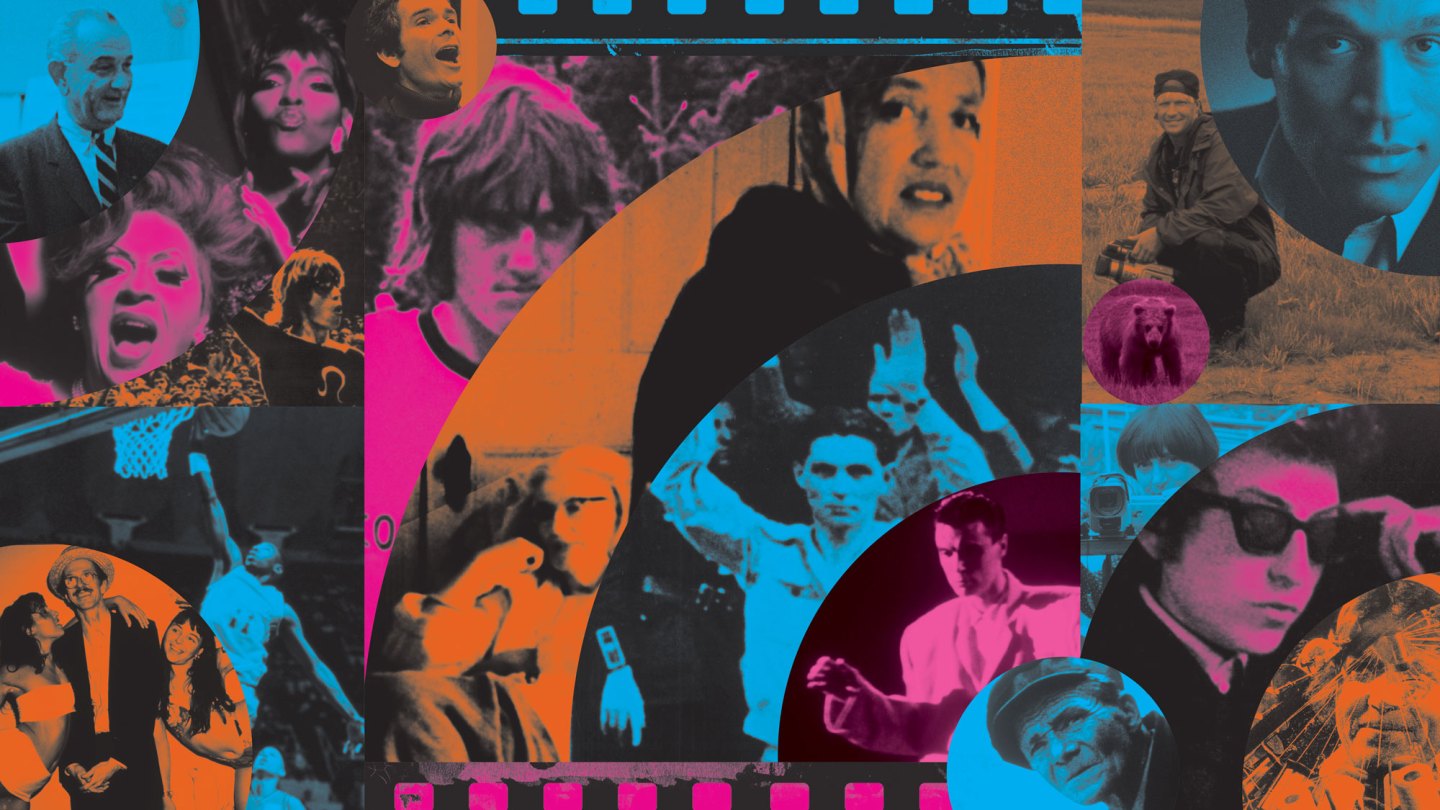
Pixel Pushers/Courtesy Everett Collection/OJ: ESPN/PMC From 'Grey Gardens' to 'The Gleaners and I,' 'Gimme Shelter' to 'Grizzly Man' and beyond, THR critics pick their favorite non-fiction films of all time. One of the paradoxes when it comes to documentaries — especially the “best” of all docs, as we’ve chosen here — is that the more personal, obsessive and, yes, subjective they are, the better they tend to be. In a genre that many viewers expect to offer us dispassionate, seemingly impartial portraits of our past and present, the films that stand out frequently do the opposite. They present bold, singular, deeply idiosyncratic visions, oftentimes from directors (Agnès Varda, Werner Herzog, Jonathan Demme and Sarah Polley, to name a few included here) who’ve oscillated between fiction and nonfiction work. Even the late, great Frederick Wiseman — two of whose 46 films are on our list — claimed he made “reality fictions” and not documentaries, although they’ve always been classified as the latter. Of course, a lot of great docs are also about great subjects, and there’s no shortage of pivotal historical events and figures explored in the films we’ve chosen. The carnage of World War II is the focus of three movies on our list — all made in France, notably. Pioneering writers (James Baldwin), artists (Robert Crumb), rock stars (Bob Dylan, The Rolling Stones, Talking Heads) and athletes (Muhammad Ali, O.J. Simpson — OK, well, an athlete who was also a suspected murderer) are featured as well. And yet nearly half of our top 25 are about people or places nobody had really heard of before. Whether it’s skateboarders facing hardship in the Rust Belt; high-school ballers struggling in Chicago; drag queens voguing in 1980s New York; Parisians dumpster diving for produce; Kentucky miners striking for a union contract; a failed actor who believed he could buddy up with Alaskan bears; or a pair of formerly wealthy recluses living in squalor and delusion in the Hamptons — what becomes clear, when making a list like this, is that the subjects depicted ultimately matter less than how they’re depicted. There will no doubt be readers who disagree with our ranking, omissions and selections; we ourselves spent a long time debating. After initially deciding to include no more than one film per filmmaker, we ended up scrapping that parameter and going with our gut — an implicit recognition that certain documentary filmmakers, in this case the Maysles brothers, D.A. Pennebaker and Wiseman, are truly masters of the form. Five films that almost made the cut — consider them honorable mentions — are: Laura Poitras’ All the Beauty and the Bloodshed (2022), Les Blank’s Burden of Dreams (1982), Spike Lee’s 4 Little Girls (1997), the Maysles brothers and Charlotte Zwerin’s Salesman (1969), and Rob Epstein’s The Times of Harvey Milk (1984). As we enter the dog days, and “dump months,” of summer — or if you’re still waiting to book a decent seat for The Odyssey in Imax 70mm — you could do worse than seek out a title or two from our list (many are available on streaming). Perhaps you’ll discover something new, allowing one of these great directors to serve as your guide through our strange, sad and marvelous world. ‘The Fog of War’ (2003) Image Credit: Sony Pictures Classics/Courtesy Everett Collection The best and worst things about Errol Morris’ documentary are, and always will be, the same: It’s a film composed of 11 lessons, conveyed by former Secretary of Defense Robert S. McNamara in uncomfortably relaxed fashion, that we didn’t learn during the Vietnam War, didn’t learn in 2003 when we were newly enmeshed in the war in Iraq and Afghanistan, and still haven’t learned in 2026 as we position ourselves in the midst of various conflicts around the globe. It’s a clear-eyed, cogent exploration of every international policy screw-up we’ve ever made and are ever going to make, featuring one of the most candid geniuses and war criminals ever captured on film. The Fog of War encapsulates all the things Morris does best, from his ability to set the strangest and cagiest of subjects at ease, to his capacity for illuminating the most intricate of topics with absolute clarity, to his gift for expressing righteous anger dispassionately. It’s a masterpiece of moral ambiguity, accompanied by Philip Glass’ eerie, pulse-pounding score, perhaps the composer’s best cinematic work. ‘I Am Not Your Negro’ (2016) Image Credit: Magnolia Pictures/Courtesy Everett Collection Widely considered the definitive film on James Baldwin, based on his unfinished manuscript titled Remember This House, Raoul Peck’s archival doc gives the great American writer and civil rights activist a resonant, uncompromising voice from beyond the grave. Narrated by Samuel L. Jackson in Baldwin’s own words, without the usual parade of academic talking heads, this is a sprawling but incisive examination of American race relations, Black experience and cultural representation, interwoven with personal recollections of the lives and assassinations of Malcolm X, Martin Luther King Jr. and Medgar Evers. Impassioned, incendiary and illuminating, it’s an eloquent analysis of American history and inequality that shows how relevant Baldwin’s prophetic views remain to the country today, almost four decades after his death. While the film drew some criticism for all but erasing the subject’s sexuality, Peck did not set out to make a life-spanning biography. Rather, it’s a singular political platform for one of the 20th century’s preeminent intellectuals, fueled by equal parts rage and despair. ‘Belfast, Maine’ (1999) Image Credit: Zipporah Films It’s tricky picking favorites from Frederick Wiseman’s vast, varied filmography; titles bandied about in our deliberations included High School, Law and Order, Welfare, Public Housing, At Berkeley, Menus-Plaisirs — Les Troisgros and a second doc that ended up making our cut. But this four-hour chronicle of a New England town is vintage Wiseman in its mix of forensic observation and underlying humanism — a boundlessly curious, gently enveloping portrait of a community, the institutions that strive to uphold it, and the individuals doing their best to survive and, if they’re lucky, thrive within it. As usual, the filmmaker’s brilliance lies in that alchemical combination of what he shows (from the hypnotic rhythms of a canned fish factory assembly line, to house calls from sympathetic doctors and social workers, to the mounting passion of a high school English teacher’s gripping Moby-Dick lecture); how he shows it (long, unbroken takes that invite you to settle into the cadences of conversation, work and other bits of everyday business and leisure, joy and struggle); and the way he stitches it all together into a tapestry that deepens in meaning and mystery the more distance you get from it. Depending on the scene, what we discover in Belfast, Maine might be despairing or inspiring, bleak or amusing, banal or extraordinary, or all those things at once. The whole has the cumulative richness, texture and stealthily soul-stirring grace of a classic novel. ‘Original Cast Album: Company’ (1970) Image Credit: Courtesy Everett Collection Putting aside the 21st century boom in stage productions filmed for broadcast, theater is the most ephemeral of the performing arts. While there are many great putting-on-a-show docs, D.A. Pennebaker’s riveting film is its own unique subgenre — a nail-biting account of the complex process of capturing what at that time would be the principal record for posterity of the now-classic Stephen Sondheim-George Furth musical. Filmed just a few days after the form-busting show opened on Broadway to polarizing critical response, the cast gathered at the Columbia Records studio in Manhattan with a live orchestra for a marathon recording session. Highlights are almost too many to mention, but watching Beth Howland conquer the rapid-fire tongue-twister “Not Getting Married” is exhilarating. And the piercing vulnerability of Dean Jones’ “Being Alive” is amplified by awareness that the stress of going through a divorce while leading a show about the minefield of marriage and relationships would cause him to withdraw from the production less than a month later. The galvanic drama of the doc, however, is supplied by Elaine Stritch, as much a perfectionist as Sondheim, struggling with an increasingly ragged voice through countless takes of “Ladies Who Lunch” as the clock keeps ticking long after midnight. Snatching triumph from defeat, she returns two days later and nails the song in one take over a recorded orchestral track. ‘Gimme Shelter’ (1970) Image Credit: Courtesy Everett Collection Watch Gimme Shelter, directed by Albert and David Maysles and Charlotte Zwerin, as a concert film and you’ll invariably be disappointed. The audio is a mess; only a few of the performances play from start to finish; the directors are frequently distracted by things happening on the fringes of the stage. Watch it as an unfolding nightmare — one in which The Rolling Stones play a not-insignificant role — and it’s a gripping, uniquely American snapshot of a moment of cultural transition and, more specifically, countercultural fragmentation. Before there was the Fyre Festival or Woodstock 1999 (musical disasters represented in multiple docs apiece), there was Altamont — and the Maysles brothers captured every step of the ill-fated lead-up to a concert that was over-attended, poorly secured and, in retrospect, perched on the precipice between the idealism of the ’60s and the nihilism of the ’70s. Moments that linger include the shell-shocked expressions of Mick Jagger and Charlie Watts watching footage from the tragic stabbing at the show, the naked and drug-addled chaos on the speedway grounds long before the Hell’s Angels imposed their will and, yes, even a few performance moments — especially Tina Turner at Madison Square Garden and the band recording at Muscle Shoals. Again, it’s far from the best concert film ever made, but it’s ultimately so much more. ‘Grizzly Man’ (2005) Image Credit: PMC Werner Herzog has always insisted there’s no meaningful difference between his documentary and fiction work. His subject in Grizzly Man, one of his greatest films, is environmental activist Timothy Treadwell — and indeed, he is as much a profoundly flawed, charismatic dreamer as the protagonists Klaus Kinski played in Herzog’s classic features Fitzcarraldo and Aguirre, the Wrath of God. Treadwell was killed in 2003 by one of the bears he spent many summers observing, filming, interacting with and obsessing over. A troubled man-child given to anthropomorphizing the carnivores around him, Treadwell registers as simultaneously ridiculous, likable and tragic in footage he shot himself, woven together with interviews Herzog shot for the film. Deeply at odds with Treadwell’s sentimental worldview, Herzog is at his lugubrious best here, especially in his incisive voiceover: “In all the faces of all the bears that Treadwell ever filmed, I discover no kinship, no understanding, no mercy. I see only the overwhelming indifference of nature.” Richard Thompson’s superb guitar score at least offers some consolation as we join Herzog in peering into that abyss. ‘Berlin: Symphony of a Great City’ (1927) Image Credit: Courtesy Everett Collection Along with Dziga Vertov’s Man With a Movie Camera, Walter Ruttmann’s Berlin: Symphony of a Great City is a defining entry in the “city symphony” movement that blended avant-garde sensibilities and documentary realism, made possible by the increasing mobility of film technology on the eve of sound. In 65 minutes, capturing an ordinary day in the life of the German capital, the doc makes humanity into its story — fellow cinematic titans Carl Mayer and Karl Freund co-wrote with Ruttmann — and, fittingly, the film is, as the kids today might say, a whole vibe. There are moments that are thrilling, as the camera races along on a rickety roller coaster; hilarious, including the intercut footage of monkeys and other zoo animals; and political, illustrating the genre’s Marxist roots. Invariably, though, what gives this work its greatest power is its very presence on the cusp of Hitler’s rise and Nazi devastation. From the architecture that didn’t survive Allied bombings to the glimpses of a soon-to-be-eradicated way of life, every frame brims with subtext that works as elegiac and ironic counterpoint to the vibrant imagery and Edmund Meisel’s glorious score, which goes from celebratory to playful to passionate. ‘Stories We Tell’ (2012) Image Credit: Roadside Attractions/Courtesy Everett Collection Sarah Polley’s autobiographical documentary features a twist that comes midway through — a highly personal stunner that dominated much of the initial discourse around the film. Unburdened from the shock of the reveal or the desire to crack the mystery, repeat viewings expose both the sophistication of Polley’s sleight of hand — the interplay of home movies, reenactments and direct-to-camera remembrances is seamless — and the potency of her narrative approach, which turns a story that shook her family into an exploration of perspective, the blurred lines between public and private, and the way cinema can function as a mirror, reflecting and revealing its subjects. Regardless of the medium, memoirs don’t get much better than this, with 109 minutes of secrets, in-jokes and emotions laid bare, at every point more honest, raw and human than anything you could script. ‘Minding the Gap’ (2019) Image Credit: Hulu/Courtesy Everett Collection It feels somehow miraculous that a 90-minute hangout doc about three childhood buddies from blue-collar Illinois (one of whom is director Bing Liu) and their shared passion for skateboarding turned out to be among the wisest, most expansive and profoundly moving portraits of American life in recent memory. A work of both piercing sensitivity and formidable rigor (Liu chiseled it down from 12 years of footage), the Sundance breakout wrangles an astonishing range of topics — including race, class, and the type of damaged masculinity that ensnares generations of fathers and sons — into something that never plays like a thesis, but rather a kind of gradual illumination of a handful of people, their troubled histories and the place they, with no small amount of ambivalence, call home. Ling’s approach is unflinching yet tactful and, despite a couple of damning revelations, unfailingly compassionate. Scenes of the subjects performing ollies, heelflips and tailslides have a cathartic lyricism, capturing much more than a hobby; skateboarding, for these young men, is a wellspring of identity, meaning and freedom that rescues them, over and over, from darkness. The closing credits sequence, with its aching, hard-won hopefulness, may give your tear ducts a workout. ‘The Sorrow and the Pity’ (1971) Image Credit: Courtesy Everett Collection After directing a string of mediocre comedies, Marcel Ophuls — son of the great filmmaker Max Ophüls (The Earrings of Madame de …), a major influence on Kubrick — rocked France to its core with this scathing four-hour exposé about Gallic life under Nazi occupation. Dispelling popular national myths of valor and resistance that had persisted since World War II, the engrossing, masterfully crafted doc, which is centered around the otherwise sleepy city of Clermont-Ferrand, reveals the extent to which the French wound up collaborating with the Vichy government out of either allegiance to the right or far right, puerility or pure opportunism. Ophuls does focus on a few real heroes, including Jewish resistant and Prime Minister Pierre Mendès France, but his movie is mostly a withering account of a country capitulating to fascism. The Sorrow and the Pity was deemed so offensive that French television banned it for more than a decade. It remains a devastatingly relevant cautionary tale about ceding to totalitarianism. ‘O.J.: Made in America’ (2016) Image Credit: ESPN/PMC We are, once again, taking advantage of the same loophole that allowed Ezra Edelman’s dazzlingly rich, eight-hour, ESPN-produced documentary to be eligible for and win the documentary feature Oscar despite being an installment in the 30 for 30 television franchise. What is Made in America about? Literally everything. Sure, it’s about O.J. Simpson and his athletic rise, his celebrity and his multitiered descent, but Edelman is unraveling a story that begins with the Great Migration that led African Americans out of the South and, in the process, reconfigured racial demographics in the Midwest and West. He delves into the long, complicated history of policing in Los Angeles, the events surrounding the “trial of the century” and its downward-spiraling aftermath, presenting Simpson as the sort of hero and villain who could only be made, yes, in America. Call it an essay, a treatise, a tapestry, a tragedy. Call it a TV show. Call it a movie. It’s essential. ‘Man With a Movie Camera’ (1929) Image Credit: Courtesy Everett Collection By all means, seek out Dviga Vertov’s masterpiece for its canonical significance and groundbreaking use of cinematic technique (it regularly ranks on lists of the greatest films ever made). But you may find yourself surprised by the swooning joy of it all. This montage work is cinema at its purest, a secular hymn to city life (shot in Moscow, Kiev, Odessa and Kharkiv), the newly triumphant proletariat, the antic rhythms of birth, work, marriage, leisure and death itself. It all goes by in a whirl of energy, expressed through jaunty traveling shots of vehicles of all kinds, sometimes observing a dashing, plus-four-wearing cameraman (the director’s brother, Mikhail Kaufman) as he operates the titular kino-apparatus himself. Sometimes he’s perched precariously on the side of a car or walking fearlessly up the strut of a bridge to get a better angle. Vertov and his editor and wife Yelizaveta Svilova, seen pulling bits of the film together, glory in the meta of it all, with superimposed shots of eyes within film lenses reflecting back the cameraman cranking away. A widely available version released by the British Film Institute is backed by a knockout, suitably kinetic score by the great Michael Nyman (The Piano), full of honking brass and sawing strings. ‘Don’t Look Back’ (1967) Image Credit: Courtesy Everett Collection Music documentaries tend to be hagiographic, fawning over rock and pop stars like they’re untouchable idols. What makes D.A. Pennebaker’s blistering fly-on-the-wall portrait of Bob Dylan so memorable is how vividly it not only captured the then-24-year-old folk legend’s lyrical genius and onstage charisma during a 1965 tour of England but also the fact that he could be, well, sort of an asshole. Honest to the point of discomfort, especially in a memorable sequence that finds Dylan upstaging British rival Donovan during an all-night hotel room jam session, Don’t Look Back is raw and arresting, combining the direct cinema techniques Pennebaker helped pioneer with the work of a brilliant singer-songwriter who was just reaching his peak. Not to be missed is the film’s opening: a single-take shot of Dylan pantomiming “Subterranean Homesick Blues” with cue cards, resulting in an uncannily minimalist music video that has yet to be surpassed. ‘Harlan County, USA’ (1976) Image Credit: Courtesy Everett Collection Barbara Kopple’s bracing chronicle of Kentucky miners embroiled in a violent strike is a landmark work of cinéma vérité and anticapitalist resistance. Armed with a camera and microphone, Kopple and her tiny crew embedded themselves with workers fighting for their livelihoods — and sometimes their lives — against the Duke Power Co., which went to extreme measures to prevent them from unionizing. Lawyers, scabs, crooked cops and armed thugs were all brought in to intimidate the coal miners, who courageously clung to their struggle until tragedy upended the movement. What makes Harlan County, USA not only a classic but every bit as powerful now as it was back then (it won the Oscar in 1977) is a visceral, you-are-there approach that puts us at the heart of a battle between impoverished laborers and a ruthless corporation. The film also stands out for its rousing soundtrack of folk and bluegrass songs as well as its inspiring portrayal of women — mostly wives and mothers — bravely standing up to the man. ‘Crumb’ (1994) Image Credit: Courtesy Everett Collection Terry Zwigoff’s unflinching 1994 documentary about the underground comix strip deity R. (short for Robert) Crumb doesn’t shy away from the misogyny and racism that found an outlet in his work. That includes a strip where his iconic Mr. Natural gifts another guy an ambulatory headless woman who can be raped on demand but, without a mouth or regular brain, can’t resist or dissent. Crumb’s then-wife, fellow cartoonist Aline Kominsky, laughs off such content as better-out-than-in catharsis, as if it were just his id farting. But to Zwigoff, Crumb and company’s credit, plenty of women here — some of them the artist’s former partners — call him out on his bullshit. What endures above all is the film’s extraordinary insight into the painful family dynamics that made Crumb who he was, explored through extensive interviews with his brothers Charles and Max, both clearly neurodivergent like Crumb himself. And for all his many faults, the main subject’s cranky honesty makes him a disarming subject whose place in American popular (counter)culture deserves this kind of serious, searching scrutiny. ‘Paris Is Burning’ (1990) Image Credit: Off White Productions/Courtesy Everett Collection A work of affecting humanity and pulsing emotional vitality, Jennie Livingston’s 1990 snapshot of the New York City ballroom scene in its mid- to late-’80s glory days is among the most influential cornerstones of queer nonfiction portraiture, doubling as a wry commentary on America’s aspirational obsession with fame, wealth and beauty. Not just a fabulously entertaining record of Harlem’s underground voguing and drag balls, the doc is also a sensitive reflection on race, class, gender and sexuality. Its unintrusive shooting style empowers the marginalized Black and Latino, gay and trans subjects to speak in their own unfiltered voices about difficult lives and the escape provided by the runway contests, extravagant fashion statements and trophies. Chosen families of “house mothers” and children serve as a refuge from poverty, homophobia and transphobia in a community in which posing and realness quite literally go hand in hand. ‘In Jackson Heights’ (2015) Image Credit: PMC A decade before Zohran Mamdani — the Ugandan-American son of a Punjabi Hindu and a Gujarati Muslim — became the most exciting New York mayor to get elected since Fiorello La Guardia (himself the son of Italian and Jewish immigrants), Frederick Wiseman’s epic doc depicted the city as a vast multicultural melting pot, or salad bowl, depending on which theory you adhere to, with residents hailing from all four corners of the earth. What makes this tender, comprehensive look at one Queens neighborhood so moving, and also such a quietly searing rebuke to the xenophobic discourse currently being spewed by the White House, is its depiction of people with vastly different beliefs, customs and cultures living side by side in relative harmony. Wiseman lovingly reveals a working-class borough that never sleeps, and one that never stops talking, praying and preaching in dozens of different languages. It’s a movie filled with New Yorkers all pursuing the same American dream. Seen today, it’s also a stirring reminder that such a dream is worth fighting for. ‘Sans Soleil’ (1983) Image Credit: Robert Grant Archive/Alamy A friend and contemporary of Agnes Varda and other luminaries of the Nouvelle Vague, French filmmaker/multimedia artist/journalist Chris Marker made arguably the strangest, most singular film on our list: a shimmering, shape-shifting oddity very much of its time but still completely bewitching today. Formed of observed events shot mostly by Marker in Iceland, Japan, Guinea-Bissau, Cape Verdi, San Francisco and Paris, among other places, Sans Soleil (Sunless) draws its cohesiveness from the darting, discursive, philosophical narration, voiced over by female actors reading excerpts from letters written by fictional peripatetic cameraman Sandor Krasna, an avatar for Marker himself. Subjects covered include the revolutions of the 1960s and their aftermaths, Japan’s economic miracle and its surviving Shinto traditions, dancing, cats, the nature of time and memory, the evanescence of things, dogs, cats again, moments when subjects look straight into a documentarian’s camera, and Alfred Hitchcock’s Vertigo (a fantastic sub-essay). Did we mention the cats? ‘Night and Fog’ (1955) Image Credit: Courtesy Everett Collection To call Alain Resnais’ mold-breaking meditation on the horrors of Auschwitz and Majdanek haunting is a colossal understatement. After a postwar decade during which the public’s consumption of Holocaust images was predominantly through newsreels and conventional documentary formats, the Nouvelle Vague pioneer brought nondidactic intellectual rigor, an essayist’s sense of structure, philosophical depth and purposefully calibrated temporal shifts to the subject. Cutting between black-and-white archival material shot during the war and color footage from 1955, the film is uncommonly direct. Images of deportations, quarantine, starving and dehumanized prisoners, gas chambers and mass graves are hard to watch, as are the mounds of personal items once belonging to victims — glasses, combs, shaving brushes. The postwar scenes of abandoned camps — in the case of Auschwitz, repurposed as a museum — surrounded by bucolic countryside make the atrocities hit even harder. Running a concise 32 minutes, the film owes part of its indelible power to narration written by poet Jean Cayrol, a concentration camp survivor, and read by actor Michel Bouquet, and to the effective counterpoint of German-Austrian composer Hanns Eisler’s score. Despite the obfuscation implied by the title, this is a bracingly lucid witnessing of monstrous inhumanity, clear in its implication that it could all happen again. ‘When We Were Kings’ (1996) Image Credit: Gramercy Pictures/Courtesy Everett Collection Nothing beats documentary footage when it comes to showing exactly why a figure like Muhammad Ali was the greatest boxer in the world, a self-appointed title that’s also entirely accurate. What we see here of the historic 1974 fight in Zaire, the so-called Rumble in the Jungle, illustrates his undeniable skill and strategy as he took on the then-undefeated George Foreman on live TV. Director Leon Gast’s doc, 22 years in the making, is a celebration of these boxers’ prowess. Interviewed eyewitnesses include Norman Mailer and George Plimpton, who analyze the men’s strengths with expertise you don’t often hear outside sports commentary. But this face-off was also about so much more: politics on macro and micro levels, the discourse around race in 1974 (which Spike Lee perspicaciously dissects), idealism and capitalism. The material is phenomenal, so it’s a good thing the filmmaking is up to the task; the editing, which splices in music by James Brown, B.B. King and Miriam Makeba from the concert that preceded the bout, adds a sizzle as succulent as a steak on a George Foreman grill. ‘Hoop Dreams’ (1994) Image Credit: Fine Line Features/Courtesy Everett Collection Steve James’ incomparable 1994 documentary illuminates, over the course of a robust yet intensely involving 171 minutes, the American dream in all its shimmering potential and gritty, unrealized reality. James’ portrait of two teens, William Gates and Arthur Agee, from rough sections of Chicago who dream of getting themselves and their families out of the projects through basketball — even though they’re both fully aware that the high school and college hoops system is designed to exploit them — is propelled by an astonishing mix of nonfiction filmmaking skill, access and divine serendipity. The result is triumphant and soul-crushing, inspiring and disheartening, predestined and unpredictable, the catalyst for countless provocative questions about race and class that America and organized sports have, alas, failed to even begin to answer in the 30-plus years since the film’s release. ‘The Gleaners and I’ (2000) Image Credit: Zeitgeist Films/Courtesy Everett Collection Manic pixie dream auteur Agnes Varda’s eclectic career contains many films wherein she appears on camera, bops around France, discourses on subjects wide and weird, and chats away with regular French folk she encounters. But in this glorious doc, she collates all those elements together in one enchanting, sui generis package as she explores gleaning, the practice of collecting still-edible produce (especially grain) or other foodstuffs usually left to rot by farmers or vendors. She starts off by musing on Jean-François Millet’s famous painting “The Gleaners” and the historical significance of an agricultural practice that was once considered women’s work. Soon the brief expands to cover dumpster divers, radical recyclers, crusty squatters and other vagabonds. Throughout, Varda displays a charming, childlike curiosity; sporting her distinctive trademark bowl-cut, she’s like a grown kid fascinated by everyone she meets, delighted to film her wizened hands with her new digital camera and make it look like she’s squeezing or encircling the big trucks seen out the windshield. Relentlessly thoughtful, playful and slyly original, this personal essay never gets old. ‘Shoah’ (1985) Image Credit: New Yorker Films/Courtesy Everett Collection After scouring the planet for 12 years and amassing hundreds of hours of footage, French journalist turned filmmaker Claude Lanzmann finally released Shoah, a harrowing and unforgettable nine-and-a-half-hour Holocaust documentary that quickly became a historical and cinematic milestone. At the time, few documentaries depicted the horrific fate of more than 6 million Jews during World War II, while a certain omerta still existed in France and other European countries that had been complicit in the genocide. With its exhaustive and sometimes unbearable array of testimonies from concentration camp survivors, as well as a few Nazis whom Lanzmann captured with a hidden camera, Shoah changed all of that — to the point that its title (a Hebrew word meaning “catastrophe”) has become common usage to describe the defining human disaster of the 20th century. Beyond its unprecedented value as a record of atrocities, survival and resistance, the film is also a major artistic achievement that chronicles the past uniquely through the present, eschewing archive footage to focus on the living remnants of industrialized death. ‘Stop Making Sense’ (1984) Image Credit: Courtesy Everett Collection Music, sound and rhythm were foundational elements to the work of Jonathan Demme, in both narratives and nonfiction. Think of Buffalo Bill preening to Q Lazarus’ “Goodbye Horses” in The Silence of the Lambs, or Jamaican reggae queen Sister Carol toasting through the dancehall syncopation of “Wild Thing” at the end of Something Wild, or Rosemary Clooney’s brassy “Mambo Italiano” setting the rollicking tone for Married to the Mob. Not to mention Demme’s trilogy of Neil Young concert films. The director found his most viscerally exciting musical symbiosis with art-rock icons Talking Heads in this electrifying concert shot over four nights in 1983 at Hollywood’s Pantages Theatre. Even after more than 40 years of technological advancements, it remains the gold standard for concert docs in terms of physicality, dynamic camerawork, visual invention and attentiveness not just to the core band members but to every person onstage. The song-by-song expansion of the ensemble of musicians and vocalists functions as a kind of primer to the way music is made. It’s an absolute banger, magnificently complemented in 2020 by Spike Lee’s film of Heads frontman David Byrne’s roof-raising theatrical concert, American Utopia. ‘Grey Gardens’ (1975) Image Credit: Janus Films/Courtesy Everett Collection It’s tempting to think of David and Albert Maysles’ 1975 cinéma vérité masterwork as a template for the most eccentric reality show imaginable. But that would be absurdly reductive. This all-access docu-portrait drops us into the lives of upper-class recluses Edith “Big Edie” Beale and her daughter, known as Little Edie, respectively the aunt and cousin of Jacqueline Kennedy Onassis, living in poverty and squalor in a dilapidated East Hampton mansion crawling with cats, raccoons and fleas. Some critics initially labeled the film exploitative, putting the scrappy co-dependent mother-daughter relationship on grotesque display. But even at its campiest — Little Edie’s patriotic flag dance or her detailed description of her radical “costume” for the day: “Mother wanted me to come out in a kimono, so we had quite a fight” — this intimate fly-on-the-crumbling-wall glimpse of a world far removed from blue-blood society and the Camelot myth is a work of deeply felt empathy, and even of grace and dignity. Despite the broken dreams, the fortunes and lovers lost, these women exist defiantly on their own terms, expressing themselves — whether in words, reminiscences, beauty or style — in voices of unapologetic authenticity, devoid of self-pity. There may be weightier films on this list that many will feel are more deserving of the No. 1 spot. But none so completely remove all distance, plunging us into other lives, past and present. Or into a dimension suspended between the two. To quote one of Little Edie’s many philosophical musings: “It’s very difficult to keep the line between the past and the present. You know what I mean? It’s awfully difficult.” THR Newsletters Sign up for THR news straight to your inbox every day Subscribe Sign Up
The 25 Best Documentaries of All Time, Ranked
Full Article
Original Source
Read the full article at Hollywoodreporter →KhanList aggregates and links to publicly available news content. We do not host full articles from third-party sources. Always verify important information with original sources.