
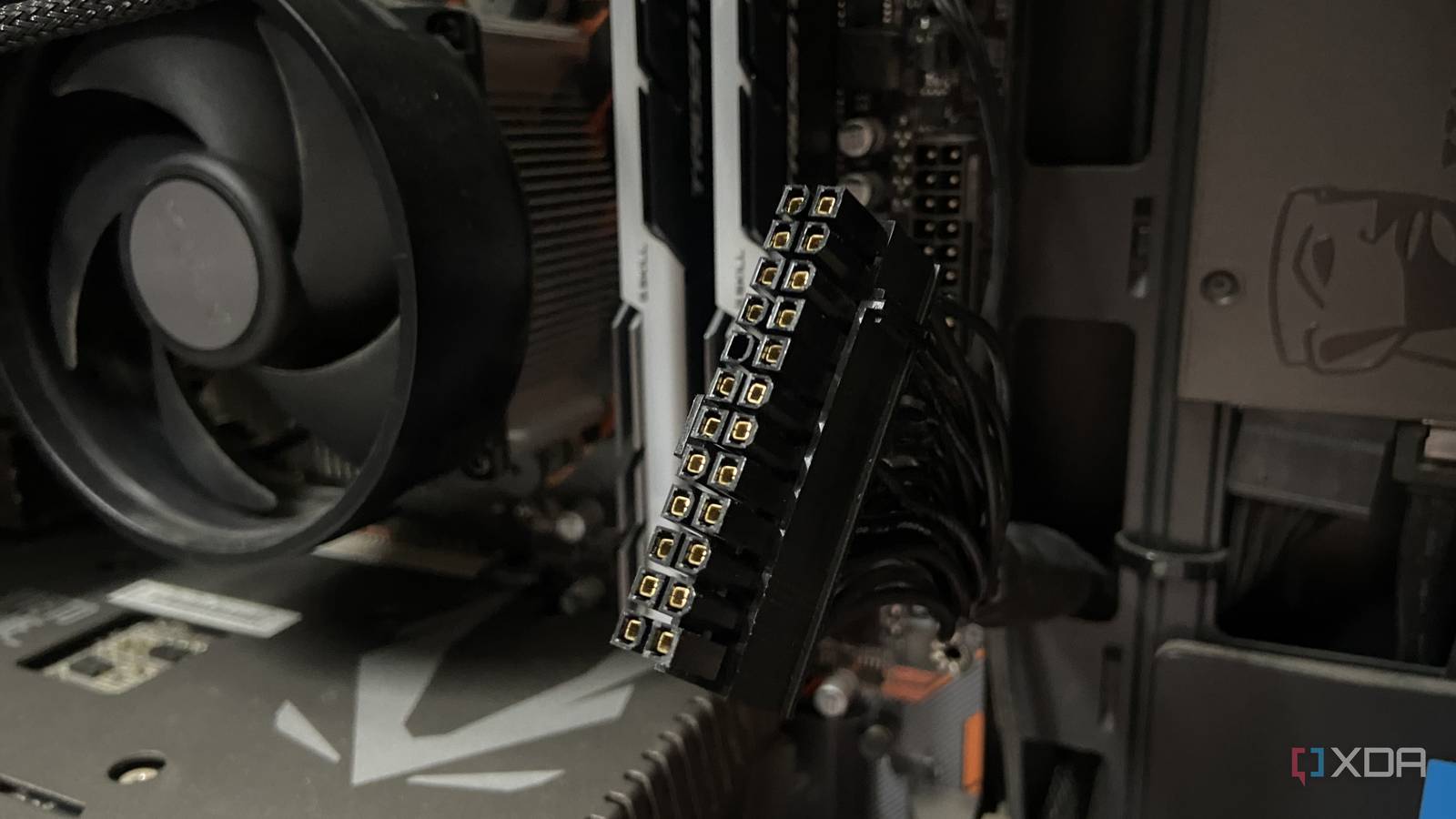
Published Aug 26, 2026, 4:30 PM EDT Abhinav pivoted from a career in banking to pursue his first love in writing. Even while working full-time, he continued contributing as an editor-at-large, a role he has held for more than 7 years. A lifelong tech enthusiast who has built three gaming and productivity powerhouse PCs since 2018, his passion for technology keeps him closely following the semiconductor industry, from NVIDIA and AMD to ARM. His MSc dissertation explored how artificial intelligence will reshape the future of work, reflecting his curiosity about the wider social impact of emerging technologies. The motherboard has seen many changes to its form-factor over the past five years. Over the course of this time, we've seen a new, revamped rear-connector design (which, I found personally intriguing), several changes to PCIe GPU cables and power delivery, and currently, we have CAMM2 memory just beginning to challenge the DIMM slot. What has been the very same, however, is the 24-pin ATX connector that goes into your motherboard, and it has stuck out like a sore thumb since 2003. Sure, it has moved places from the front to the back on some newer platforms, and there have been ways like sleeving and installing RGB strimers to make it feel like less of an aesthetic nightmare. A new innovation by Intel is poised to change this for consumer PCs soon. Intel's latest motherboard innovation is set to change consumer motherboards The ATX12VO V3 seems to be pushing the next frontier in motherboard tech Credit: Intel. On May 30, several outlets, including Tom's Hardware and TechPowerUp reported on Intel's latest ATX12VO specification, which was Team Blue's latest attempt to move the PC industry away from the decades-old 24-pin ATX connector. The information came from leaked presentation slides shared by hardware leaker @momomo_us, with the outlets subsequently reporting on what they showed. Intel later published the official ATX12VO V3 specifications, confirming many of the details revealed in the leaked slides, but curiously enough, did not officially announce the standard on stage during Computex in June this month as many analysts expected. What do we know about the ATX12VO V3? A simpler, smaller, and smarter standard The ATX12VO standard itself isn't a new development. Intel introduced it several years ago as an alternative to the traditional ATX power-delivery design, and Linus Sebastian was amongst the first to publish a first look at its earlier iterations in a power supply unit about six years ago. The goal was to simplify the PSU-to-motherboard connection by having the power supply deliver 12V power and shifting voltage conversion onto the motherboard, although the adoption of this standard has remained limited as conventional 24-pin connectors continue to dominate consumer PCs. The ATX12VO V3 builds upon that with a radical new shift that's immediately noticeable. The 24-pin connector in this variant is now switched with a much smaller 8-pin connector that supplies power to the motherboard, freeing up substantially more space around the edge and therefore making cable management much less cumbersome. Besides the obvious aesthetic uplift, Intel has also introduced changes with this standard to help make the power delivery more intelligent through improved communication between the motherboard and PSU, with the addition of more granular power monitoring by bringing PMBus, which is a communication interface used in servers, to desktop PCs. The PMBus-enabled version, however, adds four optional pins to become a 12-pin part. What makes this significant is that, in their current state, ATX power supplies do not provide similar telemetry compared with the rest of the components in the PC relating to temperature, voltage, or power draw, and technicians often have to rely on dedicated tools to capture these data points. The addition of the PMBus lets the supply stream the data to the operating system directly, just the way a standard CPU or a GPU report their own sensors, which makes it for a convenient diagnostic feature for both users and system integrators. The smaller connector offers more than just a tidier look Tighter efficiency, and more intelligent power delivery Credit: Intel Intel is also making changes to how the power supply behaves when the PC isn't actively drawing power with the new standard. The ATX12VO V3 removes the standby rail found on previous ATX implementations, instead keeping the main 12V rail always available and splitting operation into a new Low Power Mode and High Power Mode. Intel claims that it results in greater efficiency, and it established it by benchmarking an ATX12VO V3 build against a comparable multi-rail system. In the published results, the multi-rail system drew 1.29 times the power at idle and 1.12 times under load, translating to roughly 29% more power drawn when idle and 12% more while under similar workload. This goes hand-in-hand with the new PMBus protocol, in that, the PSU can now communicate its power consumption and utilization back to the motherboard, providing a clear picture of how much headroom remains in the power supply. This also becomes useful in select circumstances. For example, when the system tends to approach the PSU's rated capacity, the motherboard can use that information given by the I_PSU% signal that expresses the supply's live load as a percentage of its rated capacity. The motherboard can then have the processor ease its power draw so that the supply can ride out the spike instead of shutting down. Will your next motherboard come with an 8-pin ATX connector? While the gains are straightforward as reported, it is rather unclear how the trend of adoption will follow when it comes to consumer motherboard and power supply manufacturers, especially when the existing 24-pin ATX standard is universal across all ATX, micro-ATX and ITX motherboards. Igor's lab argues that acceptance is going to be a challenge, and it is certainly a defensible position, as with any other component that demands an overhaul of the existing dominant standard, it is going to require widespread manufacturer support to ever make it to consumer motherboards and power supplies, regardless of how bulky and tedious the 24-pin connectors seem.
The 24-pin ATX connector is finally getting replaced, but what comes next looks nothing like modern PC boards
Full Article
Original Source
Read the full article at Xda-developers →KhanList aggregates and links to publicly available news content. We do not host full articles from third-party sources. Always verify important information with original sources.