
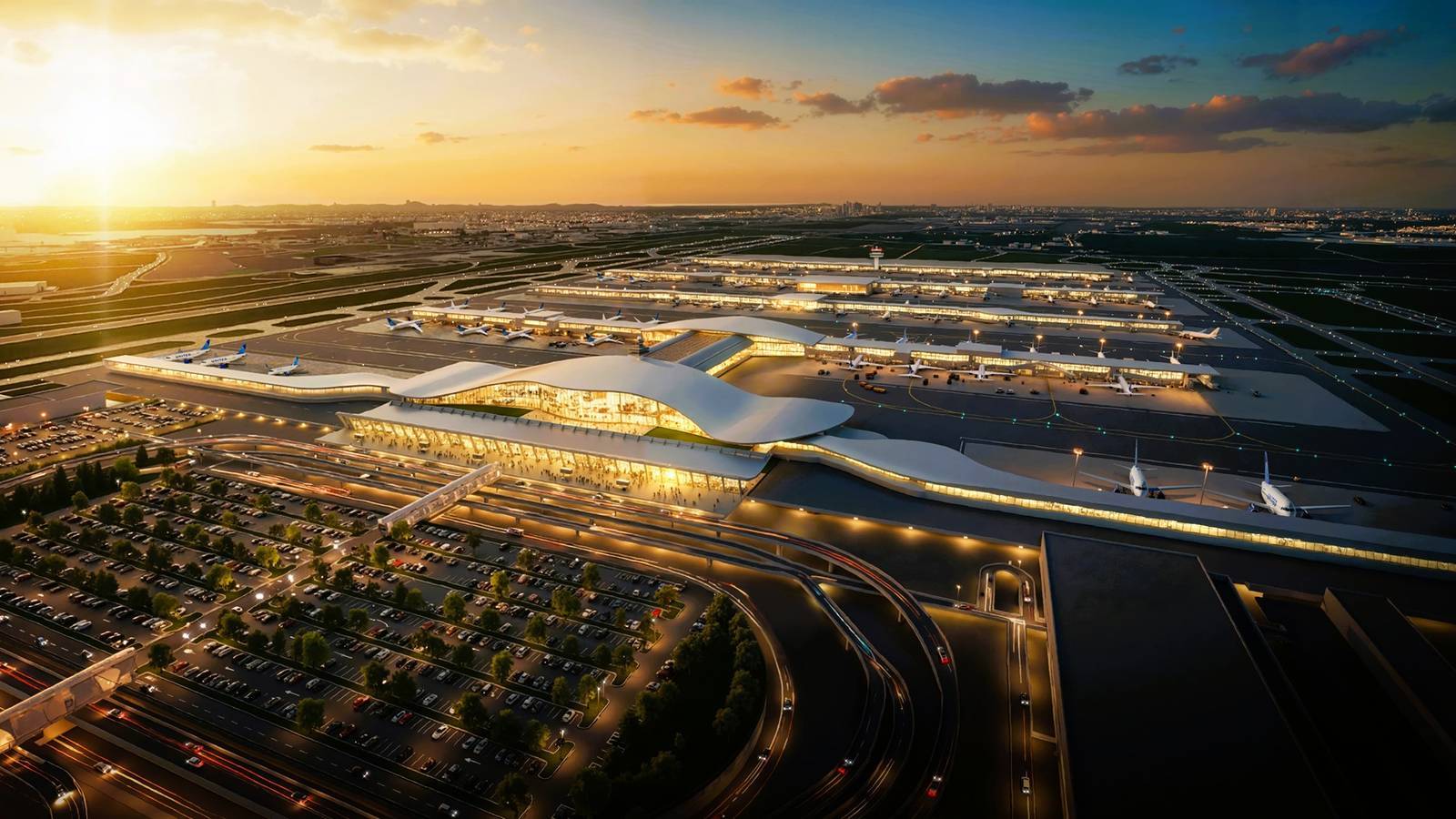
Published Nov 7, 2026, 3:00 PM EST Brandon's passion for aviation started at a young age. He became involved in the flight simulator and VATSIM communities, which sparked his interest in aviation and eventually led him to earn his private pilot license. Outside of work, he continues to build flight hours, explore new airports, and stay involved in the aviation community. The Metropolitan Washington Airports Authority (MWAA), United Airlines, and the US Department of Transportation announced a capital investment program of more than $20 billion for Washington Dulles International Airport (IAD) on July 29, 2026. The program covers more than 5 million square feet (464,515 square meters) of new or renovated space across the next decade, and it roughly triples the $7 billion modernization outlined in MWAA's master plan of May 2025. Eero Saarinen's Main Terminal stays. Concourse C and D, which house the core of United's hub, are slated for replacement. The first piece arrives within months. Concourse E opens later in 2026 with 14 new United gates, direct AeroTrain access, and new lounges including an expanded United Club and a United Polaris Lounge. Behind it sits an active design-build procurement worth $4.5 billion to $5 billion covering expansion of the Saarinen terminal, a post-security connector to Concourse A, and redevelopment of the A-B concourse. MWAA CEO Jack Potter said Dulles was the fastest-growing large airport in the country across 2024 and 2025, and the airport's aging facilities have been limiting how efficiently United can expand there. What Was Announced On July 29 Credit: United Airlines The scope sits behind the headline figure. More than 5 million square feet (464,515 square meters) of new or renovated space is the program's central measure, covering new and modernized concourses, expanded passenger processing, a new baggage handling system, and additional retail and lounge space. MWAA, United and the US Department of Transportation described the work as creating an airport of the future for the National Capital Region, delivered across the next decade rather than as a single project with an end date. The figure represents a substantial escalation rather than a new plan. ENR reported that MWAA's May 2025 master plan outlined a modernization program of roughly $7 billion, and that the July announcement expands it into a redevelopment effort valued at more than $20 billion, tripling the investment. The underlying master plan has not been discarded. Projects within it remain active under MWAA's existing modernization program, and ENR noted that the expanded proposal was developed under that same plan rather than alongside it. The announcement described the three parties as working together to accelerate long-term plans to create an airport of the future for the National Capital Region, which positions the new money as compressing an existing timeline as much as adding scope to it. One element is being preserved deliberately. The Airports Authority and United stated that new and modernized facilities are designed to create a smoother, more efficient and elevated experience from curb to gate while preserving architect Eero Saarinen's iconic Main Terminal design. United CEO Scott Kirby framed the program around the airline's position at the airport: "Washington Dulles is the gateway that connects the nation's capital to the world, and this transformation builds on United's long-term investment in our hub to deliver the world-class airport experience our employees, customers and millions of travelers deserve." United operates its largest hub in the Washington region at Dulles. Concourse E Opens First Credit: Washington Dulles International Airport The first visible result arrives before the end of 2026. The initial section of Concourse E opens later this year with 14 new United gates, direct access to the airport's AeroTrain system, and new passenger amenities including concessions and lounges. The Points Guy reported it as a half-billion-dollar terminal, with crews working beyond the airport's farthest-flung existing terminal. The lounge program is substantial. The concourse will debut new and enhanced passenger lounges, including an expanded United Club offering and a new United Polaris Lounge. United has said the new gates will help the airline expand its international network, which is the function a Polaris Lounge serves, since the product is tied to the airline's long-haul business class cabin. The Points Guy reported United Airlines CEO Scott Kirby touring construction at the airport, and separately noted that MWAA and United celebrated future development plans at Dulles in December, which is the point at which the broader program began taking public shape ahead of the July announcement. What Concourse E does not do is resolve the underlying problem. The Points Guy put it directly, noting that 14 new gates are hardly enough to sunset the aging terminal currently housing the core of United's Dulles hub operation, which it described as well past its prime. United has acknowledged that the current construction of Concourse E is just the start of multiple phases to come for its future development at the airport. MWAA CEO Jack Potter said the airport hopes to build a sizable extension of the terminal currently being built for United. Package A And The $5 Billion Procurement Credit: GZ Productions | Shutterstock The next tranche of work is already out to tender. ENR reported that MWAA has an active design-build procurement known as Package A, valued at between $4.5 billion and $5 billion, with contractors competing for the contract. It was developed under MWAA's existing master plan rather than created by the July announcement, which means the procurement was underway before the program expanded past $20 billion. ENR described the redevelopment as serving as the framework for that procurement, so the larger program and the contract being tendered are structured around each other rather than running independently. At roughly a quarter of the total announced investment, Package A is the single largest identifiable piece of the program currently in the market. The scope covers the areas passengers move through before reaching a gate. Package A includes expansion and transformation of the Eero Saarinen-designed main terminal, new terminal gates, a post-security connector to Concourse A, redevelopment of the existing A-B concourse, and replacement of its regional-gate section. ENR reported that HOK has been selected to design the Dulles expansion. Two elements of the broader program address how passengers move around the airport rather than how many gates exist. The post-security connector to Concourse A creates a walkable route where passengers currently rely on other means, and United's announcement separately referenced a walkable path to a new, large US facility serving the airport. Dulles has historically depended on mobile lounges, the raised passenger transporters that drive between the terminal and outlying concourses, and The Points Guy photographed passengers waiting for them inside Concourse D. Each piece of walkable connection removes a dependency on that system. Concourse C And D Are Being Replaced Credit: Daniel J. Macy | Shutterstock The core of United's Dulles operation is housed in Concourse C and D, and both are slated for replacement. ENR reported that the redevelopment would preserve Saarinen's landmark terminal while replacing Concourse C and D, expanding passenger-processing capacity, and serving as the framework for MWAA's Package A procurement. The condition of those facilities is why the work is necessary. The Points Guy described the terminal currently housing the core of United's Dulles hub as well past its prime, and reported passengers waiting inside Concourse D for mobile lounges. Supporting systems are included alongside the concourse work. A new baggage handling system will be installed, along with additional retail concessions and airport lounges. The sequencing is visible in the announced timeline. Concourse E opens first with 14 gates, and United has described it as the start of multiple phases to come. The Points Guy noted that under a new agreement with MWAA, United and its Dulles competitors committed to billions of dollars of investment at the airport over the coming years, extending well beyond the 14 gates opening in late 2026. That detail matters for how the program is funded, since it indicates the carriers operating at Dulles are contributing alongside the airport authority and the federal government rather than simply benefiting from public investment. Why Is Now The Right Time? Credit: daa International, Corgan Growth is the stated reason. MWAA CEO Jack Potter said Dulles was "the fastest-growing airport in '24 and '25 of any large airport in the country." An airport adding passengers faster than any comparable facility in the country while operating concourses that have outlived their intended purpose faces a problem that compounds annually. Potter remarked in the context of explaining why the investment had expanded so sharply, and ENR reported it alongside the detail that the proposal builds on that growth rather than anticipating it. The distinction matters, because a program sized against demand already arriving carries a different risk than one sized against a forecast. The constraint has been limiting United directly. AirGuide reported that while United has long operated a major hub at Dulles, the airport's aging facilities have limited the airline's ability to expand efficiently, and that the redevelopment is set to change that. United's own announcement stated that the 14 new gates at Concourse E will help the airline expand its international network, which identifies where the capacity is needed. Federal involvement is what separates this from a standard airport capital program. ENR characterized the announcement as a federal selection that transformed MWAA's long-range airport program, expanding it into a megaproject, with the US Department of Transportation appearing alongside the airport authority and the airline in the announcement. Whether $20 billion of work proceeds over a decade on the schedule announced depends on funding, procurement, and construction sequencing that has not yet been published in detail.
The $20 Billion Airport Transformation Planned Around United's Washington Hub
Full Article
Original Source
Read the full article at Simpleflying →KhanList aggregates and links to publicly available news content. We do not host full articles from third-party sources. Always verify important information with original sources.