
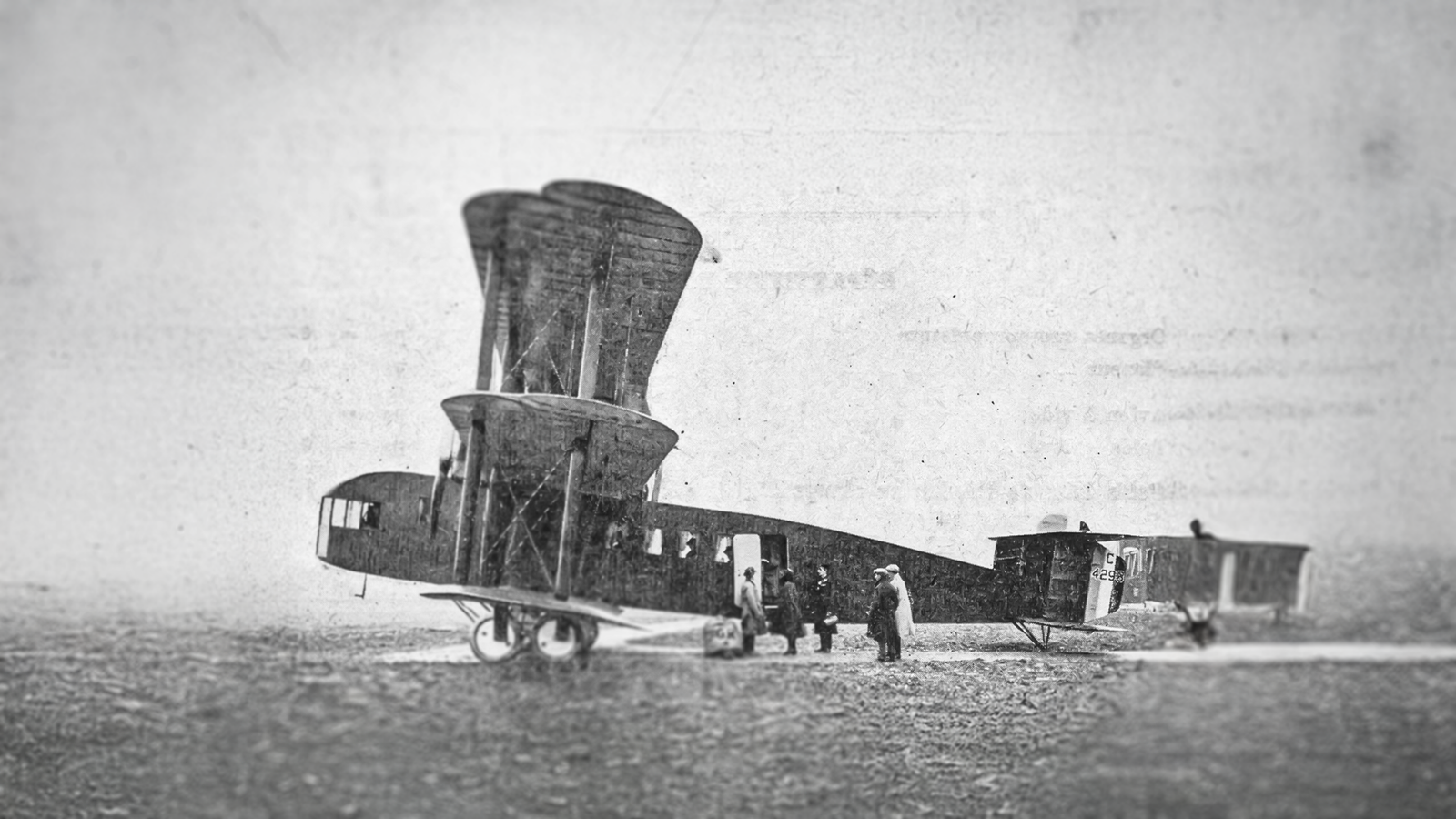
Published Sep 26, 2026, 12:00 PM EDT Luke Diaz is a freelance military writer with experience with active duty experience in the US Navy as well as defense and industrial engineering. He is a former Naval Flight Officer who performed tactical air control on the carrier-based E-2 Hawkeye. The Bristol Pullman appeared, on paper, to fulfill immediate postwar aviation needs in the United Kingdom. The design utilized a spacious bomber airframe modified with a fully enclosed cabin to accommodate 14 passengers. Ultimately, it never carried a single paying passenger because the public just could not afford to fly it. The aircraft started its life as the third prototype of the Bristol Braemar, a giant heavy bomber meant to attack Berlin during WWI. It was a creative attempt to turn a giant weapon of war into a peaceful, high-end 'flying palace.' The interior had comfortable seating for 14 passengers in a cabin that was highly praised for its luxury. The plane first flew in May 1920. It was powered by four 400-horsepower Liberty engines and had three sets of wings stacked on top of each other. When it was displayed at an international aero show in London later that year, people marveled at its incredible size and beautiful interior. Following many setbacks, the Royal Air Force quietly purchased the airframe and dismantled it in the end. From Royal Air Force Heavy To Idle Airliner The aircraft destined to become the Pullman originated as the Bristol Braemar. This triplane heavy bomber was designed by Frank Barnwell following the establishment of the unified air service in 1917. The military requirement that spawned it was straightforward. Britain needed a long-range strategic bomber capable of reaching Berlin if the conflict extended late into the war. Bristol received a contract to construct three developmental prototypes. The initial airframe was completed in August 1918, utilizing four underpowered engines due to a shortage of Rolls-Royce powerplants. Despite suffering from persistent vibration issues and wing-strut failures, the aircraft achieved a maximum speed of 106 miles per hour (171 km/h)during flight testing. A second prototype featured a redesigned layout utilizing four Liberty L-12 engines, yielding vastly superior performance results. This modified variant reached 125 miles per hour (201 km/h). This speed exceeded that of Bristol’s own F.2b fighter. It also outpaced its direct competitor, the Handley Page V/1500, by a full 23 miles per hour (37 km/h). The Unnecessary Bomber: Failure To Launch However, these technological achievements yielded zero military impact. WWI concluded in November 1918, before either Braemar prototype could enter active service. The strategic justification for a dedicated Berlin-range bomber dissolved overnight. Because Bristol remained legally contracted to finish the third scheduled airframe, the Air Board recommended an alternative approach. The Pullman’s engines were originally meant to be placed inside the main body of the plane. They used a complicated system of cables and pulleys to spin the propellers. However, this design failed because the gears did not perform as desired. The original two Braemar planes had open-air cockpits and space for guns in the front. The Pullman changed this by adding a fully enclosed cabin with wrap-around windows. Below is the table of specifications per Aviastar: Bristol Pullman Specification Imperial Metric Crew 2 Passengers 14 Engine 4 x 400hp Liberty 12 inline Take-off Weight 17,767 pounds 8,059 kilograms Empty Weight 11,010 pounds 4,994 kilograms Wingspan 82 feet, 8 inches 24.89 meters Length 52 feet 15.85 meters Height 20 feet 6.10 meters Wing Area 1905.00 square feet 176.98 square meters Maximum Speed 135 mph 217 km/h Ceiling 15,000 feet 4,572 meters Rather than scrapping the incomplete military airframe, officials directed the company to complete the plane using an entirely new fuselage designed for civil transportation. Redesignated as the Type 26 Pullman, this transport aircraft conducted its maiden flight in early 1920. It operated under the temporary civil aircraft registration G-EASP. A Cabin Built For 14 Plus A Cockpit Pilots Hated The Pullman inherited the Braemar's triplane wing configuration, which featured a span of roughly 82 feet, along with its four Liberty engines. However, engineers constructed the fuselage behind the cockpit entirely from scratch to accommodate 14 passengers. The most radical design feature was located entirely outside the main passenger cabin. Bristol provided the two pilots with a fully enclosed, heavily glazed flight deck, representing one of the earliest enclosed cockpits on a British aircraft. This design offered what historical archives described as an unsurpassed forward view for the flight crew. Despite the enhanced visibility, professional service pilots strongly disliked the configuration. Enclosing the flight deck meant sealing the crew inside a glazed compartment that they could not easily egress if the aircraft experienced a hard landing. Consequently, pilots who operated the type routinely carried fireman's axes to ensure they could chop their way free during an emergency, according to Hush-Kit. Despite the complaints from aircrew about the flight deck, the fuselage design received much acclaim. The luxurious cabin successfully impressed public audiences at exhibitions. Still, that did not resolve the issue of how deeply alarmed the aircrews tasked with flying it were over the cockpit layout. Showstopper That Couldn't Close A Deal The Pullman's public debut took place during the 1920 International Aero Show at London's Olympia exhibition hall. The aircraft even served as the exhibition's primary attraction. The triplane was the largest airplane ever shown inside the building up to that time. According to Grace's Guide, visitors marveled at the passenger plane of unprecedented scale. Such an enthusiastic reception at Olympia should have signaled a successful commercial transition. However, the momentum stalled. The aircraft that impressed showgoers would fail to meet the standards introduced by the government for civil aviation later that year. New landplane regulations emphasized short takeoff distances and a slow landing speed alongside useful cargo load and overall operating economy. The Pullman was built on a heavy bomber's triplane wing structure and possessed a correspondingly high gross weight. As a result, the aircraft simply could not achieve a low enough landing speed to meet the safety specifications. That caused the aircraft to be excluded from entering the Civil Aircraft Competition and ended its bid to be a competitive airliner before it even began in earnest. A Roster Full Of Rejected Designs The irony behind the story of the Pullman deepens upon closer examination of the official competition itself. The event was intended to jump-start a British civil aviation industry that manufacturers feared was withering without wartime contracts. It attracted large aircraft makers of the time, including the de Havilland DH.18 and the Handley Page W.8, as well as the Vickers Vimy Commercial, which was itself a passenger conversion of a wartime bomber. Yet, even among the aircraft that did compete, judges remained unimpressed by how these designs were simply reworked bombers rather than purpose-built transports. Consequently, no first prize was awarded that year in the large aircraft category. A tragic accident shortly after these events would reinforce the poor judgment that the Air Ministry leveled at the converted warbirds. On December 14, 1920, a converted O/400 operated by Handley Page Transport crashed on takeoff from Cricklewood and struck a tree, killing both crew members and two passengers, according to the RAF Museum. This accident went down in history as one of the very first fatal British airliner crashes. This aircraft had been built as a wartime bomber and pressed into civilian service, and no surviving examples remain today, according to MiGFlug. The plane's fuselage and control system were never designed with passenger safety as the primary concern. The Pullman, whatever its commercial failures, at least never put fare-paying travelers at risk in the way its more commercially successful rival eventually did. That represents a strange kind of consolation for an aircraft remembered mainly for going nowhere, but it underlines a genuine tension running through this entire generation of British airliners. End Of The Line: Dismantled at Martlesham Following the Olympia exhibition, the sole Pullman prototype proceeded to Martlesham Heath. This was the same experimental station hosting the competition from which the aircraft had been barred. There, in September 1920, the Royal Air Force purchased the aircraft outright. No attempt was made to operate the aircraft as a passenger transport under military ownership. It sat at the station, underwent informal evaluation through the autumn, and was eventually dismantled. Its airframe was broken up rather than being preserved or sold onward to a civil operator. The Pullman was accepted neither for RAF squadron service nor for civil airline operations. This left the single prototype as the sole example of the type ever built or flown. Bristol spent development effort turning a canceled bomber into a civil transport, won admiration at a premier air show, and ended the venture with an aircraft the government bought only to scrap. Bristol did not entirely abandon the heavy transport concept. The company went on to develop the Type 53 Tramp, an even larger design intended to use the Pullman's basic layout. This model was initially planned to use experimental closed-cycle steam turbine engines following discussions with the Royal Mail Steam Packet shipping line. When the steam propulsion system proved unworkable, engineers built two Tramp airframes using conventional engines instead. However, persistent problems with their clutch and gearbox systems meant neither airframe ever attempted flight. Both were ultimately broken up at Farnborough in 1922, according to BAE Systems' company heritage history. The developmental lineage that began with a heavy bomber meant for Berlin ended three aircraft later. Not a single one of the completed airframes ever carried a fare-paying passenger. Thus concluded a costly chapter in Bristol's early commercial transport ambitions.
The 1920 British Bomber That Was Converted Into A 14-Passenger Airliner, But Never Carried A Paying Passenger
Full Article
Original Source
Read the full article at Simpleflying →KhanList aggregates and links to publicly available news content. We do not host full articles from third-party sources. Always verify important information with original sources.