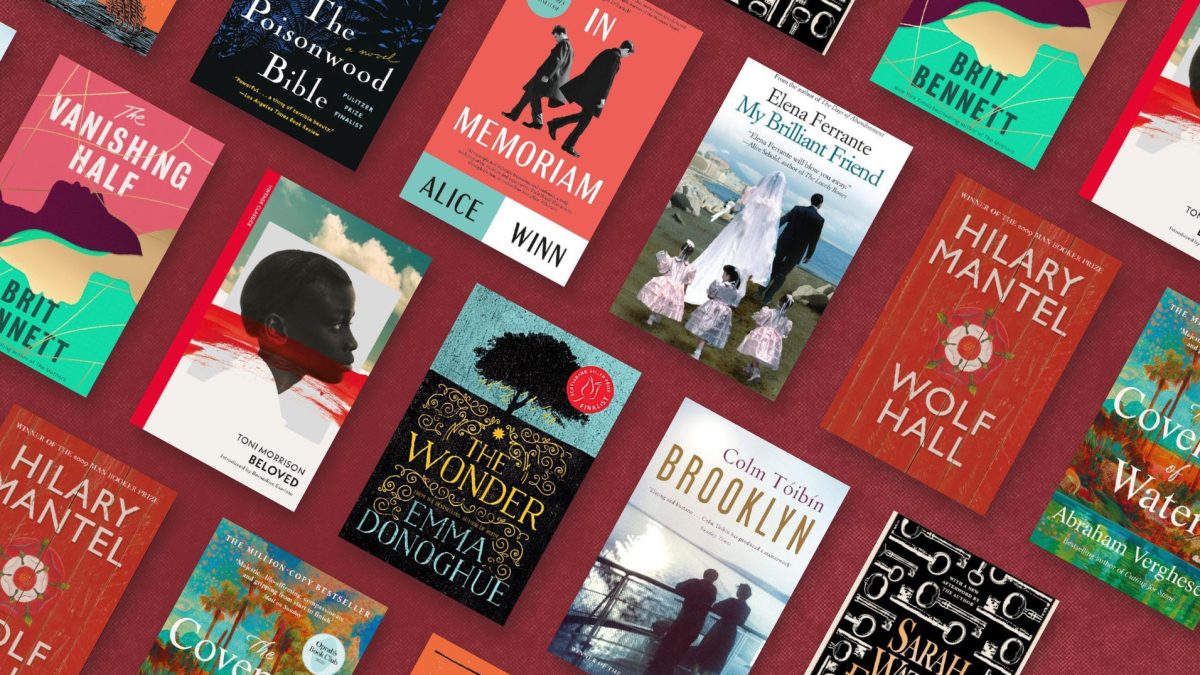
Just because you’re going to lie by the pool and try to get away from all the stresses of daily life doesn’t mean you need to read chick lit or airport thrillers while lazing on your sunlounger. Relaxation can go hand in hand with delving into another time period too. Fancy escaping to the trenches with some Great War poets, or to a 14th-century monastery with ascetic monks? Or how about the criminal underworlds of Victorian London or the slave markets of pre-Civil War Missouri? Here are some of the best pieces of historical fiction to enjoy on your holiday. My Brilliant Friend by Elena Ferrante The Neapolitan novels offer a deliciously nuanced dissection of female friendship, and the first book is perhaps the most intimate, delving into Elena and Lia’s childhood friendship in the 50s and where it all began. As competitive and ambitious as they are loyal and loving, the girls are drawn to each other from the start and bound forever after amid the poverty and tensions of Naples in post-war Italy and the concurrent changing expectations for women. Ann Goldstein’s translation is a marvel, offering the unique pulsating rhythms of spoken Italian to English-speaking readers. A coming-of-age story you can get lost in on the beach. Brooklyn by Colm Tóibín Made into a terrific film starring Saoirse Ronan in 2015, this is one of best novels, more hopeful than the 2024 sequel Long Island and shorter too, making it a zippy holiday read. Eilis Lacey is a working-class Irish girl who travels to New York for work, leaving her family and the economic stagnation of 1950s Ireland behind. Her terrible homesickness is beautifully described in Tóibín’s careful, measured prose, as are her love affairs with a local boy and with America itself. The Name of the Rose by Umberto Eco Think Dan Brown with brains. Umberto Eco’s 1980 classic is set in 1327, when narrator Adso travels as an assistant to a Franciscan friar, William of Baskerville (yes, like Sherlock Holmes, get it?) to an abbey in Northern Italy where there’s a far-reaching theological dispute about the nature of the church and wealth taking place. Oh, and a growing number of murders. This a deeply rich and complex text about the dangers of knowledge and faith versus reason smuggled into an absurdly entertaining murder mystery. In Memoriam by Alice Winn Following in the footsteps of so many melancholy war novels (e.g. Atonement, Birdsong), Winn’s book is a modern classic about the forbidden love between two young students at Preshute, aka Malborough College, where Winn herself once studied. It is 1914, and boys are still intellectually debating whether war is “a necessary evil” on school grounds, when the realities of it come for them. Drawing inspiration from Siegfried Sassoon and Robert Graves, the prose is lyrical and wonderfully bittersweet. Fingersmith by Sarah Waters It’s hard to pick a top Waters novel, but this probably tops the list, with its unparalleled ability to plunge you deep into the Dickensian criminal underworld of Victorian London, while still reading like a proper page-turner. Pivoting on the role of maid Sue and her reluctant involvement in defrauding her heiress boss, there are thieves, romance and complex interrogations of class and sexuality. Oh, and a twist to rival that of Gone Girl. The Vanishing Half by Brit Bennett Segregation is still very much in place in America’s Deep South in this deftly handled tale of two light-skinned black sisters who make different choices about how to move through life, one choosing to “pass” as white, while the other lives as black, along with all the consequences of that you’d (sadly) expect. It’s a gripping story, as well as a clever interrogation of racism, self-identity, generational prejudices and the passage of time, as the book moves from the 1950s to the 1990s. Wolf Hall by Hilary Mantel Is there another historical novel that has so altered the common perception of a real person? With her unusually intimate, upfront voice, Mantel takes us right inside Thomas Cromwell’s head and lets us see the shrewd, self-made survivor, capable of deep love and loyalty, alongside the manipulator behind the fall of Anne Boleyn. It doesn’t hurt either that we get such a good look at Henry VIII, not as the cartoon villain we’ve all grown used to, but as a deeply admired yet volatile storyteller. The Wonder by Emma Donoghue Best known for her Booker-shortlisted Room (also made into a film starring Brie Larson, who won an Oscar for it) this is a less showy book from Donoghue, in all the right ways. Based on the true story of the fasting girls, young women purported to be surviving for great lengths of time without food, it is a story of Irish poverty and dangerous religiosity during the potato famine of the 1850s that feels dramatic without ever becoming hyperbolic. Beloved by Toni Morrison If you liked this year’s Oscar triumph Sinners, you will love this 1987 Pulitzer Prize-winner, which also uses supernatural horror to explore systemic oppression and loss. In the aftermath of the American Civil War, Sethe, a former slave living in Cincinnati, lives with her daughter in a haunted house, when a mysterious young woman called Beloved turns up and forces Sethe and those around her to come to terms with the trauma of slavery. An emotionally wrenching read for when you’ve got a lot of time on the sunlounger. The Poisonwood Bible by Barbara Kingsolver An arrogant Baptist minister and his family head to Congo as missionaries in 1959, right before the country’s hard-won independence, thinking they can help locals who really don’t want to be helped. With five deeply distinct narrative voices and Kingsolver’s typical shrewd socio-political observations, this is both character-driven and very much invested in its time and place. Not only will you leave this book understanding Congo’s history; you’ll also leave understanding – and being appalled by – how little others understood of it too. James by Percival Everett You don’t have to have read Huckleberry Finn to enjoy this visceral, fast-paced and somehow stomach-achingly funny look at racism in Antebellum America, told from the point of view of escaping slave Jim. Everett reworks Mark Twain’s source material to give us a Jim who is far cleverer, speaking in slave lingo to fool the white people around him, learned and terrified, and yes, inexplicably funny. I still don’t know how a book that features lynchings and other horrifying aspects of slavery manages to get away with being so comical, but it really does. The Covenant of Water by Abraham Verghese A sprawling family saga that begins in Kerala in 1900, this covers three generations of a family afflicted by a curse that causes repeated drownings. It’s an extraordinarily immersive picture of monsoon skies and coconut palms, taking us all the way to the final days of the Raj through the eyes of the ancient Syrian Christian community in southern India.
The 12 best historical novels to read on holiday
Full Article
Original Source
Read the full article at Inews →KhanList aggregates and links to publicly available news content. We do not host full articles from third-party sources. Always verify important information with original sources.