
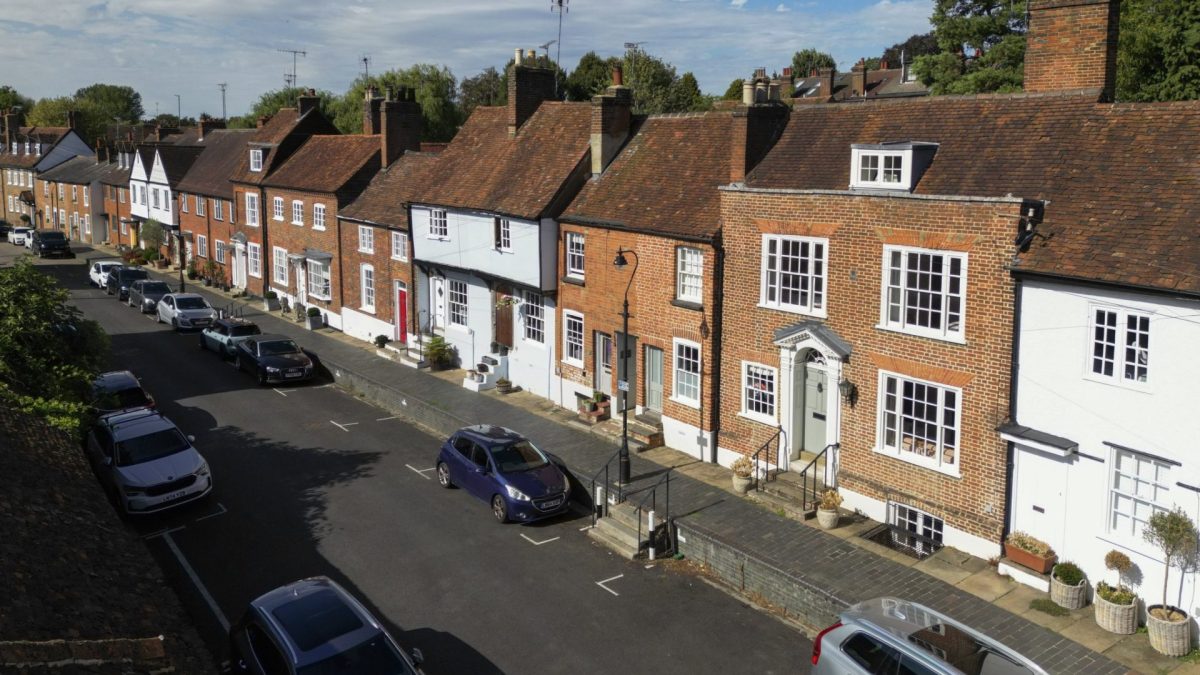
Millions of households across the country will receive a one off payment to help with surging energy prices next year, the Chancellor announced. But the use of “outdated” council tax bands to determine who will receive a £100 energy support payment has drawn criticism from analysts as the barometer for eligibility is based on property valuations from 1991. John Healey made several pledges to help households deal with rising energy bills in his Budget announcement on Wednesday, but the rabbit out of the hat moment was a one-off cash payment for households to help deal with rising energy prices. In tandem with scrapping standing charges on gas bills, the Chancellor said the measure would provide “breathing room” for households despite forecasts warning typical bills will rise 27 per cent to £2,200 next year. All households in council tax bands A to D, which equates to around 20 million households – roughly 70 percent of all resident properties – will receive the money, which will be paid directly into bank accounts. Shorts But the measure has been criticised by fuel poverty campaigners and economists who warn the support is not targeted to those who need it most, and that it does not go far enough to help the most vulnerable. ‘Terrible targeted support’ “Many who receive it won’t need it, while the most vulnerable are struggling in unheated, damp homes. The government could have targeted those in greatest need,” National Energy Action’s Chief Executive Adam Scorer, said. Greg Thwaites, the Resolution Foundation’s interim chief economist, described the scheme as “terribly badly targeted kind of support”. “And the reason for that is, first, there are lots of people who are doing OK who probably can manage without that money, and probably need to manage without that money if we’re going to support the people we need to support at a time when we don’t have a lot of money to throw around in the first place,” he added. “We would much rather the Government gave twice as much money to half as many people.” Annual energy bills for a typical household increased to £1,723 this autumn, but with the price cap set to rise again in January, campaigners say the one-off winter energy payment will cover the rise. The median gross annual pay in London is £42,280, based on Office for National Statistics, but the country’s wealthiest areas are concentrated in individual boroughs, such as Westminster where the median annual gross pay is estimated at £57,609. It is expected around 46,500 homes in the capital will be eligible for the £100 payment, according to analysis Valuation Office Agency data by money app, Gains. Outside of the capital, Brentwood comes out on top as the area with the highest average wages that will benefit from the £2.6bn scheme. The median gross annual pay in Brentwood is £51,739, while homes in bands A to D make up 55.3 per cent of the properties charged council tax in the area – most being in A to C. In second place after the Essex town is St Albans, where the median gross annual pay is £48,392. It has one of the lowest shares of homes in bands A to D with 49 per cent, but 31,210 homes will receive the cash, the data shows. Despite Brentwood household’s high wages, thousands will receive £100 for energy bills (Photo: Laurence Berger/Getty Images/iStock Editorial) Elmbridge in Surrey, which ranks third for median gross annual pay (£45,951), also has some of the fewest homes in A to D bands (41.1 per cent), with 24,880 homes in the bands eligible for the energy payment. Around 60 per cent of homes in Runnymede, where average wages are £44,427, are in bands A to D. In affluent North Hertfordshire, where annual median wages are £43,011, 72.5 per cent of homes will meet the criteria for the cash. More than half of households (52.5 per cent) in Wokingham, another high income area, will qualify for the payment where the average annual salary is £44,111. Median annual wages are lowest in Nottingham (£27,496) where 143,660 households will be entitled to the cash to help with energy bills, followed by the Isle of Wight £27,818, where 83.1 per cent of households will qualify, and Malvern Hills (£28,140), which has 68.6 per cent of homes in bands A to D. In Blackpool, one of the most deprived areas in England, gross annual pay is estimated to be £29,003. The majority of homes in the area are in bands A to D (96.1 per cent), but many on lower incomes could miss out on the £100 payment because they fall outside of the eligible bands. Chris Barnes, co-founder of Gains App, said: “Whether you get the £100 mostly comes down to what your home was worth 35 years ago, not what you earn or what you pay for energy. “That’s how a band D home in Hackney gets the payment while a band E home in Blackpool, worth around a third as much, doesn’t.”
The 10 wealthiest areas where thousands will get £100 energy payout
Full Article
Original Source
Read the full article at Inews →KhanList aggregates and links to publicly available news content. We do not host full articles from third-party sources. Always verify important information with original sources.