
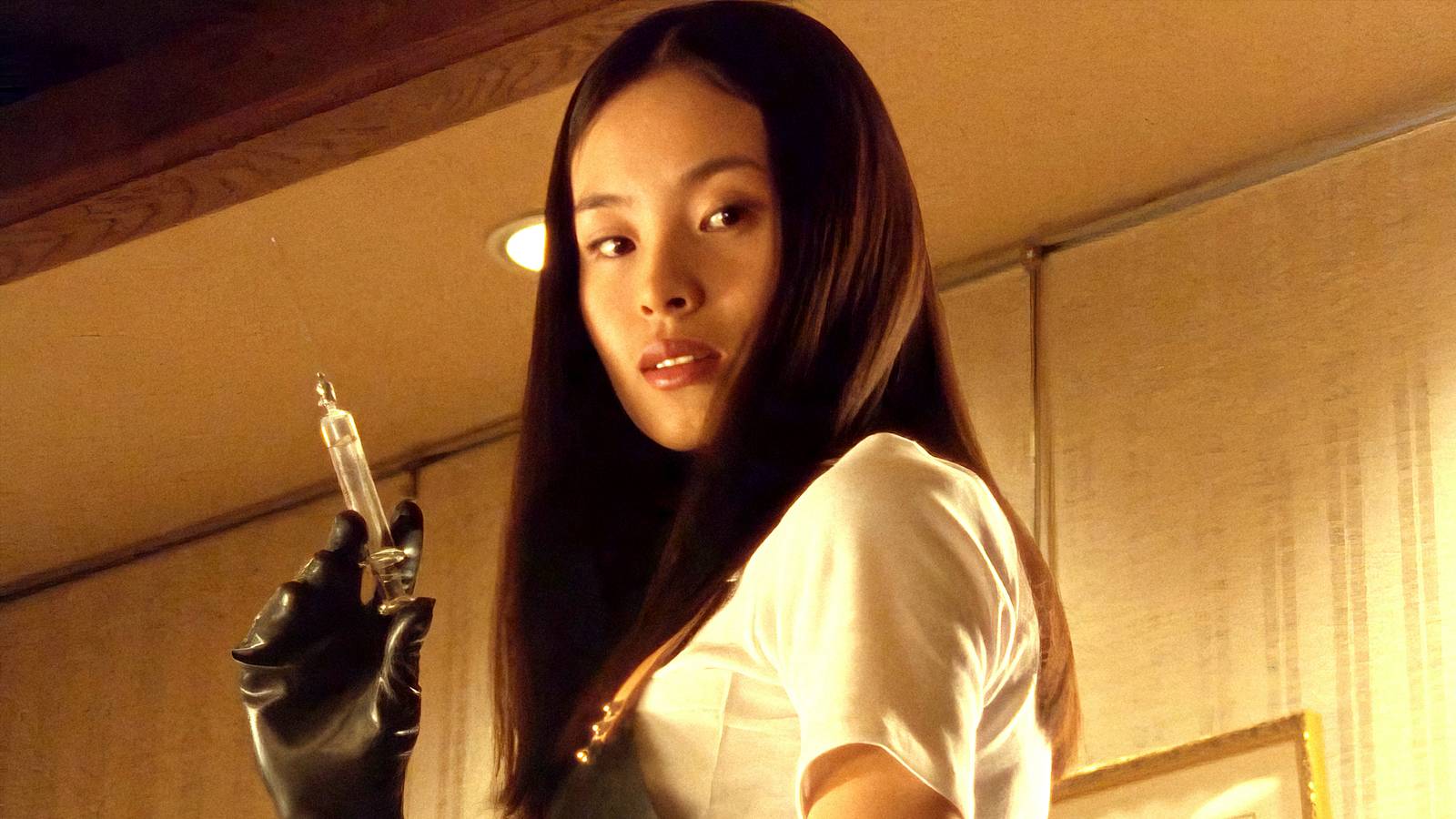
Image via Vitagraph Films Published Oct 20, 2026, 8:33 PM EDT Diego Pineda has been a devout storyteller his whole life. He has self-published a fantasy novel and a book of short stories, and is actively working on publishing his second novel. A lifelong fan of watching movies and talking about them endlessly, he writes reviews and analyses on his Instagram page dedicated to cinema, and occasionally on his blog. His favorite filmmakers are Andrei Tarkovsky and Charlie Chaplin. He loves modern Mexican cinema and thinks it's tragically underappreciated. Other interests of Diego's include reading, gaming, roller coasters, writing reviews on his Letterboxd account (username: DPP_reviews), and going down rabbit holes of whatever topic he's interested in at any given point. Sign in to your Collider account There are many things that can make a movie subversive. Perhaps it's culturally or politically subversive, challenging or outright critiquing the mainstream ideologies of its time. Perhaps it's subversive in regards to its genre's tropes, twisting them on their head and looking to surprise fans. Perhaps it's subversive simply in that it seeks to manipulate viewers' pre-existing assumptions and weaponize them against them. In any case, one of the genres that lends themselves best to subversive filmmaking is the thriller. Indeed, several of the greatest and most iconic thrillers of all time—from foundational cornerstones of the genre like Psycho to controversial cult classics like American Psycho—can be best described as subversive in several key ways. This is, after all, a genre that's all about tension, suspense, and excitement; and what better way is there to generate those elements than with a story that seeks to upend the status quo? 10 'They Live' (1988) Image via Universal Pictures Saying that They Live is one of the best B-movies in film history may technically be true, but it's also an incredibly reductive understatement. Directed by John Carpenter, one of the most brilliantly subversive auteurs that have ever graced horror cinema, They Live is a perfect illustration of everything that makes him such a transgressive filmmaker: weaponizing low-budget genre conventions to critique American institutions, politics, and culture. It's all a hard-hitting satirization and uncompromising critique of Reaganomics, late-stage capitalism, media indoctrination, and class warfare. What may superficially seem like a regular B-grade sci-fi action thriller—and is, indeed, immensely entertaining from start to finish—is hiding something very thematically rich under that layer of pulp. It's all a hard-hitting satirization and uncompromising critique of Reaganomics, late-stage capitalism, media indoctrination, and class warfare, themes which have allowed the film to age like fine wine. 9 'Fight Club' (1999) Image via 20th Century Studios After 20th Century Studios had directors like Peter Jackson and Danny Boyle reject the project, the film adaptation of Chuck Palahniuk's 1996 novel Fight Club landed on the lap of David Fincher. The rest is history. The film split critics and wasn't particularly successful at the box office, but it found a second life on home video, establishing it as one of the biggest cult classics of the '90s. Today, it's about as mainstream as modern thriller classics come. Almost three decades after its release, Fight Club is today widely accepted as one of the most influential thriller movies of all time, and that's largely thanks to how unforgettably subversive it is. On the one hand, it's politically subversive, offering a critique of how modern consumerist culture leads to hyper-violence and, ultimately, fascism. Add to that one of the most game-changing plot twists in film history, and there should be no question left as to why this is widely regarded as one of the most subversive films of the '90s. 8 'Memento' (2000) Image via Newmarket Films Before he became one of the undeniable modern kings of blockbuster filmmaking and completely re-defined commercial cinema, Christopher Nolan was still an up-and-coming indie filmmaker crafting movies as revolutionary as Memento. Structured in reverse chronological order, this masterful neo-noir is easily among the most perfect psychological thrillers with the best plots. For one, the very act of telling a story on the big screen in reverse chronological order was already a hugely subversive and rebellious creative act, and continues to feel that way 26 years later. Adding to that, Nolan uses the narrative to deconstruct the archetype of the noble avenger in a way that should be capable of changing the way any viewer thinks of the revenge thriller subgenre. 7 'Peeping Tom' (1960) Image via Anglo-Amalgamated Film Distributors Directed by Michael Powell, the British psychological horror-thriller Peeping Tom was so controversial upon release that critics decimated it, practically destroying Powell's career as a director in the United Kingdom. In later years, however, it began a trajectory of re-evaluation that transformed it into an essential cult following, one of the biggest and most important pioneers of the slasher film and the grandfather of found footage movies. Now, you'd be hard-pressed to find any thriller fan who doesn't think that this is one of those excellent thrillers that no one should ignore. The reasons why it was initially controversial, however, are still abundantly clear today. Released the same year as a certain Alfred Hitchcock classic that's also about a disturbed young man with voyeuristic fixations murdering women, Peeping Tom does something wholly different with that premise. By weaponizing the camera itself and holding up a mirror to the audience, Powell forced viewers to confront the act of movie-watching as an act of potentially violent voyeurism. 6 'Mulholland Drive' (2001) Image via Universal Pictures There have been many filmmakers over the years who have been absolutely crucial to the evolution of surrealist cinema, but none after Luis Buñuel and Salvador Dalí (arguably the fathers of the genre) have been more foundational or influential than David Lynch. When talking about the auteur's magnum opus, there's one answer that's bound to come up far more often than most: Mulholland Drive. It's one of those rare psychological thriller movies with no flaws, but it's definitely not designed for those who prefer their thrillers straightforward. What Lynch initially presents as a classic Hollywood noir mystery gradually transforms into something far weirder, far more sinister, and—of course—far more radically subversive in terms of genre, gender, sexuality, and constantly shocking the audience. Collider Exclusive · 8 Questions · 2 Minutes What Is Your Biggest Horror Nightmare? Elm Street · Chucky · Scream · The Conjuring Four horror franchises. Four completely different ways of scaring you. One waits until you fall asleep. One makes sure nobody believes you. One is already in your group of friends. And one is in the house with your family. Answer eight quick questions about how you actually watch horror, and find out which nightmare was built for you. 😴Elm Street(Freddy Krueger) 🧸Chucky(Child's Play) 📞Scream(Ghostface) 🕯️The Conjuring(The Warren Files) FIND YOUR NIGHTMARE → 01 Which horror scene makes you cover your eyes? Four classic images. One of them is worse than the others for you. ASomebody falling asleep when they really should not. BA toy that has moved, and nobody touched it. CA phone ringing in an empty house. DA child talking to somebody who is not there. NEXT QUESTION → 02 You are home alone and you hear a noise. First thought? Everybody has one. It arrives before you have decided anything. AI am exhausted and my mind is playing tricks on me. BSomething in this room is not where I left it. CSomebody is in here with me. DThis house has never felt entirely right. NEXT QUESTION → 03 Which horror movie rule would you break first? Everybody thinks they would survive. Almost nobody actually does. ANever fall asleep. BNever leave it out of your sight. CNever answer the phone. DNever go down to the basement. NEXT QUESTION → 04 Something genuinely frightening happens. What do you do? Not in a film. In your actual living room, tonight. AConvince myself I imagined the whole thing. BTell someone, and brace for them not believing me. CWork out which person I know could be behind it. DGet everybody in the house into one room. NEXT QUESTION → 05 How do you actually watch a horror film? Be honest about this one. Nobody is checking. AFine during. Wide awake at two in the morning. BShouting at the screen that nobody is listening. CCalling the twist out loud before it lands. DThrough my fingers, holding on to something. NEXT QUESTION → 06 Somebody offers you serious money. Which do you still refuse? The amount does not matter. There is one on this list you are not doing. AFall asleep in a room I have never been in before. BKeep an old doll on the shelf facing my bed. CAnswer every unknown number that calls after midnight. DSpend one night alone in a house with a history. NEXT QUESTION → 07 Which feeling stays with you a week after the film? Good horror does not stop when the credits do. ANot wanting to turn the bedroom light off. BNot trusting one particular object in my house. CLooking twice at people I have known for years. DFeeling like something came home with me. NEXT QUESTION → 08 Something wakes you at 3am. What is the worst possibility? Eight questions in, this is the one that decides your nightmare. AThat I am still asleep, and it knows it. BThat the thing nobody believed me about is here. CThat somebody with a key is downstairs. DThat something is in the doorway, watching us sleep. REVEAL MY NIGHTMARE → The Lights Just Went Out Your Nightmare Is…Four franchises, four completely different ways of getting underneath your skin. This is the one built out of your particular fear, why it works so well on you, and what it would leave behind. Elm StreetYour nightmare does not wait outside the door. It waits for you to close your eyes, which you are going to have to do eventually, because nobody has ever won that particular argument. Freddy is horror's cruellest idea: a threat that lives in the one place you cannot guard, cannot lock, and cannot avoid forever. You are the one who is fine during the film and wide awake at two in the morning. Your own head is where this does its damage. These films understood exhaustion as a horror engine. The kids on Elm Street do not lose because they are weak. They lose because they are tired. You can lock every door in the house. You still have to sleep. ChuckyYour nightmare is not really the doll. It is the face of the person you tell, and the way they decide, very kindly, that you have imagined all of it. Chucky works precisely because he is absurd. That is the trap: the more accurately you describe him, the less anybody is going to believe you. You are the one shouting at the screen because the characters are not listening. You know that feeling from real life too. The franchise is at its best when the adults in the room are the real obstacle, and you have met those adults. By the time somebody finally believes you, you will have handled most of it on your own. ScreamYour nightmare has your number, knows your name, and has almost certainly been inside your house before. The worst part is that you already know them. Scream is the only one of these where the killer takes the mask off and turns out to be somebody who was at the party. You are the person who calls the twist out loud before it lands. You watch people the same way you watch films. The franchise made the rules of horror part of the plot, which means the survivors are the ones paying attention. You would be paying attention. Everybody is a suspect, including the person who just offered to walk you home. The ConjuringYour nightmare is not really about you. It is about the people asleep down the hall, and the feeling that whatever is here is not interested in leaving. The Conjuring films are domestic horror. The house, the family, the perfectly ordinary room that quietly stops feeling ordinary. Your instinct is to get everybody into one room. Your fear is protective rather than personal, which is rarer than it sounds. This is the one franchise where belief is the weapon. The people who come through it are the ones who are not alone and refuse to be. Whatever is here did not come for you. It came for the household, and you are the one standing in the hallway. ↻ RETAKE THE QUIZ 5 'American Psycho' (2000) It should come as no surprise that the film adaptation of one of the most controversial books of all time has remained equally controversial over the years. Director Mary Harron had read Bret Easton Ellis' book and found its depiction of violence toward women disturbing, but excited to satirize '80s corporate culture, social privilege, and toxic masculinity, she agreed to take on the project. Harron recruited Guinevere Turner as a co-writer, and the duo specifically sought out to make a comedic slasher as subversive and feminist as possible, creating one of the most unique horror movies of modern times in the process. With a uniquely female gaze, Harron takes the story of a brutal serial killer and turns it into a biting parody of the hollow, status-obsessed world of 1980s Wall Street yuppies. It truly has aged like fine wine. 4 'Oldboy' (2003) Image via Show East Park Chan-wook has long been one of South Korea's most masterfully subversive thriller filmmakers, but no movie of his is more universally regarded as brilliantly subversive than Oldboy. Based on Garon Tsuchiya and Nobuaki Minegishi's manga Old Boy, this action thriller is one of the most disturbing non-horror movies of all time, making it better for those with a weaker stomach to steer clear of it. Those who love thrillers which meaningfully deploy hyper-violence as an essential part of the subtext of their incredibly-written narratives, however, are bound to find Oldboy downright genius. Park's magnum opus aggressively dismantles all notions of heroism, morality, hope, or righteousness that might be present in most revenge thrillers, instead delivering a film that takes every taboo under the Sun and runs with it. 3 'Audition' (1999) Image via Basara Pictures Where many films that are generally regarded among the most disturbing in movie history tend to be polarizing among critics, Takashi Miike's Audition actually received the utmost praise, and for good reason. This cult classic is perhaps one of the best horror movies of 1999, based on the novel by Ryu Murakami. Though critics loved it, the film is largely famous for having caused walkouts and faintings at international film festival screenings. That shock is not merely because of the movie's visceral depiction of hugely graphic violence, but also because of how radically genre-bending and deceptive its narrative is. For a good portion of its first hour, Audition feels mostly like a slow and melancholic Japanese romantic drama, only to abruptly transform into a stomach-churning psychological horror thriller halfway through. As far as cinematic bait-and-switches go, it doesn't get a lot more successful than this. 2 'Psycho' (1960) Image via Paramount Pictures There are many who would argue that Alfred Hitchcock's Psycho is the single most subversive movie in mainstream Hollywood history, and it would be remarkably different to argue against them. Hitchcok is still widely known as the Master of Suspense, and that's because of how incredibly brilliant masterpieces like this one still are, even over six decades after release. Subversive though it may be, Psycho is nevertheless one of the most universally-loved thriller movies based on books, this one based on the 1959 novel by Robert Bloch. Psycho's complete and radical subversion of traditional cinematic storytelling traditions may have lost some of its shock value as the years have passed, but it's still incredibly effective in coming across as brilliantly rebellious and flawlessly executed. 1 'Funny Games' (1997) Image via Wega Film There are those who may prefer the shot-for-shot American remake from 2007, but it's almost universally agreed upon that Michael Haneke's original Austrian masterpiece Funny Games is the most disturbing, transgressive, and subversive of the two. It's one of the best domestic thrillers of all time, but it's also one of the most difficult movies to recommend that have ever been put into existence. That's because even though it's not explicitly violent on-screen, Funny Games is still one of the most harrowing thrillers ever made, and that's because the off-screen violence is exactly the point. Haneke is abundantly clear, even aggressive, about the fact that the audience is being complicit in the disturbing violence being portrayed merely by watching the film. "If you weren't watching," the movie seems to be saying, "none of this would be happening." Haneke thus offers a brilliantly meta commentary on audiences' morbid desire to see "entertaining" movie violence, which results in the single most subversive thriller the big screen has ever seen. Funny Games Release Date September 11, 1997 Runtime 108 Minutes
The 10 Most Subversive Psychological Thrillers, Ranked
Full Article
Original Source
Read the full article at Collider →KhanList aggregates and links to publicly available news content. We do not host full articles from third-party sources. Always verify important information with original sources.