
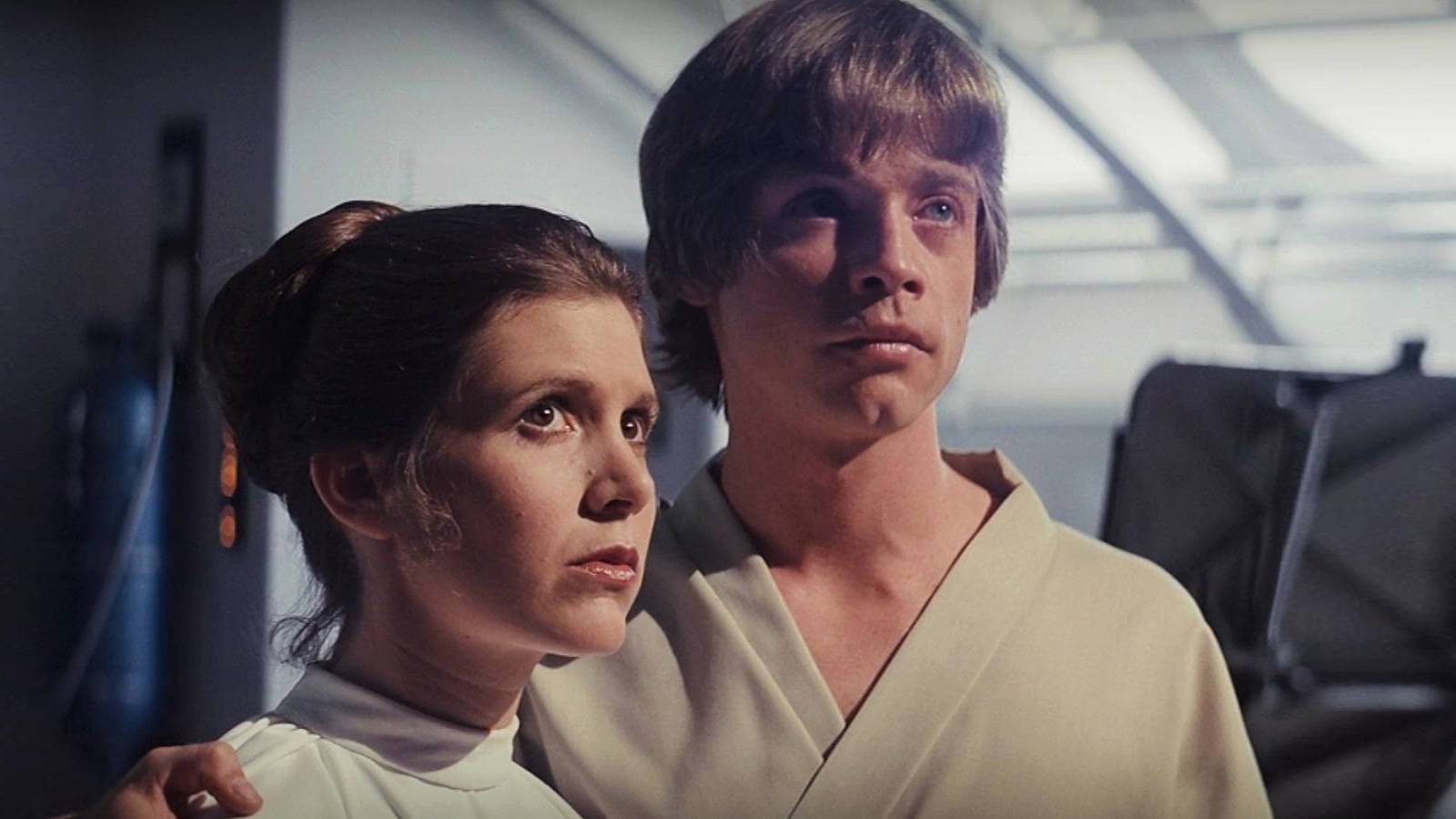
Image via Lucasfilm Published Nov 5, 2026, 4:59 PM EST A New York native, Joe graduated from an avant-garde theater school upstate, where he was obsessed with sketch comedy. There, he and his lunatic friends founded The Sketchies — which still lives on at Skidmore College today. Living in New York City, a screenwriter friend of his then taught him how to write for film. This awakened a new passion in Joe. Since then his scripts have garnered over 200 festival selections, nominations, and wins all over the globe (including the BlueCat Best Feature award). Several of his screenplays have been made into feature films — some of them not that bad! Overall, he loves to create unique, hilarious, touching, and bizarre stories. Sign in to your Collider account Let’s twist again, like we did (in the) last…scene of these 80s movies. Everyone loves a good twist ending, where expectations are completely reversed, and the cinematic rug is pulled out from under the audience’s feet. With mind-bending, twisty films released each year, perhaps no decade encapsulated the perfect twist ending more than the totally radical 80s. Needless to say, this list is chocked full of spoilers, so if any of these movies initially appear intriguing and the end reveal is not already common knowledge in your particular orbit, it’s perhaps best to discover them all on your own. Alas, here are the best twist endings that the 80s had to offer, in all their tumultuous, gobsmacking glory. 10 'No Way Out' (1987) Image via Orion Pictures War/military movies aren’t typically known for their huge twist endings; fans of this sub-genre are really just there to watch generals strategizing and soldiers shooting at one another. Spy movies are naturally more prone to contain some mystery; they’ve got “spy” right in the name. Director Roger Donaldson’s hit political thriller No Way Out is actually packed with tons of interesting twists and turns, but ultimately concludes with a really massive one that was truly unexpected. Tom Farrell (Kevin Costner) is a naval officer who’s having an affair with Susan Atwell (Sean Young), a temptress who is also involved with Tom’s superior, Secretary of Defense David Brice (Gene Hackman). During a jealousy-filled fight, Brice kills Susan, and pins the crime on a seemingly fictitious Russian spy named “Yuri.” The rest of the film, Tom and others in the U.S. military try to uncover the real identity of Yuri. After a thrilling climax, it finally comes out that Tom actually is Yuri, the very Russian operative he’s been allegedly hunting the whole time. This twist is pretty unexpected if only for the fact that Costner doesn't look Russian in the slightest bit. 9 'Angel Heart' (1987) Image via TriStar Pictures. While Fight Club famously did the whole “He was him” thing in the late 90s, there was another 80s flick that basically did this first — which saw the protagonist trying to pin down an elusive rock-star type who eventually turned out to be himself. This is director/co-writer Alan Parker’s Angel Heart, and, wow, did this reveal take audiences off-guard. The story takes place in 1955, in New York City. A good-looking private eye, Harry Angel (Mickey Rourke), gets hired by an eccentric (weird) rich guy, Louis Cyphre (Robert De Niro), to locate a missing singer named Johnny Favorite, who owes Louis some cryptic debt. Harry goes on a bizarre journey from Manhattan’s sultry jazz scene to the voodoo swamps of New Orleans, and every time he interviews someone, they end up six feet under. So, the big reveal is that Harry is Johnny; well, Johnny got caught up in some voodoo mumbo jumbo and switched bodies with (the now amnesiac) Harry, a WW2 solider. In any event, Louis is the devil, and with Faustian flare he indirectly urged Harry to commit the murders and so now he’s got his soul on lock. It’s the fun type of twist where the main character and the audience are simultaneously thrown for a loop. 8 'Miracle Mile' (1988) Image via Hemdale Film Corporation Not every twist has to come in the third act. Writer-director Steve De Jarnatt proves this with his clever subversion of genres in Miracle Mile. The movie starts out as a light-hearted romp, bursting with romcom possibilities. By the end, not only has the entire type of movie switched, the protagonist’s view of what is really happening has his head spinning (right along with the audience’s collective noggin). The ostensibly fun tale begins with the freewheeling musician Harry Washello (Anthony Edwards) meeting and falling for a diner waitress, Julie Peters (Mare Winningham). Harry tries to catch Julia on her shift, but hears a payphone annoyingly ringing outside the diner. Instead of just letting the darn thing ring, he elects to answer the call. The person on the other line is a solider who is in a nuclear facility. He dialed the wrong number, wouldn’t ya know it, and Harry hears some pretty distressing info indeed: nuclear missiles have been deployed, and the City of Angels is about to be toast in less than an hour. So, the frantic Harry tries to find Julia so they can flee L.A. before they're trapped there and atomized. The audience is intermittently led to believe that this may all be a big prank that the paranoid Harry has fallen for…until the bombs are seen exploding in the distance. It’s an anxiety-inducing film from the minute the phone is picked up, but the ultimate reveal is even more mind-(and metropolis)-blowing. 7 'The Bedroom Window' (1987) Image via De Laurentiis Entertainment Group When one thinks of the films of Steve Guttenberg, they typically conjure a string of innocuous, somewhat heartwarming dramedies, like Three Men and a Baby and Cocoon. And then, there’s the entire Police Academy franchise… So, to stick him in a steamy noir thriller is kind of a twist in its own right. Directed by Curtis Hanson, The Bedroom Window is about an architect, Terry Lambert (Guttenberg) who is a bit of a naughty fellow. He’s having an affair with his boss's wife, the seductive Sylvia Wentworth (Isabelle Huppert), — who gives femme fatale vibes from the outset. While at Terry’s place, Sylvia witnesses a woman, Denise (Elizabeth McGovern), get assaulted, right through Terry’s window (*paging Alfred Hitchcock). Terry is a gentleman, and tells the cops he’s actually the one who saw the attack, to not drag Sylvia’s good name into this mess (and save his own professional reputation in the process, of course). This backfires, naturally, and Terry is soon suspected of this crime and subsequent ones. Eventually, the real perpetrator is apprehended, Collin Wentworth (Paul Shenar), but during his trial, Terry’s lies are exposed and Collin is acquitted — and then tracks down and murders Sylvia. The irony is quite thick in this one. 6 'Friday the 13th' (1980) Image via Paramount Pictures Double-twist! Aka, the twist within a twist. That’s how the film that launched a million sequels, Friday the 13th, concluded — with not just one major reveal but another, suddenly supernatural one tacked on as well (that director Sean S. Cunningham apparently OK’d toward the end of filming — inspired by the movie Carrie). Crystal Lake was once a peaceful body of water, where little campers came to frolic for the summer. Except, one fateful day, one of the camp counselors wasn’t paying enough attention to one small guy, Jason Voorhees. He drowned, and the rest is horror history. 22 years later, a new crop of counselors find themselves being stalked and systematically slashed into the afterlife. The major question is: who is the murderer? That is revealed in the final portion of the film: it’s a woman, Mrs. Voorhees (Betsy Palmer), the mother of the poor drowned boy. Now, once she gets a few more kills in, and there is just one counselor left, Alice (Adrienne King), that’s when the real humdinger happens. As Alice floats on a row boat, blood-splattered and mentally toast, and the police arrive…a seemingly undead kid pops out of the water and grabs her. It’s Jason! This unexpected event turned the straight slasher into a supernatural horror in mere seconds. COLLIDERInteractive Ballot sealed Movies/Academy Awards/Best Picture Collider · Best Picture Which Oscar Best PictureIs Your Perfect Movie? Five winners · ten questions · one envelope Five Oscar Best Picture winners. Five completely different visions of what cinema can be and what it can do to you. One of them is the film made for the way your mind works, and ten questions will work out which. The nominees 2020Parasite 2023Everything Everywhere All at Once 2024Oppenheimer 2015Birdman 2008No Country for Old Men Open the envelope Question 01 of 10TONE 01 What kind of film experience are you really after? The best movies do not just entertain. They leave something behind. ASomething that pulls the rug out, that makes me think I am watching one kind of film and then reveals I am watching another entirely. BSomething overwhelming: funny, sad, absurd and genuinely moving, all at once. CSomething grand and weighty, a film that makes me feel the full scale of what I am watching. DSomething formally daring, a film that pushes what cinema can even do. ESomething lean and relentless, pure tension with no wasted frame. ← Back Keys 1 to 5 or A to E · Enter to advance Next Question 02 of 10THEME 02 Which idea grabs you most in a film? Great films are driven by a central obsession. What is yours? AClass, inequality, and what people are willing to do when desperation meets opportunity. BIdentity, family, and the chaos of holding your life together while everything falls apart. CGenius, moral responsibility, and the catastrophic weight of a decision you can never take back. DEgo, legacy, and the terror of becoming irrelevant while you are still alive to watch it happen. EEvil, chance, and whether moral order exists at all or we just tell ourselves it does. ← Back Keys 1 to 5 or A to E · Enter to advance Next Question 03 of 10STRUCTURE 03 How do you like your story told? Form is content. The way a story is shaped changes what it means. AGenre-twisting. I want it to start in one lane and migrate into something completely different. BMaximalist and genre-blending: comedy, action, drama and sci-fi in one ride. CEpic and non-linear, cutting between timelines to build a mosaic of cause and consequence. DA single unbroken flow. I want to feel like I am living it in real time with no cuts to safety. ESpare and precise, every scene doing exactly what it needs to do and nothing more. ← Back Keys 1 to 5 or A to E · Enter to advance Next Question 04 of 10VILLAIN 04 What makes a truly great antagonist? The opposition defines the protagonist. What kind of opposition fascinates you? AA system: invisible, structural, and almost impossible to fight because it has no single face. BThe self, and the ways we sabotage, abandon and fail the people we love most. CHistory, and the unstoppable momentum of events no single person can stop or redirect. DThe industry, the machinery of culture that chews up talent and spits out irrelevance. EPure, implacable evil, a force so certain of itself it becomes almost philosophical. ← Back Keys 1 to 5 or A to E · Enter to advance Next Question 05 of 10ENDING 05 What do you want from a film's ending? The final note is the one that lingers. What do you want it to sound like? AShock and inevitability, a conclusion that recontextualizes everything before it. BEarned emotion. I want to cry, laugh and feel hopeful, even if the world is a mess. CDevastation and grandeur, an ending that leaves me sitting in silence for a few minutes. DAmbiguity, something open enough that I am still turning it over days later. EBleakness, an honest refusal to pretend the world is tidier than it is. ← Back Keys 1 to 5 or A to E · Enter to advance Next Question 06 of 10WORLD 06 Which setting pulls you in most? Where a film takes place shapes everything: mood, stakes, what is even possible. AA gleaming modern city with a hidden underside, beauty masking rot and wealth masking desperation. BA collapsing suburban life that opens onto something infinite, the multiverse inside one ordinary person. CThe corridors of power and science at a world-historical turning point, where decisions echo for decades. DThe grimy, alive chaos of New York and Hollywood, fame as both destination and trap. EVast, indifferent landscape, desert and highway where violence arrives without warning or reason. ← Back Keys 1 to 5 or A to E · Enter to advance Next Question 07 of 10CRAFT 07 What cinematic craft impresses you most? Every great film has a signature, the element that makes it unmistakable. AProduction design and mise-en-scène, every frame composed to carry meaning beneath the surface. BEditing and tonal control, the ability to move between registers without losing the audience. CScore and sound design, music that becomes inseparable from the dread and awe of what you see. DCinematography as performance, the camera not recording events but taking part in them. ESilence and restraint, what is left unsaid doing more work than any dialogue could. ← Back Keys 1 to 5 or A to E · Enter to advance Next Question 08 of 10PROTAGONIST 08 What kind of main character do you root for? The protagonist is the lens. Who you follow says something about you. ASomeone smart and resourceful who makes increasingly dangerous decisions under pressure. BSomeone overwhelmed and ordinary who turns out to be capable of something extraordinary. CA brilliant, tortured figure whose gifts and flaws cannot be separated from each other. DA self-destructive artist whose ego is both their superpower and their undoing. EA quiet, principled person trying to make sense of a world that has stopped making sense. ← Back Keys 1 to 5 or A to E · Enter to advance Next Question 09 of 10PACE 09 How do you feel about a film that takes its time? Pace is a choice. Some films sprint. Others let tension accumulate slowly, deliberately. AI love a slow build when the payoff is going to be seismic. Patience for a devastating reveal. BGive me relentless momentum. I want to feel breathless and emotionally spent by the end. CEpic runtime does not scare me. If the material demands three hours, give me three hours. DI want it propulsive even when nothing is technically happening, restless energy throughout. EDeliberate and unhurried. I want dread to accumulate in the spaces between the action. ← Back Keys 1 to 5 or A to E · Enter to advance Next Question 10 of 10AFTERMATH 10 What do you want to feel walking out of the cinema? The best films leave a mark. What kind of mark do you want? AUnsettled, like I have just seen something I cannot fully explain and cannot stop thinking about. BMoved and energized, like the film reminded me what matters and gave me something to hold onto. CHumbled, like I have been in the presence of something important and overwhelming. DExhilarated, like I have just watched cinema do something it has never quite done before. EHaunted, like a cold, quiet dread that stays with me for days. ← Back Keys 1 to 5 or A to E · Enter to advance Reveal my film The envelope, pleaseAnd the Oscar goes to ★ Best Picture, 2020 Parasite Bong Joon-ho, 2019 A film that hides its true intentions until the moment it is ready to reveal them. You are drawn to films that operate on several levels at once, that begin in one genre and quietly, brilliantly migrate into another. Bong Joon-ho's Parasite is a film about class, desire and the architecture of inequality that manages to be darkly funny, deeply suspenseful and genuinely shocking across a single extraordinary running time. Your instinct is for cinema that rewards close attention and punishes assumptions, right up to its devastating final image. From the Collider file The first film not in the English language to win Best Picture, in the Academy's 92-year history to that point. It took four Oscars in one night: Picture, Director, Original Screenplay and International Feature. It won the Palme d'Or at Cannes in 2019 by a unanimous jury vote, the first Korean film to do so. The Park family's modernist house was not a location. It was built from scratch on an outdoor lot. Reads between the lines Loves a reveal Attention to detail ★ Best Picture, 2023 Everything Everywhere All at Once Daniel Kwan and Daniel Scheinert, 2022 A film that refuses to choose between being entertaining and being meaningful. You want it all, and this one gives you all of it. The Daniels' Everything Everywhere All at Once is among the most maximalist films ever made: action comedy, multiverse science fiction, family drama, existential crisis, and an emotional core that sneaks up on you in the middle of the chaos. You respond to ambition. Being overwhelmed is the design, not the side effect, because the feeling of being crushed by infinite possibility is exactly what the film is about. From the Collider file Seven Oscars, including three acting wins for Michelle Yeoh, Ke Huy Quan and Jamie Lee Curtis. Michelle Yeoh became the first Asian woman to win Best Actress. The visual effects were handled by a team of fewer than ten people, most of them self-taught. Ke Huy Quan had all but left acting for two decades before this role brought him back. Wants everything Big swings Soft center ★ Best Picture, 2024 Oppenheimer Christopher Nolan, 2023 A film about the gap between what we can do and what we should do. You are drawn to cinema on a grand scale, films that treat history not as a backdrop but as a force, then place their characters inside that force and watch what happens. Christopher Nolan's Oppenheimer sits inside one of the most consequential moments in human history and refuses to look away from it. You want your films to feel important without being self-important, earning their ambition through craft and the gravity of the subject. This one is enormous, complicated, and offers no easy comfort. From the Collider file Seven Oscars, including Nolan's first wins for directing and for Best Picture. Cillian Murphy and Robert Downey Jr. both took their first Academy Awards for it. Kodak engineered a black-and-white 65mm stock that did not previously exist so Nolan could shoot those sequences on IMAX. A three-hour, R-rated drama about theoretical physics that passed 950 million dollars worldwide. Thinks in decades Scale and weight No easy comfort ★ Best Picture, 2015 Birdman Alejandro G. Iñárritu, 2014 A film doing something that probably should not be possible. You are drawn to films that foreground their own construction, where the how of the filmmaking becomes part of the what it is about. Alejandro G. Iñárritu's Birdman, stitched to appear as one continuous take, is cinema examining itself through the cracked mirror of a fading actor's ego. You respond to formal daring. Michael Keaton's performance and Emmanuel Lubezki's restless camera make something unlike anything else: a film about creativity, relevance, self-destruction and never quite knowing whether your work means anything at all. From the Collider file Four Oscars, among them Best Picture and Best Director for Iñárritu. Emmanuel Lubezki's win here was the middle of three consecutive cinematography Oscars, after Gravity and before The Revenant. Antonio Sánchez's improvised drum score was ruled ineligible for the score category, which caused a minor uproar. The long-take illusion was built from a handful of extended shots joined by hidden cuts. Formally daring Camera as character Ego and art ★ Best Picture, 2008 No Country for Old Men Joel and Ethan Coen, 2007 A film that treats dread as a form of meaning. You are drawn to cinema that trusts silence, refuses to explain itself, and lets unease do the talking. The Coen Brothers' No Country for Old Men is about the arrival of a new kind of evil: implacable, arbitrary, and indifferent to the moral frameworks we use to make sense of things. It is one of the most tightly controlled films ever made, and that control is the source of the terror. You want your films to haunt you rather than comfort you, and you have no interest in a resolution that would be a lie. From the Collider file Four Oscars: Picture, Director, Adapted Screenplay, and Supporting Actor for Javier Bardem. Adapted from Cormac McCarthy's 2005 novel, with much of his dialogue carried over intact. Carter Burwell's score runs about sixteen minutes and is nearly inaudible by design. Roger Deakins was nominated twice that year, for this and The Assassination of Jesse James, and won for neither. Trusts silence Dread over answers No tidy endings Ballot tally · your top three 1 2 3 ↻ Retake the quiz Copied to your clipboard Ballot counted byCOLLIDERCollider.com · The Awards Desk 5 'The Return of the Living Dead' (1985) Image via Orion Pictures A nuclear explosion typically means “game over.” Well, not in this zany zombified sequel. An off-shoot of the George A. Romero Dead franchise, this film, with director Dan O’Bannon at the helm, really ups the ante in terms of scope. The Return of the Living Dead may be a bit campy (talking zombies can have that effect), but it’s got one heck of a finale. The undead tale begins with two dudes, Frank (James Karen) and Freddy (Thom Mathews), working in a warehouse. They accidentally open a canister of military gas that spreads through the atmosphere. Naturally, this toxic mist causes the local dead to rise, and go on a quest for delicious brains. So, as things descend into pure chaos, and the town looks to be completely overtaken by the gallivanting ghouls, the warehouse boss, Burt (Clu Gulager), phones the military. The head honchos decide to nuke the whole town and be done with this mess…which only ends up spreading the gas over a much wider region of the country… Ergo, atomic zombies galore. 4 'House of Games' (1987) Image via Orion Pictures Every once in a while, a person likes to break bad. When you have a thriving psychiatric practice, but an otherwise mild social life, it just may be time to spice things up. That’s the basic premise of famed playwright David Mamet’s cinematic directorial debut, House of Games. Yet, this movie isn’t just about engaging in some promiscuous fun; it’s a lesson in being too cocky and believing you are more clever than everyone around you. Margaret Ford (Lindsay Crouse) is the smart headshrinker in question. She encounters an obvious Lothario, Mike (Joe Mantegna), a dude who runs scams and lives dangerously. He’s intriguing to Margaret, and she lets herself be drawn into an illicit world of underground shenanigans. The thing is, Marge fancies herself a real smart cookie, and while Mike seems to be calling the shots, she believes that she has his number and is just along for the thrill ride. Eventually (here comes the big twist), it’s revealed that all the events that Margaret has been privy to have really all been part of an intricately woven scam to swindle her out of her own cash. When Margaret confronts Mike, and he brushes her off, her dark arc completes and she coldly shoots him dead. With deviously fun set pieces throughout, this is a great neo-noir, predicated on the concept of the inflated ego and how far people go to retain their pride. 3 'Sleepaway Camp' (1983) Image via United Film Distribution Company Naturally, earlier decades produced a bunch of cringe-worthy, problematic films — when viewed through a modern lens. Writer-director Robert Hiltzik’s Sleepaway Camp is no exception, but its final reveal was so shocking at the time, it still has to be acknowledged as one of the decade’s most eye-popping, jaw-dropping twists. The story is about a summer camp where a plucky plethora of murders takes place (shocker). At this sleep away sojourn in the woods, there is one particular girl, Angela (Felissa Rose), who is constantly mocked and bullied by her peers. Anyway, more kids die, and it’s eventually disclosed (in feral, raw fashion) that Angela is the killer. Not much of a bombshell there…except for the astonishing fact that Angela is really a boy named “Peter,” who, when his sister died, was raised by his caregiver aunt, Martha (Desiree Gould), as a wee lass. The way that this is expressed to the audience is with a shot of Angela, where she gives a snarling, lunatic smile…while “she” is stark naked. Yup. Sometimes, you have to let it all hang out. 2 'Deathtrap' (1982) Image via Warner Bros. Sometimes the best twists are revealed right in the film’s title. Director Sidney Lumet’s Deathtrap really spells it all out in the very name of the movie. With some really compelling performances throughout, this twisty flick is actually not what it seems at all, with motivations and allegiances switching right up until the film’s conclusion. The plot is centered on a successful Broadway playwright, Sidney Bruhl (Michael Caine), who has hit a bit of a career snag. When he ostensibly learns that his former protégé, Clifford Anderson (Christopher Reeve), has written a new work that is sure to be the next big sensation, Sidney appears to become so consumed with envy that he devises a plan to murder Clifford — and claim Clifford's script as his own, thus returning Sidney to his former glory. But…it turns out that Sidney doesn’t really want Clifford dead…he wants him in his bed. In reality, they are lovers, and the whole “murder plot” was designed to give Sidney’s feeble wife, Myra (Dyan Cannon), a life-ending heart attack. Paying a bit of an "homage" to Les Diabolique, only now with a gay spin, this film is shocking in its ingenuity in redefining the kill-one’s-spouse plot. 1 'The Empire Strikes Back' (1980) Image via Lucasfilm For good or bad, this pick shouldn’t come as a surprise to basically anyone who calls themselves a fan of film. Co-writer George Lucas and director Irvin Kershner not only supplied one of the best sequels of all time with The Empire Strikes Back, but they also delivered one of the most shocking twists in all cinema, ever, in any decade, in any galaxy. One doesn’t need to be a Star Wars nerd to know the plot of this movie inside and out, but here’s the gist anyway. The evil Empire discovers the Rebel Alliance, and the key players are compelled to flee. Luke Skywalker (Mark Hamill) ventures to the planet Dagobah to receive instruction from the wise little creature Yoda (voiced by Frank Oz) in the wily ways of the Jedi. Meanwhile, Han Solo (Harrison Ford), Princess Leia (Carrie Fisher), the fur-ball Chewbacca, and the bot C-3PO hide out in Cloud City in Bespin. Eventually, the Empire tracks them down, and Luke (now all Jedi-ready) has a lightsaber face-off with Darth Vader (David Prowse), the dark leader of the Empire. As the gravitas-imbued James Earl Jones (the voice of Darth Vader) delivers one of the most epic lines ever uttered onscreen, Luke’s head is spun. His greatest foe has been the very person who supplied him with his DNA (well, half anyway). It’s the type of realization that’s kind of hard to come back from (just watch any paternity-themed episode of The Maury Povich Show). Hamill handles this revelation really nicely, with just the right amount of shock and awe — but, at the end of the day, Luke’s a Jedi, and will not bow down to evil authority, no matter who is wielding it, or how many hands he has left. In one of the 80s’ best films, this twist is a true force to be reckoned with.
The 10 Most Perfect Movie Plot Twists of the 1980s, Ranked
Full Article
Original Source
Read the full article at Collider →KhanList aggregates and links to publicly available news content. We do not host full articles from third-party sources. Always verify important information with original sources.