
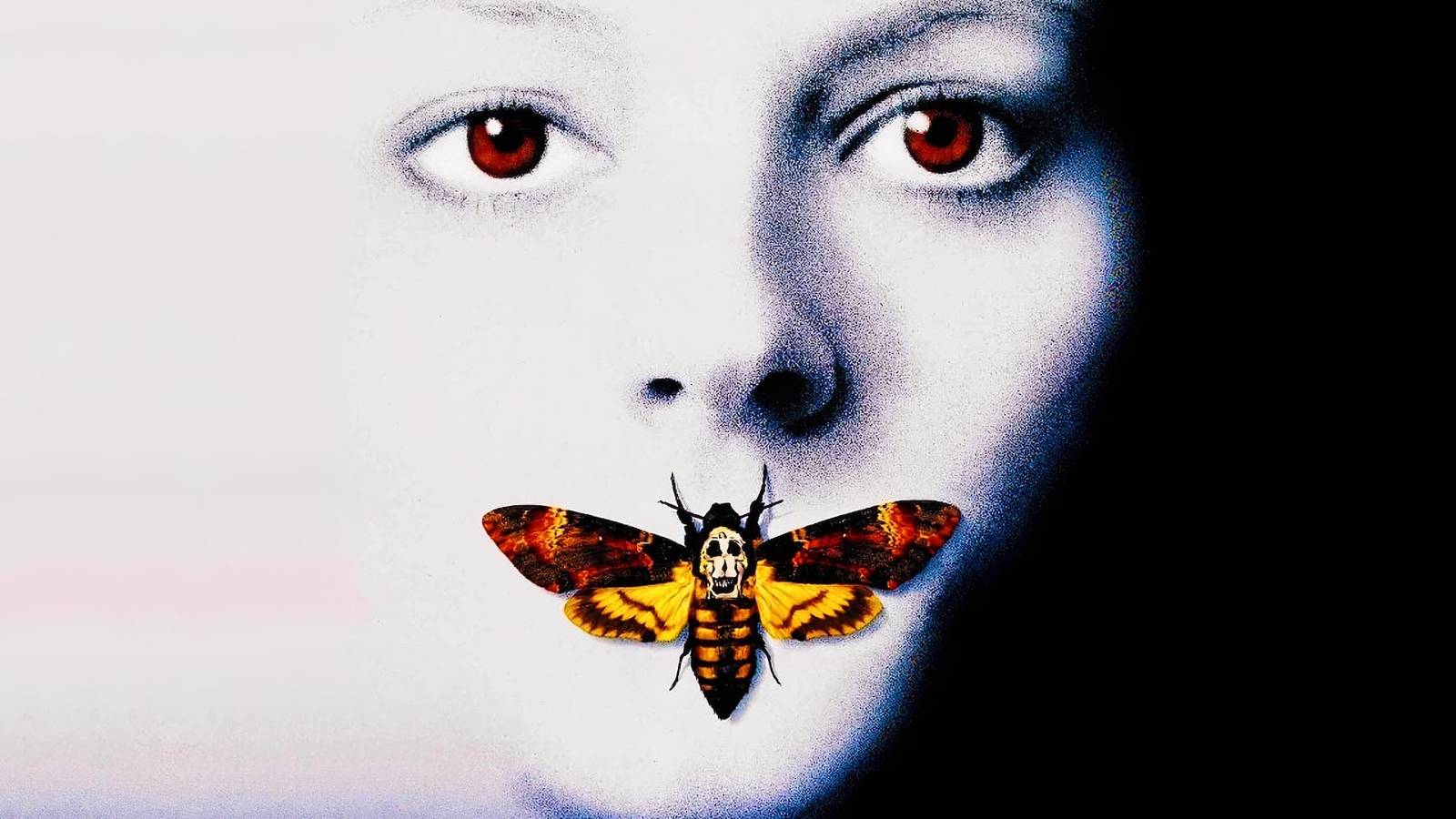
Image via Orion Pictures Published Nov 20, 2026, 12:05 AM EST Michael Block is a 14 time GLAM Award nominated writer, producer, and host of the podcast Block Talk. Throughout his time in the entertainment industry, he has worked on and off Broadway as a stage manager, written several produced plays, critiqued hundreds of theatrical performances, drag and cabaret shows, and has produced events randing from drag competitoons to variety concerts! On Block Talk, he interviews nightlife personalities, covers the wide world of entertainment through features, ranking episodes, and recaps ALL of Drag Race, as well as Dragula and Survivor. He has interviewed hundreds of RuGirls that span the globe at DragCon NYC, DragCon LA, and DragCon UK. In his free time, he makes one-of-a-kind jewelry and gift baskets with his mom. He is a proud member of the LGBTQ+ community. Sign in to your Collider account Every young person with a dream for Hollywood has certainly pretended what it might feel like to win an Academy Award. They’ve held a hairbrush as a microphone, a shampoo bottle in hand, practicing their speech in front of the bathroom mirror. Many of those speeches come from those they have watched win on their TV. Whether it was an expected win or a massive shock, many inspiring victories have shaped generations that followed. We’re here to celebrate ten. From groundbreaking firsts to sweeps that reshaped the landscape of the awards and movies at large, these ten inspiring wins have stayed with us long beyond their speeches. While many other groundbreaking Academy Award wins changed Hollywood, these ten represent a well-rounded mix of categories, eras, and legacies. Whose Oscar win made the greatest impact on you? 10 Three 6 Mafia Best Original Song- 'Hustle and Flow' (2006) Image via ABC The history and legacy of songs in films leave a very different impression than the movies they came from. Not only can we enjoy them on their own, but they also bring us back to that moment when we heard them on the silver screen. For a long time, the Best Original Song winners maintained a specific essence and style. Then the 21st Century came and the times had changed. Once Eminem won for “Lose Yourself,” the door was open for Three 6 Mafia to win for “It’s Hard Out Here for a Pimp.” Winning for the film Hustle & Flow, the song emerged victorious as it captured the grit, struggle, and ambition of the film's main character, DJay (Terrence Howard), in a way that resonated emotionally. The hip-hop group’s victory didn’t come as a shock for defeating Dolly Parton, but because of how it proved that independent, underground Southern hip-hop artists could reach mainstream Hollywood success without compromising their roots. Coming out of Memphis, Three 6 Mafia was an unlikely contender in a traditional award show setting, making their victory feel like a win for "outsiders.” They became the first hip-hop group to win an Academy Award and perform at the ceremony, making the night’s milestone even sweeter. Members Juicy J and DJ Paul didn't expect to win and had no prepared acceptance speech, but their enthusiasm reverberated through the room. 9 Alan Heim Best Editing- 'All That Jazz' (1979) Image via 20th Century Fox If there’s one thing that Bob Fosse is, it’s specific. Though he had been in the director’s seat in the past, his greatest cinematic triumph came through in his semi-autobiographical film All That Jazz. The legendary choreographer had a vision, and editor Alan Heim delivered. Though the Oscar went solely to Heim, Fosse collaborated quite closely with him in the cutting room. Heim and Fosse shaped the film with a driving, musical pace, blending theatrical choreography, rehearsal footage, and surreal sequences into a cohesive pulse. As Roy Scheider’s Joe Gideon nears physical collapse, the editing shifts fluidly between gritty backstage reality, hospital scenes, and elaborate musical fantasies. Building on techniques discovered while editing Lenny, Heim moved fluidly across timelines and wove fantasy and dream logic into a straight narrative. This mirrors a mind under intense physical and creative strain. Techniques like cutting slightly off the beat or overlapping dialogue keep momentum high without feeling mechanical. Heim described moving time around and collaborating with Fosse as a creative adventure. Heim’s victory was a creative win. His win came against tough competition, beating heavy hitters including Apocalypse Now and Kramer vs. Kramer. The wildcard win showed how complex, long-gestating post-production can reward visual and rhythmic craftsmanship. Heim’s artistry is a benchmark of ambitious editing. 8 Diane Keaton Best Actress- 'Annie Hall' (1977) Image via United Artists Sometimes playing yourself, or at least a version of it, can lead to massive success. For Diane Keaton, playing Annie Hall came as old hat, as Woody Allen modeled the titular character around her, name and all. Incorporating her natural mannerisms, humor, and tomboyish style was all it took as the Academy voters praised her fresh, self-deprecating comedic timing and nuanced portrayal of an awkward yet intelligent woman. Rather than playing a one-note "ditzy" character, Keaton balanced nervous tics and awkwardness with genuine intelligence and vulnerability. Her vintage menswear wardrobe of vests, ties, baggy trousers, and hats helped turn her into a defining late-1970s style icon. Keaton’s victory for Annie Hall broke traditional conventions, celebrating individuality over traditional Hollywood glamour. Her candid, low-key acceptance moment stood out against overly scripted awards-show polish, making the win feel genuine and approachable. By redefining the leading lady through her achingly real presentation, Keaton influenced generations of performers and viewers alike. Sharp-witted, neurotic, and self-deprecating personas can be as equally charming as the formally polished presentation of a romantic damsel. 7 Jordan Peele Best Original Screenplay- 'Get Out' (2018) Image via Universal Pictures Before Get Out, most audiences knew Jordan Peele from his sketch comedy days. Then his directorial debut rattled cinema as a genuine Hollywood player. The film was a massive success, largely because of Peele’s groundbreaking original screenplay. Peele was awarded for writing an original horror-satire script that blended suspense with sharp social commentary on modern Black experiences. He combined psychological horror and satire into what he called a "social thriller," addressing themes underrepresented in mainstream horror cinema. Peele’s victory was monumental because he became the first Black writer to win the category. Only three other creators of color had been nominated in the category before him: Suzanne de Passé, Spike Lee, and John Singleton. Shot in 23 days on a $4.5 million budget, Get Out proved that tight constraints and unconventional premises could yield major critical and commercial success. Peele framed the moment as part of a wider renaissance in Black filmmaking, encouraging young creators to claim their voices and tell stories that challenge industry norms. Peele shared in his acceptance speech that he stopped writing the script about 20 times because he doubted it would ever get made, yet kept returning to it because he believed people needed to hear and see the story. That part alone reminds anyone watching, no matter their craft, of the power of resilience. Coming from a low-budget debut by a writer-director best known for sketch comedy, Peele broke long-standing Oscar barriers for horror films and Black screenwriters. Underdogs rise up! 6 Marlon Brando Best Actor, 'On the Waterfront' (1954) Image via Columbia Pictures When we examine the top-tier actors in cinema history, that list almost certainly includes Marlon Brando. His style of acting was on full display in On the Waterfront, and he was rewarded for it. He won the Academy Award because of his groundbreaking, naturalistic method-acting performance as dockworker Terry Malloy. His approach stood out as both intense and lifelike compared to traditional theatrical screen acting. The win marked Brando's fourth consecutive Best Actor nomination, signaling that Academy voters were ready to reward his sustained impact. Brando’s performance paired working-class grit with quiet pain and moral awakening, most famously in the backseat cab scene in which he uttered, “I could have been a contender.” Brando was in quite a tough category, besting Humphrey Bogart, Bing Crosby, James Mason, and Dan O'Herlihy. Brando’s inspirational win validated emotional vulnerability beneath a tough exterior, influencing future elite actors including Daniel Day-Lewis and Joaquin Phoenix. Though Brando’s victory did not come as a shock, it was part of the film’s eight-award sweep that night. COLLIDERInteractive Ballot sealed Movies/Academy Awards/Best Picture Collider · Best Picture Which Oscar Best PictureIs Your Perfect Movie? Five winners · ten questions · one envelope Five Oscar Best Picture winners. Five completely different visions of what cinema can be and what it can do to you. One of them is the film made for the way your mind works, and ten questions will work out which. The nominees 2020Parasite 2023Everything Everywhere All at Once 2024Oppenheimer 2015Birdman 2008No Country for Old Men Open the envelope Question 01 of 10TONE 01 What kind of film experience are you really after? The best movies do not just entertain. They leave something behind. ASomething that pulls the rug out, that makes me think I am watching one kind of film and then reveals I am watching another entirely. BSomething overwhelming: funny, sad, absurd and genuinely moving, all at once. CSomething grand and weighty, a film that makes me feel the full scale of what I am watching. DSomething formally daring, a film that pushes what cinema can even do. ESomething lean and relentless, pure tension with no wasted frame. ← Back Keys 1 to 5 or A to E · Enter to advance Next Question 02 of 10THEME 02 Which idea grabs you most in a film? Great films are driven by a central obsession. What is yours? AClass, inequality, and what people are willing to do when desperation meets opportunity. BIdentity, family, and the chaos of holding your life together while everything falls apart. CGenius, moral responsibility, and the catastrophic weight of a decision you can never take back. DEgo, legacy, and the terror of becoming irrelevant while you are still alive to watch it happen. EEvil, chance, and whether moral order exists at all or we just tell ourselves it does. ← Back Keys 1 to 5 or A to E · Enter to advance Next Question 03 of 10STRUCTURE 03 How do you like your story told? Form is content. The way a story is shaped changes what it means. AGenre-twisting. I want it to start in one lane and migrate into something completely different. BMaximalist and genre-blending: comedy, action, drama and sci-fi in one ride. CEpic and non-linear, cutting between timelines to build a mosaic of cause and consequence. DA single unbroken flow. I want to feel like I am living it in real time with no cuts to safety. ESpare and precise, every scene doing exactly what it needs to do and nothing more. ← Back Keys 1 to 5 or A to E · Enter to advance Next Question 04 of 10VILLAIN 04 What makes a truly great antagonist? The opposition defines the protagonist. What kind of opposition fascinates you? AA system: invisible, structural, and almost impossible to fight because it has no single face. BThe self, and the ways we sabotage, abandon and fail the people we love most. CHistory, and the unstoppable momentum of events no single person can stop or redirect. DThe industry, the machinery of culture that chews up talent and spits out irrelevance. EPure, implacable evil, a force so certain of itself it becomes almost philosophical. ← Back Keys 1 to 5 or A to E · Enter to advance Next Question 05 of 10ENDING 05 What do you want from a film's ending? The final note is the one that lingers. What do you want it to sound like? AShock and inevitability, a conclusion that recontextualizes everything before it. BEarned emotion. I want to cry, laugh and feel hopeful, even if the world is a mess. CDevastation and grandeur, an ending that leaves me sitting in silence for a few minutes. DAmbiguity, something open enough that I am still turning it over days later. EBleakness, an honest refusal to pretend the world is tidier than it is. ← Back Keys 1 to 5 or A to E · Enter to advance Next Question 06 of 10WORLD 06 Which setting pulls you in most? Where a film takes place shapes everything: mood, stakes, what is even possible. AA gleaming modern city with a hidden underside, beauty masking rot and wealth masking desperation. BA collapsing suburban life that opens onto something infinite, the multiverse inside one ordinary person. CThe corridors of power and science at a world-historical turning point, where decisions echo for decades. DThe grimy, alive chaos of New York and Hollywood, fame as both destination and trap. EVast, indifferent landscape, desert and highway where violence arrives without warning or reason. ← Back Keys 1 to 5 or A to E · Enter to advance Next Question 07 of 10CRAFT 07 What cinematic craft impresses you most? Every great film has a signature, the element that makes it unmistakable. AProduction design and mise-en-scène, every frame composed to carry meaning beneath the surface. BEditing and tonal control, the ability to move between registers without losing the audience. CScore and sound design, music that becomes inseparable from the dread and awe of what you see. DCinematography as performance, the camera not recording events but taking part in them. ESilence and restraint, what is left unsaid doing more work than any dialogue could. ← Back Keys 1 to 5 or A to E · Enter to advance Next Question 08 of 10PROTAGONIST 08 What kind of main character do you root for? The protagonist is the lens. Who you follow says something about you. ASomeone smart and resourceful who makes increasingly dangerous decisions under pressure. BSomeone overwhelmed and ordinary who turns out to be capable of something extraordinary. CA brilliant, tortured figure whose gifts and flaws cannot be separated from each other. DA self-destructive artist whose ego is both their superpower and their undoing. EA quiet, principled person trying to make sense of a world that has stopped making sense. ← Back Keys 1 to 5 or A to E · Enter to advance Next Question 09 of 10PACE 09 How do you feel about a film that takes its time? Pace is a choice. Some films sprint. Others let tension accumulate slowly, deliberately. AI love a slow build when the payoff is going to be seismic. Patience for a devastating reveal. BGive me relentless momentum. I want to feel breathless and emotionally spent by the end. CEpic runtime does not scare me. If the material demands three hours, give me three hours. DI want it propulsive even when nothing is technically happening, restless energy throughout. EDeliberate and unhurried. I want dread to accumulate in the spaces between the action. ← Back Keys 1 to 5 or A to E · Enter to advance Next Question 10 of 10AFTERMATH 10 What do you want to feel walking out of the cinema? The best films leave a mark. What kind of mark do you want? AUnsettled, like I have just seen something I cannot fully explain and cannot stop thinking about. BMoved and energized, like the film reminded me what matters and gave me something to hold onto. CHumbled, like I have been in the presence of something important and overwhelming. DExhilarated, like I have just watched cinema do something it has never quite done before. EHaunted, like a cold, quiet dread that stays with me for days. ← Back Keys 1 to 5 or A to E · Enter to advance Reveal my film The envelope, pleaseAnd the Oscar goes to ★ Best Picture, 2020 Parasite Bong Joon-ho, 2019 A film that hides its true intentions until the moment it is ready to reveal them. You are drawn to films that operate on several levels at once, that begin in one genre and quietly, brilliantly migrate into another. Bong Joon-ho's Parasite is a film about class, desire and the architecture of inequality that manages to be darkly funny, deeply suspenseful and genuinely shocking across a single extraordinary running time. Your instinct is for cinema that rewards close attention and punishes assumptions, right up to its devastating final image. From the Collider file The first film not in the English language to win Best Picture, in the Academy's 92-year history to that point. It took four Oscars in one night: Picture, Director, Original Screenplay and International Feature. It won the Palme d'Or at Cannes in 2019 by a unanimous jury vote, the first Korean film to do so. The Park family's modernist house was not a location. It was built from scratch on an outdoor lot. Reads between the lines Loves a reveal Attention to detail ★ Best Picture, 2023 Everything Everywhere All at Once Daniel Kwan and Daniel Scheinert, 2022 A film that refuses to choose between being entertaining and being meaningful. You want it all, and this one gives you all of it. The Daniels' Everything Everywhere All at Once is among the most maximalist films ever made: action comedy, multiverse science fiction, family drama, existential crisis, and an emotional core that sneaks up on you in the middle of the chaos. You respond to ambition. Being overwhelmed is the design, not the side effect, because the feeling of being crushed by infinite possibility is exactly what the film is about. From the Collider file Seven Oscars, including three acting wins for Michelle Yeoh, Ke Huy Quan and Jamie Lee Curtis. Michelle Yeoh became the first Asian woman to win Best Actress. The visual effects were handled by a team of fewer than ten people, most of them self-taught. Ke Huy Quan had all but left acting for two decades before this role brought him back. Wants everything Big swings Soft center ★ Best Picture, 2024 Oppenheimer Christopher Nolan, 2023 A film about the gap between what we can do and what we should do. You are drawn to cinema on a grand scale, films that treat history not as a backdrop but as a force, then place their characters inside that force and watch what happens. Christopher Nolan's Oppenheimer sits inside one of the most consequential moments in human history and refuses to look away from it. You want your films to feel important without being self-important, earning their ambition through craft and the gravity of the subject. This one is enormous, complicated, and offers no easy comfort. From the Collider file Seven Oscars, including Nolan's first wins for directing and for Best Picture. Cillian Murphy and Robert Downey Jr. both took their first Academy Awards for it. Kodak engineered a black-and-white 65mm stock that did not previously exist so Nolan could shoot those sequences on IMAX. A three-hour, R-rated drama about theoretical physics that passed 950 million dollars worldwide. Thinks in decades Scale and weight No easy comfort ★ Best Picture, 2015 Birdman Alejandro G. Iñárritu, 2014 A film doing something that probably should not be possible. You are drawn to films that foreground their own construction, where the how of the filmmaking becomes part of the what it is about. Alejandro G. Iñárritu's Birdman, stitched to appear as one continuous take, is cinema examining itself through the cracked mirror of a fading actor's ego. You respond to formal daring. Michael Keaton's performance and Emmanuel Lubezki's restless camera make something unlike anything else: a film about creativity, relevance, self-destruction and never quite knowing whether your work means anything at all. From the Collider file Four Oscars, among them Best Picture and Best Director for Iñárritu. Emmanuel Lubezki's win here was the middle of three consecutive cinematography Oscars, after Gravity and before The Revenant. Antonio Sánchez's improvised drum score was ruled ineligible for the score category, which caused a minor uproar. The long-take illusion was built from a handful of extended shots joined by hidden cuts. Formally daring Camera as character Ego and art ★ Best Picture, 2008 No Country for Old Men Joel and Ethan Coen, 2007 A film that treats dread as a form of meaning. You are drawn to cinema that trusts silence, refuses to explain itself, and lets unease do the talking. The Coen Brothers' No Country for Old Men is about the arrival of a new kind of evil: implacable, arbitrary, and indifferent to the moral frameworks we use to make sense of things. It is one of the most tightly controlled films ever made, and that control is the source of the terror. You want your films to haunt you rather than comfort you, and you have no interest in a resolution that would be a lie. From the Collider file Four Oscars: Picture, Director, Adapted Screenplay, and Supporting Actor for Javier Bardem. Adapted from Cormac McCarthy's 2005 novel, with much of his dialogue carried over intact. Carter Burwell's score runs about sixteen minutes and is nearly inaudible by design. Roger Deakins was nominated twice that year, for this and The Assassination of Jesse James, and won for neither. Trusts silence Dread over answers No tidy endings Ballot tally · your top three 1 2 3 ↻ Retake the quiz Copied to your clipboard Ballot counted byCOLLIDERCollider.com · The Awards Desk 5 Stanley Kubrick and John Alcott Best Cinematography- 'Barry Lyndon' (1976) Image via Warner Bros. Stanley Kubrick’s imprint on cinema is quite profound. Though his career includes many monumental moments, his victory alongside John Alcott for Best Cinematography is the most inspiring. Winning for the film Barry Lyndon, the victory came from its groundbreaking low-light filming techniques and a painterly visual style that recreated an 18th-century world without electric light. Capturing enough light in near darkness, Alcott and Kubrick used ultra-fast Zeiss Planar 50mm f/0.7 lenses originally created for NASA low-light photography. Exterior scenes relied on natural daylight and careful light control rather than heavy artificial setups. The victory inspired future filmmakers because it proved authentic, period-accurate visuals could be achieved through daring technical problem-solving rather than standard Hollywood shortcuts. Principal photography took roughly 300 days across multiple countries, highlighting a close working relationship between a demanding director and a cinematographer willing to go the distance to achieve greatness. The win wasn’t undeserved, but rather shocking due to the overall sentiment regarding the slower, 3-hour period piece. While it competed against stiff competition like Jaws and One Flew Over the Cuckoo’s Nest in other categories, there was no denying the inspiring influence of artistic creativity and ingenuity on the film’s cinematography. 4 Halle Berry Best Actress- 'Monster's Ball' (2002) Image via Lionsgate Firsts always have a massive impact, but Halle Berry’s monumental win for Best Actress was huge. For her role as Leticia Musgrove in Monster’s Ball, Berry was the first Black woman to win in that category. The win came to some as a shock, as the Golden Globes tend to be a predictor for the Oscars. She lost to Sissy Spacek for In the Bedroom. She won against a stacked lineup that included Dame Judi Dench for Iris, Nicole Kidman for Moulin Rouge!, Spacek for In the Bedroom, and Renée Zellweger for Bridget Jones's Diary. In her acceptance speech, she dedicated the moment to "every nameless, faceless woman of color" and honored trailblazers and peers who shaped her path. She took on a demanding, low-paying dramatic part despite warnings about its difficult and explicit material. The role itself drew intense discussion around portrayals of Black women and female sexuality, but even with her win, Hollywood's casting habits did not fundamentally shift overnight. That same ceremony saw Denzel Washington win Best Actor, marking the only time both top acting Oscars went to performers of color in the same year. 3 'Parasite' Best Picture (2019) Image via NEON Foreign language films rarely earned mainstream representation in the Best Picture category. When they do, it’s a formality and almost like a participation trophy. But then, one profound film walked away with the top honor: Parasite. Directed by Bong Joon Ho, the film earned the award because of its universal themes of class inequality, genre-blending craftsmanship, strong word-of-mouth among voters, and late-season awards momentum. It became the first non-English-language film to win Best Picture. Voters praised its tight structure, foreshadowing, ensemble acting, and seamless shifts between comedy, thriller, and drama. Bong's win, echoing the idea that the most personal is the most creative, highlighted the power of distinct, auteur-driven storytelling. The win showed that non-English films and international creators can reach the highest level of mainstream awards recognition rather than be confined to international categories. It broadened global representation and encouraged viewers to explore cinema beyond Hollywood. While Sam Mendes’ 1917 entered the season as the clear frontrunner, the director’s charismatic campaigning, strong backing, and enthusiastic recommendations from voters helped overcome the traditional subtitle barrier. Now we celebrate foreign-language films as genuine contenders each year. 2 'The Lord of the Rings: The Return of the King' Best Picture and Oscar Sweep (2003) Image via New Line Cinema Sequels rarely get a chance for Oscar glory, let alone the third chapter of a franchise. Then The Lord of the Rings: The Return of the King proved the naysayers completely wrong. Not only did the Peter Jackson adaptation have a good night at the 2004 Academy Awards, but it also swept all 11 of its Oscar nominations! Because The Fellowship of the Ring and The Two Towers had earned major nominations and technical wins without capturing Best Picture or Best Director, voters treated the finale as a cumulative reward for the entire trilogy, backed by a massive studio campaign that overcame longtime Academy bias against fantasy films. The Return of the King tied the all-time Oscar record held by Ben-Hur and Titanic. Shooting an entire trilogy back-to-back over years was an unprecedented risk that reaped a beneficial reward. Winning celebrated a story rooted in courage, hope, friendship, and enduring human effort during a turbulent era. Fantasy had historically struggled to win top honors at the Oscars, making the clean sweep a watershed moment that helped break that barrier. What may come as a shock is that the massive achievement came even though none of the cast members received an acting nomination. 1 'The Silence of the Lambs' The Big Five (1991) Image via Orion Pictures Horror rarely received a seat at the table. Then The Silence of the Lambs not only received an invitation, it was the true guest of honor. The film earned the rare honor of winning the “Big Five”—Best Picture, Best Director, Best Actor, Best Actress, and Best Adapted Screenplay. It became the third film in Oscar history to win all five major categories, joining It Happened One Night and One Flew Over the Cuckoo's Nest. Jonathan Demme's direction emphasized psychological tension and character empathy over constant gore, working from Ted Tally's adaptation of Thomas Harris' novel. Jodie Foster as FBI trainee Clarice Starling and Anthony Hopkins, with roughly 16 minutes of screen time, as Hannibal Lecter, anchored the story with intense, memorable acting. Defying the odds, its dark themes, cannibalism, and graphic violence felt far removed from traditional prestige Oscar fare. The Silence of the Lambs proved a dark thriller film could earn top-tier prestige rather than being dismissed as mere genre entertainment. Another shocker in its victory was its time of release. Coming out in February 1991, it won 13 months later—showing a film that did not need a late-year release to stay in the Oscar conversation. Though it faced off against massive contenders like Beauty and the Beast and faced protests outside the ceremony over its portrayal of killer Jame Gumb, controversy and competition were nothing for the massive hit.
The 10 Most Inspired Oscar Wins of All Time, Ranked
Full Article
Original Source
Read the full article at Collider →KhanList aggregates and links to publicly available news content. We do not host full articles from third-party sources. Always verify important information with original sources.