
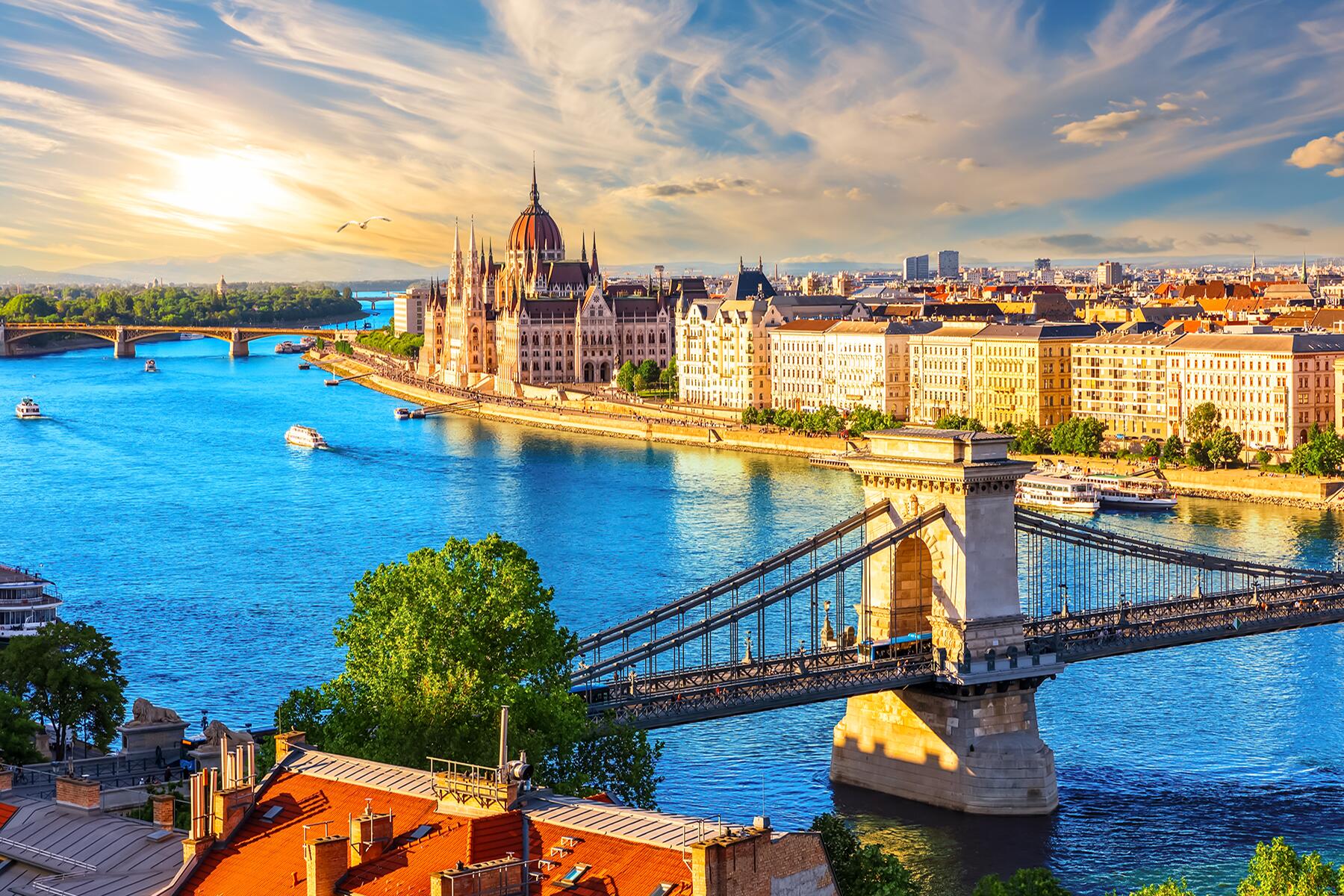
Start planning the trip where you come home with change to spare.Europe has a reputation for emptying wallets and, in fairness, a long weekend in Paris or Venice can do exactly that. But that reputation only holds if you keep going back to the same handful of cities. Step slightly off the well-worn track–or in some cases, just east and south of it–and you’ll find proper, full-sized cities where your money goes two or three times further without you giving up a single thing that makes a city trip worth taking. I’m not talking about sleepy towns where it’s cheap because there’s nothing to spend money on. These are big, loud, brilliant places with grand architecture, world-class food, layers of history you can walk through for free, and nightlife that runs till dawn. What makes them wallet-friendly is the good stuff: cheap eats that locals queue for (not tourist traps), walkable centers that keep your transport costs near zero, and a daily lunch deal culture that lets you eat like royalty without the price tags to match. Here are my ten favorites for stretching every dollar, as well as the budget tricks worth knowing and one affordable spot to eat or stay in each. Read on, and start planning the trip where you come home with change to spare. 1 OF 10 Budapest WHERE: Hungary Budapest is the perfect place to start: a grand city of Danube views, palatial thermal baths and ruin bars tucked into crumbling courtyards, where a brilliant trip asks little of your budget—a typical day runs around €35-65 ($39-74). Getting around is easy and cheap on an extensive tram, metro, and bus network, though the handsome center is walkable enough that you may not need it much. Plenty of the city’s best moments are free or close to it: strolling across the Chain Bridge, wandering Margaret Island, and watching the sun set over the river. The famous Széchenyi thermal baths, set inside a former palace, run about a €20 ($23) day pass—they’re well worth it if you arrive early in the day. And eating well is part of the everyday rhythm here: look for the weekday “napi menü”, a two or three-course daily lunch for roughly 2,000-3,500 HUF ($6-11) chalked outside small canteens, or join the locals at Belvárosi Disznótoros, a standing-room counter serving Hungarian sausages and grilled meats for a few euros. 2 OF 10 Kraków WHERE: Poland Kraków packs a remarkable amount into a small, walkable footprint, which is half the secret to doing it cheaply–the medieval Main Square, Wawel Castle and the atmospheric Kazimierz district are all within an easy stroll, so transport barely figures, and when you do need it, the trams are inexpensive and simple. Much of the pleasure here costs nothing: gazing at the Renaissance and Gothic architecture, climbing the Krakus Mound for views over the city, sitting out in the square watching the world go by. Budget accommodation is plentiful too, from stylish hostels to modest hotels that suit a short stay. And food stays refreshingly accessible thanks to the milk bar–the “bar mleczny”, a cafeteria-style institution kept affordable partly through government support so that everyone can sit down to a proper hot meal. Pierogies run about €3 ($3.40) a plate, and you’ll likely share a table, which is half the fun. Bar Mleczny Krakus over in Podgórze is the real thing; Milkbar Tomasza near the old town is the easy central choice. 3 OF 10 Sofia WHERE: Bulgaria Sofia layers 2,500 years of history into one walkable capital—Roman ruins underfoot, golden-domed cathedrals, leafy parks, and Vitosha Mountain rising right behind the city for a day’s hiking that costs nothing but the effort. Public transport is cheap and reliable, and many of the headline sights–the churches, the parks, the open squares–are free to enjoy. A tip-based walking tour is a lovely low-cost way to get your bearings, and Balkan Bites runs a free food tour that takes you round five or six local spots for tastings. One quick note: Bulgaria adopted the euro this year, so you’ll now be paying in euros, with a satisfying day sitting around €45 ($51). Bulgaria’s rich agriculture means real quality shows up at accessible prices: a flaky cheese banitsa makes a €1-2 ($1.14-2.28) breakfast, a bowl at the cheerful soup bar Supa Star is around €3 ($3.40), and a generous spread of traditional dishes at Manastirska Magernitsa, built on 19th-century monastery recipes, won’t stretch the budget much further. 4 OF 10 Bucharest WHERE: Romania Bucharest is a city wholly itself with grand boulevards, an enormous Palace of Parliament (around €7, or $8, to tour), and a 14th-century old town, so it’s an easy place to explore well without spending much. The metro is cheap and efficient (grab a rechargeable travel card), ride-hailing is inexpensive for anything further out, and the cobblestoned Lipscani quarter is best covered on foot anyway. The free pleasures add up fast: rowing a boat on the lake in King Michael I Park, wandering the botanical gardens, or losing an hour in Cărturești Carusel, one of the most beautiful bookshops in the world. A mid-range day comes in around €40-60 ($45-68), with a local beer or coffee as little as $3. The food scene prizes substance over polish, and the lunch-menu tradition keeps midday meals great value — at the spectacular 1879 beer hall Caru’ cu Bere, with its stained glass and vaulted ceilings, ask for the lunch menu (it isn’t offered by default) for a three-course meal that can land around $8. 5 OF 10 Athens WHERE: Greece Athens delivers world-class ancient history alongside some of the lowest day-to-day costs of any European capital. The metro is a flat €1.20 ($1.37) and reaches most of what you’ll want to see, while the historic core–Plaka, Monastiraki, the foot of the Acropolis–is wonderfully walkable. Several archaeological sites are free on certain days, and the city’s hilltop viewpoints, like Lycabettus and Filopappou, cost nothing for some of the best views in Greece. Island day trips are surprisingly affordable too: the ferry to Aegina and back makes a full day out for around €30 ($34). When hunger strikes, souvlaki is the everyday backbone of eating here–a warm pita of grilled meat, tomato, onion and tzatziki for €3-4 ($3.40-4.55)–and bakeries everywhere sell a sesame koulouri for under €1 or a cheese pie for a couple of euros. For the definitive wrap, Kostas just off Syntagma has been grilling pork souvlaki since 1950, around €3.50 ($4) a go; it’s lunch-only and sells out, so head there early. 6 OF 10 Belgrade WHERE: Serbia Belgrade is a city that knows how to linger: over coffee, over a long lunch, over a riverside evening that always drifts past midnight–and it’s an easygoing, accessible place to do it. The lively Knez Mihailova boulevard and the green ramparts of Kalemegdan Fortress are free to wander, the Tesla Museum is a modest few euros, and in summer the splavovi (clubs and bars moored on the Sava and Danube) keep the night going at gentle prices. Getting around is cheap on the city’s trams and buses, though the center is well worth walking. The kafana, the traditional tavern, is the heart of the social scene–a full meal of grilled meats, salads and bread with a drink or two runs between €10-15 ($11-17), and nobody rushes you off your table. The atmospheric kafanas of cobblestoned Skadarlija, like Tri Šešira (open since 1864), come with live Balkan music; for bigger portions and better value, a neighborhood spot a few tram stops out is the local move. Serbia uses the dinar, so carry some cash and skip the blue Euronet ATMs, which charge steep fees. 7 OF 10 Porto WHERE: Portugal Living just down the coast, I’ll always make the case for Porto: winding medieval lanes, blue-tiled facades, and sunsets over the Douro that, in my eyes, are priceless. The city is steep but very walkable, and an inexpensive metro and historic trams cover the longer hops, including out to the beaches at Foz. Some of the best of Porto is free or nearly so, like crossing the Dom Luís I bridge on foot or wandering the riverside Ribeira. Across the water in Vila Nova de Gaia, several of the port lodges run tastings that are a bargain for what you learn and sip. It all runs on a warm, working tasca culture that keeps everyday eating good value, anchored by the “prato do dia,” a Monday-to-Friday lunch special of a main, often a starter, a drink and sometimes dessert for €8-15 ($9-17). Casa Guedes does a roast-pork-and-Serra-cheese sandwich for under €5, while Café Santiago serves a definitive francesinha, the city’s gloriously excessive signature sandwich, for around €10. 8 OF 10 Valencia WHERE: Spain Valencia brings together Mediterranean beaches, a beautiful old town and futuristic architecture at a gentler pace (and matching gentler prices) than the bigger-name Spanish cities up the coast. Its masterstroke for budget travelers is the Turia, a former riverbed turned into a 9-kilometer ribbon of free park that loops through the city, perfect for a low-cost day of walking or cycling. One thing to note: while the Valenbisi bike-share looks cheap, its frustrating return system means you’ll get a better deal renting a bike from one of the many shops around the city. The beaches at Malvarrosa and Patacona are free, and the beautiful 1920s Mercado Central is free to wander–build a picnic of jamón, Manchego, bread and Valencian oranges there for about €12 ($13) for two and eat it under the palms. Lunch is where the value really lands: the menú del día, a three-course set meal with a drink for €12-15 ($13-17), is the everyday meal that feeds the working city. Inside the market, Central Bar by Ricard Camarena turns a Michelin-starred chef’s cooking into relaxed, well-priced bar food. 9 OF 10 Vilnius WHERE: Lithuania Vilnius is the most affordable of the three Baltic capitals and one of the most underappreciated cities on this list–a baroque, cobblestoned old town dating to the 14th century, compact enough to explore almost entirely on foot. And so much of its charm is free: getting lost in the old town, climbing the Hill of Three Crosses for the view, or crossing the river into Užupis, a bohemian artists’ district that playfully declared itself a republic and posted its own constitution on a wall for anyone to read. When you do need transport, it’s cheap and straightforward. The “dienos pietūs” lunch deal, a hearty midday plate for €7-12 ($8-13), sits at the center of Lithuanian dining culture–and hearty is the word, with two cepelinai (pork-stuffed potato dumplings under sour cream and bacon) enough for a meal. Šnekutis, a rustic, unpretentious tavern, is where locals gather over cepelinai and a pint of local beer; for a quick bite, grab a kibinai (a flaky meat pastry) from, well, any bakery you stroll past. 10 OF 10 Naples WHERE: Italy Naples is one of the most exhilarating cities in Italy–dense and endlessly alive, built over 2,500 years of layered history–and one of its most affordable, with a budget day coming in around €40-70 ($45-79). The dense, historic core is a free-to-walk UNESCO site, and the savings are everywhere: more than 400 churches double as free museums, the Spanish Quarters (home to the giant Maradona murals) cost nothing to explore, and a €1.20 funicular carries you up to one of the best views in the Mediterranean. Day trips are kind to the wallet too–Pompeii is reachable on the Circumvesuviana train for under €4 each way. And because this is the birthplace of pizza, the city’s most famous food is also its cheapest: a margherita at a legendary pizzeria runs €5-6, an espresso taken standing at the bar is €1, and a “pizza a portafoglio” folded into a wallet shape to eat on the move is about €3. The institution to seek out is L’Antica Pizzeria da Michele, going since 1870 and serving just two pizzas; take a ticket, bring cash, and go at lunch to skip the queue.
The 10 Most Budget-Friendly Big Cities in Europe
Full Article
Original Source
Read the full article at Fodors →KhanList aggregates and links to publicly available news content. We do not host full articles from third-party sources. Always verify important information with original sources.