
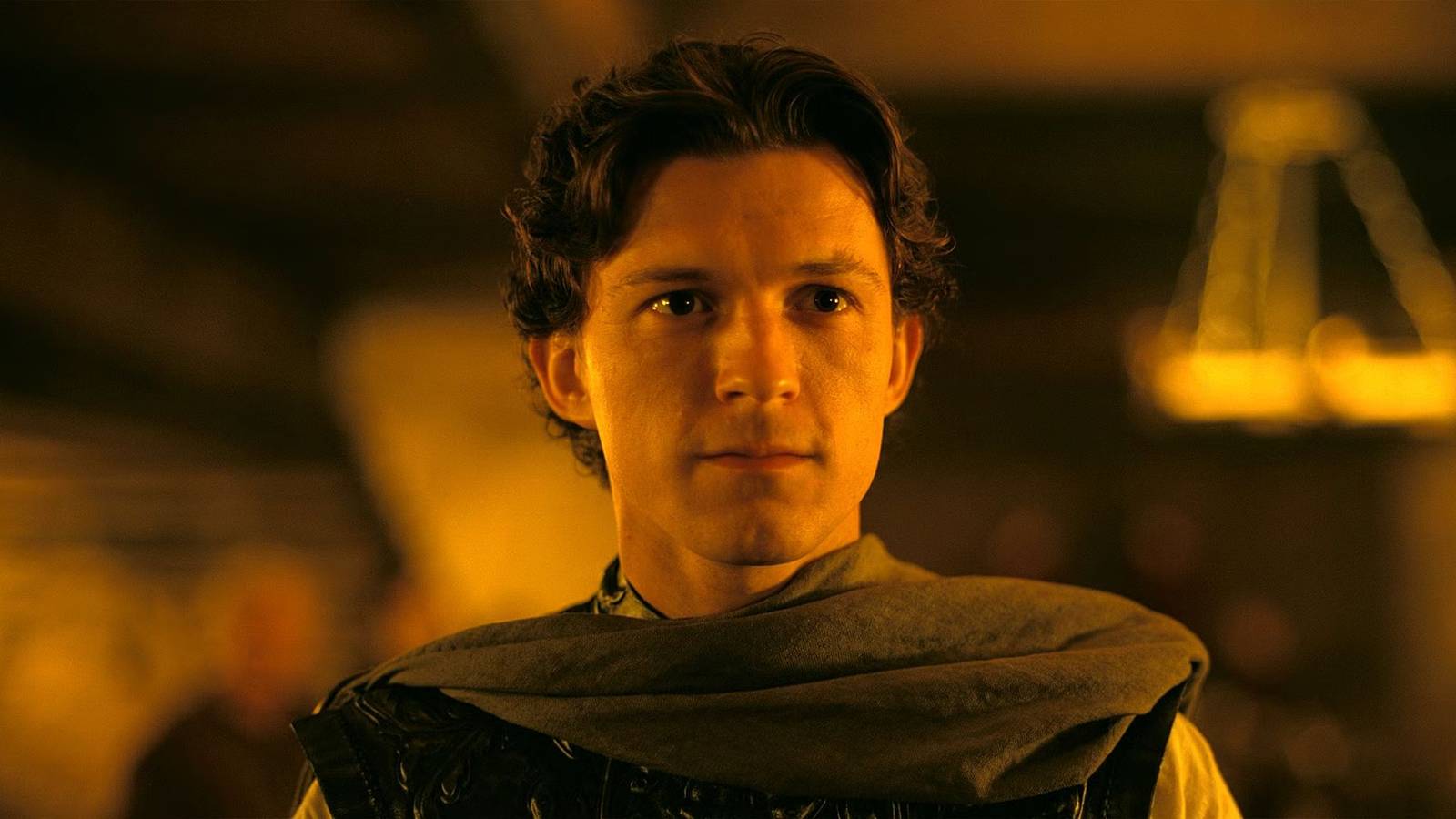
Image via Universal Pictures Published Oct 13, 2026, 7:51 AM EDT William likes watching movies and writing about those movies. Anything else is minutae. Sign in to your Collider account Sword-and-sandal epics are a special subgenre. Though the term originated to describe the Italian peplum films made in the '50s and '60s, it's been more generally applied to any of the epic films set in ancient times that often have an emphasis on bloody battle. They can be biblical, historical or even mythological, which means the line drawn between them and sword-and-sorcery movies can be as hard to define as those drawn in the sands of their battle scenes. The best of these movies come from all different eras of filmmaking, from silent classics to modern blockbusters. Their popularity has ebbed and flowed with the trends of Hollywood, and their productions are such massive undertakings that they aren't as easy for any studio to capitalize on. This makes them all the more special, and since they're having another moment in the sun thanks to Christopher Nolan's epic adaptation of The Odyssey, it's the perfect time to count down the ten greatest sword-and-sandal epics. 10 'Hercules' (1958) Image via Public Domain It's only proper to begin with a classic Italian peplum. Though they may have faded in popularity more so than the Spaghetti Westerns that succeeded them as the most prevalent Italian productions, they're integral to the spread of the subgenre. The most well-known of these are the adaptations of the legend of Hercules starring Steve Reeves as the titular mythological hero. Both the original film and its sequel, Hercules Unchained, aren't exactly peerless classics, with both having featured in episodes of Mystery Science Theater 3000, but there's an admirable ambition to them, and they certainly aren't boring. Though the film is centered around the hero of Hercules, its plot is taken from the legend of the Golden Fleece. Reeves was a professional bodybuilder, having competed and won in both the Mr. America and Mr. Universe competitions, so he makes for a suitably mythologically muscular hero. It's not a role or a film that requires a lot of depth, but Reeves is still more closely associated with the role than those who came after him, like Lou Ferrigno, Dwayne Johnson, and even Arnold Schwarzenegger. 9 'Jason and the Argonauts' (1963) Image via Columbia Pictures A more direct, if not more accurate, adaptation of the voyage to retrieve the Golden Fleece, Jason and the Argonauts is best known for its iconic stop-motion effects by the legendary Ray Harryhausen. From a giant bronze statue coming to life to a seven-headed hydra to the classic skeletons, every moment of the film featuring Harryhausen's effects is indelible, and the film that's hung around them is a colorful, unpretentious classic. Starring Todd Armstrong as Jason, the film runs through the bullet points of the epic Greek poem Argonautica, propelled by its action scenes, Harryhausen's effects, and Bernard Hermann's score. Much like The 7th Voyage of Sinbad, which also featured Harryhausen's effects and a score by Hermann, Jason and the Argonauts has become a massively influential fantasy adventure movie. Dozens of films have paid homage to it, and it clearly left an impression on filmmakers like Christopher Nolan, Peter Jackson, and Steven Spielberg. 8 'Quo Vadis' (1951) Image via MGM A proper epic, Quo Vadis features all the hallmarks of the classic Hollywood spectacles. It was filmed at Cinecittà Studios and was the most expensive film ever made at the time until it was overtaken by later biblical epics like The Ten Commandments. Like many of the epics produced during the same time, the money is all on screen, with thousands of extras and an all-star cast filling out its depiction of Ancient Rome. Based on the novel by Henryk Sienkiewicz, which had been adapted twice before, the film is a condensed and fictionalized account of the waning days of the reign of Roman emperor Nero (Peter Ustinov), focusing specifically on the persecution of Christians told through the eyes of war hero Marcus Vinicius (Robert Taylor). The film was a resounding box office hit and was nominated for multiple Academy Awards, although it failed to win any. Quo Vadis hasn't held the same legacy as other epics from the same era, but it has an undeniable grandeur that justifies its presence here. 7 'Cabiria' (1914) Image via Itala Film An Italian production and silent-era epic, Cabiria is best known as a marker in cinematic history. It was the first film to heavily feature tracking shots, introducing a level of movement that hadn't been seen in cinema before, and is considered by some to be the first true epic. The film was the first to be screened on the White House lawn and was given a restoration in the early 2000s but remains more obscure in comparison to other silent epics. As the humble beginning of the sword-and-sandals, Cabiria still manages to inspire awe with its ambitious scope. Beginning with the eruption of Mount Etna, the film proceeds episodically through a number of historical events, including Hannibal crossing the Alps and the siege of Syracuse. The narrative is anchored around the titular character, an eight-year-old girl who becomes separated from her family during the opening disaster and is later abducted. It features a number of sequences that stick in the memory, particularly one where children are sacrificed at the Temple of Moloch. Cabiria is the solid foundation for all sword-and-sandal epics that followed. 6 'Julius Caesar' (1953) Image via Metro-Goldwyn-Mayer Joseph L. Mankiewicz's adaptation of the William Shakespeare play Julius Caesar is a sword-and-sandal epic by way of political tragedy, offering a more intimate portrait of its characters within its grand theatrical design. The film is best known for the quality of its cast, featuring Marlon Brando as Mark Antony, James Mason as Brutus, John Gielgud as Cassius, and Louis Calhern in the titular role. Shot in black-and-white and dense with dialogue, the film has been lauded by some as one of the most successful adaptations of Shakespeare, maintaining the integrity of the characters and verse without bastardization for Hollywood audiences. The film follows the plot of the play with relative accuracy, but expands it visually, though it's hardly on the level of many other epics made in the same time period. The Shakespearean language is maintained, though, and while the events depicted have been adapted to film and television in more full-blooded ways, there's an epic kind of power in relying on the language itself. Julius Caesar is essential for Shakespeare film fans, and it holds a strong position in the history of sword-and-sandal epics. 5 'Gladiator' (2000) Image via DreamWorks Distribution Of all the sword-and-sandal films made in the 21st century, Ridley Scott's Gladiator looms largest. The success of the film, along with The Lord of the Rings the following year, kicked off a small renaissance of epic films in the 2000s, which included the likes of Troy and later 300, but few reached the same level. The film is complete fiction, even though it does incorporate many historical figures, but it succeeds as a piece of pure popcorn entertainment thanks to Scott's visceral direction of its many battle scenes, its truly epic scale accomplished in an earlier era of CGI expansion, and especially the performances. Russell Crowe gives a commanding lead performance as Maximus, a Roman general sold into the slave trade after the murder of his wife and son for refusing to swear loyalty to Joaquin Phoenix's Commodus. The role, for which Crowe won his only Academy Award, was his official ascendance to leading star status after incredible turns in L.A. Confidential and The Insider.Gladiator is overall an uneven experience but still staggering in comparison to what these kinds of films often look like now, including the ill-advised sequel. Collider Exclusive · Oscar Best Picture Quiz Which Oscar Best PictureIs Your Perfect Movie? Parasite · Everything Everywhere · Oppenheimer · Birdman · No Country Five Oscar Best Picture winners. Five completely different visions of what cinema can be — and what it can do to you. One of them is the film that was made for the way your mind works. Ten questions will figure out which one. 🪜Parasite 🌀Everything Everywhere ☢️Oppenheimer 🐦Birdman 🪙No Country for Old Men FIND YOUR FILM → 01 What kind of film experience do you actually want? The best movies don't just entertain — they leave something behind. ASomething that pulls the rug out — that makes me think I'm watching one kind of film and then reveals I'm watching another entirely. BSomething overwhelming — funny, sad, absurd, and genuinely moving, all at once. CSomething grand and weighty — a film that makes me feel the full scale of what I'm watching. DSomething formally daring — a film that pushes what cinema can even do. ESomething lean and relentless — pure tension with no wasted frame. NEXT QUESTION → 02 Which idea grabs you most in a film? Great films are driven by a central obsession. What's yours? AClass, inequality, and what people are willing to do when desperation meets opportunity. BIdentity, family, and the chaos of trying to hold your life together when everything is falling apart. CGenius, moral responsibility, and the catastrophic weight of a decision you can never take back. DEgo, legacy, and the terror of becoming irrelevant while you're still alive to watch it happen. EEvil, chance, and whether moral order actually exists or if we just tell ourselves it does. NEXT QUESTION → 03 How do you like your story told? Form is content. The way a story is shaped changes what it means. AGenre-twisting — I want it to start in one lane and migrate into something completely different. BMaximalist and genre-blending — comedy, action, drama, sci-fi, all in one ride. CEpic and non-linear — cutting between timelines, building a mosaic of cause and consequence. DA single unbroken flow — I want to feel like I'm living it in real time, no cuts to safety. ESpare and precise — every scene doing exactly what it needs to do and nothing more. NEXT QUESTION → 04 What makes a truly great antagonist? The opposition defines the protagonist. What kind of opposition fascinates you? AA system — invisible, structural, and almost impossible to fight because it has no single face. BThe self — the ways we sabotage, abandon, and fail the people we love most. CHistory — the unstoppable momentum of events that no single person can stop or redirect. DThe industry — the machinery of culture that chews up talent and spits out irrelevance. EPure, implacable evil — a force so certain of itself it becomes almost philosophical. NEXT QUESTION → 05 What do you want from a film's ending? The final note is the one that lingers. What do you want it to sound like? AShock and inevitability — a conclusion that recontextualises everything that came before it. BEarned emotion — I want to cry, laugh, and feel genuinely hopeful, even if the world is a mess. CDevastation and grandeur — an ending that makes me sit in silence for a few minutes after. DAmbiguity — something that leaves enough open that I'm still thinking about it days later. EBleakness — an honest refusal to pretend the world is tidier than it actually is. NEXT QUESTION → 06 Which setting pulls you in most? Where a film takes place shapes everything — mood, stakes, what's even possible. AA gleaming modern city with a hidden underside — beauty masking rot, wealth masking desperation. BA collapsing suburban life that opens onto something infinite — the multiverse of a single ordinary person. CThe corridors of power and science at a world-historical turning point — where decisions echo for decades. DThe grimy, alive chaos of New York and Hollywood — fame as both destination and trap. EVast, indifferent landscape — desert and highway where violence arrives without warning or reason. NEXT QUESTION → 07 What cinematic craft impresses you most? Every great film has a signature — a technical or artistic element that makes it unmistakable. AProduction design and mise-en-scène — every frame composed to carry meaning beneath the surface. BEditing and tonal control — the ability to move between registers without losing the audience. CScore and sound design — music that becomes inseparable from the dread and awe of what you're watching. DCinematography as performance — the camera not recording events but participating in them. ESilence and restraint — what's left unsaid and unshown doing more work than any dialogue could. NEXT QUESTION → 08 What kind of main character do you root for? The protagonist is the lens. Who you choose to follow says something about you. ASomeone smart and resourceful who makes increasingly dangerous decisions under pressure. BSomeone overwhelmed and ordinary who turns out to be capable of something extraordinary. CA brilliant, tortured figure whose gifts and flaws are inseparable from each other. DA self-destructive artist whose ego is both their superpower and their undoing. EA quiet, principled person trying to make sense of a world that has stopped making sense. NEXT QUESTION → 09 How do you feel about a film that takes its time? Pace is a choice. Some films sprint; others let tension accumulate slowly, deliberately. AI love a slow build when I know the payoff is going to be seismic — patience for a devastating reveal. BGive me relentless momentum — I want to feel breathless and emotionally spent by the end. CEpic runtime doesn't scare me — if the material demands three hours, give me three hours. DI want it to feel propulsive even when nothing is technically happening — restless energy throughout. EDeliberate and unhurried — I want dread to accumulate in the spaces between the action. NEXT QUESTION → 10 What do you want to feel walking out of the cinema? The best films leave a mark. What kind of mark do you want? AUnsettled — like I've just seen something I can't fully explain but can't stop thinking about. BMoved and energised — like the film reminded me what actually matters and gave me something to hold onto. CHumbled — like I've been in the presence of something genuinely important and overwhelming. DExhilarated — like I've just seen cinema doing something it's never quite done before. EHaunted — like a cold, quiet dread that stays with me for days. REVEAL MY FILM → The Academy Has Decided Your Perfect Film Is…Your answers have pointed to one Oscar Best Picture winner above all others. This is the film that was made for the way your mind works. ParasiteYou are drawn to films that operate on multiple levels simultaneously — that begin in one genre and quietly, brilliantly migrate into another. Bong Joon-ho's Parasite is a film about class, desire, and the architecture of inequality that manages to be darkly funny, deeply suspenseful, and genuinely shocking across a single extraordinary running time. Your instinct is for cinema that hides its true intentions until the moment it's ready to reveal them. Parasite is exactly that — a film that rewards close attention and punishes assumptions, right up to its devastating final image. Everything Everywhere All at OnceYou want it all — and this film gives you all of it. The Daniels' Everything Everywhere All at Once is one of the most maximalist films ever made: action comedy, multiverse sci-fi, family drama, existential crisis, and a genuinely earned emotional core that sneaks up on you amid the chaos. You are someone who responds to ambition, who doesn't want cinema to choose between being entertaining and being meaningful. This film refuses that choice entirely. It is overwhelming by design, and its overwhelming nature is precisely the point — because the feeling of being crushed by infinite possibility is exactly what it's about. OppenheimerYou are drawn to cinema on a grand scale — films that understand history not as a backdrop but as a force, and that place their characters inside that force and watch what happens. Christopher Nolan's Oppenheimer is a film about the terrifying gap between what we can do and what we should do, told with the full weight of one of the most consequential moments in human history behind it. You want your films to feel important without feeling self-important — to earn their ambition through sheer craft and the gravity of their subject. Oppenheimer does exactly that. It is enormous, complicated, and refuses easy comfort. BirdmanYou are drawn to films that foreground their own construction — that make the how of the filmmaking part of the what it's about. Alejandro González Iñárritu's Birdman, shot to appear as a single continuous take, is cinema examining itself through the cracked mirror of a fading actor's ego. You respond to formal daring, to the feeling that a film is doing something that probably shouldn't be possible. Michael Keaton's performance and Emmanuel Lubezki's restless camera create something genuinely unlike anything else — a film that is simultaneously about creativity, relevance, self-destruction, and the impossibility of ever truly knowing if your work means anything at all. No Country for Old MenYou are drawn to cinema that trusts silence, that refuses to explain itself, and that treats dread as a form of meaning. The Coen Brothers' No Country for Old Men is a film about the arrival of a new kind of evil — implacable, arbitrary, and utterly indifferent to the moral frameworks we use to make sense of the world. It is one of the most formally controlled films ever made, and its controlled restraint is what makes it so terrifying. You want your films to haunt you, not comfort you. You are not interested in resolution if resolution would be dishonest. No Country for Old Men is honest in a way that most cinema never dares to be. ↻ RETAKE THE QUIZ 4 'Kingdom of Heaven' (2005) Image via 20th Century Studios The true epic masterpiece of Ridley Scott's career, Kingdom of Heaven was originally met with negative critical reviews when it was first released in a heavily truncated version in theaters. The far superior director's cut offers much greater depth in its characters and the political machinations behind its epic battles. Set against the backdrop of the Third Crusade, the film is about as historically accurate as any sword-and-sandals movie, applying a post-9/11 lens to its Middle Ages conflict, but it's a thematically rich and visually arresting epic. Orlando Bloom plays the historical figure Balian of Ibelin, and the film chronicles his journey to Jerusalem and his defense during the infamous siege. Included in this story are also subplots involving King Baldwin (Edward Norton) behind a mask concealing the character's leprosy, his sister Sibylla (Eva Green), and her duplicitous husband. The director's cut gives all of these characters room to breathe and more context; all that's really missing is a more dynamic lead character. Bloom is serviceable in the lead role but lacks the command of an actor like Crowe in Gladiator. And yet, Kingdom of Heaven is an astonishing epic. 3 'The Odyssey' (2026) Image via Universal Pictures Swords and sandals made a big comeback this year thanks to Christopher Nolan, who is one of the few remaining directors with enough clout in Hollywood to get the backing of a studio to make a film of this size. He also carries enough clout with audiences that The Odyssey became the highest-grossing film of 2026 (so far), which is impressive considering the average moviegoer probably hasn't thought about the Homeric epic poem since high school. The film has become a flashpoint for online arguments between critics, film bros, academics and even conservative pundits, but beyond all that noise, it's still a massively entertaining epic. Matt Damon leads an all-star cast as Odysseus, the hero of the Trojan War whose journey back home to his family in Ithaca takes a decade-long detour. The film's most fantastic sequences, from the infamous cyclops to the body-horror transformations from a scene-stealing Samantha Morton as Circe, are all made tangible and visceral through the devotion to practical effects, and the grander scale elements are equally immaculate. The Odyssey is an epic modern elevation of the classic sword-and-sandal template. 2 'Spartacus' (1960) Image via Universal Studios One of the greatest epic films ever made, Spartacus was the passion project of star Kirk Douglas, who had failed to earn the lead role in Ben-Hur, and brought in director Stanley Kubrick, whom he had collaborated with on Paths of Glory. Despite that disjointed process, and the fact that Kubrick did not have full creative control over the project, the finished film is an astounding spectacle that still holds up decades later. Douglas plays the titular character, a slave turned gladiator turned leader of the rebellion against Rome and its rulers. The action is all stellar, with the battle sequences shot on location in Spain, and the cast is unsurprisingly incredible. The film was also crucial in bringing back blacklisted writer Dalton Trumbo, and his script for the film is infused with political commentary. Spartacus was the highest-grossing film of 1960 and was nominated for multiple Academy Awards, and while it's often been regarded as a minor film in Kubrick's filmography, it proves the director could handle spectacle just as well as any other director of epics. 1 'Ben-Hur' (1959) Image via MGM The sword-and-sandal epic to end all others, Ben-Hur is a massive film in every sense of the word, and it hasn't been topped in almost seventy years. William Wyler's epic adaptation of the Lew Wallace novel about a Jewish prince turned slave includes all the classic elements of biblical and historical epics, and it culminates with one of the grandest set pieces of all time with its iconic chariot race. Ben-Hur is the ideal which all other sword-and-sandal epics reach for, but rarely touch. It's a pillar of the epic genre. Charlton Heston gives an Oscar-winning performance as the titular character, whose betrayal at the hands of a Roman friend leads him down a path of vengeance that also intersects with pivotal moments in the life of Jesus Christ. It's a vibrant film of spectacle and human drama, vividly captured in a widescreen format, and Wyler fills every frame with motion and detail. Shot primarily by second unit directors Andrew Marton and Yakima Canutt, with legendary director Sergio Leone serving as an assistant director, the chariot race is a staggering piece of filmmaking that encapsulates the greatest elements of the subgenre in the greatest scene of the greatest sword-and-sandal epic ever made. Ben-Hur Release Date November 18, 1959 Cast Charlton Heston, Stephen Boyd, Hugh Griffith, Jack Hawkins, Haya Harareet Runtime 222 Minutes Director William Wyler Writers Karl Tunberg
The 10 Greatest Sword-and-Sandal Epics of All Time, Ranked
Full Article
Original Source
Read the full article at Collider →KhanList aggregates and links to publicly available news content. We do not host full articles from third-party sources. Always verify important information with original sources.