
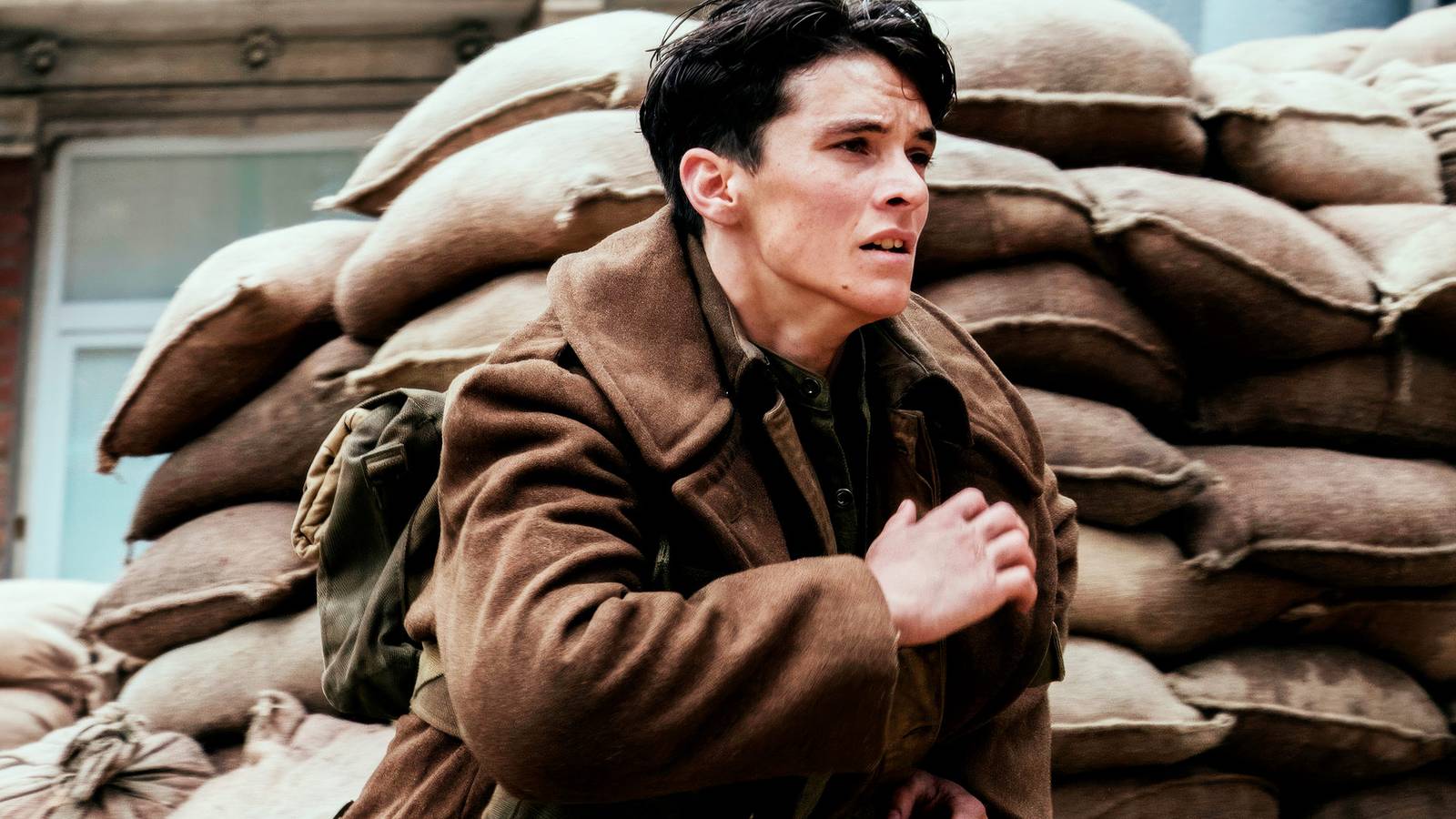
War is one of those horrific things that should never have to occur in reality but which makes for undeniably compelling films — put it right up there with serial killers and the apocalypse. There's no denying that the violence and destructive nature of war can make for visceral and technically impressive viewing, whether the films want to grapple with the psychological and political implications of it or not. War is hell, but war movies are monuments of filmmaking. War movies can come in many different forms. Some can be tense thrillers set in the clandestine world that underlies international conflict, and others are intimate dramas that examine the emotional toll that war takes on soldiers and their loved ones. Then there are the epics, the grandiose films that try to capture the true immensity of armed conflict and combat through massive set pieces or large-scale storytelling. There's nothing on the level of a war epic, and they've been an integral part of film history for at least the last 100 years. These are the greatest epic war movies of the last century. 10 'Kingdom of Heaven' (2005) Image via 20th Century Studios Ridley Scott knows scope and spectacle. His career is littered with epics like the sword-and-sandal Oscar-winner Gladiator, gritty war dramas like Black Hawk Down, and medieval thrillers like The Last Duel. For better and worse, the director has tackled many different eras of history and the conflicts that defined them. In his greatest war epic, Kingdom of Heaven, Scott took on the Crusades with an astounding scale, if not anything approaching historical accuracy. It's big bloody epic entertainment that few directors still working are capable of accomplishing. Set in the time of the Third Crusade, the film follows Balian of Ebelin (Orlando Bloom), who goes from a disillusioned blacksmith struggling with his faith to the defender of the Kingdom of Jerusalem during its three-day siege. The film covers a lot of ground both geographically and historically, but Scott approaches it more like mythology and entertainment than as a factual representation, and contextualizes it through a more modern political lens. Although notoriously released in a heavily edited version that critics and audiences detested, the much more acclaimed director's cut is an essential war epic. 9 'Napoléon' (1927) Image via Gaumont Scott is also one of several filmmakers to tackle the notorious Napoleon Bonaparte on film, but his rendition of the character pales in comparison to the totemic silent film Napoléon directed by Abel Gance. An influential epic that used a variety of cinematic techniques in its visuals and editing when most of its contemporaries were far more static affairs, what Gance accomplished with Napoleon is still breathtaking to behold. An early widescreen technique called Polyvision was also developed solely for the film, predating similar techniques like Cinerama by decades, but which was lost for years until the film received a proper restoration. Chronicling the early years of Napoleon's life and his rise in the military, various edits of the film have been shown over the years, with the shortest running just under two hours and the longest over nine. It's a staggering and overwhelming war epic to consume, and even if some of its performances and dramatic elements are crude by today's standards, they are outweighed by its technical achievements and the cinematic experience of it. 8 'Red Cliff' (2008) Image via Magnet Releasing While John Woo will always be best known to Western audiences for his modern bullet-riddled action movies, from his Hong Kong Heroic Bloodshed efforts like Hard Boiled to his Hollywood blockbusters like Face/Off, he staged a major cinematic comeback with his epic historical war film Red Cliff. Based on the historical battle that occurred near the end of the Han dynasty in 3rd-century China, the film was Woo's triumphant return to Asian cinema after years of diminishing returns in Hollywood. It reinvigorated him as a filmmaker and reaffirmed to audiences his unparalleled skill at directing action. In the waning years of the Han dynasty, the warlord Cao Cao (Zhang Fengyi) declares war through the Emperor on the southern lords in order to consolidate and maintain power. Bloody battles ensue, with the film focused through the perspectives of strategist Zhuge Liang (Takeshi Kaneshiro) and general Zhou Yu (Tony Leung). Historically speaking, the events aren't important, since Woo's emphasis is on the spectacle and the human drama, taking inspiration from the novel Romance of the Three Kingdoms. 7 'War and Peace' (1965-1967) Image via Mosfilm Leo Tolstoy's totemic epic novel War and Peace has inspired several adaptations on film and television, including the notorious Hollywood version directed by King Vidor and starring Henry Fonda and Audrey Hepburn. While that film may be technically impressive in many respects, its scale and fidelity to Tolstoy's novel are both eclipsed by Sergei Bondarchuk's staggering Soviet epic. Produced in four parts and released over two years, Bondarchuk's film is the definitive adaptation and so monumental that it seems impossible to ever repeat or improve upon in terms of sheer size. Set during the Napoleonic Wars, the film dramatizes Tolstoy's fictional narrative of the intersecting relationships of several Russian families amid the political turmoil and devastating conflict. Sweeping, romantic, and utterly epic in every way, Bondarchuk's film has been held up as the ideal of Soviet cinema, and was embraced and acclaimed worldwide. It became one of the longest films to ever win an Academy Award. War and Peace is everything and more in an epic fashion. 6 'Saving Private Ryan' (1998) Image via DreamWorks Pictures In terms of pure filmmaking spectacle, it's hard to beat Steven Spielberg. The director is a showman of the highest order. That doesn't mean he can't use his filmmaking powers to craft something with deeper substance beyond wonder and sentimentality. Some of his greatest are those that examine the darker side of human nature, like Munich and Schindler's List. His war epic, Saving Private Ryan, is perhaps the perfect synthesis of his sensibilities, offering a moving portrait of heroism and duty that's more effective because of the harrowing violence of its combat sequences. Following a squad of soldiers sent on a special mission to save one man whose brothers were all killed in combat, the movie began development as a WWII adventure story in the vein of Where Eagles Dare before Spielberg turned it into a more honest depiction of the violence. War films had been gritty and violent long before Saving Private Ryan, but Spielberg completely redefined how combat should be captured on camera. Almost every modern war film made since owes a debt to this epic. 5 'Dunkirk' (2017) Image via Warner Bros. Pictures For the last decade and a half, director Christopher Nolan has exclusively worked on epics. Superhero epics, sci-fi epics, Greek epics. His greatest epic in that time is his intense war film Dunkirk. Like Saving Private Ryan, Nolan wanted to put an emphasis on the experience of war and to immerse the audience in it. That's accomplished in the film with minimal dialogue, an emphasis on practical effects, tightly constructed editing, and percussive sound design. Dunkirk is one of the most technically precise and impressive war movies ever made. As its title suggests, the film dramatizes the Dunkirk evacuation of over 300,000 Allied soldiers during WWII. While the film features several recognizable stars, such as Tom Hardy, Kenneth Branagh and Harry Styles, they all serve as part of the larger ensemble to focus on the collective efforts it took to pull off what was hailed as a miracle. For all his faults as a filmmaker, Nolan has always known how to deliver spectacle on the largest scale possible, and in Dunkirk he delivers it in service of astounding history. It's what makes it the greatest war epic of the 21st century. 4 'Das Boot' (1981) Image via Neue Constantin Film Like Spielberg and Nolan, Wolfgang Petersen was no stranger to large-scale films. His tenure in Hollywood was marked by disaster films like The Perfect Storm, action blockbusters like Air Force One and mythological epics like Troy. His name on a film almost guaranteed a certain level of spectacle, but his greatest epic is also, ironically, his most contained. Das Boot is a sprawling war drama following the crew of a German U-boat during WWII that combines tense action sequences with intimate character dynamics. Based on the autobiographical novel of the same name by Lothar-Günther Buchheim, the film depicts the experiences of the men on the submarine U-96 as they head into service. The crew is a nuanced group, representing many different men of varying ideologies who are bonded only by their loyalty to each other and their cynical Captain (Jürgen Prochnow). Das Boot minutely details not only the thrill and danger of combat, but also the tedium of life onboard the boat. It's the ultimate submarine movie and a masterpiece of German cinema. 3 'Come and See' (1985) Image via Sovexportfilm For all the spectacle and intensity crafted by filmmakers like Spielberg, Nolan, and Petersen, the war film that truly communicates the utter dehumanizing brutality of war is Elem Klimov's Soviet masterpiece Come and See. It's a surreal, nightmarish vision of the horrors of war through the eyes of an innocent, and it leaves a deep impression. It was Klimov's final film as a director after he lost interest in it and felt there was nothing else left for him to explore. Flyora (Aleksei Kravchenko) is a Belarusian teen boy who is conscripted into the Soviet resistance and witnesses unspeakable atrocities committed by the occupying Nazis. The film wallows in the ugliness of war as a plea for peace, and it's hard not to be moved by its violence and startling imagery. Come and See is neither exciting, thrilling, nor inspiring; it's a corrosive film where war is the ultimate hell, certainly leaving nothing of the darkest corners of humanity. 2 'Ran' (1985) Image via Toho From one of the ugliest war epics to one of the most objectively beautiful. Akira Kurosawa's Ran was released the same year as Come and See and was the legendary director's final epic. Inspired equally by Japanese legends and William Shakespeare's King Lear, the film was a massive production that is often considered the director's last true masterpiece. Most notable is the film's vivid and bold use of color, which is used to delineate characters and evoke emotions. Kurosawa painted the storyboards for the film himself, and Ran is easily the most visually arresting war movie ever made. Hidetora (Tatsuya Nakadai) is an aging warlord who decides to cede his power to his three sons, which results in violent betrayal and war between them all, leaving Hidetora to wander the countryside as his mind begins to fail him. Ran is Kurosawa's ultimate epic; the culmination of one of the most impressive filmmaking careers of all time. It's a singular war epic of an unparalleled beauty that belies its dark narrative of greed, hubris, and retribution and the chaos they wreak. 1 'Lawrence of Arabia' (1962) Image via Columbia Pictures As a director, David Lean has been one of the most major influences on modern cinema, and while his epics occupy but a small section of his total filmography, their impact has been massive. The Bridge on the River Kwai and Doctor Zhivago alone would qualify Lean as a quintessential director of epics, but Lawrence of Arabia places him at the apex. The World War I drama, which was based on the life and memoirs of T.E. Lawrence, is the epitome of the epic genre. Following Lawrence (Peter O'Toole) during his time in the British Army, where he served as part of the Arab Revolt against the Ottoman Empire, the film charts his rise through battles and alliances and fall into psychological torment and disillusionment. Beautifully composed on Super Panavision by cinematographer Freddie Young, Lawrence of Arabia is an epic meant to be experienced on the largest scale possible, a paragon of epic filmmaking, the greatest epic war film of the last 100 years, and likely the next 100 as well. Lawrence of Arabia Release Date December 11, 1962 Cast Alec Guinness, Omar Sharif, Peter O'Toole, Jack Hawkins, Anthony Quinn Runtime 228 minutes Director David Lean Writers Robert Bolt, Michael Wilson
The 10 Greatest Epic War Movies of the Last 100 Years, Ranked
Full Article
Original Source
Read the full article at Collider →KhanList aggregates and links to publicly available news content. We do not host full articles from third-party sources. Always verify important information with original sources.