
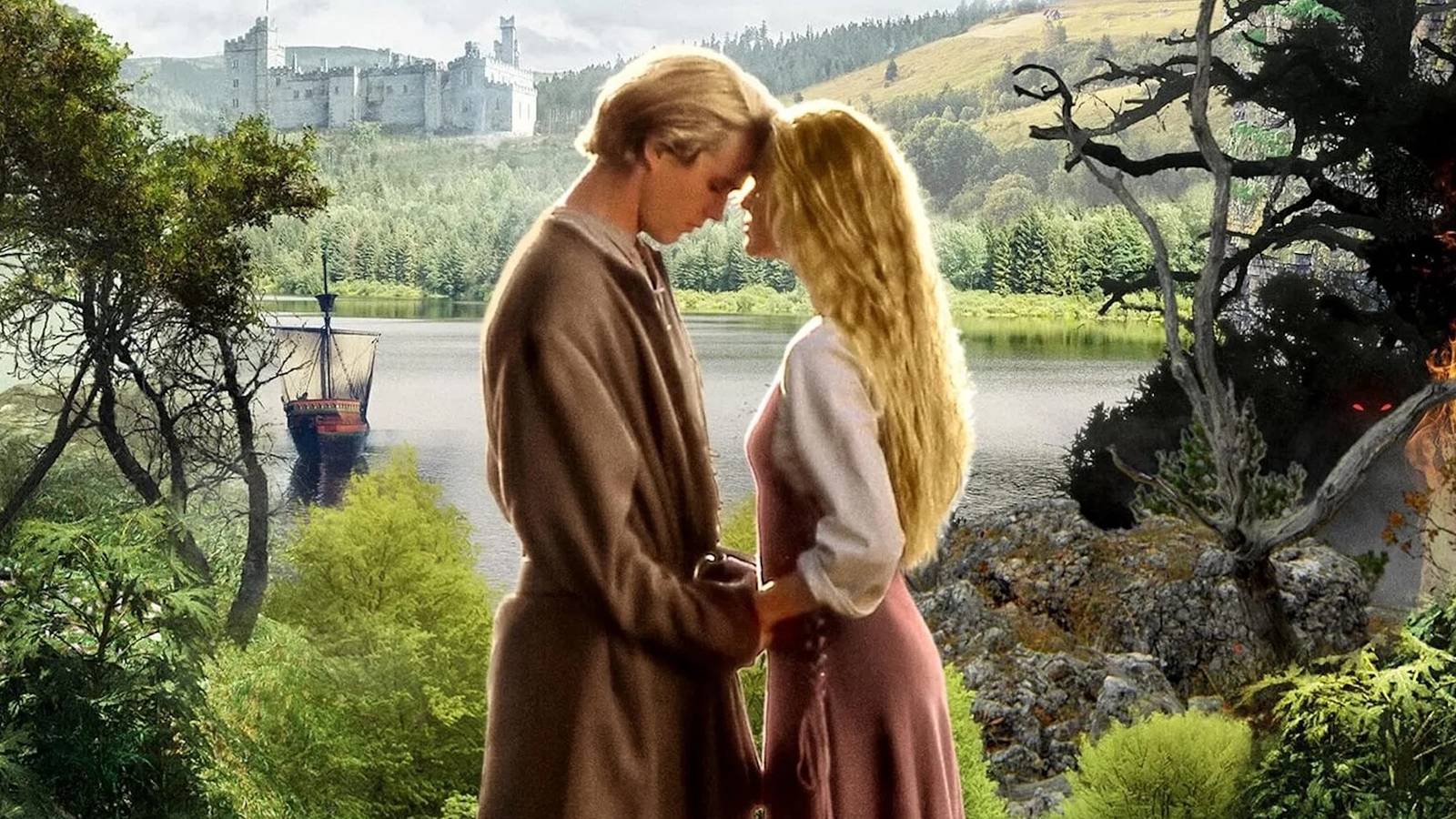
Image via 20th Century Studios Published Aug 13, 2026, 7:12 PM EDT Luc Haasbroek is a writer and videographer from Durban, South Africa. He has been writing professionally about pop culture for eight years. Luc's areas of interest are broad: he's just as passionate about psychology and history as he is about movies and TV. He's especially drawn to the places where these topics overlap. Luc is also an avid producer of video essays and looks forward to expanding his writing career. When not writing, he can be found hiking, playing Dungeons & Dragons, hanging out with his cats, and doing deep dives on whatever topic happens to have captured his interest that week. Sign in to your Collider account Adaptations are tricky, providing filmmakers with strong source material but also increasing the risk that some things might get lost in translation. For this reason, countless readers have been let down by tepid adaptations of their favorite books. That said, a lot of adaptations do succeed, and this is particularly evident when looking at comedies. A lot of terrific comedy films were actually based on solid, if not particularly memorable, novels, upping the humor and breathing life into the characters. The list is long but includes movies like Silver Linings Playbook and The Devil Wears Prada. Through performances and left direction, these adaptations manage to surpass their source material. Even The Princess Bride, which was a fantastic book, is better in cinematic form. With this in mind, here are the ten best comedy movies based on books, from coming-of-age classics to wacky family movies. Whether they lean into slapstick humor or sharp wit, these films manage to respect their literary origins while making a mark of their own. 10 'The Devil Wears Prada' (2006) Image via 20th Century Studios "By all means, move at a glacial pace. You know how that thrills me." Anne Hathaway turns in a charming lead performance in this fun adaptation of Lauren Weisberger's bestselling novel. She plays Andy Sachs, an aspiring journalist who lands a job as an assistant to the formidable Miranda Priestly (Meryl Streep), editor-in-chief of a high-fashion magazine. As Andy navigates the cutthroat world of fashion, she finds herself torn between her personal life and the demands of her ruthless boss. The movie is entertaining and well-crafted; light and effervescent but also sleek. On the storytelling side, Aline Brosh McKenna's screenplay not only stays true to the essence of the novel but also elevates it, while David Frankel's economical direction adds a perfect touch. The performances are the real highlight, however, with Streep turning in some of her very best work. She rightly received an Oscar nod for her efforts. Stanley Tucci is also fantastic in his supporting part as art director Nigel. 9 'Mrs. Doubtfire' (1993) Image via 20th Century Studios "Help is on the way, dear! Based on Anne Fine's novel Alias Madame Doubtfire, this heartwarming gem follows Daniel Hillard (Robin Williams), a struggling actor who disguises himself as an elderly British nanny to spend more time with his children after his divorce. Under the guise of Mrs. Doubtfire, Daniel learns more about his family and becomes a better father, all while trying to keep his double life under wraps. It's a zany and slightly twisted premise, but Williams carries the project with his energetic and versatile performance. Cleverly, the humor appeals to both young and mature audiences, with sly, risqué jokes woven subtly into the dialogue. But the comedy is also balanced out with a lot of emotion and genuine family drama. Not every scene sticks the landing, but, overall, Mrs. Doubtfire makes for an enjoyable slice of '80s entertainment. There's a reason it grossed $441m worldwide against a budget of just $25m. 8 'Fast Times at Ridgemont High' (1982) Image via Universal Pictures "All I need are some tasty waves, a cool buzz, and I'm fine." Another '80s classic, Fast Times at Ridgemont High is a hilarious (and apparently painfully accurate) depiction of teenage life in that decade. The film follows a group of students at Ridgemont High, including surfer dude Jeff Spicoli (Sean Penn), as they navigate the highs and lows of adolescence, from relationships to part-time jobs and the complexities of growing up. The movie was based on a book by future filmmaker Cameron Crowe (Jerry Maguire, Almost Famous), who was then still a journalist. It works as both a comedy and a social commentary, full of raunchiness but also genuine emotion. Director Amy Heckerling approaches the characters with care and without judgment, making for a movie that was both of its time and ahead of it. Over the following decades, it would exert a strong influence on the teen comedy genre. 7 'Mean Girls' (2004) Image via Paramount Pictures "On Wednesdays we wear pink." If Fast Times is a defining statement on teenagerhood in the 1980s, Mean Girls is one for the 2000s. Penned by Tina Fey from the nonfiction book Queen Bees and Wannabes by Rosalind Wiseman, it centers on Cady Heron (Lindsay Lohan), a new student attempting to survive the complex social hierarchy of her new school. The movie was a huge hit on release and quickly became iconic, thanks to its insightful script and defiance of teen movie stereotypes. The sharp screenplay brings to life the absurdities of high school cliques and the power dynamics at play. (In many ways, the movie's rampant cattiness was a harbinger of social media.) The acting is also great, with great work from future stars like Rachel McAdams as well as SNL alums like Amy Poehler and Tim Meadows. For all these reasons, Mean Girls has become a cultural touchstone. How long will it remain enjoyable? The limit does not exist. 6 'High Fidelity' (2000) "Did I listen to pop music because I was miserable? Or was I miserable because I listened to pop music?" John Cusack leads this adaptation of Nick Hornby's novel as Rob Gordon, a record store owner in Chicago who recounts his top five breakups and reflects on his past relationships. Most of all, he pines for his ex Laura (Iben Hjejle). Bursting with witty dialogue and a stellar soundtrack, High Fidelity is an infectious exploration of love, identity, and personal growth. The screenwriters (including Cusack himself) do a great job of translating the book to the screen. Their changes (like relocating the setting from London to Chicago) are generally for the better, and they retained the first-person narrative by having Rob frequently talk directly to the audience. In addition to Cusack, Jack Black also delivers a scene-stealing performance as an obnoxious record store clerk, one which greatly boosted his profile and enabled many of the roles to follow. Collider Exclusive · Oscar Best Picture Quiz Which Oscar Best PictureIs Your Perfect Movie? Parasite · Everything Everywhere · Oppenheimer · Birdman · No Country Five Oscar Best Picture winners. Five completely different visions of what cinema can be — and what it can do to you. One of them is the film that was made for the way your mind works. Ten questions will figure out which one. 🪜Parasite 🌀Everything Everywhere ☢️Oppenheimer 🐦Birdman 🪙No Country for Old Men FIND YOUR FILM → 01 What kind of film experience do you actually want? The best movies don't just entertain — they leave something behind. ASomething that pulls the rug out — that makes me think I'm watching one kind of film and then reveals I'm watching another entirely. BSomething overwhelming — funny, sad, absurd, and genuinely moving, all at once. CSomething grand and weighty — a film that makes me feel the full scale of what I'm watching. DSomething formally daring — a film that pushes what cinema can even do. ESomething lean and relentless — pure tension with no wasted frame. NEXT QUESTION → 02 Which idea grabs you most in a film? Great films are driven by a central obsession. What's yours? AClass, inequality, and what people are willing to do when desperation meets opportunity. BIdentity, family, and the chaos of trying to hold your life together when everything is falling apart. CGenius, moral responsibility, and the catastrophic weight of a decision you can never take back. DEgo, legacy, and the terror of becoming irrelevant while you're still alive to watch it happen. EEvil, chance, and whether moral order actually exists or if we just tell ourselves it does. NEXT QUESTION → 03 How do you like your story told? Form is content. The way a story is shaped changes what it means. AGenre-twisting — I want it to start in one lane and migrate into something completely different. BMaximalist and genre-blending — comedy, action, drama, sci-fi, all in one ride. CEpic and non-linear — cutting between timelines, building a mosaic of cause and consequence. DA single unbroken flow — I want to feel like I'm living it in real time, no cuts to safety. ESpare and precise — every scene doing exactly what it needs to do and nothing more. NEXT QUESTION → 04 What makes a truly great antagonist? The opposition defines the protagonist. What kind of opposition fascinates you? AA system — invisible, structural, and almost impossible to fight because it has no single face. BThe self — the ways we sabotage, abandon, and fail the people we love most. CHistory — the unstoppable momentum of events that no single person can stop or redirect. DThe industry — the machinery of culture that chews up talent and spits out irrelevance. EPure, implacable evil — a force so certain of itself it becomes almost philosophical. NEXT QUESTION → 05 What do you want from a film's ending? The final note is the one that lingers. What do you want it to sound like? AShock and inevitability — a conclusion that recontextualises everything that came before it. BEarned emotion — I want to cry, laugh, and feel genuinely hopeful, even if the world is a mess. CDevastation and grandeur — an ending that makes me sit in silence for a few minutes after. DAmbiguity — something that leaves enough open that I'm still thinking about it days later. EBleakness — an honest refusal to pretend the world is tidier than it actually is. NEXT QUESTION → 06 Which setting pulls you in most? Where a film takes place shapes everything — mood, stakes, what's even possible. AA gleaming modern city with a hidden underside — beauty masking rot, wealth masking desperation. BA collapsing suburban life that opens onto something infinite — the multiverse of a single ordinary person. CThe corridors of power and science at a world-historical turning point — where decisions echo for decades. DThe grimy, alive chaos of New York and Hollywood — fame as both destination and trap. EVast, indifferent landscape — desert and highway where violence arrives without warning or reason. NEXT QUESTION → 07 What cinematic craft impresses you most? Every great film has a signature — a technical or artistic element that makes it unmistakable. AProduction design and mise-en-scène — every frame composed to carry meaning beneath the surface. BEditing and tonal control — the ability to move between registers without losing the audience. CScore and sound design — music that becomes inseparable from the dread and awe of what you're watching. DCinematography as performance — the camera not recording events but participating in them. ESilence and restraint — what's left unsaid and unshown doing more work than any dialogue could. NEXT QUESTION → 08 What kind of main character do you root for? The protagonist is the lens. Who you choose to follow says something about you. ASomeone smart and resourceful who makes increasingly dangerous decisions under pressure. BSomeone overwhelmed and ordinary who turns out to be capable of something extraordinary. CA brilliant, tortured figure whose gifts and flaws are inseparable from each other. DA self-destructive artist whose ego is both their superpower and their undoing. EA quiet, principled person trying to make sense of a world that has stopped making sense. NEXT QUESTION → 09 How do you feel about a film that takes its time? Pace is a choice. Some films sprint; others let tension accumulate slowly, deliberately. AI love a slow build when I know the payoff is going to be seismic — patience for a devastating reveal. BGive me relentless momentum — I want to feel breathless and emotionally spent by the end. CEpic runtime doesn't scare me — if the material demands three hours, give me three hours. DI want it to feel propulsive even when nothing is technically happening — restless energy throughout. EDeliberate and unhurried — I want dread to accumulate in the spaces between the action. NEXT QUESTION → 10 What do you want to feel walking out of the cinema? The best films leave a mark. What kind of mark do you want? AUnsettled — like I've just seen something I can't fully explain but can't stop thinking about. BMoved and energised — like the film reminded me what actually matters and gave me something to hold onto. CHumbled — like I've been in the presence of something genuinely important and overwhelming. DExhilarated — like I've just seen cinema doing something it's never quite done before. EHaunted — like a cold, quiet dread that stays with me for days. REVEAL MY FILM → The Academy Has Decided Your Perfect Film Is…Your answers have pointed to one Oscar Best Picture winner above all others. This is the film that was made for the way your mind works. ParasiteYou are drawn to films that operate on multiple levels simultaneously — that begin in one genre and quietly, brilliantly migrate into another. Bong Joon-ho's Parasite is a film about class, desire, and the architecture of inequality that manages to be darkly funny, deeply suspenseful, and genuinely shocking across a single extraordinary running time. Your instinct is for cinema that hides its true intentions until the moment it's ready to reveal them. Parasite is exactly that — a film that rewards close attention and punishes assumptions, right up to its devastating final image. Everything Everywhere All at OnceYou want it all — and this film gives you all of it. The Daniels' Everything Everywhere All at Once is one of the most maximalist films ever made: action comedy, multiverse sci-fi, family drama, existential crisis, and a genuinely earned emotional core that sneaks up on you amid the chaos. You are someone who responds to ambition, who doesn't want cinema to choose between being entertaining and being meaningful. This film refuses that choice entirely. It is overwhelming by design, and its overwhelming nature is precisely the point — because the feeling of being crushed by infinite possibility is exactly what it's about. OppenheimerYou are drawn to cinema on a grand scale — films that understand history not as a backdrop but as a force, and that place their characters inside that force and watch what happens. Christopher Nolan's Oppenheimer is a film about the terrifying gap between what we can do and what we should do, told with the full weight of one of the most consequential moments in human history behind it. You want your films to feel important without feeling self-important — to earn their ambition through sheer craft and the gravity of their subject. Oppenheimer does exactly that. It is enormous, complicated, and refuses easy comfort. BirdmanYou are drawn to films that foreground their own construction — that make the how of the filmmaking part of the what it's about. Alejandro González Iñárritu's Birdman, shot to appear as a single continuous take, is cinema examining itself through the cracked mirror of a fading actor's ego. You respond to formal daring, to the feeling that a film is doing something that probably shouldn't be possible. Michael Keaton's performance and Emmanuel Lubezki's restless camera create something genuinely unlike anything else — a film that is simultaneously about creativity, relevance, self-destruction, and the impossibility of ever truly knowing if your work means anything at all. No Country for Old MenYou are drawn to cinema that trusts silence, that refuses to explain itself, and that treats dread as a form of meaning. The Coen Brothers' No Country for Old Men is a film about the arrival of a new kind of evil — implacable, arbitrary, and utterly indifferent to the moral frameworks we use to make sense of the world. It is one of the most formally controlled films ever made, and its controlled restraint is what makes it so terrifying. You want your films to haunt you, not comfort you. You are not interested in resolution if resolution would be dishonest. No Country for Old Men is honest in a way that most cinema never dares to be. ↻ RETAKE THE QUIZ 5 'Election' (1999) Image via Paramount Pictures "Pick Flick!" Election, based on the novel by Tom Perrotta, is a satirical comedy about a high school election that spirals out of control. At the heart of the mayhem are two oddball characters: Tracy Flick (Reese Witherspoon), an overachieving student determined to win the election for class president, and history teacher Jim McAllister (Matthew Broderick), who will go to any length to prevent Tracy from winning. It's a biting commentary on ambition, ethics, and power, packaged within plentiful gags. Much of the movie's success is thanks to Witherspoon. She turns in some of her finest work here as the wacky but terrifying Tracy, an embodiment of unrestrained power-hunger. Her complex character ultimately flips the script and is the movie's real animating force. Not for nothing, Barack Obama has reportedly named Election as his all-time favorite movie about politics. It has aged well and remains possibly Alexander Payne's funniest project. 4 'M*A*S*H' (1970) Image via CBS "Attention, attention. All personnel report to the compound for 'M*A*S*H.'" Before the long-running TV series, there was this classic black comedy film directed by Robert Altman (Nashville, The Player). It's based on Richard Hooker's book MASH: A Novel About Three Army Doctors, set during the Korean War. The plot centers on the irreverent antics of surgeons Hawkeye Pierce (Donald Sutherland) and Trapper John (Elliott Gould), who use humor and pranks to cope with the horrors of war. While it’s filled with jokes, the film also poignantly addresses the toll that war takes on those involved. The movie is endlessly irreverent (seemingly poking at every sacred cow) and often crass but conveyed through sophisticated camerawork and a sneakily smart script. It's also thoroughly absurd, in a way that recalls Joseph Heller's Catch-22. The hard-edged humor and clear-eyed take on war resonated with viewers on release, making M*A*S*H a box office hit. 3 'Breakfast at Tiffany's' (1961) Image via Paramount Pictures "You call yourself a free spirit, a 'wild thing,' and you're terrified somebody's gonna stick you in a cage." Audrey Hepburn is at her most iconic in this one as Holly Golightly, a New York socialite with a mysterious past who charms everyone she meets, including her new neighbor, Paul Varjak (George Peppard). But, while Holly appears carefree and whimsical, her life is far more complex than it seems, as she struggles with identity, love, and survival in the big city. Breakfast at Tiffany's is a delightful mix of romance and comedy, ranking among the most beloved movies of the 1960s. What many fans may not know is that it was based on a novella by Truman Capote, the author of In Cold Blood. The writer complained that the movie deviated too much from the source material, although even Capote admitted that it was enjoyable, saying, "The movie is a confection — a sugar and spice confection." 2 'Silver Linings Playbook' (2012) Image via The Weinstein Company "You have to do everything you can, and if you stay positive, you have a shot at a silver lining." Based on Matthew Quick's novel, Silver Linings Playbook tells the story of Pat Solitano (Bradley Cooper), a man with bipolar who returns to live with his parents after being released from a mental health facility. Determined to reconcile with his estranged wife, Pat meets Tiffany (Jennifer Lawrence), a young widow with her own emotional struggles. Together, they form an unlikely bond and discover new ways to find happiness. The book was well-received, but the movie takes everything good about it and ups it by a factor of ten. It's wonderfully eccentric and madcap, shot through with humor and drive and unexpected emotional twists. The film could have been sentimental but is instead energetic and fresh. It helps that the acting is great, not just from the leads but also from the supporting players like Chris Tucker, Jacki Weaver, and Robert De Niro. 1 'The Princess Bride' (1987) Image via 20th Century Studios "As you wish." When it comes to the best comedy movies based on books, it's very hard to top The Princess Bride, which was adapted by writer William Goldman from his own 1973 novel. Both the book and the film are fantastic, radiating a joy that can't help but be infectious. It's a fairy tale adventure centering on Westley (Cary Elwes), who embarks on a quest to rescue his true love, Princess Buttercup (Robin Wright), from the evil Prince Humperdinck (Chris Sarandon). Along the way, Westley encounters a cast of colorful characters, including the giant Fezzik (André the Giant), the vengeful Inigo Montoya (Mandy Patinkin), and the cunning Vizzini (Wallace Shawn). The film is pure fun from start to finish, jam-packed with quirkiness and memorable dialogue. Practically every second line is quotable. A genuine classic, The Princess Bride remains entertaining today and has aged a lot more gracefully than most of its '80s peers.
The 10 Greatest Comedy Movies Based on Books, Ranked
Full Article
Original Source
Read the full article at Collider →KhanList aggregates and links to publicly available news content. We do not host full articles from third-party sources. Always verify important information with original sources.