
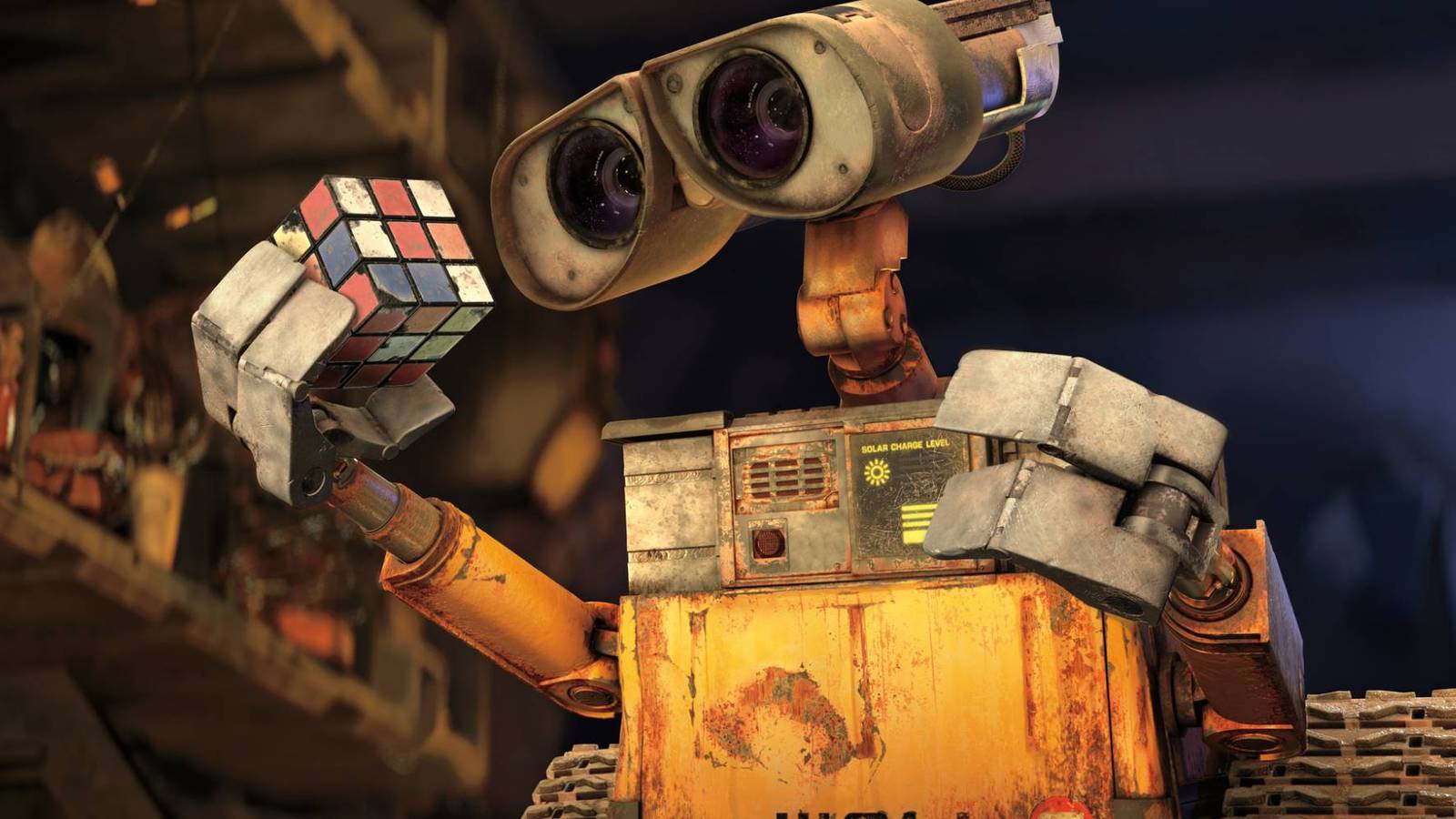
Image via Pixar Animation Studios Published Sep 12, 2026, 4:29 PM EDT William likes watching movies and writing about those movies. Anything else is minutae. Sign in to your Collider account Cinema knows no borders. Many of the greatest films ever made have come from the furthest corners of the world, but there's no denying the massive impact the American film industry has had. The history of filmmaking is inextricable from American history, and throughout that history there have been many masterpieces, amazing movies from master filmmakers that represent the best that America has to offer. Drama, comedy, horror and science fiction—every genre is represented, and every movie is a classic. Of course, this is all subjective. What one person calls a masterpiece, another will call mediocre, and trying to limit it to ten films will inevitably leave a number of the most acclaimed and beloved behind. There's no accounting for personal taste, but by almost any standard, the films listed here are indeed masterpieces of American cinema, and they're among the greatest of all time. 10 'WALL-E' (2008) Image via Walt Disney Studios Motion Pictures A fair number of the greatest American movie masterpieces are animated. From Disney classics like Pinocchio to cult films like The Iron Giant and superlative stop-motion features like The Nightmare Before Christmas. Then there are the many computer-animated films that have dominated the 21st century. The best of these have come from the studio Pixar, which elevated the form with several undeniable masterpieces, the greatest of which is Andrew Stanton's robot rom-com WALL-E. Far from the fairy or folk tales that came before it, WALL-E is a futuristic masterpiece depicting a dystopia where humanity's worst tendencies have left Earth a barren, trash-filled wasteland where one optimistic robot dreams of finding love. There's a lot of sharp satire in WALL-E, most of it softened by the film's slapstick humor and beautiful visuals. It takes some jabs at rampant consumerism and reliance on technology, but, much like the robot at the center of its plot, the film is enduringly optimistic. It's a film that's as charming as the lovesick robot at the center of it, and it's impossible not to feel uplifted by it. 9 'The Wild Bunch' (1969) Image via Warner Bros. The mythologizing of the Old West started well before the first motion picture was made about it. Dime store novels and traveling cowboy shows started telling aggrandizing tall tales of outlaws and gunslingers for years before movies would come along to continue the tradition. Lots of great Westerns built up the myths, and then many others started to break them down. If there's one film that encapsulates the good, the bad and the ugly of the American West, it's Sam Peckinpah's The Wild Bunch, a bloody revisionist Western about the end of a violent era from one of the genre's greatest mavericks. William Holden leads the titular bunch of outlaws who carry on their old ways as the wild and untamed West disappears around them. They rob banks and trains and try to evade the lawmen hot on their heels, but there's no heroic ride off into the sunset for them. Instead, they get one of the bloodiest gunfights in film history. The violence of The Wild Bunch made it controversial when it was released, but what it offers is an unvarnished depiction of the killers that American myths are made of. 8 'Do the Right Thing' (1989) Image via Universal Pictures Violence in America isn't relegated to the eras we feel more comfortable classifying as uncivilized. It simmers within our culture and bubbles up in conflicts of class, politics and race. The latter has provided particular inspiration for some of the most incendiary films of the 20th and 21st centuries, none more blistering than Spike Lee's Do the Right Thing. It's a hot slice of American culture that remains as relevant as ever almost three decades after its release. Over one hot summer day in Brooklyn, the film follows a wide cast of characters who spark over racially charged issues. Those sparks eventually lead to a shocking moment of violence that, at the time, carried the weight of years of historical oppression in America, but which now has been echoed in many real events involving the unjust killings of Black Americans. Do the Right Thing is a vibrant masterpiece that passionately rages against injustice, and its power has only increased. 7 'Jaws' (1975) Image via Universal Pictures Steven Spielberg's Jaws is many things. It was the first modern blockbuster, released with a massive marketing push towards an historic opening weekend. It was Spielberg's first masterpiece, leading him to become Hollywood's most dominant director for decades. Most relevantly, it's the greatest American horror movie ever made, filled with suspense, humor, memorable characters and one of the most iconic musical motifs in cinema history. The deceptively simple structure of Jaws splits its action into two halves, one on land and the other at sea. What begins as one outmatched police chief's struggle to keep an island of locals and tourists safe from a great white shark that has come to feast becomes a waterlogged adventure featuring three men in a battle for survival against the fearsome fish. Jaws made American audiences terrified to go into the water, and dozens of shark movies since haven't come close to replicating its fear. 6 'Network' (1976) Image via United Artists While the era of broadcast news that it depicts has long since passed, the commodification of news and monetization of outrage prophesied in Sidney Lumet's Network proved to be only the tip of the iceberg. The script by Paddy Chayefsky sharply satirizes the bloodthirsty nature of network television executives in their never-ending quest for ratings, but their immorality seems almost quaint in the modern era of toxic political podcasters. The film's cast is just as razor sharp as the script too, with career-best work from legends like Peter Finch, Robert Duvall, Faye Dunaway, William Holden, and Ned Beatty. Holden, Dunaway and Duvall are the executives exploiting the mental breakdown of Finch's veteran news anchor, molding him from a desperate man into a mad prophet, while Beatty gives perhaps the greatest single scene performance ever committed to film, delivering a brutal capitalist diatribe that feels painfully pointed even in the current political climate. Network is one of the most damning films about American media, and also one of the most wickedly entertaining. Collider Exclusive · Oscar Best Picture Quiz Which Oscar Best PictureIs Your Perfect Movie? Parasite · Everything Everywhere · Oppenheimer · Birdman · No Country Five Oscar Best Picture winners. Five completely different visions of what cinema can be — and what it can do to you. One of them is the film that was made for the way your mind works. Ten questions will figure out which one. 🪜Parasite 🌀Everything Everywhere ☢️Oppenheimer 🐦Birdman 🪙No Country for Old Men FIND YOUR FILM → 01 What kind of film experience do you actually want? The best movies don't just entertain — they leave something behind. ASomething that pulls the rug out — that makes me think I'm watching one kind of film and then reveals I'm watching another entirely. BSomething overwhelming — funny, sad, absurd, and genuinely moving, all at once. CSomething grand and weighty — a film that makes me feel the full scale of what I'm watching. DSomething formally daring — a film that pushes what cinema can even do. ESomething lean and relentless — pure tension with no wasted frame. NEXT QUESTION → 02 Which idea grabs you most in a film? Great films are driven by a central obsession. What's yours? AClass, inequality, and what people are willing to do when desperation meets opportunity. BIdentity, family, and the chaos of trying to hold your life together when everything is falling apart. CGenius, moral responsibility, and the catastrophic weight of a decision you can never take back. DEgo, legacy, and the terror of becoming irrelevant while you're still alive to watch it happen. EEvil, chance, and whether moral order actually exists or if we just tell ourselves it does. NEXT QUESTION → 03 How do you like your story told? Form is content. The way a story is shaped changes what it means. AGenre-twisting — I want it to start in one lane and migrate into something completely different. BMaximalist and genre-blending — comedy, action, drama, sci-fi, all in one ride. CEpic and non-linear — cutting between timelines, building a mosaic of cause and consequence. DA single unbroken flow — I want to feel like I'm living it in real time, no cuts to safety. ESpare and precise — every scene doing exactly what it needs to do and nothing more. NEXT QUESTION → 04 What makes a truly great antagonist? The opposition defines the protagonist. What kind of opposition fascinates you? AA system — invisible, structural, and almost impossible to fight because it has no single face. BThe self — the ways we sabotage, abandon, and fail the people we love most. CHistory — the unstoppable momentum of events that no single person can stop or redirect. DThe industry — the machinery of culture that chews up talent and spits out irrelevance. EPure, implacable evil — a force so certain of itself it becomes almost philosophical. NEXT QUESTION → 05 What do you want from a film's ending? The final note is the one that lingers. What do you want it to sound like? AShock and inevitability — a conclusion that recontextualises everything that came before it. BEarned emotion — I want to cry, laugh, and feel genuinely hopeful, even if the world is a mess. CDevastation and grandeur — an ending that makes me sit in silence for a few minutes after. DAmbiguity — something that leaves enough open that I'm still thinking about it days later. EBleakness — an honest refusal to pretend the world is tidier than it actually is. NEXT QUESTION → 06 Which setting pulls you in most? Where a film takes place shapes everything — mood, stakes, what's even possible. AA gleaming modern city with a hidden underside — beauty masking rot, wealth masking desperation. BA collapsing suburban life that opens onto something infinite — the multiverse of a single ordinary person. CThe corridors of power and science at a world-historical turning point — where decisions echo for decades. DThe grimy, alive chaos of New York and Hollywood — fame as both destination and trap. EVast, indifferent landscape — desert and highway where violence arrives without warning or reason. NEXT QUESTION → 07 What cinematic craft impresses you most? Every great film has a signature — a technical or artistic element that makes it unmistakable. AProduction design and mise-en-scène — every frame composed to carry meaning beneath the surface. BEditing and tonal control — the ability to move between registers without losing the audience. CScore and sound design — music that becomes inseparable from the dread and awe of what you're watching. DCinematography as performance — the camera not recording events but participating in them. ESilence and restraint — what's left unsaid and unshown doing more work than any dialogue could. NEXT QUESTION → 08 What kind of main character do you root for? The protagonist is the lens. Who you choose to follow says something about you. ASomeone smart and resourceful who makes increasingly dangerous decisions under pressure. BSomeone overwhelmed and ordinary who turns out to be capable of something extraordinary. CA brilliant, tortured figure whose gifts and flaws are inseparable from each other. DA self-destructive artist whose ego is both their superpower and their undoing. EA quiet, principled person trying to make sense of a world that has stopped making sense. NEXT QUESTION → 09 How do you feel about a film that takes its time? Pace is a choice. Some films sprint; others let tension accumulate slowly, deliberately. AI love a slow build when I know the payoff is going to be seismic — patience for a devastating reveal. BGive me relentless momentum — I want to feel breathless and emotionally spent by the end. CEpic runtime doesn't scare me — if the material demands three hours, give me three hours. DI want it to feel propulsive even when nothing is technically happening — restless energy throughout. EDeliberate and unhurried — I want dread to accumulate in the spaces between the action. NEXT QUESTION → 10 What do you want to feel walking out of the cinema? The best films leave a mark. What kind of mark do you want? AUnsettled — like I've just seen something I can't fully explain but can't stop thinking about. BMoved and energised — like the film reminded me what actually matters and gave me something to hold onto. CHumbled — like I've been in the presence of something genuinely important and overwhelming. DExhilarated — like I've just seen cinema doing something it's never quite done before. EHaunted — like a cold, quiet dread that stays with me for days. REVEAL MY FILM → The Academy Has Decided Your Perfect Film Is…Your answers have pointed to one Oscar Best Picture winner above all others. This is the film that was made for the way your mind works. ParasiteYou are drawn to films that operate on multiple levels simultaneously — that begin in one genre and quietly, brilliantly migrate into another. Bong Joon-ho's Parasite is a film about class, desire, and the architecture of inequality that manages to be darkly funny, deeply suspenseful, and genuinely shocking across a single extraordinary running time. Your instinct is for cinema that hides its true intentions until the moment it's ready to reveal them. Parasite is exactly that — a film that rewards close attention and punishes assumptions, right up to its devastating final image. Everything Everywhere All at OnceYou want it all — and this film gives you all of it. The Daniels' Everything Everywhere All at Once is one of the most maximalist films ever made: action comedy, multiverse sci-fi, family drama, existential crisis, and a genuinely earned emotional core that sneaks up on you amid the chaos. You are someone who responds to ambition, who doesn't want cinema to choose between being entertaining and being meaningful. This film refuses that choice entirely. It is overwhelming by design, and its overwhelming nature is precisely the point — because the feeling of being crushed by infinite possibility is exactly what it's about. OppenheimerYou are drawn to cinema on a grand scale — films that understand history not as a backdrop but as a force, and that place their characters inside that force and watch what happens. Christopher Nolan's Oppenheimer is a film about the terrifying gap between what we can do and what we should do, told with the full weight of one of the most consequential moments in human history behind it. You want your films to feel important without feeling self-important — to earn their ambition through sheer craft and the gravity of their subject. Oppenheimer does exactly that. It is enormous, complicated, and refuses easy comfort. BirdmanYou are drawn to films that foreground their own construction — that make the how of the filmmaking part of the what it's about. Alejandro González Iñárritu's Birdman, shot to appear as a single continuous take, is cinema examining itself through the cracked mirror of a fading actor's ego. You respond to formal daring, to the feeling that a film is doing something that probably shouldn't be possible. Michael Keaton's performance and Emmanuel Lubezki's restless camera create something genuinely unlike anything else — a film that is simultaneously about creativity, relevance, self-destruction, and the impossibility of ever truly knowing if your work means anything at all. No Country for Old MenYou are drawn to cinema that trusts silence, that refuses to explain itself, and that treats dread as a form of meaning. The Coen Brothers' No Country for Old Men is a film about the arrival of a new kind of evil — implacable, arbitrary, and utterly indifferent to the moral frameworks we use to make sense of the world. It is one of the most formally controlled films ever made, and its controlled restraint is what makes it so terrifying. You want your films to haunt you, not comfort you. You are not interested in resolution if resolution would be dishonest. No Country for Old Men is honest in a way that most cinema never dares to be. ↻ RETAKE THE QUIZ 5 'Citizen Kane' (1941) Image via Warner Bros. Entertainment Corruption and capitalism also take center stage in Orson Welles' Citizen Kane, a film that for many years was the standard titleholder for greatest film ever made. Whether it actually is the greatest American masterpiece is up for debate, but its impact is unquestionable. In his directorial debut, Welles combined every visual and narrative trick he could learn from the greatest filmmakers and synthesized them into a dramatic work that would change the way movies were made. The financial rise and moral downfall of Welles' magnate, Charles Foster Kane, is told through flashbacks, conflicting narrators and visual montages that might look standard today, but they were revolutionary in 1941. It was a new peak for cinematic storytelling, and it charted a course for future filmmakers to follow and go even higher. Welles may have been surpassed by some of those filmmakers, but the legacy of his American masterpiece has grown far beyond its singular success. 4 'Casablanca' (1942) Image via Warner Bros. Pictures Sometimes you don't need something to be revolutionary; it just has to be good. Casablanca is an old-fashioned Hollywood movie in all the best ways. It's an unabashedly corny wartime romance that wears its broken heart on its sleeve, featuring theatrical dialogue and performances that can only exist in a cinematic world. The actors behind those performances are all phenomenal as well, creating characters that became archetypal ideals. Humphrey Bogart and Ingrid Bergman are the definitive star-crossed lovers as Rick and Ilsa, who reconnect in the titular city while it's under the control of Vichy France during World War II. Rick runs his gin joint while Ilsa is on the run with her fugitive husband. The two stars' chemistry together is combustible, and every scene they have together crackles with explosive tension, ably supported by a dynamite supporting cast. Every individual scene and line of dialogue is its own masterpiece, and Casablanca is the quintessential Golden Age movie. 3 'Taxi Driver' (1976) Image via Columbia Pictures In equal measure to how magical and crowd-pleasing Casablanca is, Martin Scorsese's Taxi Driver is malevolent and unnerving. As a dark psychological profile of a lonely, disaffected man and his path towards violence, it offers one of the bleakest depictions of New York City in the '70s as envisioned by one of its greatest filmmaking sons. Equal to Scorsese's influence, the film also belongs to writer Paul Schrader and star Robert De Niro, who gives one of the most compelling and repellent performances in cinema history. Travis Bickle is a man of violence, forged by war and lost in an antisocial nightmare. Taking a job as a taxi driver only exposes him to further ugliness and propels him towards an inevitable climax of bloody vigilantism. The character was meant to be an aberration of society in the '70s, but the ensuing decades since the film's release have shown that American society is filled with far more Travis Bickles than the filmmakers could have anticipated. Taxi Driver is a dark film that reflects far more about society than any of us should be comfortable with. 2 '2001: A Space Odyssey' (1968) Image via Metro-Goldwyn-Mayer Epics have been an integral part of American cinema since the beginning, from biblical to historical and everything in between. Most epics transport audiences to time periods or settings that audiences could never experience themselves. Stanley Kubrick's totemic sci-fi epic 2001: A Space Odyssey took them into the future and far off into outer space, with an experiential film that was a quantum leap forward for visual effects and science fiction filmmaking. Chronicling the evolution of humanity from the dawn of its existence into a future of commercialized space travel, the film spans space and time with technical brilliance and stunning visuals. From the first appearance of the iconic alien monolith set to Requiem to the Star Child climax featuring Also Sprach Zarathustra, there's an overwhelming effect created by the combination of the visuals and sounds of Kubrick's masterpiece. Silence and emptiness play just as large a part in the film as its classical soundtrack and psychedelic lights. 2001: A Space Odyssey is an epic masterpiece in every sense. 1 'The Godfather' (1971) Image via Paramount Pictures The only other American epic that could possibly rival 2001 is the generational crime saga of the most famous fictional family of gangsters. Francis Ford Coppola's tremendous adaptation of Mario Puzo's novel The Godfather is the greatest American movie masterpiece. It's sharply written, handsomely shot, perfectly acted and captivating from the first frame to the last. The Godfather completely redefined the gangster genre, and it's been referenced, quoted and parodied more than almost any other film in American cinema. The Corleone family represents the darkest side of the American Dream, earning respect and gaining power through violence and intimidation, and the arc of the prodigal son, Michael (Al Pacino), is a classic tragedy. His ascendance to power is also a slow descent into the criminal underworld that's immaculately depicted. Every detail of The Godfather adds to the immersive texture of the film, and every character is an integral thread woven into its narrative. James Caan's explosive Sonny, Robert Duvall's calm Tom, John Cazale's hapless Fredo, Diane Keaton's weary Kay, and Marlon Brando's iconic Vito. Every character is an icon of American cinema, and every moment of The Godfather is a masterpiece. The Godfather Release Date March 24, 1972 Cast Marlon Brando, Al Pacino, James Caan, Robert Duvall, Richard S. Castellano, Diane Keaton, Talia Shire, Gianni Russo, Sterling Hayden, John Marley, Richard Conte, Al Lettieri, Abe Vigoda, Rudy Bond, Al Martino, Morgana King, Lenny Montana, John Martino, Salvatore Corsitto, Richard Bright, Alex Rocco, Tony Giorgio, Vito Scotti, Tere Livrano Runtime 175 minutes Director Francis Ford Coppola Writers Mario Puzo, Francis Ford Coppola
The 10 Greatest American Movie Masterpieces of All Time, Ranked
Full Article
Original Source
Read the full article at Collider →KhanList aggregates and links to publicly available news content. We do not host full articles from third-party sources. Always verify important information with original sources.