
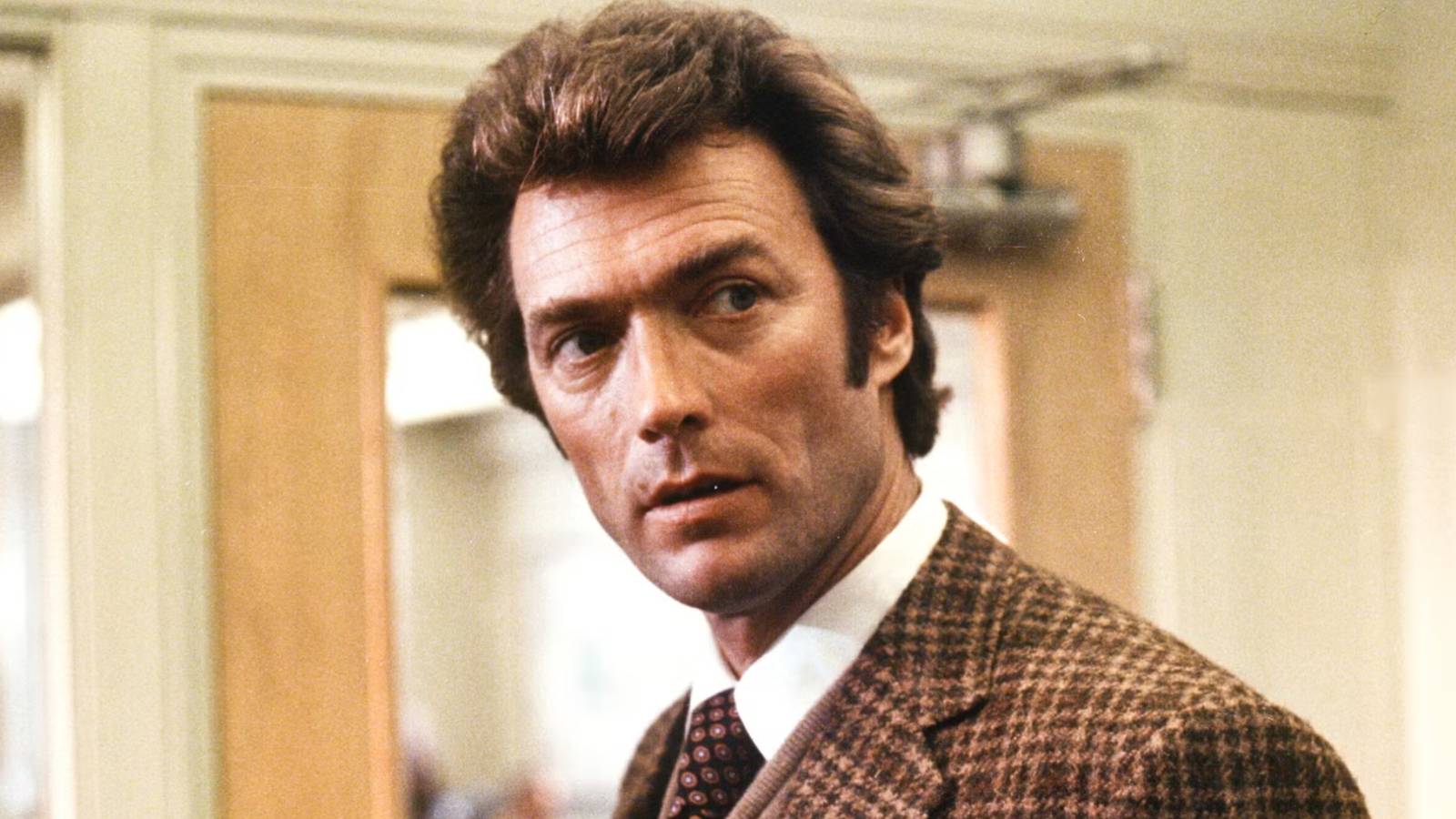
Image via Warner Bros. Published Nov 29, 2026, 2:40 PM EST Jeremy has more than 2900 published articles on Collider to his name, and has been writing for the site since February 2022. He's an omnivore when it comes to his movie-watching diet, so will gladly watch and write about almost anything, from old Godzilla films to gangster flicks to samurai movies to classic musicals to the French New Wave to the MCU... well, maybe not the Disney+ shows. His favorite directors include Martin Scorsese, Sergio Leone, Akira Kurosawa, Quentin Tarantino, Werner Herzog, John Woo, Bob Fosse, Fritz Lang, Guillermo del Toro, and Yoji Yamada. He's also very proud of the fact that he's seen every single Nicolas Cage movie released before 2022, even though doing so often felt like a tremendous waste of time. He's plagued by the question of whether or not The Room is genuinely terrible or some kind of accidental masterpiece, and has been for more than 12 years (and a similar number of viewings). When he's not writing lists - and the occasional feature article - for Collider, he also likes to upload film reviews to his Letterboxd profile (username: Jeremy Urquhart) and Instagram account. He has achieved his 2025 goal of reading all 13,467 novels written by Stephen King, and plans to spend the next year or two getting through the author's 82,756 short stories and 105,433 novellas. Sign in to your Collider account The easiest way to define a vigilante movie is to say it’s one about people who respond to crime or violence of some sort with more violence, being ruthless against things that they see as worthy of being ruthless against. Many vigilante movies are also revenge films, but not all. Also, some have vigilante figures fighting for sympathetic and justified reasons, while others are more critical of the idea of someone becoming a vigilante. The following titles are among the best vigilante movies of all time, with some variety focused on here, in terms of other genres explored and dipped into. That’s to keep things interesting, and it’s also done to show that there is a broader range of vigilante movies out there than one might imagine there being (but the simpler/blunter ones? That kind of thing can be done right, too). 10 'Death Wish' (1974) Image via Paramount Pictures Death Wish is about as straightforward as vigilante movies get, so even if it’s not quite as good as all the other movies that are going to be mentioned, it is very much worth mentioning regardless. It also came out much earlier than most other direct vigilante movies, so it paved the way in some regards, and yeah, it might well even be the case that later comparable films built upon what Death Wish did quite considerably. There is a guy, and he loses one member of his family while another member of his family is attacked and left traumatized. So, he lashes out to get revenge while also cleaning up the area he lives in with a whole lot more force than you might expect from other people/institutions fighting crime and all. That is it, but that’s all Death Wish has to be. It mostly works, and Charles Bronson is undeniably solid and effectively utilized in the lead role, too. 9 'Sin City' (2005) Image via Miramax There are lots of characters and moving pieces in Sin City, but one thing throughout the various stories that make up this movie is how chaotic the world is. Most characters are outright bad people, or they're more flawed antihero sorts of characters, and the latter category tends to be focused on, all the while also feeling a bit like vigilantes, because there aren’t really many other options when that city really does have so much sin. Also, it’s very noir stuff with its style, considering it’s mostly shot in black and white, but then you get some more singular/distinctive visuals thanks to the brief bursts of color here and there. The important thing here is that Sin City is exciting, visually distinctive, undeniably stylish, and also quite unpredictable, largely thanks to all the straightforward but interesting morally shady characters all wrapped up in several different storylines throughout. 8 'Streets of Fire' (1984) Image via Universal Pictures There’s like a vibe here that makes Streets of Fire feel a bit like a vigilante film, but it’s not as conventional a vigilante film as the other stuff here. Like, it’s also almost a musical, just because there’s so much bombast in the soundtrack that’s matched by the rest of the movie (albeit to a slightly lesser extent), as Streets of Fire is an action movie, first and foremost. Music is very important, and there are some music numbers, though it’s not a full-on musical. Narratively, it’s about a young singer who gets kidnapped, and then her ex has to set out and rescue her. It’s heightened and stylized in a way that almost feels fantastical, or vaguely sci-fi/dystopian, but all without genuinely committing to either genre. The stylized world here is almost lawless and people live by their own rules, and maybe the rebelliousness of it all is another reason why Streets of Fire feels worth including here, for present purposes. 7 'Falling Down' (1993) Image via Warner Bros. Falling Down is very entertaining and quite silly at times, being just about as over-the-top as satire can get without also functioning as a full-on comedy. Narratively, what you’ve got here is something that follows a middle-aged man who snaps one day, and decides he's fed up with the rules that control his life. So, he basically becomes a vigilante or a rebel, but without much by way of truly sympathetic motivation. He’s just sick of life and lots of people around him. Maybe you can see where he’s coming from at first, but he pushes things further and further, and if you don’t feel he’s full-on villainous at the start, you will feel he is that way by the end. And Falling Down does eventually involve him coming into conflict with law enforcement, so that moral and physical downfall is inevitable, but the movie is called “Falling Down,” so what else could really happen? 6 'Promising Young Woman' (2020) Image via Focus Features There’s an argument to be made that Promising Young Woman doesn’t entirely stick its landing, but even if you're of that opinion, the rest of the movie is admirably impressive and topical. It’s about a woman trying to avenge the death of someone close to her, as she pursues those she believes responsible for the tragedy, along with various other men who treat her poorly, and all that does make her feel like a unique kind of cinematic vigilante. Overall, Promising Young Woman is not subtle, but the blunt approach to the heavy subject matter does work more often than not, with Promising Young Woman also benefiting immensely from having a very well-written screenplay. It’s one of those films worth watching, even if you might not be on board with it every single step of the way, and its ability to start conversations about things both heavy and relevant is undeniable (maybe even too many conversations, but this has since become the norm for every new Emerald Fennell movie that comes out). 5 'Straw Dogs' (1971) Image via 20th Century Studios The most iconic Sam Peckinpah movie is understandably The Wild Bunch, which was about as heavy-going as Westerns got, certainly for its time, and then it also still packs quite the punch to this day. There are various other heavy-going movies Peckinpah made, including others broadly classifiable as Westerns, plus Straw Dogs, which certainly wasn’t a Western, and ultimately felt (arguably) more confronting than even The Wild Bunch… again, about as disturbing as movies got at the time. You can watch it nowadays and still find a lot of it uncomfortable, since this movie’s a thriller about a married couple who begin living what they think will be a peaceful countryside lifestyle, only to have various people in the area begin tormenting them. Things escalate slowly but surely, and then eventually, the seemingly mild-mannered couple are forced to fight back, fire being fought with fire and that kind of thing. Straw Dogs is very much a bad time, albeit a very well-executed bad time that pushed boundaries to a rather staggering extent. 4 'Dirty Harry' (1971) Image via Warner Bros. The Dirty Harry series is undeniably iconic, though most would agree it's not exactly consistent. At least the first sequel (Magnum Force from 1973) is quite good, but not as great as the original from 1971, simply called Dirty Harry. It’s easily the best of the Dirty Harry movies, with the title character probably being Clint Eastwood's most iconic non-Western role, and one he kind of got to build upon with a certain 2008 movie that’ll soon be mentioned (not part of the Dirty Harry series officially, but something of a spiritual finale). Sure, most vigilante movies involve people who aren’t officially law enforcement taking things into their own hands, but Dirty Harry functions within this genre nonetheless. Dirty Harry follows Harry Callahan, who’s a no-nonsense and often brutal cop who is also, thanks to this movie and the whole series, one of the most iconic vigilante-type characters in cinema history. He spends this first film going after a dangerous murderer known as the Scorpio Killer, who's been indiscriminately targeting victims in San Francisco with a sniper rifle (inspired by the Zodiac Killer, though his MO is pretty different). And sure, most vigilante movies involve people who aren’t officially law enforcement taking things into their own hands, but Dirty Harry functions within this genre nonetheless, just because Callahan is that rebellious and individualistic a police officer. 3 'Gran Torino' (2008) Image via Warner Bros. Just as Unforgiven gave Clint Eastwood a chance to say a bittersweet farewell to some of the sorts of characters he got to play in a handful of his older Westerns, Gran Torino feels partially designed to give a character like Harry Callahan a fitting send-off. So, it’s worth mentioning it right after discussing that first Dirty Harry movie. There is a familiarity to the character Eastwood plays here, sure, but it's given a new spin owing to the fact that it's a film about getting older, falling behind in times that are a-changin’, and finding redemption. Eastwood plays a Korean War veteran who gradually befriends a neighboring Southeast Asian family and assists them when they come under threat from local gangs. It's bittersweet and very sentimental, and some might even call it cheesy, but there is an earnestness to the film that makes it quite touching and powerful when it needs to be, and so for being one of the gentler and more drama-focused movies of this sort (instead of being a more conventional action or thriller film), it feels noteworthy. 2 'The Crow' (1994) Unlike most of the movies here, The Crow branches out into more than just action, thriller, and drama territory, thanks to it being both a superhero movie (of sorts) and also a dark fantasy film. There’s a supernatural spin to the story of revenge here, since it’s about a man coming back from the dead as an essentially invincible avenger, going out to avenge the death of his fiancée and, in a way, also avenge his very own death. He does this as a kind of vigilante, but is probably one of the more outwardly heroic ones being mentioned here, being very sympathetic compared to the outright despicable villains he goes after. The Crow is about vengeance and also fighting out/back against an awful world, and then if you're looking at the non-narrative parts of this film, it’s also more or less about being stylish and very atmospheric (and sure, The Crow does end up having a surprising amount of heart in the end, too). 1 'Taxi Driver' (1976) Image via Columbia Pictures Fairly early on in his filmmaking career, Martin Scorsese made what is up there among the grittiest and most emotionally intense movies of all time: Taxi Driver. Like with Falling Down, there is a man here who becomes disillusioned with life and some groups of people around him, which leads him to eventually become a vigilante, but the movie is even more critical of that kind of thing than Falling Down. He really unravels psychologically here, and even if he lashes out against some other difficult-to-like people, there is still an intentional discomfort provoked by Taxi Driver, all in a very timeless manner (that one would have to assume was particularly startling back when the movie first came out 50 years ago). It deconstructs – and deepens things about – the vigilante genre in a genuinely surprising and radical way. Taxi Driver Release Date February 9, 1976 Runtime 114 minutes
The 10 Best Vigilante Movies of All Time, Ranked
Full Article
Original Source
Read the full article at Collider →KhanList aggregates and links to publicly available news content. We do not host full articles from third-party sources. Always verify important information with original sources.