
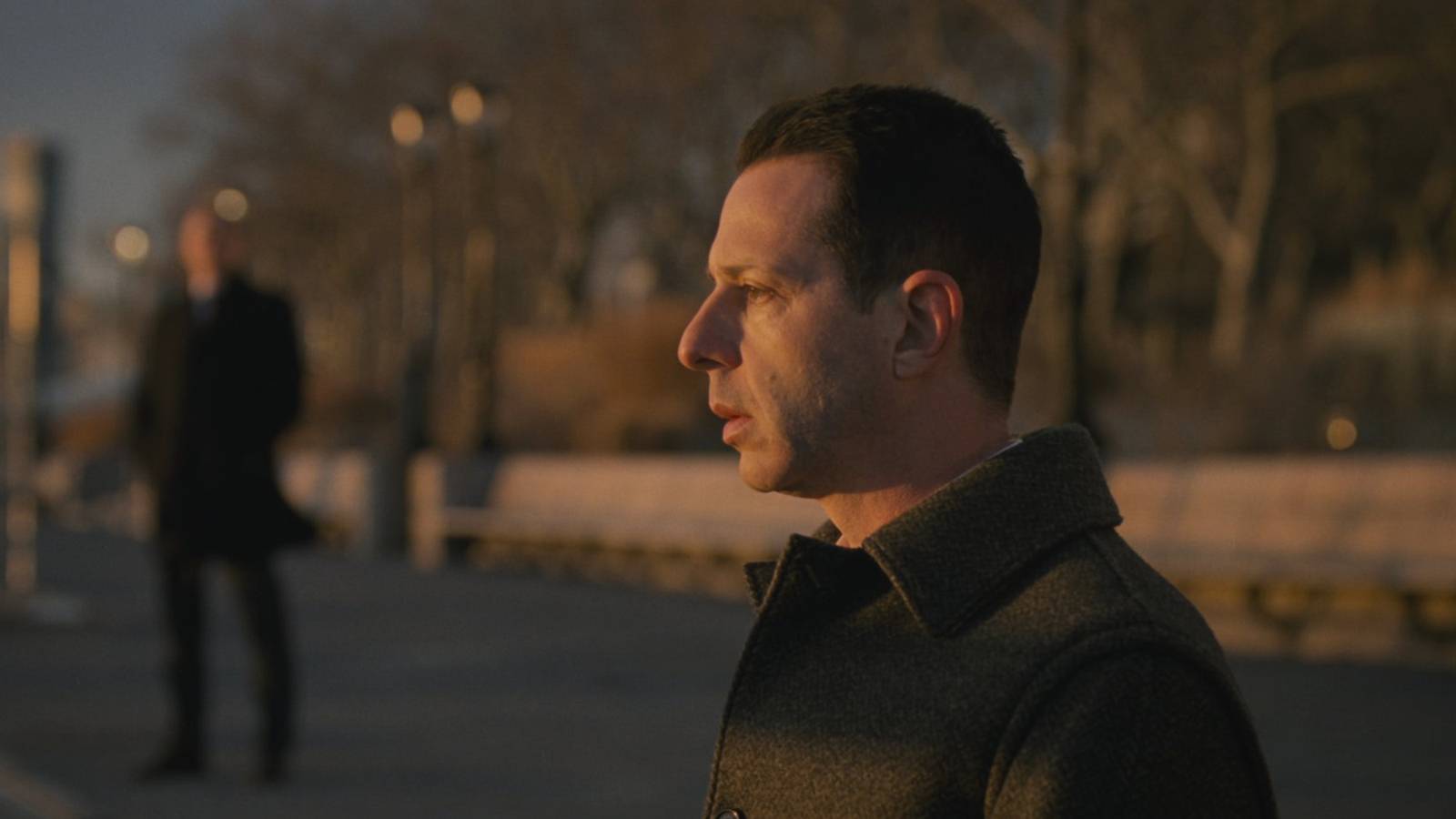
Published Nov 4, 2026, 7:12 PM EST David is a Senior Editor at Collider focused primarily on Lists. His professional journey began in the mid-2010s as a Marketing specialist before embarking on his writing career in the 2020s. At Collider, David started as a Senior Writer in late 2022 and has been a Senior Editor since mid-2023. He is in charge of ideating compelling and engaging List articles by working closely with writers, both Senior and Junior, as well as other editors. Occasionally, David also reviews movies and TV shows and writes episode recaps. Currently, David is also writing his second novel, a psychological horror satire that will, hopefully, be picked up for publication sometime next year. Sign in to your Collider account The following article contains spoilers.The saying goes, "It's not television, it's HBO," and it's absolutely correct. The network has produced some of the best and most iconic shows from the current Golden Age of Television, from harrowing dramas like The Sopranos and The Wire to absurdly hilarious comedies like Veep and Curb Your Enthusiasm. HBO's shows usually go out on top, maintaining their quality until the end. Indeed, the network's most memorable series have equally memorable series finales. These final episodes satisfied fans and critics alike, delivering suitable endings to their stories and cementing their shows' legacies as juggernauts of modern television. 10 "An American Girl in Paris, Part Deux" 'Sex and the City' (2004) Image via HBO Sex and the City ended its six-season run in 2004 with the episode "An American Girl in Paris, Part Deux." The episode sees Carrie rethinking her relationship with Aleksandr Petrovsky just as Mr. Big arrives in Paris to confess his love. The two finally get together after years of doubt and toxicity, and Carrie returns to New York, renting with her friends. "An American Girl in Paris, Part Deux" is the perfect ending for Sex and the City. The show was always a fantasy, a highly romanticized take on love and sex; thus, it makes sense that the ending was straight out of a fairy tale. "An American Girl in Paris, Part Deux" felt somewhat anticlimactic in certain places, but it ultimately sticks the landing with a suitable send-off to Carrie and her friends. 9 "Veep" 'Veep' (2019) Armando Iannucci's Veep is arguably the best modern political satire. The show starred Julia Louis-Dreyfus as Selina Meyer, the incompetent but fiercely ambitious US Vice President who claws her way into the presidential chair, losing everything in the process. The season finale, titled "Veep," sees Selina rise to the highest office in the US only to skip 24 years ahead to her funeral. Remembered as an ineffective, one-term president, Selina's death gets overshadowed by that of Tom Hanks, driving one last dark and brutal punchline home. Veep was always an acidic look at ambition and the inherent ineffectiveness of politics; watching Selina make it into the history books for all the wrong reasons was logical, cathartic, and more than a little heart-wrenching. 8 "Latching" 'Girls' (2017) Image via HBO Lena Dunham's Girls might've been marketed as another show about twenty-somethings struggling with twenty-something life, aimed at twenty-somethings with cable. However, in reality, it was a bleak and cynical look at those friendships that seem like they'll last forever, only to evaporate once the painful truth comes out: some people are simply not meant to stay. Girls' second-to-last episode, "Goodbye Tour," sees the four friends separate for good. There's no catharsis to their breakup, no tearful goodbye, only a sigh of relief from them and the audience knowing their story is over. "Latching" then centers on Hannah and Marnie, struggling to find a way forward while dealing with Hannah's newborn child. It's a simple yet unbelievably affecting way to end the show and a reminder that Girls is a truly daring portrayal of human connection. 7 "Wow" 'Barry' (2023) Image via HBO Barry is a modern HBO show destined to become a classic. Bill Hader created, directed, wrote, and starred in the show as the titular character, a hitman who travels to Los Angeles and enrolls in an acting class following a crisis of faith about his life choices. Barry's final episode, "wow," was a satisfying end to the series, wrapping up every major story. However, the final scene, in which Barry's son watches his father's biopic, where he's portrayed as a tragic hero, is a work of true genius. It takes guts to call out the audience for rooting for and, on occasion, justifying Barry's actions, yet the show goes with it. Barry's final scene transcends satire to become a farcical yet extremely relevant commentary on society and how they consume art. 6 "-30-" 'The Wire' (2008) Image via HBO The Wire is as crucial to HBO's early success as The Sopranos. The brilliant and brutal show about corruption and violence in Baltimore, Maryland, broke new ground, introducing numerous characters that made audiences question themes of morality and justice. The Wire lasted five seasons, each exploring a different aspect of the city's fabric. The show's series finale, "-30-," wrapped up loose ends on its own terms. The Wire ended as it lived, offering an unabashed, uncompromising, and often unforgiving take on life in a city that, in the eyes of the show, corrupted everything and everyone that inhabited it. "-30-" has a few moments of levity, but the overall feeling is bleak; The Wire knew Baltimore's story wasn't ending; it's just that the audience wouldn't be there to see it. Collider Exclusive · Villain Personality Quiz Which Criminal Mastermind Would Be Your Nemesis? Lecter · Joker · Moriarty · Chigurh Four of the finest criminal minds ever put on screen. One of them would look at you and see something worth their time. Eight questions decide which one comes for you, why they picked you, and what they would want when they arrived. 🍷Lecter 🃏Joker ♟️Moriarty 🪙Chigurh MEET YOUR NEMESIS → 01 What would a criminal mastermind notice about you first? Great villains choose their opponents carefully. Something about you got their attention. AMy manners, and everything I am careful not to say. BThat I still believe people are basically decent. CThat I am clever, and quietly enjoy proving it. DThat I handle things myself, and always have. NEXT QUESTION → 02 How do they make first contact? The introduction tells you everything about what is coming next. AA polite letter. Beautiful handwriting. Quietly wrong. BSomething on fire, with a message left beside it. CA puzzle, left where only I would look. DNo contact. Just the aftermath, and a coin. NEXT QUESTION → 03 What do you actually believe about right and wrong? Every nemesis is really an argument about the thing you believe most. AThere are lines. Mine are private and absolute. BRules are the only thing keeping us from being animals. CMorality is a system, and systems can be solved. DThings happen. Most of it was never up to me. NEXT QUESTION → 04 What finally gets under your skin? Everybody has a pressure point. Finding yours is the whole plan. ABeing seen clearly by somebody I cannot read. BWatching good people do something ugly. CLosing to someone who was simply better prepared. DHaving no move left that changes anything. NEXT QUESTION → 05 They have made their move. How do you fight back? This is the part of the film where the audience finds out who you are. ACarefully, and never where they expect to be touched. BLoudly. I would rather lose than play their game. CWith a better plan. I can out-think this. DDirectly, once, with whatever is closest to hand. NEXT QUESTION → 06 What would they use against you? A good villain never brings a weapon you have not already handed them. AMy privacy. I have kept far too much to myself. BMy conscience. I will not cross the line they want. CMy ego. I cannot resist a worthy opponent. DMy certainty that I can handle it alone. NEXT QUESTION → 07 What do they actually want from you? The money is never the point. Something else always is. ATo understand me better than anyone ever has. BTo prove I am no better than they are. CTo finally be beaten by someone worth the trouble. DNothing at all. I stepped into the wrong path. NEXT QUESTION → 08 How does it end between the two of you? Eight questions in, this is the one that decides who comes for you. AA conversation I will be replaying for years. BA choice forced on me that has no clean answer. COne final move, and the better mind wins. DA coin in the air, and nothing I can say. REVEAL MY NEMESIS → The Case File Is Complete Your Nemesis Is…Four criminal masterminds. One of them was always going to be yours. Here is who comes for you, why they picked you out of everyone available, and what they want from the encounter. Hannibal LecterYour nemesis does not want to beat you. He wants to know you completely, and he is patient enough to wait for it. The frightening part is how good the conversation is. Lecter is the most dangerous kind of opponent: the one who finds you interesting. He never raises his voice, because he has never needed to. You keep a great deal to yourself and you are careful about what you show. That reserve is exactly the door he would knock on. The films understood something other thrillers missed. The horror is not the violence. It is being perfectly understood by the wrong person. He would be unfailingly polite about all of it. That is the worst part. The JokerYour nemesis is not after money, territory or revenge. He is after a demonstration, and you are the person he has chosen to prove his point on. The Joker only picks opponents who believe in something. Your decency is not a defence against him. It is the entire reason he showed up. He has no plan you can predict and nothing you can take away, which removes every tool you would normally reach for. His whole argument is that you are one bad day away from being him, and you would spend the rest of your life proving him wrong. He would call it a magic trick. You would call it the worst night of your life. MoriartyYour nemesis respects you, which sounds flattering until you work out what it means. He chose you because nobody else was worth his time. Moriarty is the original criminal mastermind, the template every later one borrows from: a mind the equal of the hero's, pointed the wrong way. You enjoy being the cleverest person in the room. He is counting on exactly that, and he has already built the room. This is the rare nemesis who would be genuinely disappointed if you lost badly. He needs the game to be worth playing. It ends the way these things always end. Two people, one problem, and only one way down. Anton ChigurhYour nemesis has no personal interest in you whatsoever, and that is precisely what makes him unsurvivable. You are not a rival. You are a stop on the way. Chigurh does not negotiate, gloat or explain. He arrives, he asks one question, and the answer was decided long before you opened your mouth. You trust yourself to handle things. He is the one problem in the world that has no interest in how capable you are. No Country for Old Men rewrote the screen villain by removing the thing audiences quietly rely on: the sense that talking might work. Call it. He will wait. ↻ RETAKE THE QUIZ 5 "With Open Eyes" 'Succession' (2023) Image via HBO Succession is a certified classic in the making. The show chronicled the dysfunctional and chaotic Roy family, owners of the multimedia conglomerate Waystar RoyCo, and their continuous attempts to sabotage each other over control of the company. Following Logan Roy's shocking death early in the season, Succession's final episodes chronicled the efforts of the Roy siblings to take control of Waystar RoyCo. By that point, audiences could see it was a senseless battle; Logan had cut these people way too deeply, dangling fake promises before them while chastising them every step of the way. The Roy siblings were wholly unprepared and inadequate for the prize they were chasing; in the end, they fell into old tactics and sabotaged each other because that was the only thing they knew how to do. Succession was always a tragedy, but "With Open Eyes" drove the point home with harrowing accuracy. 4 "The Book of Nora" 'The Leftovers' (2017) Image via HBO Damon Lindelof's The Leftovers is a fascinating and thought-provoking rumination on faith, life, and the elusiveness of human nature. The show follows a group of characters trying to pick up their broken lives after an event known as the Sudden Occurrence, in which 2% of the Earth's population vanishes. The Leftovers' final episode, "The Book of Nora," is a gargantuan achievement of dramatic storytelling. The show was always a challenging and willfully elusive enterprise, dealing with heavy themes and concepts it couldn't possibly explain. And yet, "The Book of Nora" offers a cathartic conclusion to the show, with Nora finding peace following her family's disappearance and reuniting with Kevin, finally ready to start life anew. It's a beautiful yet distinctively tragic ending that perfectly and beautifully summarizes The Leftovers' main thesis. 3 "Valerie Gets What She Really Wants" 'The Comeback' (2014) Image via HBO The Comeback might be HBO's most underrated comedy. Television icon Lisa Kudrow stars as Valerie Cherish, a B-list sitcom actress staging a comeback to the Hollywood scene by starring in a new sitcom and chronicling his life in a reality show, The Comeback. Brilliant, intelligent, and wildly ahead of its time, The Comeback was a brilliant satire of the entertainment industry. Kudrow delivered a career-best bravura performance as the thorny Valerie Cherish, crafting a devastatingly funny portrayal of regret and frustration. The series finale, "Valerie Gets What She Really Wants," sees her finding her way back to the top but giving up her moment under the spotlight to instead secure what matters to her. It's a tremendous and beautiful ending to the story of this would-be diva and further confirmation that Kudrow is a comedic titan like few others. 2 "Everyone's Waiting" 'Six Feet Under' (2005) Image via HBO Alan Ball's drama Six Feet Under is one of the shows that built HBO's reputation. The story revolved around the Fisher family, who owned and operated a funeral home in Los Angeles. Using dark humor and searing drama, Six Feet Under approached life and death with a unique and refreshing perspective. With Six Feet Under being a show revolving around grief and death, it was only logical that its final hour, "Everyone's Waiting," would end in death. The episode presents the characters' ultimate fates, jumping in time to show audiences how each dies. The final sequence, set to Sia's "Breathe Me," is a haunting coda to the show, a collection of tragic yet inescapable moments that portray the show's ultimate message, providing audiences with a bittersweet but cathartic closure. 1 "Made in America" 'The Sopranos' (2007) Image via HBO HBO's crowning jewel, The Sopranos, followed the criminal life of Tony Soprano and his efforts to balance his private life with his expanding empire. The late James Gandolfini led a large ensemble throughout the show's six-season run. The show's final episode, "Made in America," deeply polarized critics during its original 2007 release. Accompanied by Journey's "Don't Stop Believin'," the scene features a classic moment in Tony's life. Yet, there's a sense of urgency, a palpable feeling of dread; when the screen abruptly faded to black, some viewers thought their televisions had malfunctioned. But that's the brilliance of the ending. It tells audiences everything they need to know without making an overt statement. Tony's life keeps going — for how long? It doesn't matter. Fans know what's coming, even if they don't see it. In fact, it's the not seeing it that makes it more powerful.
The 10 Best Series Finales in HBO History, Ranked.
Full Article
Original Source
Read the full article at Collider →KhanList aggregates and links to publicly available news content. We do not host full articles from third-party sources. Always verify important information with original sources.