
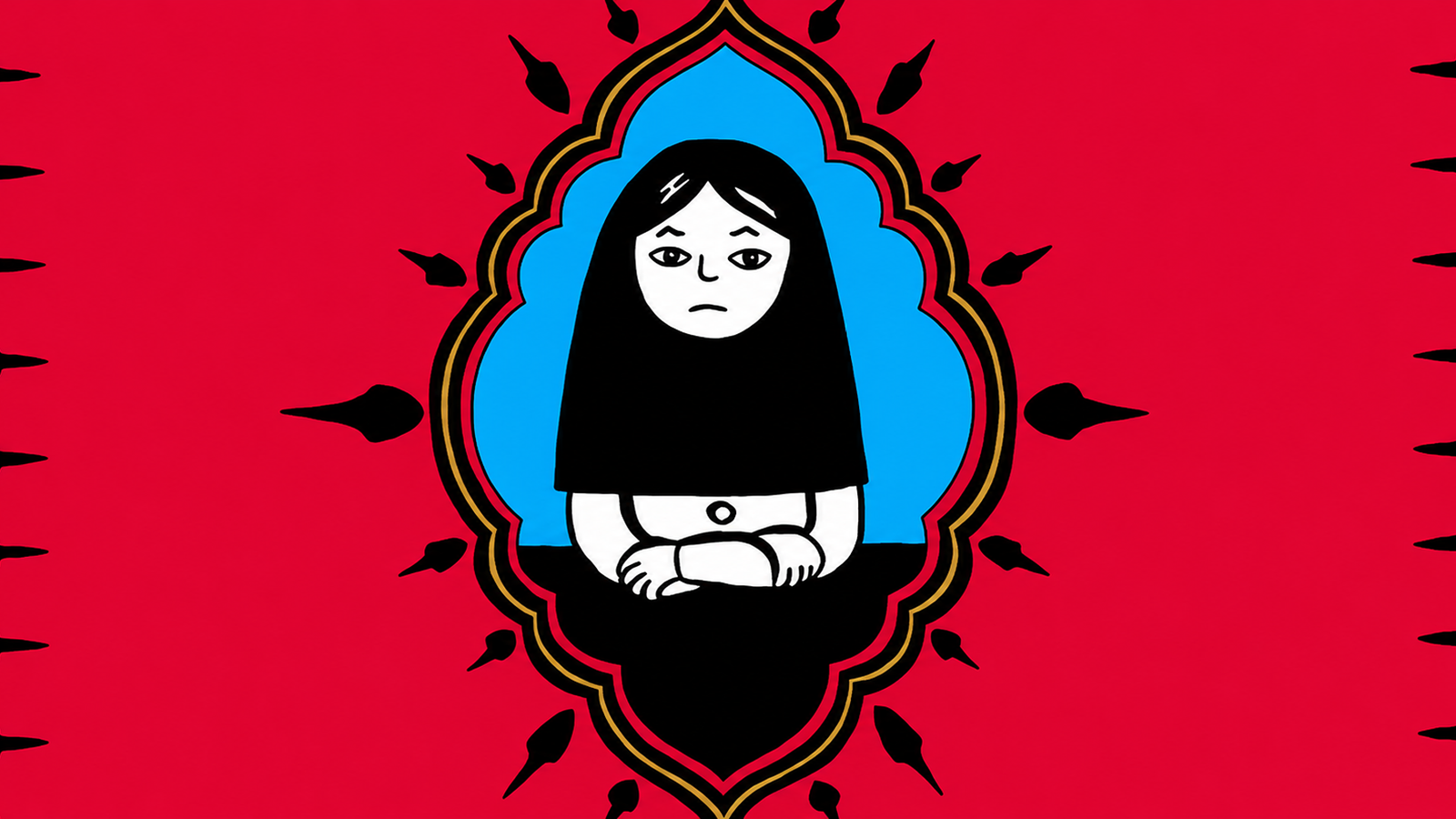
Image via Pantheon Books Published Aug 15, 2026, 1:04 PM EDT Sign in to your Collider account Memoirs can be a difficult sell. After all, who really wants to spend hundreds of pages listening to someone talk about their own life? In the wrong hands, the genre can feel self-important, and even overly dramatic. The best authors, however, do something completely different with memoirs. Instead of just jotting down things that happened to them, they recreate a time, place, and version of themselves so vividly that the reader begins to experience it alongside them. Even when the experiences are highly personal, the emotions behind them feel universal. That is what separates a memorable memoir from a carefully managed public narrative. To prove that, here are the best memoirs of all time that are bound to keep the reader engaged from beginning to end. 10 'Everything I Know About Love' (2018) Image via Penguin The clever thing about Dolly Alderton’s Everything I Know About Love is that it sounds like a memoir about romance, but the men are never really the point. Alderton looks back on her life from adolescence to her thirties through MSN conversations, drunken university nights, unhealthy relationships, career struggles, anxiety, an eating disorder, and the fear that everyone else has adulthood figured out. The book is not told as one neat timeline. It features personal essays mixed with emails, recipes, lists, and lessons Alderton learned at different ages. This structure makes the memoir feel less like a formal autobiography and more like a brutally honest conversation with a friend. Speaking of which, Alderton’s lifelong friendship with Farly is the heart of this fragmented narrative. Together, the two experience university life, first jobs, serious relationships, and grow into completely different people by the end of the book. Alderton is honest to the point where she isn’t afraid to talk about her selfishness, jealousy, and moments where she is completely in the wrong. Her humor keeps the memoir easy to read, while the chapters about loss, aging, and heartbreak give it genuine emotional weight. Everything I Know About Love is a must-read for people of all ages, simply because it’s a reflection on life itself. 9 'I'm Glad My Mom Died' (2022) Image via Simon & Schuster Controversial title aside, Jennette McCurdy’s memoir, I’m Glad My Mom Died, captures the very complex emotions that come with loving and living with a toxic parent. The story talks about McCurdy’s early career and how she began auditioning at six years old because her mother, Debra, wanted her to become a star. As a child, the author quickly learns that making her mother happy is more important than knowing what she wants for herself. Debra controls nearly every part of her daughter’s life. The control is so bad that her mother forces a “calorie restriction” on her, which encourages habits that eventually contribute to years of eating disorders for the Nickelodeon star. McCurdy talks about feeling trapped in a career that she did not enjoy. However, the more emotional parts of the novel come when Debra dies from cancer and McCurdy begins to realize how abusive her childhood actually was. It is only through years of treatment that she begins separating the mother she desperately loved from the person who repeatedly manipulated and harmed her. This could have become an unbearably bleak narrative, but McCurdy’s dry humor makes it surprisingly difficult to put down. She never turns Debra into a cartoon villain or uses her own suffering to demand sympathy. She recognizes that her mother had unresolved problems of her own, while refusing to pretend those problems excuse the damage she caused. That complexity is what makes I’m Glad My Mom Died much more than another celebrity memoir exposing the dark side of childhood fame. 8 'On Writing' (2000) Image via Scribner Stephen King’s On Writing is half memoir and half practical guide that takes readers through the experiences that shaped King before laying out the habits he believes helped him become a successful author. What’s fascinating is that the book works even for people who have never read one of his novels, because King is not trying to prove how brilliant he is. He mostly wants to explain how a working writer gets work done. The memoir section follows King from a childhood filled with books and homemade stories to the years when he and his wife, Tabitha, were struggling to pay their bills. He taught English, worked difficult side jobs, collected rejection letters, and continued writing whenever he could. The most famous story involves Carrie. King wrote a few pages, decided the idea was not working, and threw them in the bin. Tabitha found the pages, read them, and convinced him to continue. That discarded manuscript eventually became the novel that changed their lives. King also writes openly about his dependence on alcohol and drugs, including the family intervention that finally pushed him towards sobriety. The author’s actual advice is pretty simple. He encourages writers to read constantly, write regularly, understand basic grammar, and remove anything that slows a sentence down. None of this sounds revolutionary, but King explains it so directly that it becomes difficult to hide behind excuses. Now, while he was still writing the book, King was struck by a van while walking near his home in 1999. His injuries were severe, but even then, he began writing again only weeks later, and that journey is one of the most compelling parts of the memoir. On Writing will not turn every reader into a bestselling novelist, but it attempts to show how simple it is to become one. 7 'When Breath Becomes Air' (2016) Image via Random House When Breath Becomes Air begins with a neurosurgeon studying a set of scans and immediately recognizing that the patient has advanced cancer. The devastating twist is that the scans are his. Paul Kalanithi was thirty-six and nearing the end of his neurosurgical residency at Stanford when he was diagnosed with stage IV lung cancer. After spending years helping patients and their families face life-changing diagnoses, he suddenly finds himself sitting on the other side of the conversation. The first half of the memoir follows Kalanithi’s long search for meaningful work. Before medicine, he studied literature, philosophy, and human biology because he wanted to understand what makes a life worth living. He eventually turns to neurosurgery, a field where a difference of only a few millimeters can save a person or permanently change who they are. Kalanithi writes about the responsibility of operating on the brain with surprising humility, and talks about the cost of being a doctor. After his diagnosis, though, he has to determine whether to return to surgery, focus on writing, spend his remaining time with his wife Lucy, or prepare for the birth of their daughter. The cruelest part is that nobody can tell him exactly how much time he has left. Kalanithi’s memoir is extremely impactful because he understands that a terminal diagnosis does not suddenly make life clear like movies would have one believe. It makes every choice more difficult because time has become more precious than ever. The author died before completing the manuscript, and Lucy closes the epilogue about his final days. That unfinished quality is what makes When Breath Becomes Air stay with the audience long after they are done reading, making it a perfect novel from the first page to the last. 6 'The Glass Castle' (2005) Image via Scribner The Glass Castle opens with Jeannette Walls sitting in a taxi on her way to a party when she spots her mother digging through a dumpster. Walls is a successful journalist living in New York, while both of her parents are homeless by choice. That immediately captures the essence of this memoir. The story then returns to Walls’ childhood with her siblings Lori, Brian, and Maureen, who grow up moving between desert towns and rundown homes whenever rent, the law, or their father Rex’s latest disaster catches up with them. Rex Walls is intelligent, charming, and full of enormous plans, especially his promise to build the family a dream home made almost entirely of glass. He draws blueprints and talks about finding gold to pay for it, but the Glass Castle slowly becomes another fantasy that his children want to believe while the reader knows that it’s never going to come true. Walls talks about her father’s alcohol addiction and the terrible person he turns into when he drinks. Their mother, Rose Mary, on the other hand, is an artist who values freedom and creativity above stability and considers domestic responsibility a burden. As a result, the Walls children learn to feed, protect, and raise one another. Eventually, they begin planning their escape to New York, only for their parents to follow them there years later. Now, Walls never tells this story with any kind of bitterness. She never dictates what the readers should feel and talks about all of her struggles with a matter-of-fact acceptance. Walls eventually escapes poverty and creates a stable life, and she still loves her parents, especially her father, even after she stops trusting his promises. The Glass Castle understands that growing up sometimes means realizing that sometimes, one needs to forgive in order to move on. Collider Exclusive · Oscar Best Picture Quiz Which Oscar Best PictureIs Your Perfect Movie? Parasite · Everything Everywhere · Oppenheimer · Birdman · No Country Five Oscar Best Picture winners. Five completely different visions of what cinema can be — and what it can do to you. One of them is the film that was made for the way your mind works. Ten questions will figure out which one. 🪜Parasite 🌀Everything Everywhere ☢️Oppenheimer 🐦Birdman 🪙No Country for Old Men FIND YOUR FILM → 01 What kind of film experience do you actually want? The best movies don't just entertain — they leave something behind. ASomething that pulls the rug out — that makes me think I'm watching one kind of film and then reveals I'm watching another entirely. BSomething overwhelming — funny, sad, absurd, and genuinely moving, all at once. CSomething grand and weighty — a film that makes me feel the full scale of what I'm watching. DSomething formally daring — a film that pushes what cinema can even do. ESomething lean and relentless — pure tension with no wasted frame. NEXT QUESTION → 02 Which idea grabs you most in a film? Great films are driven by a central obsession. What's yours? AClass, inequality, and what people are willing to do when desperation meets opportunity. BIdentity, family, and the chaos of trying to hold your life together when everything is falling apart. CGenius, moral responsibility, and the catastrophic weight of a decision you can never take back. DEgo, legacy, and the terror of becoming irrelevant while you're still alive to watch it happen. EEvil, chance, and whether moral order actually exists or if we just tell ourselves it does. NEXT QUESTION → 03 How do you like your story told? Form is content. The way a story is shaped changes what it means. AGenre-twisting — I want it to start in one lane and migrate into something completely different. BMaximalist and genre-blending — comedy, action, drama, sci-fi, all in one ride. CEpic and non-linear — cutting between timelines, building a mosaic of cause and consequence. DA single unbroken flow — I want to feel like I'm living it in real time, no cuts to safety. ESpare and precise — every scene doing exactly what it needs to do and nothing more. NEXT QUESTION → 04 What makes a truly great antagonist? The opposition defines the protagonist. What kind of opposition fascinates you? AA system — invisible, structural, and almost impossible to fight because it has no single face. BThe self — the ways we sabotage, abandon, and fail the people we love most. CHistory — the unstoppable momentum of events that no single person can stop or redirect. DThe industry — the machinery of culture that chews up talent and spits out irrelevance. EPure, implacable evil — a force so certain of itself it becomes almost philosophical. NEXT QUESTION → 05 What do you want from a film's ending? The final note is the one that lingers. What do you want it to sound like? AShock and inevitability — a conclusion that recontextualises everything that came before it. BEarned emotion — I want to cry, laugh, and feel genuinely hopeful, even if the world is a mess. CDevastation and grandeur — an ending that makes me sit in silence for a few minutes after. DAmbiguity — something that leaves enough open that I'm still thinking about it days later. EBleakness — an honest refusal to pretend the world is tidier than it actually is. NEXT QUESTION → 06 Which setting pulls you in most? Where a film takes place shapes everything — mood, stakes, what's even possible. AA gleaming modern city with a hidden underside — beauty masking rot, wealth masking desperation. BA collapsing suburban life that opens onto something infinite — the multiverse of a single ordinary person. CThe corridors of power and science at a world-historical turning point — where decisions echo for decades. DThe grimy, alive chaos of New York and Hollywood — fame as both destination and trap. EVast, indifferent landscape — desert and highway where violence arrives without warning or reason. NEXT QUESTION → 07 What cinematic craft impresses you most? Every great film has a signature — a technical or artistic element that makes it unmistakable. AProduction design and mise-en-scène — every frame composed to carry meaning beneath the surface. BEditing and tonal control — the ability to move between registers without losing the audience. CScore and sound design — music that becomes inseparable from the dread and awe of what you're watching. DCinematography as performance — the camera not recording events but participating in them. ESilence and restraint — what's left unsaid and unshown doing more work than any dialogue could. NEXT QUESTION → 08 What kind of main character do you root for? The protagonist is the lens. Who you choose to follow says something about you. ASomeone smart and resourceful who makes increasingly dangerous decisions under pressure. BSomeone overwhelmed and ordinary who turns out to be capable of something extraordinary. CA brilliant, tortured figure whose gifts and flaws are inseparable from each other. DA self-destructive artist whose ego is both their superpower and their undoing. EA quiet, principled person trying to make sense of a world that has stopped making sense. NEXT QUESTION → 09 How do you feel about a film that takes its time? Pace is a choice. Some films sprint; others let tension accumulate slowly, deliberately. AI love a slow build when I know the payoff is going to be seismic — patience for a devastating reveal. BGive me relentless momentum — I want to feel breathless and emotionally spent by the end. CEpic runtime doesn't scare me — if the material demands three hours, give me three hours. DI want it to feel propulsive even when nothing is technically happening — restless energy throughout. EDeliberate and unhurried — I want dread to accumulate in the spaces between the action. NEXT QUESTION → 10 What do you want to feel walking out of the cinema? The best films leave a mark. What kind of mark do you want? AUnsettled — like I've just seen something I can't fully explain but can't stop thinking about. BMoved and energised — like the film reminded me what actually matters and gave me something to hold onto. CHumbled — like I've been in the presence of something genuinely important and overwhelming. DExhilarated — like I've just seen cinema doing something it's never quite done before. EHaunted — like a cold, quiet dread that stays with me for days. REVEAL MY FILM → The Academy Has Decided Your Perfect Film Is…Your answers have pointed to one Oscar Best Picture winner above all others. This is the film that was made for the way your mind works. ParasiteYou are drawn to films that operate on multiple levels simultaneously — that begin in one genre and quietly, brilliantly migrate into another. Bong Joon-ho's Parasite is a film about class, desire, and the architecture of inequality that manages to be darkly funny, deeply suspenseful, and genuinely shocking across a single extraordinary running time. Your instinct is for cinema that hides its true intentions until the moment it's ready to reveal them. Parasite is exactly that — a film that rewards close attention and punishes assumptions, right up to its devastating final image. Everything Everywhere All at OnceYou want it all — and this film gives you all of it. The Daniels' Everything Everywhere All at Once is one of the most maximalist films ever made: action comedy, multiverse sci-fi, family drama, existential crisis, and a genuinely earned emotional core that sneaks up on you amid the chaos. You are someone who responds to ambition, who doesn't want cinema to choose between being entertaining and being meaningful. This film refuses that choice entirely. It is overwhelming by design, and its overwhelming nature is precisely the point — because the feeling of being crushed by infinite possibility is exactly what it's about. OppenheimerYou are drawn to cinema on a grand scale — films that understand history not as a backdrop but as a force, and that place their characters inside that force and watch what happens. Christopher Nolan's Oppenheimer is a film about the terrifying gap between what we can do and what we should do, told with the full weight of one of the most consequential moments in human history behind it. You want your films to feel important without feeling self-important — to earn their ambition through sheer craft and the gravity of their subject. Oppenheimer does exactly that. It is enormous, complicated, and refuses easy comfort. BirdmanYou are drawn to films that foreground their own construction — that make the how of the filmmaking part of the what it's about. Alejandro González Iñárritu's Birdman, shot to appear as a single continuous take, is cinema examining itself through the cracked mirror of a fading actor's ego. You respond to formal daring, to the feeling that a film is doing something that probably shouldn't be possible. Michael Keaton's performance and Emmanuel Lubezki's restless camera create something genuinely unlike anything else — a film that is simultaneously about creativity, relevance, self-destruction, and the impossibility of ever truly knowing if your work means anything at all. No Country for Old MenYou are drawn to cinema that trusts silence, that refuses to explain itself, and that treats dread as a form of meaning. The Coen Brothers' No Country for Old Men is a film about the arrival of a new kind of evil — implacable, arbitrary, and utterly indifferent to the moral frameworks we use to make sense of the world. It is one of the most formally controlled films ever made, and its controlled restraint is what makes it so terrifying. You want your films to haunt you, not comfort you. You are not interested in resolution if resolution would be dishonest. No Country for Old Men is honest in a way that most cinema never dares to be. ↻ RETAKE THE QUIZ 5 'Know My Name' (2019) Image via Viking Press For years, millions of people knew Chanel Miller’s story without knowing her name; Know My Name was her taking back the narrative. The author was publicly referred to as “Emily Doe” after Brock Turner was found guilty of sexually assaulting her on Stanford University’s campus. There were eyewitnesses, physical evidence, and Turner was even caught trying to leave the scene. Despite all that, he received a sentence of only six months in county jail. Miller’s victim impact statement was later published online, where it was read by millions, translated around the world, and even read on the floor of Congress. Then, she published her memoir to take people through the gut-wrenching aftermath of the assault, the long court process, and the strange experience of watching strangers publicly discuss the worst night of her life. The memoir covers how Miller was questioned by the public and held accountable for not being careful, while Turner was repeatedly described as a talented athlete with a promising future. What makes the book especially frustrating is that this was supposed to be a strong case, yet Miller still had to fight for years just to be taken seriously. That’s not all her book talks about, though, because Miller also writes about her family, her boyfriend, her art, and all the little details that remind readers of what a full life she lived before the world reduced her to an anonymous victim. Some parts of the book are incredibly painful, but she is also witty and surprisingly funny, and the fact that she lets her true self shine in this memoir is what makes it so powerful. 4 'Angela's Ashes' (1996) Image via Scribner Frank McCourt’s Angela’s Ashes is often described as one of the saddest memoirs ever written, which is true, but it is also extremely funny. The 1996 book follows Frank, who is born in Brooklyn to Irish immigrant parents. His life takes a turn after the death of his baby sister, which leads his mother, Angela, to fall into extreme depression. The family returns to Ireland in the hopes that things will get better. However, life becomes even harder in Limerick, where the McCourts’ poverty becomes even worse. Frank’s father, Malachy, is the most complicated person in the book. He is charming and intelligent, but also someone with alcoholism who spends wages and welfare money in pubs while his children go hungry. Frank knows exactly what his father is doing to the family, but he still treasures the quiet mornings when Malachy lights the fire, makes tea, and tells him stories. That mix of love and anger is much more painful than if McCourt had written his father as a one-dimensional bad guy. The humor that the author brings to situations is also pretty unique. As he gets older, Frank begins working and handing most of his wages to his mother. Alongside all of this, he has to deal with strict Catholic teachers, terrifying ideas about sin, and the belief that almost every normal teenage thought might send him straight to hell. The author brings a childlike wonder to all of this and doesn’t interrupt young Frank’s stream of thought with adult explanations, which is where the book’s lasting power comes from. 3 'The Autobiography of Malcolm X' (1965) Image via Grove Press The Autobiography of Malcolm X feels like several completely different lives packed into one book. The autobiography is written by activist Malcolm X in collaboration with American journalist Alex Haley. The story begins with Malcolm’s family being torn apart by racism, poverty, and the loss of his father. He later becomes a street hustler in Boston and Harlem, lands in prison, educates himself almost from scratch, and eventually emerges as one of the most recognizable political figures in America. The transformation is so dramatic that it would feel unrealistic in a novel, yet Malcolm never tries to make his past look perfect. The prison chapters are where the book really comes alive. Malcolm begins reading constantly, takes correspondence courses, and gradually starts understanding that many of the things he had accepted about himself were never really true. After leaving prison, Malcolm joins the Nation of Islam, and his pilgrimage to Mecca causes another major change. What makes this autobiography so interesting is that it does not pretend the author had everything figured out. He changes his mind, admits when he has been wrong, and keeps rebuilding his worldview. The story is humorous, confident, and extremely self-reflective, and Malcolm’s assassination before the book was finished only adds more impact to the life he lived and the ones he impacted. 2 'I Know Why the Caged Bird Sings' (1969) Image via Random House Maya Angelou’s I Know Why the Caged Bird Sings begins with a three-year-old Maya and her older brother, Bailey, being sent alone by train to live with their grandmother in Stamps, Arkansas. Their grandmother, whom they call Momma, owns the store at the center of the local Black community and gives them some stability, but their parents continue to move in and out of their lives. Not to mention that Maya grows up in the segregated South where she learns that racism is a continuous, never-ending act that she has to live with. One of the memoir’s most painful scenes comes during Maya’s school graduation, when a white speaker casually suggests that the Black students should expect to become athletes or servants rather than doctors, scientists, or professionals. These are the moments where the reader realizes just how Angelou was made to see herself as a young girl. The turning point in her life comes when she meets Mrs. Flowers, and their loving dynamic becomes the heart of the memoir. Angelou writes beautifully, but remains confused, angry, insecure, and uncertain well into her teenage years. She gradually becomes more willing to act for herself, however, even fighting to become San Francisco’s first Black female streetcar conductor after the company initially refuses to employ her. However, even then, the book never feels like a tidy story about overcoming hardship. Maya does not leave every painful experience behind, but learns how to live without letting those experiences speak for her. 1 'Persepolis: The Story of a Childhood' (2000) Image via Pantheon Books Persepolis: The Story of a Childhood is not a simple book. It shows political upheaval through the eyes of a child still trying to work out what any of it means. Marjane Satrapi’s graphic memoir follows her life in Tehran from the ages of six to fourteen and covers the overthrow of the Shah, the rise of the Islamic Republic, and the Iran-Iraq War. Young Marjane is intelligent, outspoken, and endlessly curious, but even she cannot keep up with how quickly the world around her keeps changing. When the new regime separates boys and girls at schools, forces women to wear the veil, and begins punishing anyone who refuses to obey. In the face of all this, Marjane’s rebellious personality only grows stronger, as she secretly buys Western music and openly challenges her teachers who repeat the government’s lies. The book captures the very stark contrast between elements of Marjane’s childhood and the terrifying world that surrounds it. Satrapi never turns Iran into one simple image of extremism, but presents it as a country filled with loving families, political culture, and people trying to preserve some sense of normality under an oppressive regime. The simple black-and-white artwork is also central to the book’s impact. Persepolis is funny, heartbreaking, and infuriating, but it never asks readers to pity Marjane. The animated adaptation of Persepolis is an award-winning film that's also worth checking out.
The 10 Best Memoir Books of All Time, Ranked
Full Article
Original Source
Read the full article at Collider →KhanList aggregates and links to publicly available news content. We do not host full articles from third-party sources. Always verify important information with original sources.