
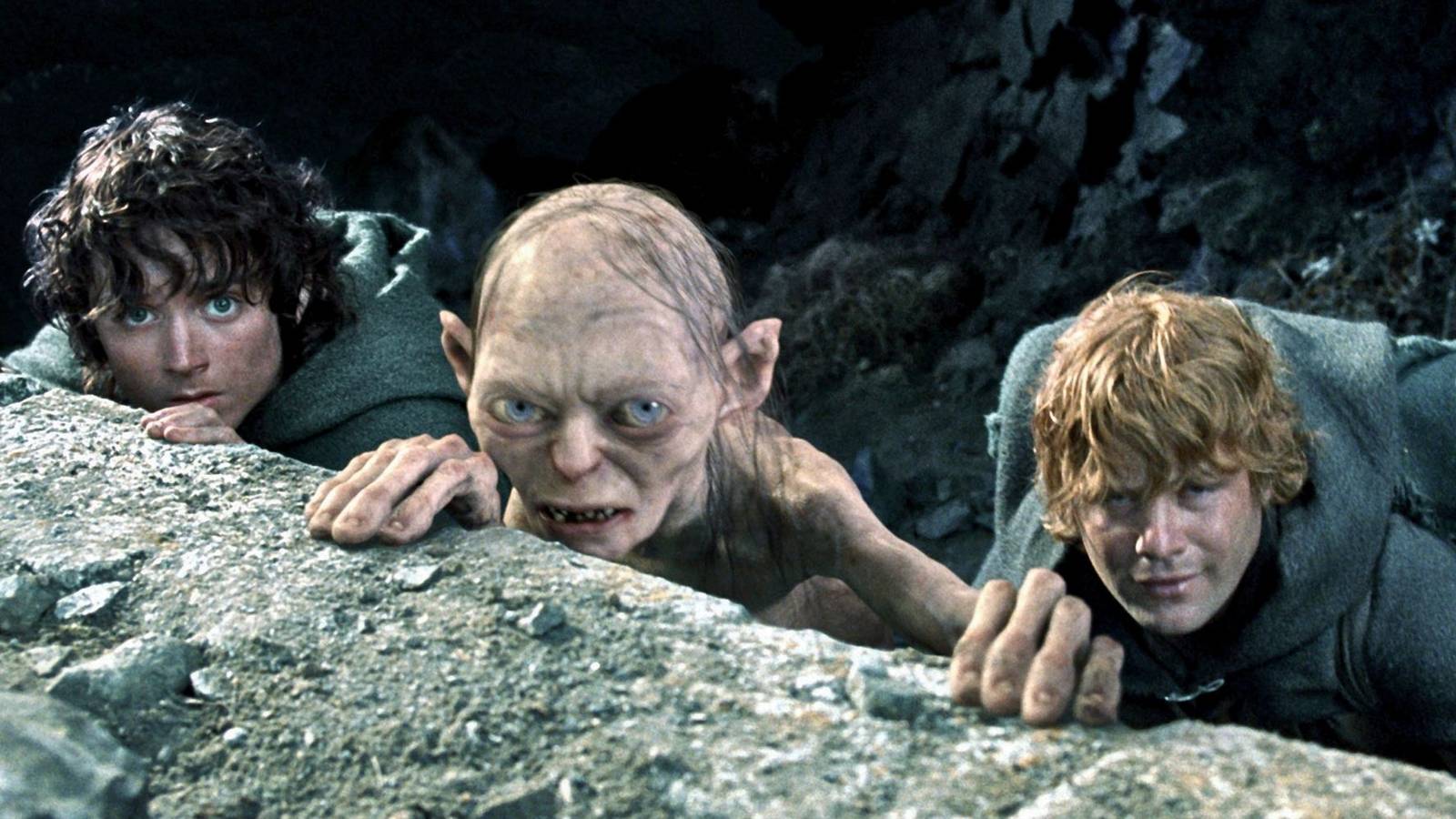
Image via New Line Cinema Published Nov 25, 2026, 5:52 PM EST Michael Block is a 14 time GLAM Award nominated writer, producer, and host of the podcast Block Talk. Throughout his time in the entertainment industry, he has worked on and off Broadway as a stage manager, written several produced plays, critiqued hundreds of theatrical performances, drag and cabaret shows, and has produced events randing from drag competitoons to variety concerts! On Block Talk, he interviews nightlife personalities, covers the wide world of entertainment through features, ranking episodes, and recaps ALL of Drag Race, as well as Dragula and Survivor. He has interviewed hundreds of RuGirls that span the globe at DragCon NYC, DragCon LA, and DragCon UK. In his free time, he makes one-of-a-kind jewelry and gift baskets with his mom. He is a proud member of the LGBTQ+ community. Sign in to your Collider account Fantasy stories let audiences escape reality and journey to far-off lands and brand-new worlds. We’ve seen and felt these tangible worlds on screen, but many of the very best fantasy narratives began on the page. Though countless incredible fantasy books exist in literary history, these ten are simply the best. For this list, we will include singular novels and larger book series because, well, together they complete a monumental tale. From Middle-earth to Westeros, Hogwarts to Narnia, these fantasy stories have played a critical part in our lives and pop culture at large. What are you favorite fantasy books? 10 'Jonathan Strange & Mr. Norrell' by Susanna Clarke (2004) Image via Bloomsbury For her debut novel, Susanna Clarke made a miraculous impression. Jonathan Strange & Mr. Norrell, set in an alternate 19th-century England during the Napoleonic Wars, follows the reclusive scholar Mr. Norrell and his daring pupil Jonathan Strange as they revive practical magic. As their rivalry and different approaches to magic grow, their dealings with dangerous faeries threaten to overwhelm the nation's war efforts. Jonathan Strange & Mr. Norrell is praised as a great in the genre for its blend of 19th-century literary style with dark, grounded magic. Winner of the 2005 Hugo Award for Best Novel and longlisted for the 2004 Booker Prize, Jonathan Strange & Mr. Norrell is a readable wonder. In a rich pastiche of Jane Austen and Charles Dickens, the book reads like a lost Regency classic rather than standard modern fantasy. By playing in that realm, Clarke builds a deep fictional academic history of English magic and the Raven King, making the world feel lived-in and authentic. Her characters are brilliant and vibrant. The cautious, book-hoarding Mr. Norrell and the daring, charismatic Jonathan Strange create a compelling mentor-student rivalry through their contrasting magical views. Magic here is wild, dangerous, and tied to ancient faerie pacts rather than neat spell systems. A perfectly adaptable story, Jonathan Strange & Mr. Norrell became a BBC miniseries in 2015 starring Bertie Carvel as Jonathan Strange and Eddie Marsan as Gilbert Norrell. 9 'His Dark Materials' by Philip Pullman (1995-2000) Image via Philip Pullman / Scholastic Corporation One of the most beloved book series of all time is His Dark Materials by Philip Pullman. Comprising The Golden Compass, The Subtle Knife, and The Amber Spyglass, His Dark Materials follows Lyra Belacqua and Will Parry as they travel across parallel universes filled with witches, armored polar bears, and a mysterious particle called Dust. Blending coming-of-age adventure with ideas from physics, philosophy, and theology, the story challenges tyrannical religious authority while reimagining themes from John Milton's Paradise Lost. His Dark Material blends fast-paced adventure with deep literary, philosophical, and scientific ideas. Though it’s geared for a younger audience, His Dark Materials presents adult themes without ever talking down. Pullman weaves ideas from theology, philosophy, and physics into a story led by children. Rather than treating growing up or questioning authority as a fall from grace, the trilogy treats consciousness, free will, and human connection as vital virtues. It’s a bold moral perspective. Pullman’s greatest achievement is his memorable works building. Every human in Lyra’s world has a "dæmon"—an external animal companion that reflects their inner self, shifting shapes in childhood and settling into a permanent form at adulthood. Alongside armored polar bears, witches, and parallel worlds, this idea gives emotional weight to the story's central conflicts. The novels have won several awards, including the Carnegie Medal in 1995 for Northern Lights and the 2001 Whitbread Book of the Year for The Amber Spyglass. Beyond the page, the stories have been transformed for radio plays, theater productions, and a prominent film, The Golden Compass, starring Daniel Craig and Nicole Kidman, as well as an epic three-part series featuring Dafne Keen, Ruth Wilson, James McAvoy, and Lin-Manuel Miranda. 8 'The Dark Tower' by Stephen King (1982-2012) Image via Donald M. Grant, Publisher He may be the King of Horror, but Stephen King sure knows how to write masterpieces in other genres! Such is the case for The Dark Tower. In his genre-blending epic, King tells the story of Roland Deschain, the last surviving gunslinger in a decaying, post-apocalyptic landscape known as Mid-World. Alongside a band of companions drawn from alternate realities, Roland journeys across multiple dimensions to reach and protect the titular Dark Tower, the central nexus holding all of existence together, before evil forces can destroy it and collapse the multiverse. With many fans pointing to the novels serving as the author’s magnum opus, The Dark Tower’s ambitious world-building, evolving characters, and bold meta-storytelling set it apart from all the rest. Comprising nine books released over a span of 30 years, The Dark Tower mixes dark fantasy, Westerns, science fiction, horror, and Arthurian myth rather than sticking to traditional sword-and-sorcery tropes. Each installment takes on a distinct structure and mood—from stark wasteland survival to flashbacks and meta-fiction—which keeps the long arc unpredictable. The Dark Tower serves as the linchpin connecting many of King's other stories across shifting worlds and realities. The novel series has a passionate fandom that was none too pleased with the execution of the 2017 film starring Idris Elba and Matthew McConaughey. Fingers crossed that Mike Flanagan does it justice as a TV series! 7 'The Wheel of Time' by Robert Jordan and Brandon Sanderson (1990-2013) Image via Orbit An exemplary high-fantasy series, The Wheel of Time spans 14 books and has two credited authors: Robert Jordan and Brandon Sanderson. The epic fantasy series in a cyclical world where a prophesied hero, the Dragon Reborn, must unite nations and master dangerous magic to fight the Dark One in the Last Battle. Begun by Jordan and finished posthumously by Sanderson using Jordan's notes, the story follows young companions swept into ancient prophecies, political upheaval, and a race against madness and darkness. Praised for its massive scale, intricate world building, unique magic system, and long-term character arcs, The Wheel of Time delivers an expansive fantasy journey that has captured the imaginations of its devoted readers. With distinct magic and themes, “channeling” is divided by gender, with male channelers facing madness from a taint on their half of the power. The story blends classic good-versus-evil stakes with cyclical time and reincarnation. Rather than infallible heroes, characters make costly mistakes, face moral ambiguity, and grow. Spanning over 4.4 million words, the series maps out diverse nations, political factions, histories, and prophecies in an intricate, distinct manner. The depth with which the novels are written proves the true dedication to storytelling. The Wheel of Time has found itself adapted into various forms of media, including the brilliant three-season wonder starring Rosamund Pike. The Wheel of Time reshaped modern epic fantasy forever, bridging fantasy past and present. 6 'A Wizard of Earthsea' by Ursula K. Le Guin (1968) Image via Gollancz Perhaps the underdog among these titans of literature, modern fantasy wouldn’t be what it is today without A Wizard of Earthsea by Ursula K. Le Guin. The 1968 novel set in the fictional archipelago of Earthsea, a proud young wizard named Ged accidentally unleashes a dangerous shadow creature after trying to prove his power. To restore balance and save himself, he must journey across the world to confront what he has released and learn true self-mastery. A Wizard of Earthsea is praised for its lyrical prose, thoughtful coming-of-age arc, and a magic system rooted in language and balance. Part of the larger The Earthsea Cycle, the novel recalibrated the genre by shifting the genre away from epic battles and good-versus-evil clichés toward inner growth, ecological and cosmic balance, and a non-white protagonist. Rather than focus on bloated lore, it centers on a gifted, prideful young mage who releases a shadow born of his own arrogance and must learn humility, balance, and self-mastery. Ged’s main adversary is internal, making his growth feel three-dimensional and earned. Magic is rooted in language and balance, working through true names and the language of dragons, where every spell affects the world's equilibrium and carries real consequences. Le Guin writes with a sparse, fairy-tale clarity that reads like an ancient legend. Coming long before many of the greats on this list, A Wizard of Earthsea helped establish the magic-school trope while offering a thoughtful, post-Tolkien alternative focused on wisdom over conquest. The book has been adapted multiple times in various media, namely a Sci-Fi series starring Shawn Ashmore, Kristen Kreuk, and Danny Glover, as well as a Studio Ghibli animated epic called Tales from Earthsea. 5 'Harry Potter' by J.K. Rowling (1997-2007) Image via Scholastic Press Pop culture forever changed when Harry Potter entered the literary lexicon. In the seven-book series, orphaned young wizard Harry Potter discovers his magical heritage and attends Hogwarts School of Witchcraft and Wizardry, where he befriends Ron Weasley and Hermione Granger. Across seven novels, they battle the dark wizard Lord Voldemort to stop him from controlling the wizarding world. Hailed by many as the greatest fantasy series of all time, regardless of controversy, Harry Potter blends a cozy boarding-school fantasy where magic dominates the world with mystery plots and a coming-of-age arc that matures alongside its characters from ages 11 to 17. The novels brilliantly invite readers into an immersive world that weaves clues and twists into a school-year structure, keeping readers guessing and rewarding close attention. Sparking a global phenomenon, Harry Potter is something special. The author builds a vivid magical society complete with Hogwarts, Quidditch, enchanted objects, and distinct systems of government and education that feel lived-in and timeless. The book’s ability to make the heroes feel like your friends is a testament to its rich character development. Beyond the primary trio, the books present a plethora of memorable characters across the spectrum of good and evil, even reminding readers that there is no binary when it comes to morality. Harry Potter revived youth reading worldwide, reshaped young adult fantasy publishing, and launched a massive cross-media entertainment franchise. The books were adapted into a monumental film franchise starring Daniel Radcliffe. The stories are being revived for the small screen on HBO with a brand-new ensemble, and will be more book-focused and faithful. 4 'The Hobbit' by J.R.R. Tolkien (1937) Image via HarperCollins Let’s just state it now: this is entry number one of two for J.R.R. Tolkien. In the grand scope of fantasy, The Hobbit is the novel that set the tone for the century and beyond. As an early entry point for young readers, The Hobbit follows Bilbo Baggins, a comfort-loving hobbit recruited by the wizard Gandalf and thirteen dwarves to serve as their burglar on a quest to reclaim their ancestral Lonely Mountain and its treasure from the dragon Smaug. Along the perilous journey, Bilbo discovers a magical ring of invisibility and grows from a timid homebody into a courageous, resourceful hero. The Hobbit works so well because it pairs a brisk, accessible adventure with rich world-building, relatable growth, and timeless themes of courage and greed. At around 300 pages, it reads like a lively, warm quest with a lighter, more self-contained arc compared to its sibling story. Tolkien mixes playful humor, songs, and riddles with real suspense and darker moments. Unlike sprawling epics that can bog down in exposition, The Hobbit moves in a masterful manner from set piece to set piece while letting characters drive the story. Bilbo Baggins starts out loving comfort and quiet routines rather than grand heroism, making his growth feel grounded and human. For many readers, he’s one of the greatest literary heroes ever written. With a whimsical charm and dangerous stakes woven into the narrative, The Hobbit taps into timeless archetypes of self-discovery. With a plentiful number of adaptations since its release, The Hobbit is most certainly remembered for its 1977 animated television special. And then there was that trilogy between 2012 and 2013 starring Martin Freeman, which we appreciate was made, though a redo would be nice. It’s no match for Peter Jackson’s other Tolkien trilogy! 3 'The Chronicles of Narnia' by C.S. Lewis (1950-1956) Image via C. S. Lewis / HarperCollins C.S. Lewis is truly a magician with words, and The Chronicles of Narnia is proof. Across seven books, The Chronicles of Narnia follows children from the real world who are magically transported to Narnia, a fantastical realm of talking animals and mythical creatures. Guided by the noble lion Aslan, these young heroes must fulfill ancient prophecies and battle evil forces to restore peace across Narnia's entire history, from its creation to its ultimate end. The novels are universally praised for combining accessible portal fantasy with rich moral themes, vivid imagery, and stories that span an entire world's history from creation to its end. Lewis delivers immediate wonder, bold storytelling, and deep moral weight without heavy exposition. Lewis was an early leader in the genre, helping elevate fantasy and children's literature by treating big ideas, danger, and loss honestly rather than talking down to readers. Rather than rigid world-building, C.S. Lewis blends Roman fauns, talking animals, mythical creatures, and Father Christmas into a lively, fairy-tale atmosphere. Ordinary children step through a wardrobe—or into other portals—into Narnia with almost no setup or dense lore dump. And yet, these worlds become brilliantly immersive, allowing the celebration of imagination to roam free. The series shifts perspectives across installments, but Lewis maintains the narrative DNA as it expands the world throughout the timeline. Through the Christ-like lion Aslan and broader narrative arcs from creation to an end-times, Lewis communicated Christian ideas through story rather than direct lecturing. No matter your ideology, the books still resonate. The volumes of books have been adapted three times on TV and, with Netflix releasing Narnia: The Magician’s Nephew, twice for film, with the Walden Media franchise presenting a beautiful trilogy. Collider Exclusive · 8 Questions · 2 Minutes What Fantasy World Do You Belong To? Middle-earth · Grand Line · The Continent · Camp Half-Blood Pick your magic, your crew, where you want to wake up and who you would rather be fighting, and we will tell you which world you actually belong in. Four are open to you: an ancient kingdom living through its last good age, an endless sea full of pirates, a continent that pays people to kill monsters, and a summer camp where the Greek gods are extremely real and mostly a nuisance. 💍Middle-earth(Rings of Power) 👒Grand Line(One Piece) 🐺The Continent(The Witcher) 🔱Camp Half-Blood(Percy Jackson) FIND YOUR WORLD → 01 What kind of power do you want? Every one of these worlds runs on a completely different sort of magic. ASomething ancient and half forgotten that came down through my family. BSomething completely ridiculous that works in a fight and gets a laugh. CNo magic at all, just training, potions and a very sharp sword. DSomething I inherited from a parent I have barely met. NEXT QUESTION → 02 Who is travelling with you? Nobody gets through any of these stories entirely on their own. AA fellowship drawn from every corner of the world who barely trust each other. BA crew I picked up one at a time, all of whom would die for me. CTwo or three people I would never describe out loud as friends. DTwo mates from school who are exactly as out of their depth as I am. NEXT QUESTION → 03 Where do you want to wake up tomorrow? The best fantasy is usually just somewhere you would genuinely like to live. AA high city of white stone with the sea somewhere far below. BA ship under sail, with an island ahead that nobody has mapped. CA rented room over a tavern, in a town I am leaving in the morning. DA cabin at a summer camp with everybody else already awake outside. NEXT QUESTION → 04 How are you making a living out there? Even in fantasy somebody has to pay for the horse. AI am not, because somebody far older than me decided this was my duty. BTreasure, and I am not always careful about whose it used to be. CI take contracts, since people will pay well for what they will not touch. DI am fifteen and this is all technically a school trip. NEXT QUESTION → 05 There is something in the woods. What do you do about it? All four of these worlds keep something unpleasant out there in the dark. ASend word to somebody who has seen this before, then hold the line. BWalk straight in, because it is interesting and possibly edible. CAsk what it has been eating and what the village is willing to pay. DWork out which myth it escaped from, then improvise very badly. NEXT QUESTION → 06 Who is the villain of your story? The enemy tells you far more about a world than the hero ever does. AAn ancient evil that has been patient for several thousand years. BA government that has spent a long time calling itself the good guys. CA man who turns out to be far worse than anything I hunt for money. DA god, or possibly my own family, and quite likely both at once. NEXT QUESTION → 07 What do you actually believe in out there? Every world hands its heroes one rule and asks them to hold onto it. ASome things are worth defending even when the odds are hopeless. BNobody gets to tell me where I can go or what I am allowed to want. CPick the lesser evil, and never pretend afterwards that it was not evil. DMy friends come before anything a prophecy has to say about it. NEXT QUESTION → 08 A thousand years from now, how are you remembered? Eight questions in, this is the one that decides your world. AIn a song, in a language hardly anybody still speaks. BAs the one who got there first and proved the whole thing was possible. CBarely, and mostly wrongly, in ballads I would absolutely hate. DOn a plaque at a camp, read by kids about to do the same thing. REVEAL MY WORLD → The Map Is Drawn Your World Is…Four worlds and four completely different ideas of what a good life looks like. This is where you belong, what it would ask of you, and what you would get back in return. Middle-earthYou belong somewhere old enough that the mountains have names and somebody can still tell you who gave them. Middle-earth is for people who think the right thing is worth doing even when it will not be finished in their lifetime. This is the only world on the list where doing good is understood as a very long defeat, fought anyway, by people who will never see how it ends. You are drawn to grandeur, to white cities and deep forges and the sense that almost everything you touch is older than your entire family line. The Rings of Power is set in the last good age before it all goes wrong, which gives every quiet scene in it a slightly unbearable weight. You would take the hard road, and you would take it on foot. The Grand LineYou want the sea, a crew, and absolutely nobody telling you where you are allowed to go. The Grand Line is the world for people whose main ambition in life is finding out what is over there. One Piece has run for decades on one very simple engine, which is a group of people who each want something impossible and have decided to go and get it together. You collect people. Your ideal crew is a set of misfits who were each written off somewhere else before you turned up and offered them a better idea. The world is enormous and deliberately ridiculous, and the emotional gut punches land harder because of that rather than in spite of it. You would set sail knowing the map runs out, which is more or less the entire point of it. The ContinentYou would rather be feared and useful than liked and useless. The Continent is a world where the monsters are the straightforward part of the job and the people are where it all gets complicated. Witchers get paid to do what nobody else will and resented for existing at all, which is a trade most people would refuse and you would probably accept. You have no real illusions about which side is the good one, largely because on the Continent that question tends to have a disappointing answer. The best of these stories are not about the fighting. They are about somebody with a rigid code being repeatedly cornered into caring about people. You would take the coin, finish the job properly, and be out of town before the story got told wrong. Camp Half-BloodYou want the myths to be real and loose in the actual world, and you want to find out at about thirteen that you were never anywhere near as ordinary as everybody kept telling you. Percy Jackson takes the oldest stories we have and drops them into car parks and diners, which makes the gods considerably funnier and a great deal worse. You would be the kid every school gave up on, who turns out to have been built for something nobody thought to test for. The series is genuinely about friendship rather than destiny, and it says so out loud every time a prophecy tries to get in the way. Camp Half-Blood is the real fantasy here: a place where the thing that made you difficult everywhere else is the thing that makes you belong. ↻ RETAKE THE QUIZ 2 'A Song of Ice and Fire' by George R.R. Martin (1996-???) Image via George R. R. Martin / Bantam Books Though it existed long before the hit HBO series, A Song of Ice and Fire is high fantasy at its finest. Written by George R.R. Martin, consisting of five existing books at the moment, A Song of Ice and Fire is set in the medieval continent of Westeros, where rival noble families engage in a brutal political civil war for control of the Seven Kingdoms. As these human power struggles unfold, ancient magic slowly returns in the form of Daenerys Targaryen's reborn dragons in the east and an existential threat of undead creatures gathering beyond a massive ice wall in the far north. Praised for its morally complex characters, ruthless political intrigue, and stories where choices carry real consequences, A Song of Ice and Fire grounds the fantasy in human motives while subverting classic genre tropes. What A Song of Ice and Fire does brilliantly is its unpredictability. No one is safe to Martin's pen. Major figures can be killed or maimed, rejecting traditional fantasy comfort for a high-tension thrill ride. The morally gray characters operate in a middle ground where their complex motives override the clear heroic or villainous traits. Martin paints Westeros as a brilliantly rich land where power struggles, alliances, and the harsh realities of survival drive the action. Shifting third-person limited viewpoints allow readers to experience deep personal perspectives across a vast, detailed world. A Song of Ice and Fire had a monumental impact that reshaped modern fantasy. Though the question remains: will it ever get finished!? Whether you've read the collection or not, Martin's vision came to life in the eight-season series Game of Thrones. There was a definitive ending, though based on fans' reactions, the final two planned novels may veer in a vastly different direction! Fingers crossed, at least! 1 'The Lord of the Rings' by J.R.R. Tolkien (1954-1955) Image via HarperCollins We greatly revere J.R.R. Tolkien because he is such a prolific writer. The Lord of the Rings is all the proof you need. The epic high fantasy novel, broken up into three parts, is set in Middle-earth wher hobbits, wizards, elves, and men unite against the Dark Lord Sauron. It's central quest centers on the journey to destroy the One Ring in Mount Doom to thwart Sauron's campaign to conquer the realm. Through deep world-building, timeless themes of hope and friendship, and its foundational influence on modern fantasy, The Lord of the Rings has had a lasting cultural reach beyond its initial release. Tolkien built Middle-earth over decades, grounding the story in deep lore, past ages, and fallen kingdoms. His vast vision became a benchmark for scale and depth for fantasy storytelling. He crafted distinct languages, scripts, and histories for peoples, making Middle-earth feel lived-in rather than a simple backdrop. Shaped by the author's experience in World War I and his views of industrialism, the story examines the corrupting pull of power, the cost of war, and the value of everyday courage and compassion. Humble hobbits carry the weight of stopping a massive evil, showing how quiet courage and persistence can change the world. Tolkien moves the narrative from cozy beginnings to high-stakes battles and tragic moments, offering readers a wide emotional range. With over 150 million copies sold, it has inspired countless media adaptations, most notably Peter Jackson's Oscar-winning trilogy. Whether it's your favorite fantasy story or not, its lasting impact on the genre, pop culture, and entertainment is undeniable.
The 10 Best Fantasy Books in Literary History, Ranked
Full Article
Original Source
Read the full article at Collider →KhanList aggregates and links to publicly available news content. We do not host full articles from third-party sources. Always verify important information with original sources.