
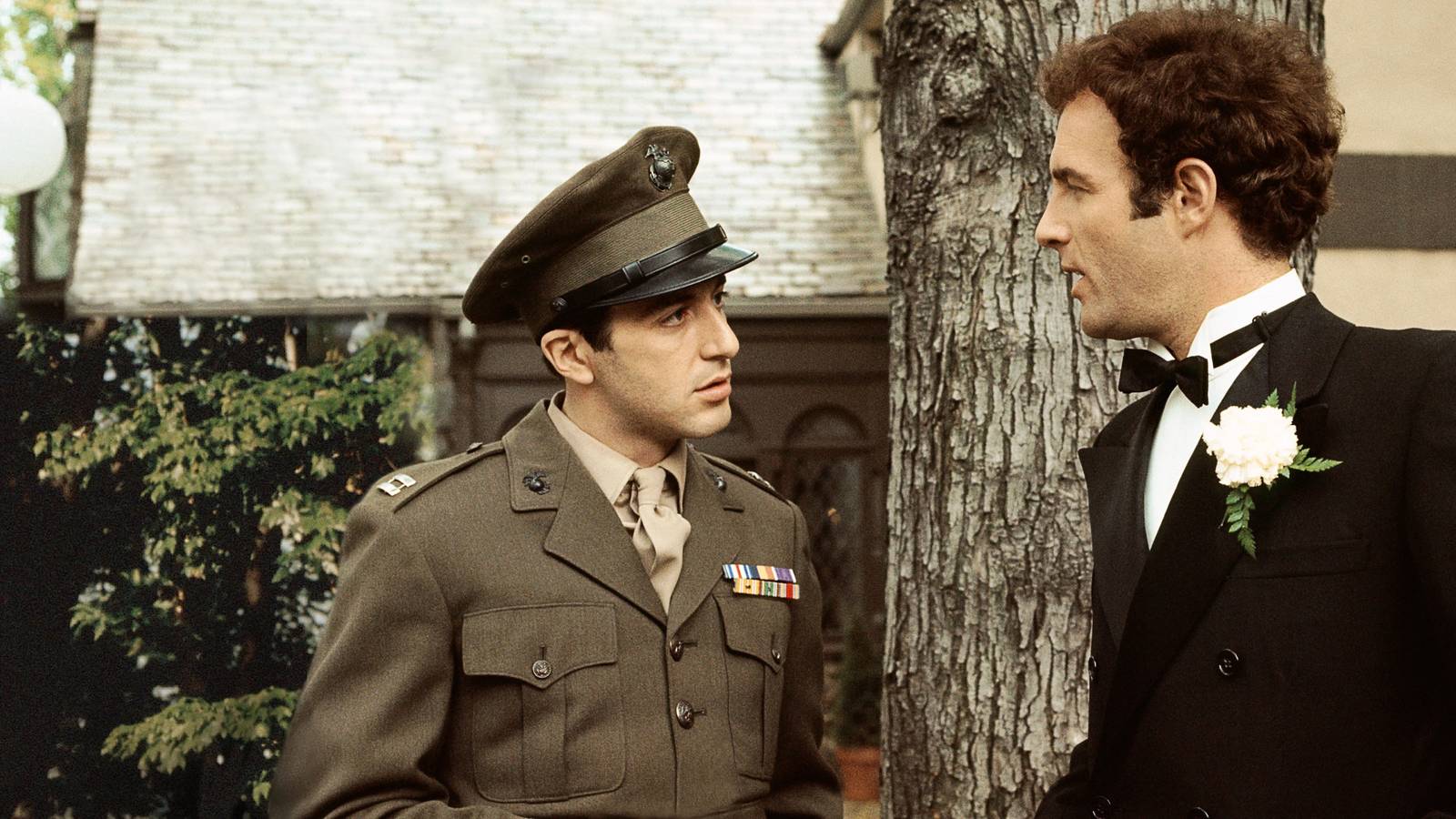
Image via Paramount Pictures Published Oct 19, 2026, 7:40 AM EDT Ryan Heffernan is a Senior Writer at Collider. Storytelling has been one of his interests since an early age, with his appreciation for film and television becoming a particular interest of his during his teenage years. This passion saw Ryan graduate from the University of Canberra in 2020 with an Honours Degree in Film Production. In the years since, he has found freelance work as a videographer and editor in the Canberra region while also becoming entrenched in the city's film-making community. In addition to cinema and writing, Ryan's other major interest is sport, with him having a particular love for Australian Rules football, Formula 1, and cricket. He also has casual interests in reading, gaming, and history. Sign in to your Collider account Drama is the lifeblood of cinema, the essence of realism and gravitas in the medium as it seeks to emphasize emotional storytelling, character complexity, and interpersonal and internal conflicts through an air of seriousness and depth. Its endeavor to depict the full scope of the human condition with raw earnestness has seen many of the genre’s most esteemed films immediately enshrine themselves as quintessential classics defined by their bold writing decisions, astute direction, and their gripping performances. Cinema has seen no shortage of great dramas over the past 75 years, and for every masterpiece that has made the cut for this list, there are dozens of equally adored and decorated pictures that could easily be included in their place. However, it is impossible to deny that these 10 pictures have defined both the resonance and variety of cinematic drama, with everything from international explorations of family hardship to iconic Hollywood classics of corruption and ambition featuring. 10 'One Flew Over the Cuckoo’s Nest' (1975) Image via United Artists Through the latter part of the ‘60s and into the 1970s, there emerged a subgenre of drama that aspired to challenge social conventions and conformity through the lens of those being held in institutions. Cool Hand Luke and The Stepford Wives are both examples of this, but the very best film in this ilk is undeniably Miloš Foreman’s One Flew Over the Cuckoo’s Nest. Based on Ken Kesey’s novel, it unfolds in a mental institution where Randle McMurphy (Jack Nicholson) clashes with the domineering Nurse Ratched (Louise Fletcher) while trying to inspire revolt and joy among his fellow patients. Shot on location and incorporating real psychiatric patients and staff as extras, the five-time Oscar-winning film holds a sense of realism that is only bolstered by the awe-inspiring performances of its two leads. It is the finest exploration of individualism vs. institutional control cinema has ever seen, a cutting display of hopes for freedom clashing violently against the insistence of order. The end result is a masterpiece of narrative tension and dramatic wrath that compliments its sense of adventure with one of the most flattening and jolting climaxes of all time. 9 'Raging Bull' (1980) Image via United Artists While it is adorned like a traditional sports movie, Raging Bull subverts genre conventions to supplant the heroic underdog tale with relentless character study drama as it follows the life of Jake LaMotta (Robert De Niro), a boxer whose personal issues of jealousy, paranoia, and rage constantly thwart his career. Brutally raw and terrifyingly unflinching, Martin Scorsese presents Raging Bull as a violent descent into the siege mentality of toxic masculinity and self-destruction, with De Niro’s Oscar-winning performance imbuing every scene with power and volatility. Even the boxing sequences are deprived of Hollywood heroism, with the ring depicted not as a pillar of glory, but as a platform for punishment and penance where LaMotta externalizes his feelings of self-hatred and the loss of control. Complimented by Michael Chapman’s gorgeous black-and-white cinematography and Thelma Schoonmaker’s sharp, rhythmic editing, Raging Bull is an enduring feat of stylized, impressionable filmmaking within drama cinema that uses its eccentricities and unique qualities to present one of the more confronting pictures to have become a mainstream cultural sensation. 8 'Amadeus' (1984) Image via Orion Pictures Amadeus may flaunt a sense of epic grandeur and excess across its 160-minute runtime, but beneath its eccentricities it soars as a profound drama exploring obsession, envy, and adoration through the lens of F. Murray Abraham’s astonishing performance as Antonio Salieri. With his own dreams of universal acclaim shattered by the emergence of Wolfgang Amadeus Mozart (Tom Hulce), the scorned court composer sets his mind on using his influence to ruin his adversary and insult God in the process, but his appreciation of the delicacy of Mozart’s music never wavers. Amadeus is a stunning examination of the angst and torment of mediocrity, an immersion in the tragedy of dutiful hard work being upstaged by raw, unteachable talent. That it is framed as an elderly Salieri’s confession to his crimes only makes this complex tone all the more poignant, especially as Abraham’s performance reckons with every ounce of spite, resignation, jealousy, and reluctant admiration the character feels. It also marks another great directorial turn from Miloš Foreman, who conjures a hypnotic atmosphere of period allure through stunning production design, deft editing, and an incredible ability to weave Mozart’s music into the narrative fabric of the film with emotional gravitas and storytelling impact. Collider Exclusive · Oscar Best Picture Quiz Which Oscar Best PictureIs Your Perfect Movie? Parasite · Everything Everywhere · Oppenheimer · Birdman · No Country Five Oscar Best Picture winners. Five completely different visions of what cinema can be — and what it can do to you. One of them is the film that was made for the way your mind works. Ten questions will figure out which one. 🪜Parasite 🌀Everything Everywhere ☢️Oppenheimer 🐦Birdman 🪙No Country for Old Men FIND YOUR FILM → 01 What kind of film experience do you actually want? The best movies don't just entertain — they leave something behind. ASomething that pulls the rug out — that makes me think I'm watching one kind of film and then reveals I'm watching another entirely. BSomething overwhelming — funny, sad, absurd, and genuinely moving, all at once. CSomething grand and weighty — a film that makes me feel the full scale of what I'm watching. DSomething formally daring — a film that pushes what cinema can even do. ESomething lean and relentless — pure tension with no wasted frame. NEXT QUESTION → 02 Which idea grabs you most in a film? Great films are driven by a central obsession. What's yours? AClass, inequality, and what people are willing to do when desperation meets opportunity. BIdentity, family, and the chaos of trying to hold your life together when everything is falling apart. CGenius, moral responsibility, and the catastrophic weight of a decision you can never take back. DEgo, legacy, and the terror of becoming irrelevant while you're still alive to watch it happen. EEvil, chance, and whether moral order actually exists or if we just tell ourselves it does. NEXT QUESTION → 03 How do you like your story told? Form is content. The way a story is shaped changes what it means. AGenre-twisting — I want it to start in one lane and migrate into something completely different. BMaximalist and genre-blending — comedy, action, drama, sci-fi, all in one ride. CEpic and non-linear — cutting between timelines, building a mosaic of cause and consequence. DA single unbroken flow — I want to feel like I'm living it in real time, no cuts to safety. ESpare and precise — every scene doing exactly what it needs to do and nothing more. NEXT QUESTION → 04 What makes a truly great antagonist? The opposition defines the protagonist. What kind of opposition fascinates you? AA system — invisible, structural, and almost impossible to fight because it has no single face. BThe self — the ways we sabotage, abandon, and fail the people we love most. CHistory — the unstoppable momentum of events that no single person can stop or redirect. DThe industry — the machinery of culture that chews up talent and spits out irrelevance. EPure, implacable evil — a force so certain of itself it becomes almost philosophical. NEXT QUESTION → 05 What do you want from a film's ending? The final note is the one that lingers. What do you want it to sound like? AShock and inevitability — a conclusion that recontextualises everything that came before it. BEarned emotion — I want to cry, laugh, and feel genuinely hopeful, even if the world is a mess. CDevastation and grandeur — an ending that makes me sit in silence for a few minutes after. DAmbiguity — something that leaves enough open that I'm still thinking about it days later. EBleakness — an honest refusal to pretend the world is tidier than it actually is. NEXT QUESTION → 06 Which setting pulls you in most? Where a film takes place shapes everything — mood, stakes, what's even possible. AA gleaming modern city with a hidden underside — beauty masking rot, wealth masking desperation. BA collapsing suburban life that opens onto something infinite — the multiverse of a single ordinary person. CThe corridors of power and science at a world-historical turning point — where decisions echo for decades. DThe grimy, alive chaos of New York and Hollywood — fame as both destination and trap. EVast, indifferent landscape — desert and highway where violence arrives without warning or reason. NEXT QUESTION → 07 What cinematic craft impresses you most? Every great film has a signature — a technical or artistic element that makes it unmistakable. AProduction design and mise-en-scène — every frame composed to carry meaning beneath the surface. BEditing and tonal control — the ability to move between registers without losing the audience. CScore and sound design — music that becomes inseparable from the dread and awe of what you're watching. DCinematography as performance — the camera not recording events but participating in them. ESilence and restraint — what's left unsaid and unshown doing more work than any dialogue could. NEXT QUESTION → 08 What kind of main character do you root for? The protagonist is the lens. Who you choose to follow says something about you. ASomeone smart and resourceful who makes increasingly dangerous decisions under pressure. BSomeone overwhelmed and ordinary who turns out to be capable of something extraordinary. CA brilliant, tortured figure whose gifts and flaws are inseparable from each other. DA self-destructive artist whose ego is both their superpower and their undoing. EA quiet, principled person trying to make sense of a world that has stopped making sense. NEXT QUESTION → 09 How do you feel about a film that takes its time? Pace is a choice. Some films sprint; others let tension accumulate slowly, deliberately. AI love a slow build when I know the payoff is going to be seismic — patience for a devastating reveal. BGive me relentless momentum — I want to feel breathless and emotionally spent by the end. CEpic runtime doesn't scare me — if the material demands three hours, give me three hours. DI want it to feel propulsive even when nothing is technically happening — restless energy throughout. EDeliberate and unhurried — I want dread to accumulate in the spaces between the action. NEXT QUESTION → 10 What do you want to feel walking out of the cinema? The best films leave a mark. What kind of mark do you want? AUnsettled — like I've just seen something I can't fully explain but can't stop thinking about. BMoved and energised — like the film reminded me what actually matters and gave me something to hold onto. CHumbled — like I've been in the presence of something genuinely important and overwhelming. DExhilarated — like I've just seen cinema doing something it's never quite done before. EHaunted — like a cold, quiet dread that stays with me for days. REVEAL MY FILM → The Academy Has Decided Your Perfect Film Is…Your answers have pointed to one Oscar Best Picture winner above all others. This is the film that was made for the way your mind works. ParasiteYou are drawn to films that operate on multiple levels simultaneously — that begin in one genre and quietly, brilliantly migrate into another. Bong Joon-ho's Parasite is a film about class, desire, and the architecture of inequality that manages to be darkly funny, deeply suspenseful, and genuinely shocking across a single extraordinary running time. Your instinct is for cinema that hides its true intentions until the moment it's ready to reveal them. Parasite is exactly that — a film that rewards close attention and punishes assumptions, right up to its devastating final image. Everything Everywhere All at OnceYou want it all — and this film gives you all of it. The Daniels' Everything Everywhere All at Once is one of the most maximalist films ever made: action comedy, multiverse sci-fi, family drama, existential crisis, and a genuinely earned emotional core that sneaks up on you amid the chaos. You are someone who responds to ambition, who doesn't want cinema to choose between being entertaining and being meaningful. This film refuses that choice entirely. It is overwhelming by design, and its overwhelming nature is precisely the point — because the feeling of being crushed by infinite possibility is exactly what it's about. OppenheimerYou are drawn to cinema on a grand scale — films that understand history not as a backdrop but as a force, and that place their characters inside that force and watch what happens. Christopher Nolan's Oppenheimer is a film about the terrifying gap between what we can do and what we should do, told with the full weight of one of the most consequential moments in human history behind it. You want your films to feel important without feeling self-important — to earn their ambition through sheer craft and the gravity of their subject. Oppenheimer does exactly that. It is enormous, complicated, and refuses easy comfort. BirdmanYou are drawn to films that foreground their own construction — that make the how of the filmmaking part of the what it's about. Alejandro González Iñárritu's Birdman, shot to appear as a single continuous take, is cinema examining itself through the cracked mirror of a fading actor's ego. You respond to formal daring, to the feeling that a film is doing something that probably shouldn't be possible. Michael Keaton's performance and Emmanuel Lubezki's restless camera create something genuinely unlike anything else — a film that is simultaneously about creativity, relevance, self-destruction, and the impossibility of ever truly knowing if your work means anything at all. No Country for Old MenYou are drawn to cinema that trusts silence, that refuses to explain itself, and that treats dread as a form of meaning. The Coen Brothers' No Country for Old Men is a film about the arrival of a new kind of evil — implacable, arbitrary, and utterly indifferent to the moral frameworks we use to make sense of the world. It is one of the most formally controlled films ever made, and its controlled restraint is what makes it so terrifying. You want your films to haunt you, not comfort you. You are not interested in resolution if resolution would be dishonest. No Country for Old Men is honest in a way that most cinema never dares to be. ↻ RETAKE THE QUIZ 7 'Ikiru' (1952) Image via Toho Capturing both the tragedy and beauty of the human condition, Ikiru marks a masterpiece of profound intimacy from Akira Kurosawa, with its piercing honesty and universality making it an ageless gem of Japanese cinema. It follows an aging bureaucrat who learns he has terminal cancer and struggles to decide how he will live his final days with purpose. Just as he decides to oversee the construction of a playground which has been stuck in bureaucratic limbo, the film leaps forward six months to his funeral, where his friends, family, and colleagues discuss how Kanji Watanabe (Takashi Shimura) spent his final months. Bereft of Hollywood melodrama, Ikiru unfolds as a ceaselessly compelling examination of human resilience and the will to make an impact, a message that is only elevated by Shimura’s performance as his hunched-over and constantly scared personification of vulnerability begins to blossom into conviction. Its final minutes are a procession of beautiful moments peppering a bleak truth of overcoming grief and temporary self-discovery, with Watanabe’s somber moment on the swing one of cinema’s most evocative sequences and just one of his co-workers taking heed of how Watanabe lived his life. 6 'The Shawshank Redemption' (1994) Image via Columbia Pictures Based on Stephen King’s novella, and brought to the screen with spellbinding majesty by director Frank Darabont, The Shawshank Redemption has thankfully overcome its initial box office failure to stand as one of the defining icons of ‘90s cinema. The prison drama anchors its harrowing story of institutional cruelty to a richly earned sense of humanity and hope as it focuses on Andy Dufresne’s (Tim Robbins) unconventional life behind bars as he finds solace in the friendships he forms with fellow inmates, particularly “Red” (Morgan Freeman). The story of friendship and the loss of freedom is perfectly complimented by the sense of patience Darabont imbues every sequence of the story with, a point that imposes itself through Roger Deakins’ deliberate, weighted cinematography and Thomas Newton’s evocative score. Utterly transfixing from the sense of injustice and damnation it imposes in its earliest scenes right through to the triumph of its climax, The Shawshank Redemption excels as one of the finest dramas ever made, and enduring crowd-pleasing favorite, and a testament to a film’s legacy not being defined by its theatrical performance. 5 'Cinema Paradiso' (1988) Image via Titanus At its core, drama is ultimately about human life. The ups and downs we all experience and the many mistakes and lessons that transpire along the way. Cinema Paradiso is a touching exploration of exactly this, with the Italian film unfolding mostly through flashbacks as an accomplished director learns that the projectionist from his childhood hometown has died, inspiring him to reflect on his youth in post-WWII Sicily, his bond with Alfredo (Philippe Noiret), and the impact cinema has had on his life. The exploration of childhood and adolescence is outstanding, conjuring an air of curiosity, adventure, and innocent joy, especially as Salvatore’s (Salvatore Cascio/Marco Leonardi/Jacques Perrin) boyish wonder evolves into the teenage angst of young love, aimlessness, and small-town frustration. In addition to one of the most beautiful father-son style bonds cinema has ever seen, Cinema Paradiso also explores the bittersweet cost of pursuing your dreams, the nostalgic yearning of adulthood, and the tender way intimate bonds can shape one’s life. Bolstered by Ennio Morricone’s gorgeous score and one of the most unforgettably touching, albeit bittersweet endings in cinema history, Cinema Paradiso is the epitome of human drama at its very best. 4 'Tokyo Story' (1953) Image via Shochiku Another profound exploration of life’s beauty and angst from international cinema, Tokyo Story explores the full scope of the human condition within a contained tale of a family growing adrift. It unfolds as an elderly couple visit their children and grandchildren in Tokyo only for their eager excitement for the reunion to crumble when they realize that, between the busy work schedule of the parents and the new-age wonder that transfixes the children, they are no longer wanted. It’s an emotionally raw story of how family values are sacrificed amid the turmoil of life, and director Yasujirō Ozu captures it magnificently. With low-angle, static camera positioning and limited shot changes, the story unfolds with an intimacy between the audience and characters that borders on voyeuristic, especially in accordance with the film’s minimalism. Bereft of melodrama and manipulative music cues, Tokyo Story delivers raw, natural drama that soars off the actors’ ability to communicate a wealth of emotion through subtle gestures and facial expressions. 3 '12 Angry Men' (1957) Image via United Artists Not only one of the greatest dramas of all time, but the most astonishing directorial debut cinema has seen as well, 12 Angry Men is a true masterpiece, a resounding, timeless feat from Sidney Lumet that delivers incredible tension despite never leaving a single room. The absorbing crime drama unfolds in the jury deliberation room of the trial of an 18-year-old accused of murdering his abusive father. While eleven of the jurors view it as a closed case and are willing to sentence the defendant to death, Juror #8 (Henry Fonda) argues there is reasonable doubt. Not even featuring a score, the movie achieves everything through performance, writing, and visuals. The evolution of the cinematography is exceptional, with the start of the movie using wide lenses and high angles that give each character space before its shots become more claustrophobic and crushing as the stakes rise. Its real-time procession and the environmental wrath of the heat only adds to the drama, making every disagreement feel volatile, especially as it becomes clear that the underbelly of the heated discussion isn’t only about justice, but about logical reasoning vs. simmering prejudice. 2 'Schindler’s List' (1993) Image via Universal Pictures There is no doubt that Schindler’s List has elements of war and historical epic in the fold, but the quintessential 195-minute is undoubtedly most at home as a human drama that depicts life in a Nazi concentration in confronting detail. Liam Neeson stars as Oskar Schindler, a German industrialist with ties to the Nazi party who uses his influence and station to recruit Jewish workers to his factories, thus sparing them from some of the horrors that await them in the Płaszów camp. With a harrowing spectacle of unvarnished, uncompromising realism, Schindler’s arc is one of complex morality and profound sympathy, a gripping exploration of humanity in positions of power given tremendous weight by the historical brutality depicted. Steven Spielberg deepens the piercing resonance of the film with the striking use of black-and-white cinematography and precise flurries of color, John Williams’ evocative violin-driven score, and the awe-inspiring scope of the production. In addition to being one of the greatest drama movies ever made, Schindler’s List also endures as a harrowing must-see masterpiece through its enduring cultural impact as the most devastating portrayal of the Holocaust audiences have ever seen. 1 'The Godfather' (1972) Image via Paramount Pictures While its crime pedigree is plain to see, The Godfather also thrives as one of the most absorbing dramas cinema has ever seen, an engrossing combination of Shakespearian family tragedy and criticism of the American Dream that revolves around a perfect script and exceptional performances. It follows a difficult transition period in the Corleone crime family as an aging Vito (Marlon Brando) struggles to convince his reluctant son Michael (Al Pacino) to succeed him. Amid the indecision, business rivals mount an attack against Vito which forces Michael to take action. Directed by Francis Ford Coppola and written by Mario Puzo, The Godfather fills its three-hour runtime with a stunning procession of commanding sequences. Every single one of them works in service of the film’s thematic focus on power, morality, and the divide between generations. Furthermore, Michael’s arc epitomizes outstanding character development, with his moral descent into corruption bolstered not only by great acting and writing, but by cinematographer Gordon Tellis’ use of dramatic dark shadows and Nino Rota’s mournful score as well. In essence, every single element of The Godfather works beautifully in tandem to produce what is the greatest drama of the past 75 years and, in the eyes of many, the finest cinematic achievement of all time. The Godfather Release Date March 24, 1972 Runtime 175 minutes Cast Al Pacino Michael Corleone
The 10 Best Drama Movies of the Last 75 Years, Ranked
Full Article
Original Source
Read the full article at Collider →KhanList aggregates and links to publicly available news content. We do not host full articles from third-party sources. Always verify important information with original sources.