
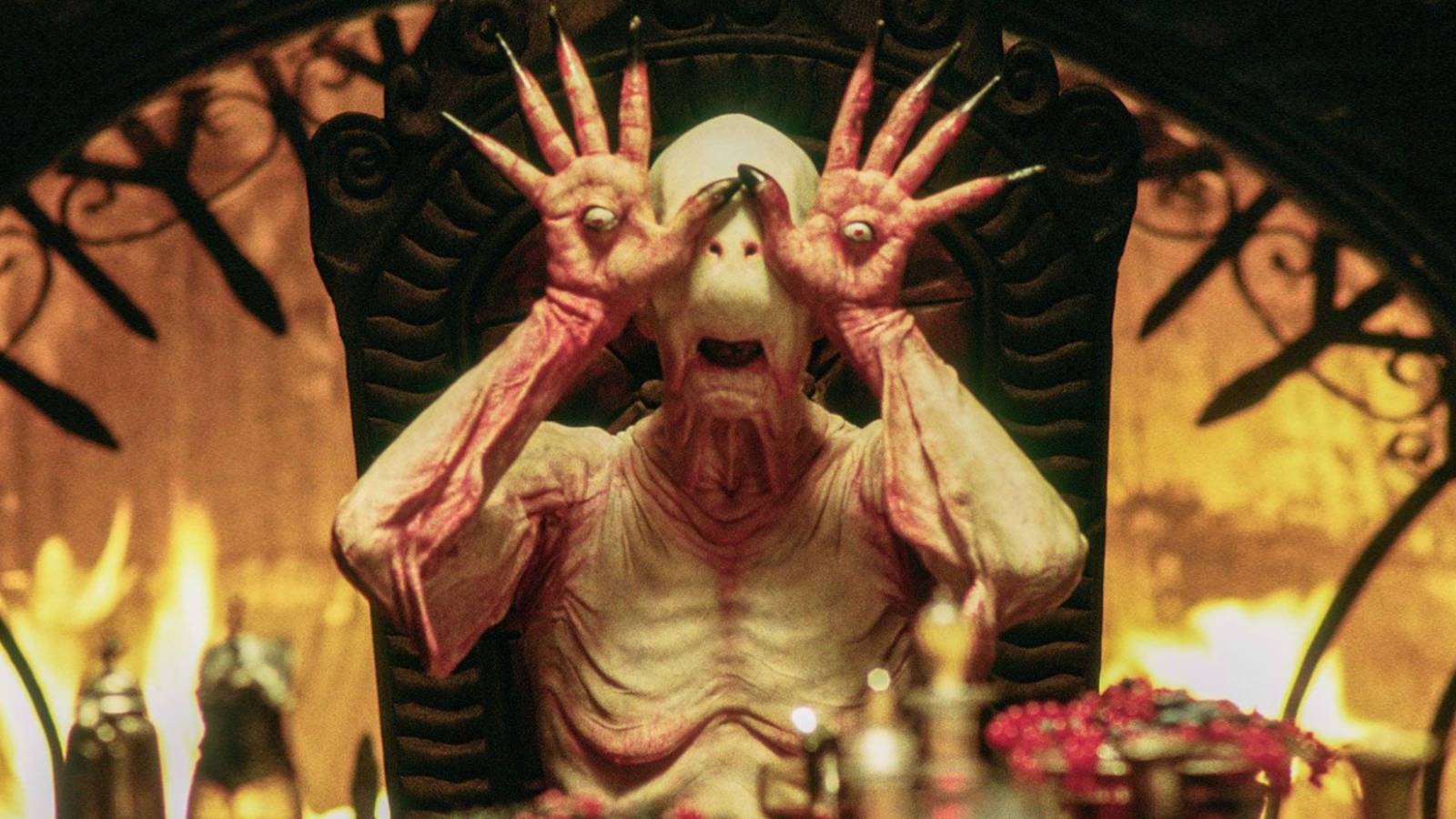
Image via Warner Bros. Pictures Published Nov 24, 2026, 8:52 PM EST Michael Block is a 14 time GLAM Award nominated writer, producer, and host of the podcast Block Talk. Throughout his time in the entertainment industry, he has worked on and off Broadway as a stage manager, written several produced plays, critiqued hundreds of theatrical performances, drag and cabaret shows, and has produced events randing from drag competitoons to variety concerts! On Block Talk, he interviews nightlife personalities, covers the wide world of entertainment through features, ranking episodes, and recaps ALL of Drag Race, as well as Dragula and Survivor. He has interviewed hundreds of RuGirls that span the globe at DragCon NYC, DragCon LA, and DragCon UK. In his free time, he makes one-of-a-kind jewelry and gift baskets with his mom. He is a proud member of the LGBTQ+ community. Sign in to your Collider account The beauty of movies is their unique ability to give us an opportunity to escape our lives while we sit in a dark room and drift into far-off lands for daring stories beyond our own worlds. Through the brilliance of fantasy, they open up doors that transform our deepest human desires, fears, and hopes into visible magic. While we often tend to think of fantasy films as fun, whimsical fairy tales, there’s an entire subgenre that thrives on darkness. These stories offer a chance to experience fear, dread, and grief within boundaries. Unlike traditional tales of pure good versus pure evil, dark fantasy reflects the world's messy realities through flawed characters and corrupt systems. Classics and cult favorites create an immersive atmosphere that feels visceral and haunting. Countless memorable dark fantasy flicks exist; ten stand out as the best in the genre. From ‘80s classics that launched endless nightmares to animated masterpieces that pushed the bounds of storytelling, these films remain a beacon of dark fantasy, inspiring stories still today. 10 'The Green Knight' (2021) Image via A24 Based on the 14th-century poem Sir Gawain and the Green Knight, The Green Knight reinvents a classic tale in fantastical form. Written and directed by David Lowery, the tale tells of King Arthur’s reckless nephew, Sir Gawain (Dev Patel), after he accepts a Christmas challenge to behead a mysterious, emerald-skinned stranger on the condition that he receive an identical blow in return one year later. As the deadline approaches, Gawain embarks on a surreal, perilous quest across the wilderness to confront the giant at the Green Chapel, facing ghosts, scavengers, and moral temptations that test his true courage and honor. The Green Knight transformed a classic poem into a rich, meditative, and visually stunning exploration of honor, mortality, and self-discovery. The adaptation stands out as a wonderful modern dark fantasy film for its bold narrative within a masterful atmosphere. By deconstructing the hero’s journey, the quest becomes an internal dissertation on a vain, insecure, and terrified hero and his own mortality. The anti-chivalric focus provides inevitable doom through a constant shadow of mortality that hangs over every frame, turning a colorful medieval romance into a solemn, haunting existential fable. The film treats magic as ancient, weird, and unknowable. It uses practical prosthetics and rich Irish landscapes to give the world a cold, physical, and decaying antiquity. Hailed as an art-house masterpiece, The Green Knight concludes with an ambiguous, poignant conclusion that lingers well beyond the final frame. 9 'The City of Lost Children' (1995) Image via Sony Pictures Classics A lesser-remembered gem, The City of Lost Children is a French wonder. Directed by Marc Caro and Jean-Pierre Jeunet, the film is set in a surreal, dystopian harbor town where a prematurely aging scientist named Krank (Daniel Emilfork) kidnaps local children to steal their dreams because he can no longer dream himself. After Krank's minions snatch a young boy named Denree (Joseph Lucien), his adoptive brother, a gentle carnival strongman named One (Ron Perlman) teams up with a clever orphan girl named Miette (Judith Vittet) to infiltrate Krank's offshore oil rig and rescue the captives. The City of Lost Children is celebrated as a visual and atmospheric masterpiece that blends dark fairy tales, steampunk, and surrealism through landmark storytelling. The City of Lost Children operates on visual rhetoric and nightmarish fairy-tale logic. Shot by cinematographer Darius Khondji with production design by Jean Rabasse and costumes by Jean Paul Gaultier, the unmatched visual and aesthetic world-building merges steampunk, dieselpunk, and gothic surrealism into a decaying, grimy port city. Angelo Badalamenti’s musical score weaves a melancholic, hypnotic spell that turns a bizarre narrative into a memorable fable. While its dreamlike surrealism can feel disorienting, the film left a massive footprint that inspired the likes of some filmmakers on this list. 8 'Legend' (1986) Image via Universal Pictures Ridley Scott has a bevy of brilliant films, but one underappreciated masterpiece is the dark fantasy phenomenon Legend. In the 1986 film, the demonic Lord of Darkness (Tim Curry) plots to plunge the world into an endless, frozen night by capturing the last two unicorns and taking their horns. After Princess Lili (Mia Sara) unwittingly leads goblins to the sacred creatures and gets kidnapped, a pure-hearted forest dweller named Jack (Tom Cruise) teams up with fairies and elves to rescue her and restore sunlight to the realm. A cult classic today, Legend is celebrated for its painterly visual atmosphere, groundbreaking practical makeup, and an iconic villain. Scott approached the film like a master artist, building massive, detailed forest and castle sets on soundstages. Every frame is saturated with smoke, dramatic shadows, and rich textures. The film fully commits to the raw, nightmarish, moral weight of classic European folklore, akin to the Brothers Grimm. Rob Bottin's monumental prosthetic makeup, featuring towering black horns, crimson skin, and cloven hooves, combined with Curry’s seductive and booming performance, created one of the greatest and most convincing manifestations of the Devil in cinema history. With the synth-heavy Tangerine Dream score in the U.S. version offering an ethereal, psychedelic sound, Legend established a unique identity for a film ahead of its time. 7 'The NeverEnding Story' (1984) Image via Warner Bros. Pictures Though it traumatized an entire generation, The NeverEnding Story remains a timeless classic. Co-written and directed by Wolfgang Petersen, the adaptation of Michael Ende’s novel follows Bastian Balthazar Bux (Barret Oliver), a lonely boy grieving for his mother who hides in his school attic to read a mysterious, stolen book about the magical land of Fantasia. As he reads about a young warrior named Atreyu (Noah Hathaway) racing to save the realm from a destructive force called "The Nothing," Bastian realizes his own imagination is required to save the fantasy world from total annihilation. The NeverEnding Story blends a deeply emotional coming-of-age story with a tactile, imaginative fantasy world that refuses to talk down to children. Though geared for a younger audience, the film is quite profoundly thematic. With despair a central cog of the story, the true antagonist is a formless void that symbolizes adult apathy and the erosion of hope. Through the weight of grief, Balthazar uses the book as a dark-fantasy escape mechanism to process the raw grief of losing his mother and dealing with school bullies. Built using practical effects, animatronics, and dark, brooding sets, Fantasia feels physically heavy, gothic, and dangerously real. The film goes all-in with traumatic moments, as scenes like Atreyu’s horse Artax sinking slowly into the Swamps of Sadness, overcome by the heavy weight of depression, delivered a level of emotional devastation rarely seen in family-oriented cinema. With a complex, haunting conclusion, The NeverEnding Story blurs the line between reality and imagination. 6 'Sleepy Hollow' (1999) Image via Paramount Pictures An underrated Tim Burton thriller, the Gothic supernatural dark fantasy Sleepy Hollow follows skeptical New York City detective Ichabod Crane (Johnny Depp), who is sent to the upstate hamlet of Sleepy Hollow to investigate a string of brutal decapitations that the townsfolk blame on the legendary Headless Horseman. As he teams up with the mysterious Katrina Van Tassel (Christina Ricci) to uncover the truth, Crane discovers the resurrected Hessian mercenary is actually being controlled as part of a sinister conspiracy targeting the village's wealthiest men. The brilliant Burton drama blends a rich gothic atmosphere, practical filmmaking craftsmanship, a clever detective plot, and standout performances. Sleepy Hollow merges Burton’s signature sensibility with a dark fantasy fairy tale aesthetic. The production built an entire 18th-century New York hamlet from scratch, capturing a fog-drenched, desaturated palette punctuated by striking splashes of crimson blood and fire. The film pays homage to classic horror cinema, complete with theatrical lighting, ghoulish practical effects, prosthetics, and a sinister orchestral score by Danny Elfman. Screenwriter Andrew Kevin Walker takes Washington Irving's classic ghost story and turns Crane into a nervous, science-minded early forensic investigator forced to reconcile rational logic with a very real supernatural curse. With Depp’s robust protagonist battling Christopher Walken’s silent, razor-toothed, fiercely intimidating portrayal of the Headless Horseman, the film gives the spectral antagonist genuine physical menace and tragic lore. A brilliant subversion of the source material, Sleepy Hollow was in more than capable hands. 5 'Coraline' (2009) Image via Laika Studios Considered a masterwork of modern stop-motion animation, Coraline is absolutely breathtaking. Written and directed by Henry Selick and based on the novella by Neil Gaiman, the story follows 11-year-old Coraline Jones (Dakota Fanning) who discovers, while exploring her family's old house, a secret door that leads to an idealized parallel version of her life. When her seemingly attentive, button-eyed "Other Mother" (Teri Hatcher) turns sinister and tries to trap her there forever, Coraline must rely on her bravery and resourcefulness to escape and rescue her real parents. Through stunning physical craftsmanship, Coraline offers a dark, mature coming-of-age story that merges tactile horror with a dark psychological palette. Concept artist Tadahiro Uesugi and director Henry Selick split the visual world into two distinct traps: a dreary, muted real world and an intoxicatingly vibrant, button-eyed "Other World" that slowly reveals its parasitic, soul-consuming nature. Produced by Laika, the film uses physical hand-built sets, miniature puppets, and over 200,000 3D-printed faces to create an organic, slightly disturbing "uncanny valley" look that CGI cannot replicate. Coraline embraces genuine dread, parental neglect, body horror, and high-stakes peril. It respects its younger audience by letting them process real fear and bravery. Beneath the gothic nightmares and spider-like Beldam lies a classic, grounded fable about appreciating the messy, imperfect reality of your actual life instead of falling for an idealized illusion. Coraline has emerged as one of the most influential animated features of the early 21st century. 4 'Dragonslayer' (1981) Image via Walt Disney Studios Motion Pictures A landmark dark fantasy classic, Dragonslayer ignited pop culture’s passion with dragons. In the film directed by Matthew Robbins, a 6th-century British kingdom appeases a terrifying, 400-year-old dragon named Vermithrax Pejorative by sacrificing young virgins chosen through a royal lottery. After his master is killed, an inexperienced sorcerer's apprentice, Galen Bradwarden (Peter MacNichol), must step up to confront the beast and end the deadly tradition with the help of a disguised blacksmith's daughter, Valerian of Swanscombe (Caitlin Clarke). Dragonslayer subverted traditional fairy-tale tropes, introducing a terrifying and realistic creature design and pioneering visual effects. Dragonslayer is all about the dragon. Industrial Light & Magic brought Vermithrax Pejorative to life through a massive 40-foot mechanical puppet, hand puppets, and pioneering Go-Motion techniques. By creating a tangible beast, the narrative was given instant weight, as Vermithrax is one of the greatest and most terrifying dragons ever put on film. Written by Robbins and Hal Barwood, the story deliberately abandons shining knights, courts of love, and noble quests for a primitive, muddy 6th-century Britain ruled by fear and superstition. The darker themes are shockingly bleak, and yet completely engrossing. Produced as a joint venture between Disney and Paramount, it pushed the boundaries of PG-rated content while inspiring a bountiful future for modern fantasy. 3 'The Dark Crystal' (1982) Image via Universal Pictures Directed by Jim Henson and Frank Oz, The Dark Crystal became an absolute cinematic game changer. Jen (Stephen Garlick) and Kira (Kathryn Mullen), the last surviving members of the elf-like Gelfling race, embark on a perilous quest to find a missing shard of a shattered mystical gem. They must heal the crystal before the convergence of three suns to end the cruel reign of the vulture-like Skeksis (Jerry Nelson) and restore peace and balance to their fractured world. The Dark Crystal became a landmark achievement in fantasy cinema because it broke conventional boundaries in puppetry, world-building, and dark storytelling. The Dark Crystal broke ground in the genre by becoming the first major live-action feature film to rely entirely on animatronics and puppetry. Every creature, from the vulture-like Skeksis to the gentle Mystics and the skittering Garthim, was built with handmade glass eyes and mechanical articulation that gave them a visceral, living presence. Fantasy illustrator Brian Froud designed a living, breathing alien planet in Thra, full of earthy textures, fungal forests, and mythical fauna that felt organic rather than digital or glossy. Henson intentionally embraced the grim, frightening nature of classic folklore, believing it was healthy for children to confront fear and darkness rather than experience a sanitized product. And with nightmarish villains, it was completely achieved. The narrative explores the deep philosophical concept that good and evil are not just warring external factions, but fractured halves of a single whole. Showing that true balance requires acknowledging and integrating internal darkness rather than hiding from it. Collider Exclusive · 8 Questions · 2 Minutes What Fantasy World Do You Belong To? Middle-earth · Grand Line · The Continent · Camp Half-Blood Pick your magic, your crew, where you want to wake up and who you would rather be fighting, and we will tell you which world you actually belong in. Four are open to you: an ancient kingdom living through its last good age, an endless sea full of pirates, a continent that pays people to kill monsters, and a summer camp where the Greek gods are extremely real and mostly a nuisance. 💍Middle-earth(Rings of Power) 👒Grand Line(One Piece) 🐺The Continent(The Witcher) 🔱Camp Half-Blood(Percy Jackson) FIND YOUR WORLD → 01 What kind of power do you want? Every one of these worlds runs on a completely different sort of magic. ASomething ancient and half forgotten that came down through my family. BSomething completely ridiculous that works in a fight and gets a laugh. CNo magic at all, just training, potions and a very sharp sword. DSomething I inherited from a parent I have barely met. NEXT QUESTION → 02 Who is travelling with you? Nobody gets through any of these stories entirely on their own. AA fellowship drawn from every corner of the world who barely trust each other. BA crew I picked up one at a time, all of whom would die for me. CTwo or three people I would never describe out loud as friends. DTwo mates from school who are exactly as out of their depth as I am. NEXT QUESTION → 03 Where do you want to wake up tomorrow? The best fantasy is usually just somewhere you would genuinely like to live. AA high city of white stone with the sea somewhere far below. BA ship under sail, with an island ahead that nobody has mapped. CA rented room over a tavern, in a town I am leaving in the morning. DA cabin at a summer camp with everybody else already awake outside. NEXT QUESTION → 04 How are you making a living out there? Even in fantasy somebody has to pay for the horse. AI am not, because somebody far older than me decided this was my duty. BTreasure, and I am not always careful about whose it used to be. CI take contracts, since people will pay well for what they will not touch. DI am fifteen and this is all technically a school trip. NEXT QUESTION → 05 There is something in the woods. What do you do about it? All four of these worlds keep something unpleasant out there in the dark. ASend word to somebody who has seen this before, then hold the line. BWalk straight in, because it is interesting and possibly edible. CAsk what it has been eating and what the village is willing to pay. DWork out which myth it escaped from, then improvise very badly. NEXT QUESTION → 06 Who is the villain of your story? The enemy tells you far more about a world than the hero ever does. AAn ancient evil that has been patient for several thousand years. BA government that has spent a long time calling itself the good guys. CA man who turns out to be far worse than anything I hunt for money. DA god, or possibly my own family, and quite likely both at once. NEXT QUESTION → 07 What do you actually believe in out there? Every world hands its heroes one rule and asks them to hold onto it. ASome things are worth defending even when the odds are hopeless. BNobody gets to tell me where I can go or what I am allowed to want. CPick the lesser evil, and never pretend afterwards that it was not evil. DMy friends come before anything a prophecy has to say about it. NEXT QUESTION → 08 A thousand years from now, how are you remembered? Eight questions in, this is the one that decides your world. AIn a song, in a language hardly anybody still speaks. BAs the one who got there first and proved the whole thing was possible. CBarely, and mostly wrongly, in ballads I would absolutely hate. DOn a plaque at a camp, read by kids about to do the same thing. REVEAL MY WORLD → The Map Is Drawn Your World Is…Four worlds and four completely different ideas of what a good life looks like. This is where you belong, what it would ask of you, and what you would get back in return. Middle-earthYou belong somewhere old enough that the mountains have names and somebody can still tell you who gave them. Middle-earth is for people who think the right thing is worth doing even when it will not be finished in their lifetime. This is the only world on the list where doing good is understood as a very long defeat, fought anyway, by people who will never see how it ends. You are drawn to grandeur, to white cities and deep forges and the sense that almost everything you touch is older than your entire family line. The Rings of Power is set in the last good age before it all goes wrong, which gives every quiet scene in it a slightly unbearable weight. You would take the hard road, and you would take it on foot. The Grand LineYou want the sea, a crew, and absolutely nobody telling you where you are allowed to go. The Grand Line is the world for people whose main ambition in life is finding out what is over there. One Piece has run for decades on one very simple engine, which is a group of people who each want something impossible and have decided to go and get it together. You collect people. Your ideal crew is a set of misfits who were each written off somewhere else before you turned up and offered them a better idea. The world is enormous and deliberately ridiculous, and the emotional gut punches land harder because of that rather than in spite of it. You would set sail knowing the map runs out, which is more or less the entire point of it. The ContinentYou would rather be feared and useful than liked and useless. The Continent is a world where the monsters are the straightforward part of the job and the people are where it all gets complicated. Witchers get paid to do what nobody else will and resented for existing at all, which is a trade most people would refuse and you would probably accept. You have no real illusions about which side is the good one, largely because on the Continent that question tends to have a disappointing answer. The best of these stories are not about the fighting. They are about somebody with a rigid code being repeatedly cornered into caring about people. You would take the coin, finish the job properly, and be out of town before the story got told wrong. Camp Half-BloodYou want the myths to be real and loose in the actual world, and you want to find out at about thirteen that you were never anywhere near as ordinary as everybody kept telling you. Percy Jackson takes the oldest stories we have and drops them into car parks and diners, which makes the gods considerably funnier and a great deal worse. You would be the kid every school gave up on, who turns out to have been built for something nobody thought to test for. The series is genuinely about friendship rather than destiny, and it says so out loud every time a prophecy tries to get in the way. Camp Half-Blood is the real fantasy here: a place where the thing that made you difficult everywhere else is the thing that makes you belong. ↻ RETAKE THE QUIZ 2 'Princess Mononoke' (1997) Image via Studio Ghibli There are quite a few brilliant Studio Ghibli films, but the best dark fantasy film from the company is Princess Mononoke. Written and directed by Hayao Miyazaki, the film follows a young warrior named Ashitaka (Yoji Matsuda/Billy Crudup) who journeys west to find a cure for a deadly curse inflicted by a demon-possessed boar god. Along the way, he becomes caught in a bitter war between the industrializing Iron Town, led by Lady Eboshi (Yuko Tanaka/Minnie Driver), and the ancient forest gods, who are defended by San (Yuriko Ishida/Claire Danes), a fierce human girl raised by wolves. Princess Mononoke rejects simplistic morality and portrays the clash between industrialization and the natural world with rare nuance, emotional depth, and artistic brilliance. With no fairy tale binaries, Princess Mononoke features clashing as a means for survival in a morally grey world. Lady Eboshi leads Iron Town, clearing the forest, yet she provides a radical, humane sanctuary for outcasts, lepers, and former prostitutes, giving them dignity and economic independence. San and the forest gods fight with lethal fury, driven to protect their home from industrial erasure. Ashitaka tries to broker peace, caught in the tragic realization that both sides have valid reasons to fight—and that compromise comes at a devastating cost. Miyazaki broke away from soft animated storytelling to show the ugly grinding horror of real war. Rooted in Muromachi-period Japanese history and folklore, the rich mythic world-building allowed the film to establish its own celebrated identity. 1 'Pan's Labyrinth' (2006) Image via Warner Bros. Pictures One of modern cinema's greatest visionaries is Guillermo del Toro. With such incredible projects to his name, the one cinephiles point to as his signature piece is Pan’s Labyrinth. Set in 1944 post-Civil War Spain, Pan's Labyrinth follows a young girl named Ofelia (Ivana Baquero) who moves with her pregnant mother, Carmen (Ariadna Gil), to a rural military outpost ruled by her sadistic, fascist stepfather, Captain Vidal (Sergi Lopez). To escape the brutal reality around her, Ofelia enters a mysterious labyrinth where a faun informs her she is a lost underworld princess who must complete three perilous tasks to reclaim her immortality and throne. Masterfully blending grim historical drama with a dark, magical fairy tale, Pan’s Labyrinth is a dual-world parable with dazzling visuals and mesmerizing storytelling. Pan’s Labyrinth weaves together two brutally concurrent narratives: the grim, realistic violence of post-Civil War Francoist Spain in 1944 and a surreal, subterranean fairy-tale world. The real-world horrors, embodied by the fascist Captain Vidal, and the mythical trials, assigned by the Faun, make each other's stakes feel heavier and more urgent. With imagination as resistance, the story treats fantasy not as a safe escape, but as a moral testing ground where disobedience against a cruel, authoritarian regime becomes an act of grace and defiance. The film famously argues that the scariest and most destructive monsters are cold-blooded humans in uniform. With a tactile design, del Toro relied heavily on practical makeup, animatronics, and creature performance, including Doug Jones', giving the Faun and the Pale Man a nightmarish, physical weight. Pan’s Labyrinth is a landmark achievement that every other dark fantasy film has hoped to mimic. Release Date January 19, 2007 Runtime 118 minutes Director Guillermo del Toro Cast Sergi López Capitán Vidal In the Falangist Spain of 1944, the bookish young stepdaughter of a sadistic army officer escapes into an eerie but captivating fantasy world.
The 10 Best Dark Fantasy Films of All Time, Ranked
Full Article
Original Source
Read the full article at Collider →KhanList aggregates and links to publicly available news content. We do not host full articles from third-party sources. Always verify important information with original sources.