
Image via Roger Wong/INFphoto.com Published Nov 29, 2026, 4:11 PM EST Jeremy has more than 2900 published articles on Collider to his name, and has been writing for the site since February 2022. He's an omnivore when it comes to his movie-watching diet, so will gladly watch and write about almost anything, from old Godzilla films to gangster flicks to samurai movies to classic musicals to the French New Wave to the MCU... well, maybe not the Disney+ shows. His favorite directors include Martin Scorsese, Sergio Leone, Akira Kurosawa, Quentin Tarantino, Werner Herzog, John Woo, Bob Fosse, Fritz Lang, Guillermo del Toro, and Yoji Yamada. He's also very proud of the fact that he's seen every single Nicolas Cage movie released before 2022, even though doing so often felt like a tremendous waste of time. He's plagued by the question of whether or not The Room is genuinely terrible or some kind of accidental masterpiece, and has been for more than 12 years (and a similar number of viewings). When he's not writing lists - and the occasional feature article - for Collider, he also likes to upload film reviews to his Letterboxd profile (username: Jeremy Urquhart) and Instagram account. He has achieved his 2025 goal of reading all 13,467 novels written by Stephen King, and plans to spend the next year or two getting through the author's 82,756 short stories and 105,433 novellas. Sign in to your Collider account Writing about writers is hard. This is going to be a mess. It’s one thing to try to rank any number of books against one another, but at least a book is always a book. A bibliography (an author’s overall body of work) is another thing entirely, and more questions are raised when it comes time to compare a bunch of them. You can take into account factors like consistency, quantity, distinctiveness, innovation, and influence, but are they enough factors to consider? Maybe not. But with the following authors, a little bit of all those things were looked at and thought about, and then the person writing this? Uh, he kind of let his own opinion and experience with reading color some stuff further (deal with it). Authors who've done a lot and done most of it really well show up here (and only writers who've specialized in writing books, so no playwrights or people predominantly known for their screenplays here). These are some of the most significant and overall best authors of all time. 10 Franz Kafka Image via Knopf Hey, you’ve got a whole type of fiction named after Franz Kafka, so that’s pretty cool. Well, okay, "Kafkaesque" maybe isn’t quite a genre, but it is a descriptor, referring to stories that replicate the feeling of some of Kafka’s best-known stories, especially The Metamorphosis and The Trial (both about people stuck in situations that are equal parts confusing and nightmarish). Admittedly, Franz Kafka didn’t write a ton, and overall, wrote fewer stories than all the other authors who are about to be mentioned, which necessitates him being ranked a little lower overall. Still, even with a small body of work, Kafka’s influence has been monumental, and you can see that influence in any number of thrillers, dark comedies, and even some works of dystopian fiction published in the author’s wake. 9 Fyodor Dostoevsky Image via Penguin Whether thrillers as they're currently understood were really a thing back in the 19th century… you know, maybe not. But some books had characteristics of the “thriller,” as it came to be felt/defined in the 20th century and beyond, including some of what Fyodor Dostoevsky wrote, like Crime and Punishment, which is admittedly more philosophical than most thrillers, but it’s definitely got a psychological drama/thriller thing going for it. And then something like The Brothers Karamazov is also gripping, even if not quite “thrilling.” Dostoevsky dealt with big ideas in these works of fiction, and then he’s also widely appreciated for some of his more abstract and experimental works, like Notes from Underground. He’s easily one of the most interesting authors of the 1800s, and he did distinctively in terms of style, ultimately proving very influential thanks to all that ground he broke in his time. 8 Don DeLillo Image via Charles Scribner's Sons At the time of writing, Don DeLillo is still alive, unlike most of the other authors who are being mentioned here, many of whom have demonstrated that their work has outlived them. That might be morbid to say, and it is, of course, a relief to note that most of these great authors were properly appreciated in their time, but there is something to be said about someone’s work being remembered long after they’ve gone. You also do need to read if you want to engage with most of Don DeLillo’s works, seeing as only a couple have been adapted to film, and even then, not hugely well. It’s bound to happen with DeLillo, too. Even compared to other authors who've operated within the whole postmodernism movement (or genre, if you can call it that), Don DeLillo’s unique, and you're not going to mix up anyone else’s style with his. Some might try to copy him, but they're bound to look like imitators instantly. You also do need to read if you want to engage with most of Don DeLillo’s works, seeing as only a couple have been adapted to film, and even then, not hugely well (these are books that pretty consistently feel as though they should stay books). 7 Agatha Christie Image via William Morrow It was hard to say which genre Franz Kafka best exemplified, and more the case that he did a particular style of story incredibly well. But then you come to Agatha Christie, and you look at what she did genre-wise, and like, could you specify anything other than “mystery?” That’s what she mostly did, though some of those mysteries are slow-burns, while others are a bit more thrilling and relentless. You’ve got something like And Then There Were None, which is harrowing enough to almost function like a horror novel (in some regards), while other Agatha Christie mysteries, even if they do involve murders, are a little cozier. It was admittedly strange to bring up Franz Kafka again, while talking about Christie, for one other reason: she was hugely prolific, with a total number of books all up that comes pretty close to hitting 100 (counting both her novels and major short story collections). 6 Alexandre Dumas Image via Penguin There’s one other author who'll be mentioned shortly who’s best known for writing books that are entertaining above all else, and he’s been active in the past half-century or so (and is, at the time of writing, still active). But well before him was Alexandre Dumas, and of all the authors who were active well over a century ago, Dumas might be the most entertaining and approachable, with his lengthy serialized novels scratching the same itch as TV shows that are pretty great for multiple seasons. It’s a little bold to say those who wrote serialized books definitely influenced great serialized television, but before TV, this was the best way to enjoy a long story over an extended period of time. The Count of Monte Cristo is great in this regard, but then the whole saga of The d'Artagnan Romances proved even more monumental and epic in scale, starting with The Three Musketeers and ending with The Man in the Iron Mask (the whole saga written and originally serialized between 1844 and 1850). 5 Thomas Pynchon Image via Viking Press Postmodernism strikes back, because Thomas Pynchon is probably even more important within that whole category than Don DeLillo. He’s written slightly fewer novels, but a fair few of them are the length of two or three books, since Pynchon is unafraid to write lengthy novels. And he’s even less afraid to write complex and highly dense novels, because just about all of them are dizzying and perplexing on an almost once-a-page basis. He can be a frustrating author for that reason, and an author writing books that feel like puzzles that need to be solved isn't automatically a great thing, but Thomas Pynchon’s books are puzzles you'll usually feel like you want to solve, even though you almost definitely can’t. His writing’s hard to shake, and then even if it’s not quite to do with his writing, the mystique around him and his life also adds to his legend. He is still out there alive and kicking, and possibly writing, but you can count the number of official photos of him on one hand… and all those photos are from more than 70(!) years ago. 4 Stephen King If you really want to, scoff. Scoff away. After all, Stephen King writes broad novels most of the time, and is clearly out there to, first and foremost, entertain. Some of his books go a bit deeper, and there are some that have profound moments for sure, but a lot of the time, Stephen King writes crowd-pleasers, or at least crowd-pleasers that aren’t afraid to also be very dark and sometimes kind of gross while also being very easy to read and enjoy. Keeping King away from a ranking concerning great authors, though, would be just as questionable as keeping a fellow Stephen (okay, technically, a “fellow” Steven), Steven Spielberg, off a ranking that concerns the best directors of all time. Both make the act of making broad, crowd-pleasing works look easy, but it is far from easy, since few other filmmakers (in Spielberg’s case) and few other authors (in King’s case) have been anywhere close to as consistent and capable of putting out stuff that just about anyone can find entertainment value in. 3 Charles Dickens Image via Open Road Media The timelessness of Charles Dickens and his writing can be seen in many ways, sure, but maybe the most obvious of them is the fact that so many of his works continue to be adapted to film and television. Like, even people who might not read all that much should still be able to see why Dickens was kind of a big deal, and said non-readers are likely still familiar with a bunch of those stories told in different ways. That’s impressive for an author who lived and died before celluloid was a thing, let alone feature films that can more or less compress novels into a couple of hours or so. Anyway, you’ve got Oliver Twist, A Christmas Carol, David Copperfield, A Tale of Two Cities, Great Expectations, and on and on… all the titles speak for themselves, really. 2 J.R.R. Tolkien Image via HarperCollins After going over a whole bunch of authors who are known for writing plenty of books, here’s J.R.R. Tolkien who, by contrast, is best known for continually adding to one massive work throughout his writing career. Calling it the Middle-earth series if you want to, but calling it a series is underselling it, since everything Tolkien did with – and wrote about concerning – this world does feel like more than a normal sort of book series. He did so much to build a world, and then a whole complex history for that world, and diving into it is overwhelming in a good way. There’s already so much to gain from reading The Hobbit and The Lord of the Rings, but if you just go with those books, you're really only scratching the surface. Whether any other author can dig this deep with some kind of massive world remains to be seen. Brandon Sanderson, bless him, is trying, with the Cosmere and all that, but the quality of most of the writing there to date pales in comparison to what Tolkien did in a seemingly effortless way over decades. 1 Leo Tolstoy Image via Wisehouse Classics If Leo Tolstoy had only ever written War and Peace and nothing else, he might not be at #1 here, but he’d still be top 10-worthy. That mammoth piece of literature is like four or five books in one, and not like four or five works of historical fiction, but like, different sorts of books. There are thinly disguised essays in there, some stuff that feels like non-fiction, so much to do with spectacular and harrowing scenes of warfare, and then quite a lot by way of romance and melodrama (for lack of a better word), too. Somehow, it all works. It’s a book that showcases how Tolstoy could do it all, as an author, and then still have the whole thing make sense as a whole without feeling too unwieldy. Of course, Leo Tolstoy wrote a whole lot more than War and Peace, with Anna Karenina, while not as long, usually considered just as high-quality, and then the likes of Resurrection and The Death of Ivan Ilyich (the latter a novella) are also worth highlighting as classic pieces of literature.
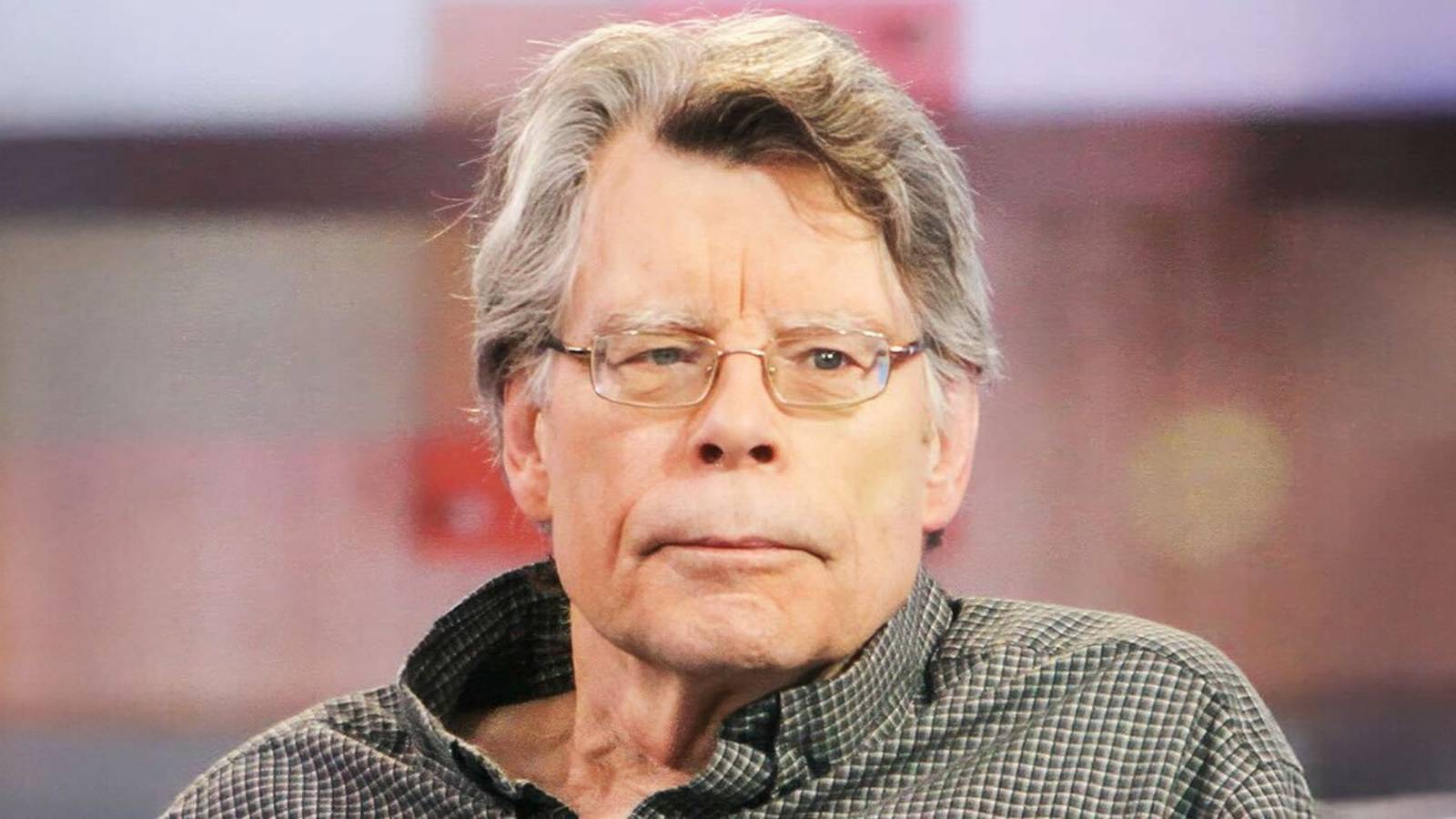
The 10 Best Authors of All Time, Ranked
Full Article
Original Source
Read the full article at Collider →KhanList aggregates and links to publicly available news content. We do not host full articles from third-party sources. Always verify important information with original sources.