
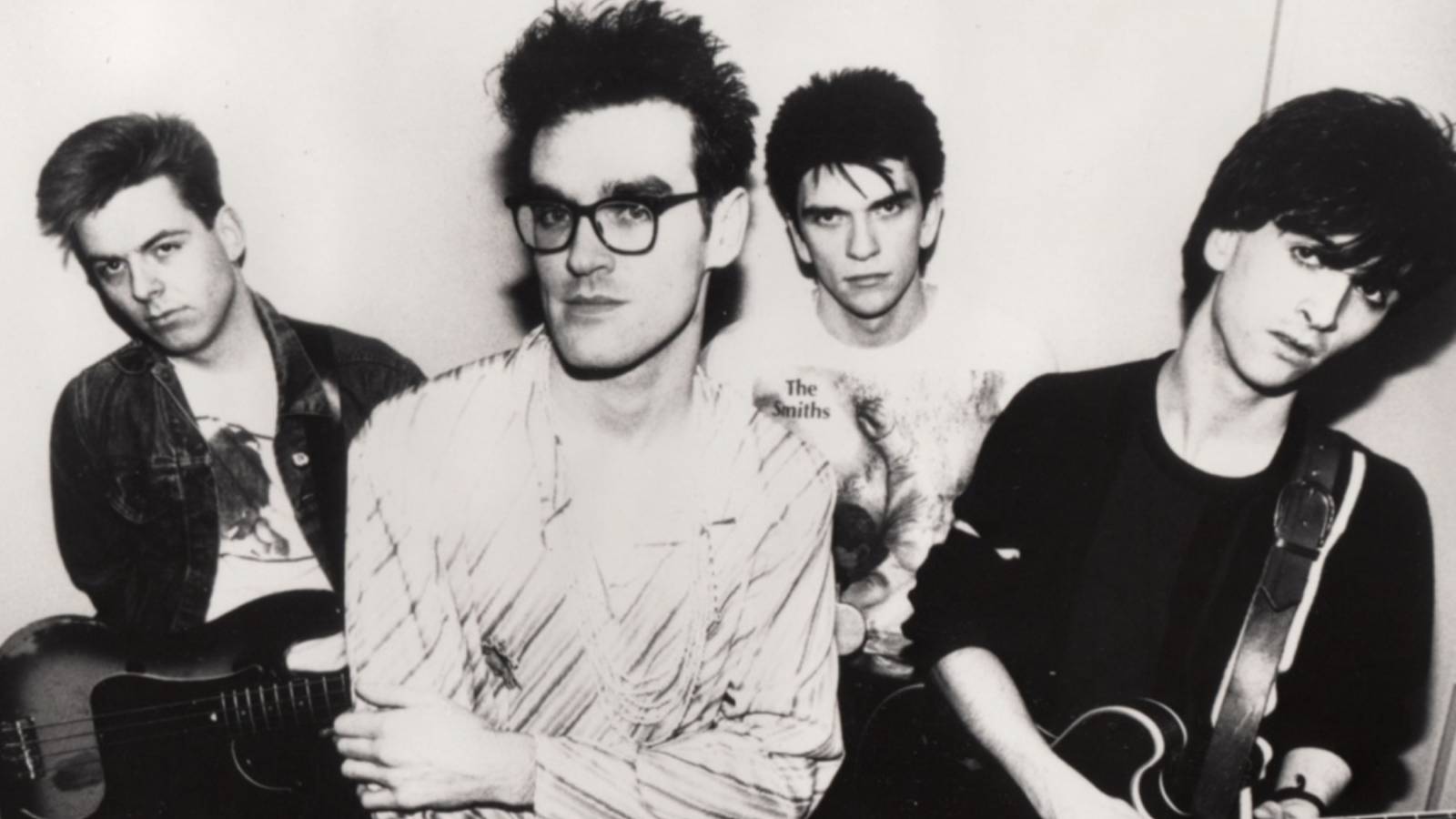
Image via Rhino Records UK Published Nov 24, 2026, 6:36 AM EST Jeremy has more than 2900 published articles on Collider to his name, and has been writing for the site since February 2022. He's an omnivore when it comes to his movie-watching diet, so will gladly watch and write about almost anything, from old Godzilla films to gangster flicks to samurai movies to classic musicals to the French New Wave to the MCU... well, maybe not the Disney+ shows. His favorite directors include Martin Scorsese, Sergio Leone, Akira Kurosawa, Quentin Tarantino, Werner Herzog, John Woo, Bob Fosse, Fritz Lang, Guillermo del Toro, and Yoji Yamada. He's also very proud of the fact that he's seen every single Nicolas Cage movie released before 2022, even though doing so often felt like a tremendous waste of time. He's plagued by the question of whether or not The Room is genuinely terrible or some kind of accidental masterpiece, and has been for more than 12 years (and a similar number of viewings). When he's not writing lists - and the occasional feature article - for Collider, he also likes to upload film reviews to his Letterboxd profile (username: Jeremy Urquhart) and Instagram account. He has achieved his 2025 goal of reading all 13,467 novels written by Stephen King, and plans to spend the next year or two getting through the author's 82,756 short stories and 105,433 novellas. Sign in to your Collider account Classic rock kind of came and went by the 1980s, after flourishing in the 1970s and beginning in the 1960s. That doesn’t mean rock itself died, nor that any rock made after the mid-1980s can’t call itself classic. It’s just classic rock is that beefy, grand, and popular kind, probably best exemplified by the likes of The Who, The Rolling Stones, some Pink Floyd, and (definitely) Led Zeppelin. At a point in the 1980s, alternative rock kind of became the next stage of rock, and then it morphed into grunge in the 1990s (which was on another level popularity-wise), before more or less morphing into indie rock in the 2000s and into the 2010s. So, some of the best alternative rock bands of all time are a bit grunge, and some might technically fit into the indie wave to some extent, but it does nonetheless feel fair to consider all the bands below as alternative rock ones. Oh, and particularly great alternative rock bands at that, too. 10 Nirvana Speaking of grunge and its relation to alternative rock, here’s Nirvana, a band that didn’t last long technically, but has undeniably endured well beyond the band and the way it ended when frontman/lead singer Kurt Cobain took his life in 1994. That event didn’t entirely end grunge, but Nirvana no longer being a thing definitely had an impact on the whole sub-genre, or strand of alternative rock. Placing Nirvana low here might seem controversial, but it comes down to the discography being limited, and the first album (of three), Bleach, being not bad, but not quite great. The great albums, of course, are Nevermind and In Utero, and then the live album MTV Unplugged in New York shouldn’t be overlooked either, since that one is also phenomenal, albeit obviously more focused on acoustic/mellow rock over alternative rock, in its sound. 9 The National While The National are the newest band here, they’ve always sounded kind of old, but in a good way. “World-weary” is probably the way to put it that doesn’t run the risk of sounding like an insult. The label that might run the risk of sounding like more of an insult is to say The National are the best “sad divorced dad rock band” of the 21st century so far. If you can take that as a compliment, please do, because making that kind of music and having it be both authentic and not annoying is a real skill. The weariness to The National’s music also contributes to them feeling a little less like an indie rock band than some of their contemporaries, and possibly more appealing to people out there (divorced dads or otherwise) who might be more familiar with some of the ’80s and ‘90s era bands being mentioned here otherwise. 8 Weezer Laugh at Weezer if you want, but a lot of the time, you're probably going to be laughing with them, or they’ll be laughing at you laughing at them, like, if you don’t think they're in on the joke. Weezer are a pretty ridiculous band, but the first two albums in their discography are untouchable, all to the extent that people are generally in agreement that they're excellent, and there’s only some division on the whole “which is better” debate between The Blue Album and Pinkerton. Beyond that, things get wild. There are some pretty shoddy Weezer albums, but then some that come close to being so-bad-they're-good, if that’s even a phenomenon that can happen with albums. Then Maladroit, Everything Will Be Alright in the End, The White Album, and OK Human all have some great stuff on them, and even some of the other lesser Weezer albums in between all that might have a handful of decent tracks on them. 7 Pixies Well, a little of what can be said about Nirvana can be said about Pixies, since there aren’t a huge number of absolutely essential albums within this band’s discography. And, like Weezer, the two all-timers were the first two albums the band put out, here being Surfer Rosa (1988) and then the even better Doolittle just one year later. Doolittle is more approachable and somehow even more consistent, though it would be foolish to skip over Surfer Rosa entirely. Start with one or the other, and either way, you're winning. As for the band generally, Pixies definitely have a distinctively alternative rock sound, and kept doing their own weird thing into the 1990s and beyond, too (with the influence the band had on Nirvana, especially Kurt Cobain, also understandably getting talked about often). 6 Sonic Youth If you want one adjective to best describe Sonic Youth, it’s probably “raw.” The band’s great and groundbreaking for sure, with early albums in the early 1980s, meaning they're especially influential as far as alternative rock bands go. The band didn’t peak until a little later, though, with the signature album of theirs coming out right as the 1980s were coming to an end: 1989’s Daydream Nation. That was such a good year for unusual and/or alternative rock, seeing as Doolittle, Bleach, and one other massive rock album by The Cure (more on them shortly) came out in 1989. The closest Sonic Youth came to putting out something approachable and/or like a hit was in 1990, though, with Goo. That’s not a bad starting point, though if the length and ambition of Daydream Nation doesn’t intimidate you, that’s perhaps the best one to check out if you want to see what all the fuss is about. 5 The Smashing Pumpkins Speaking of ambitious albums, The Smashing Pumpkins put out something kind of insane in 1995, but it really worked. That album was Mellon Collie and the Infinite Sadness, and at over two hours in length, it’s almost like a triple album, considering a good many albums of a more traditional length hover at around the 40-minute mark. If Mellon Collie and the Infinite Sadness is a bit maximalist for you, the other contender for the crown of “best Smashing Pumpkins album” is, of course, 1993’s Siamese Dream, which is a definite alternative rock classic and a huge improvement on the band’s first album, 1991’s Gish. Albums #2 and #3 might not have ever been topped, but there is a good deal more music by this band beyond 1995, and quite a bit of that discography is worth exploring if you like this particular sound/era of rock music. 4 R.E.M. R.E.M. never sounded as intense as Sonic Youth, but they're worth mentioning because they did the whole alternative rock thing quite early, with some of the band’s best material being from the early to mid-1980s. It does sound like a hipster thing to say, but sincerely, Murmur is the best showcase of what the band could do, especially lyrically, and also with pretty stripped-back and simple instrumentation overall. It’s got a pure alternative rock thing in that way, and feels influential on the wave of indie rock a couple of decades later. But it’s Automatic for the People that was the hit R.E.M. album, and yes, that one’s pretty great too. Then, the 1982 EP Chronic Town is awesome, and albums-wise, the likes of Reckoning, Lifes Rich Pageant, and Document are all pretty much essential, too. 3 The Cure The Cure were briefly mentioned before, when talking about great albums from 1989, because Disintegration is easily one of that year’s best albums on account of it also being one of the best albums of all time. Calling it alternative rock and leaving it at that is underselling it, but it’s a kind of rock throughout, with a mix of lengthy and moodier songs alongside some more energetic ones. Admittedly, a few of those livelier songs are also epic in length. Disintegration is just a monumental album in terms of its sound and also how long it goes for. And yet it’s just one album that makes The Cure worthy of being called one of the best alternative rock bands of all time (see also the likes of Seventeen Seconds, Faith, a 1981 album Google might not like me typing the name of, The Head on the Door, Kiss Me, Kiss Me, Kiss Me, Wish, and even the quite recent Songs of a Lost World). 2 The Smiths Sure, The Smiths ended a long time ago, as a band, but they’ve certainly endured. There were four studio albums released during the 1980s, and then there are some compilation albums that all feature a good many songs that were never on any of the main albums, so you do ultimately have quite a few hours' worth of songs here to dig through, and they're all pretty great, even with there being a certain sameness to things. For a few great years, there was a phenomenal songwriting partnership between Johnny Marr and Morrissey. The sameness, though, is okay when a standard song by The Smiths is so high-quality. And admittedly, the band might be a little more pop or proto-indie than outright alternative rock, but it still feels like they qualify just well enough. For a few great years, there was a phenomenal songwriting partnership between Johnny Marr and Morrissey, with the pair also making for distinctive guitarists and vocalists, respectively. 1 Radiohead Radiohead is one of those bands that feels hard to introduce, because what else can be said, at this point? The first album they released was an alternative rock and almost grunge sort of one (Pablo Honey), then they went into a Britpop thing for the much-improved The Bends, and then it was kind of anything goes after that. OK Computer is the band’s "most" alternative rock album, if that makes any sense, and then album #4, Kid A, is probably the least rock (alternative or otherwise) related. Still, Radiohead has retained feeling like something of an alternative rock band, since they're almost always at least a little bit rock, and they very much do things their own way and ultimately prove influential, since other bands sometimes seem perfectly okay to play catch-up. It’s an easy pick, putting them #1 here, but they have probably been the most consistently impressive alternative rock band in relatively recent memory. Radiohead: In Rainbows From the Basement Release Date May 4, 2008 Runtime 63 minutes Director David Barnard Producers Nigel Godrich, James Chads, Dilly Gent
The 10 Best Alternative Rock Bands of All Time, Ranked
Full Article
Original Source
Read the full article at Collider →KhanList aggregates and links to publicly available news content. We do not host full articles from third-party sources. Always verify important information with original sources.