
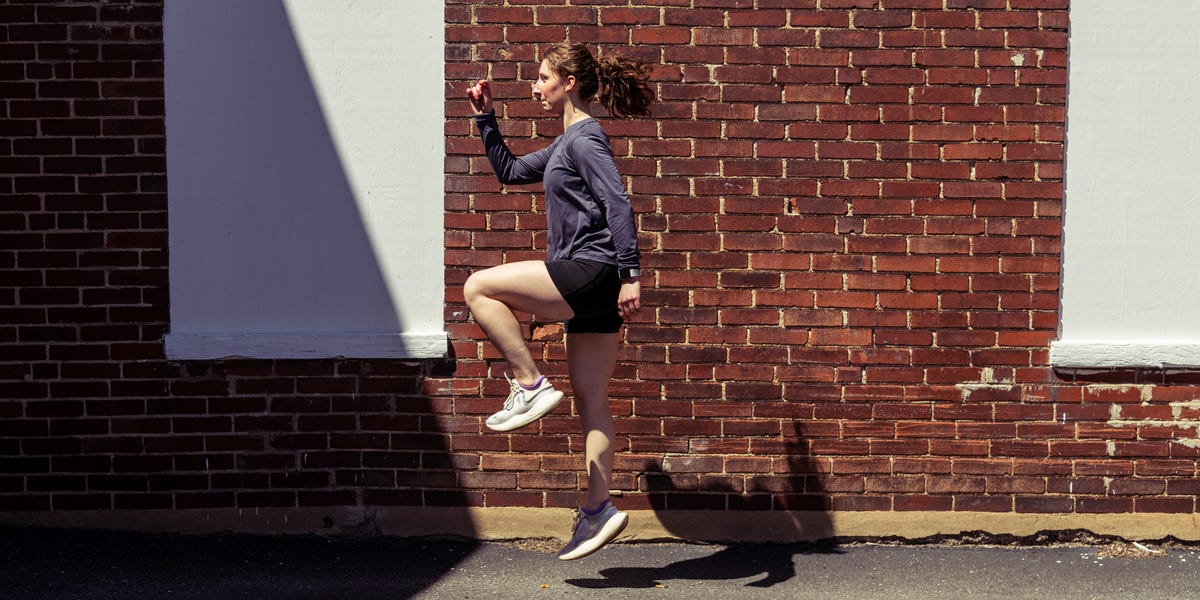
Earlier this year, tight calves plagued me for the first time. No matter what shoes I wore or how much I stretched, the back of my lower legs felt tight, sore, and uncomfortable even in the days after my runs, which made it difficult to recover fast—let alone build up my mileage.I had been making my comeback since taking about four months off and I figured if I eased into running with a few 30-minute runs per week, I wouldn’t run into any pain or injuries. But when my tight calves lingered and made it difficult to keep running regularly, I realized I wasn’t paying the same attention to these muscles as I had in previous training cycles.More specifically, I thought about a few calf-focused moves that I previously did one to two times a week, and figured that was the missing piece of my routine—and skipping them was causing serious discomfort.The Best Exercises to Prevent Tight Calves and Strengthen RunsWeak calf muscles that get overloaded on the run can cause calf tightness, says Anh Bui, DPT, CSCS, USATF-certified run coach and physical therapist with Run Resiliently. And because I hadn’t done many calf strength exercises months before I got back into running, mine were feeling the impact of my runs a little extra.“When you reintroduce impact activities, your calves can feel tight and sore from the deload period and the muscles and tendons need time to readapt to load,” Bui explains.The best ways to address sore or tight calves include getting evaluated by a physical therapist if the pain gets worse on runs, foam rolling to ease the soreness, and strengthening the calves, glutes, and hamstrings, Bui says. “If the tightness isn’t going away and feels worse as you run, don’t assume that stretching and calf raises are the fix,” because many calf strains also start out as calf tightness. “But if the tightness goes away after the warm up, then it may just be general muscle tightness,” she adds.In my case, the tightness went away on my runs but lingered in the days after, so I waited for the soreness to subside with extra rest days. Then, I focused on adding in moves that make my calves stronger and more durable to prevent them from tightening again.Preventing tight calves starts with strengthening them through plyometrics and strength training, says Bui, which ideally takes at least about one to two months. Once your calf muscles adapt to more load, they can handle the impact of your runs more effectively, which should ultimately keep the tightness away.After practicing these moves consistently for about six weeks, I didn’t have the same issue.One of those moves is simple and requires no equipment. Pogo hops (or “jumping beans,” as my cross-country coach used to call them) build reactive strength in your calves, which helps you quickly absorb force during fast, bouncy movements, like when you’re running. “Pogo hops emphasize quick, explosive movements that are the right stimulus for training tendons to be stiffer springs. You don’t get this kind of response by running alone,” says Bui.The pogo hop movement is basically one minute of hopping in place, followed by a short break and a second set. I do this move at least once but often twice a week before a mobility/core session, often adding in two sets of weighted calf raises as well, which Bui also recommends.Bent-leg calf raises, in particular, strengthen the soleus muscle, which lies very deeply in your calves and helps propel you forward on runs, Bui explains. This move is particularly helpful if you’ve experienced tightness or soreness in your calves, but not anywhere else between runs.Bui also suggests calf eccentric heel drops to both stretch and strengthen the calf muscles, which helps if you’ve been dealing with chronic cases of tight calves and need to find some relief and prevention at once.On top of building calf strength and preventing issues, each of these three moves boosts run performance by reducing ground contact time and improving overall running efficiency, Bui says.The Simple Moves I Keep in My Routine to Prevent Tight CalvesOnce I started incorporating these moves into my routine, the soreness and tightness disappeared; my calves were built to withstand the demands of running again and as an added bonus, offer me more power through my runs.Pogo HopsWhy it works: Pogo jumps build strength in your calves and also train the tendons to store and release energy efficiently, says Bui. This means your body can better absorb and redirect the force from your foot striking the ground when you run, back into your stride so your calves won’t feel so beat up from every effort.How to do it:Stand with feet together, hands on hips.Drive off feet to jump as high as possible.Land softly and go immediately into the next hop, continuously hopping for 60 seconds.Rest for 60 seconds.Repeat for 1-3 rounds total.Calf Eccentric Heel DropsWhy it works: This move stretches and strengthens your calf muscles simultaneously, says Bui. The key is lowering the heels down very slowly to emphasize the downward (eccentric) phase.How to do it:Stand with heels off the edge of a step, feet hip-width apart. Lift up onto toes with both feet.Slowly lower heels past the edge of a step on a count of at least 5.Repeat for 2-3 sets of 15 reps.Single-Leg Bent-Knee Calf RaisesTrevor RaabWhy it works: Calf raises strengthen the soleus, a very important deep calf muscle that helps propel you forward on your runs, Bui says.How to do it:Stand on one leg, arms down by sides or with hands lightly touching a wall for balance. Bend standing knee to 30 degrees.Lift heel off the ground into a calf raise, coming up onto toes.Slowly lower back down.Repeat for 15 reps.Then switch sides and repeat. Do 2-3 sets.Kristine Kearns, a writer and avid runner, joined Runner’s World and Bicycling in July 2024. She previously coached high school girls cross country and currently competes in seasonal races, with more than six years of distance training and an affinity for weightlifting. You can find her wearing purple, baking cupcakes, and visiting her local farmers market.
The 1-Minute Moves That Keep My Calves From Getting Tight
Full Article
Original Source
Read the full article at Runnersworld →KhanList aggregates and links to publicly available news content. We do not host full articles from third-party sources. Always verify important information with original sources.