
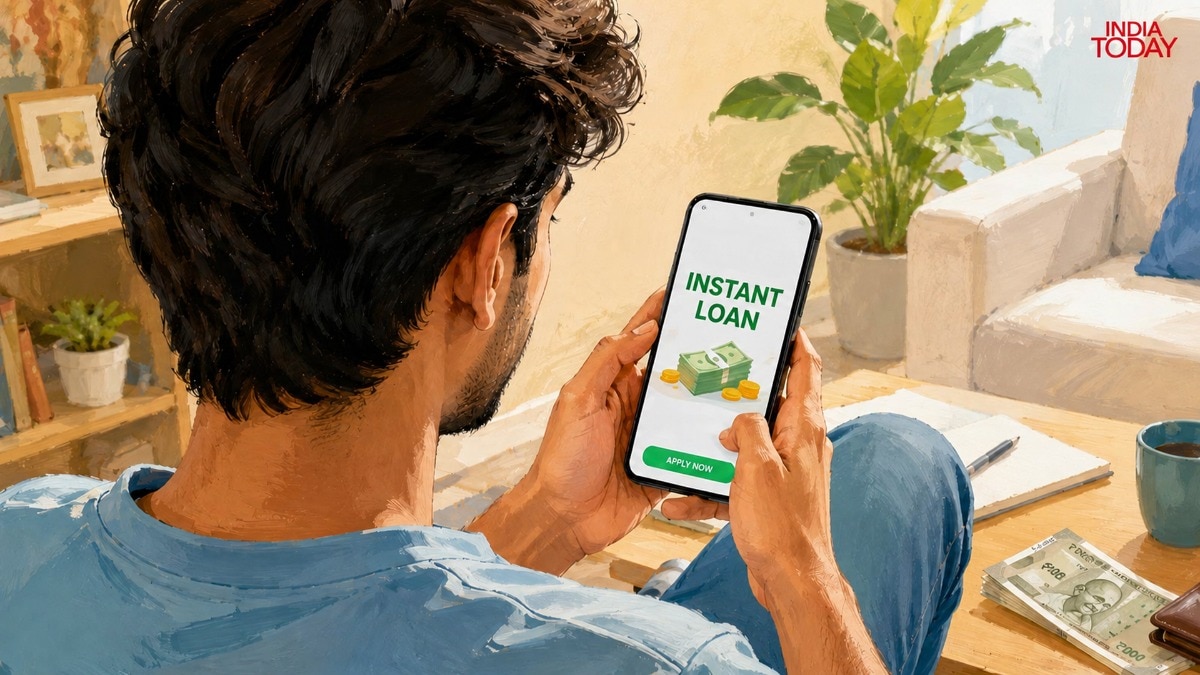
Need money urgently? A loan app can make borrowing look almost effortless. A few taps, some personal details and, sometimes, a promise of instant cash can make it tempting to go ahead without asking too many questions.That is exactly where the trouble can begin.Fake and malicious loan apps are increasingly using the language of legitimate lenders — quick approval, low interest rates and easy documentation, to lure borrowers. The risk is not just losing money. Sharing sensitive information with an unverified app can also put personal and financial data at risk.For borrowers, the first question should therefore not be “How quickly will I get the money?” but “Who exactly is lending it to me?” A LOAN APP LOOKS GENUINE. BUT IS IT?Imagine a college student who suddenly needs money for an urgent expense and comes across an app promising a loan within minutes, with almost no paperwork. The app asks for a mobile number, Aadhaar and PAN, and the student is tempted by how easy the process looks.Then think of someone who receives a message offering a personal loan at an unusually low interest rate, only to be directed to download an unfamiliar app through a link.Another borrower may have already taken a digital loan, only to discover later that the amount to be repaid is far higher than expected.These situations may be different, but they point to the same problem: before sharing personal data or accepting money, borrowers need to know exactly who is behind the loan app.START WITH THE LENDER, NOT THE LOAN OFFER Puja Abhishek Singh, CEO, Manipal Fintech, said borrowers should first look for basic signs of a genuine lender.An unclear lender identity, little information about interest rates and charges, excessive app permissions and promises of instant approval without a proper credit assessment are important warning signs.“Key red flags include an unclear lender identity, limited information on interest rates and charges, excessive app permissions, and promises of instant approval without a clear credit assessment,” Singh said.In other words, a flashy app, quick approval or attractive interest rate should not be treated as proof that the lender is genuine.CHECK THE APP STORE CAREFULLYBeing available on an app store does not mean a borrower should automatically trust an app.Before downloading it, borrowers should check the developer's name, description, privacy policy, customer support details and recent reviews. Most importantly, these details should match the information available on the lender's official website.A mismatch between the app developer and the financial institution mentioned on the website should be treated as a warning sign.IS THE LENDER REGULATED?This is perhaps the most important check.Borrowers should find out the legal name of the bank or non-banking financial company (NBFC) actually providing the loan. They should then verify the institution through the Reserve Bank of India's official sources.Singh said borrowers can also check the RBI's Digital Lending Apps directory to verify the app's association with a regulated entity.The idea is simple: don't trust an app merely because it uses the name or logo of a financial company. Verify the relationship independently.YOUR CONTACTS ARE NOT COLLATERALOne of the biggest warning signs can come when an app asks for access to information that has little obvious connection with assessing a loan.An app asking to access contacts, call logs or media files should make borrowers stop and question why that information is required.A camera, for instance, may have a legitimate purpose during KYC. But the borrower should understand why a particular permission is being requested and at what stage.“The key factor should always be needs, relevance, and clarity,” Singh said.THAT ‘CHEAP’ LOAN MAY NOT BE CHEAPA loan advertised at an attractive interest rate can look irresistible. But the interest rate alone does not tell the full story.Borrowers should look at the annual percentage rate (APR), processing fee, other applicable charges, repayment schedule, tenure and total amount payable before accepting the loan.Singh said borrowers should consider the overall cost of borrowing rather than focusing only on the interest rate.The same applies to “instant approval”. Speed should not replace proper credit assessment or transparency about the terms of the loan.DON'T HAND OVER SENSITIVE DATA BLINDLYAadhaar, PAN and bank details may legitimately be required during KYC and credit checks. But borrowers should know why the information is being collected and whether it is necessary at that particular stage.Singh advised consumers to read the app's privacy policy and enter sensitive information only through the lender's official platform.A legitimate lender should be able to explain what information it needs, why it needs it and how that information will be used.FIVE-MINUTE CHECK BEFORE YOU BORROWBefore accepting a digital loan, borrowers should take a few minutes to look beyond the promise of quick cash. The first check should be the lender itself — who is actually giving the loan, and is it a regulated bank or NBFC? The details on the app should match those on the lender's official website.Borrowers should also look at the permissions the app is asking for and question anything that seems unrelated to the loan process. Equally important is understanding the real cost of borrowing, including interest, processing fees and other charges, as well as the repayment schedule. A genuine lender should clearly explain these terms and provide a proper customer support channel.Singh said responsible digital lending should combine speed with transparency, giving borrowers clear information about the lender, loan terms, borrowing costs, data use and customer support.The convenience of getting money with a few taps is hard to resist. But before tapping that final "accept" button, it is worth knowing exactly who is on the other side.When it comes to a loan app, the smartest first step may simply be to slow down.- EndsPublished By: Jasmine anandPublished On: Aug 27, 2026 07:00 IST
That easy loan could come with a catch: Here's how to spot a fake loan app
Full Article
Original Source
Read the full article at Indiatoday →KhanList aggregates and links to publicly available news content. We do not host full articles from third-party sources. Always verify important information with original sources.