
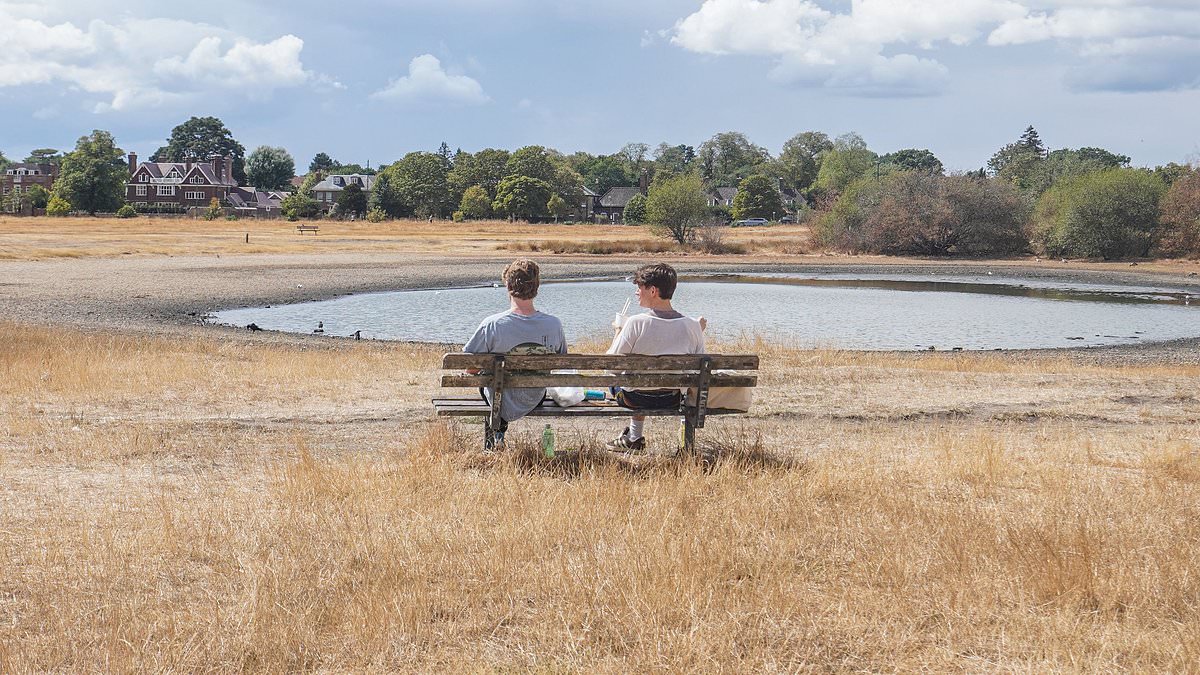
See more Daily Mail on Google - save us as a Preferred Source Published: 09:07 EDT, 20 August 2026 | Updated: 09:12 EDT, 20 August 2026 Thames Water has warned its hosepipe ban is likely to stay in place until the end of the year, with more than 10 million customers affected. The company enforced the restrictions for all 10.1 million people it supplies last month, when most of England and Wales was declared in drought due to a record-breaking summer of heatwaves. Rain has finally returned to much of Britain, left bone dry from months of soaring temperatures, yet Thames Water today admitted its restrictions could last several months.It comes after experts warned the return of rainfall may not be enough to reverse the drought conditions affecting much of the country, with weeks of above average rainfall required to make any significant changes. Rainfall totals for July ranged from 26 per cent of the typical average for northwest England to as little as 1 per cent in the southeast.Nevil Muncaster, strategic water resources director at Thames Water, told Times Radio today: 'I think realistically, it's going to be towards the end of the year before that comes off. That's something that we need to make sure we do just to protect the environment.' He added that when temperatures surpassed 25C, customers tended to use 25 per cent more water than usual. When they go above 30C, as they frequently have this summer amid five heatwaves, customers use up to 50 per cent more water. Lawns and fields across the country have been scorched by soaring temperatures. Pictured: Rushmere lake on Wimbledon Common today More than 27 million people in England and Wales are under a hosepipe ban, meaning they cannot easily water their gardens, fill up paddling pools or wash their cars. All of Wales and 71 per cent of England is in drought, following dry spells, dangerously low river levels and soaring temperatures - which reached 38C in parts of Britain this summer. Mr Muncaster said that despite some rainfall, more dry conditions are expected in the near future. 'The Environment Agency forecast is that it will be drier than normal for the next few months, but we'll wait and see,' he said. Thames Water, Britain's biggest water company, is £19.5billion in debt, with creditors in the process of trying to arrange a bailout deal. It comes after Ministers recently rejected the latest proposal. On average, the firm loses 569 million litres of water per day, down from 654 million litres a day one decade ago. Parched southern England finally saw downpours yesterday after two months without rain during the successive extreme heatwaves. Forecasters warned of localised flooding but said this week's rain will not mark an end to the drought conditions. Storm clouds gather over Cullercoats Bay and Tynemouth in North Tyneside yesterday afternoon The majority of Britain is set to be sunny with some cloud coverage this afternoon Other locations seeing their first downpour after a long time included London Heathrow Airport and Odiham in Hampshire after 56 days, and Preston in Dorset after 53 days.Wildfires have swept across parts of the UK following the hot and dry summer, including in the West Midlands where a blaze in Stourbridge destroyed 19 homes. Areas with the longest dry streaks in summer Wisley, Surrey: 62 daysHeathrow Airport, London: 56 daysOdiham, Hampshire: 56 daysPreston, Dorset: 53 daysFarnborough, Hampshire: 52 daysConingsby, Lincolnshire: 51 daysNortholt, London: 51 daysAndrewsfield: 50 daysShoeburyness, Essex: 49 daysKew Gardens, London: 49 days The National Fire Chiefs Council said England and Wales has had 1,132 wildfires in 2026 so far - a record high for the amount between January and this time of year.Several fire services have asked people in recent weeks to call 999 only to report a genuine emergency, and millions of people in England and Wales received an alert on mobile phones last Friday warning them of a 'very high risk of wildfires nationally'. One of the biggest wildfires was near Aviemore in the Cairngorms, where crews completed work this week to tackle it nearly five weeks after it began on July 15.A summer of heatwaves and dry weather has left many areas facing an elevated wildfire risk as well as water shortages.
Thames Water warns hosepipe ban will stay in place until end of the year as more than 10million customers face restrictions
Full Article
Original Source
Read the full article at Dailymail →KhanList aggregates and links to publicly available news content. We do not host full articles from third-party sources. Always verify important information with original sources.