
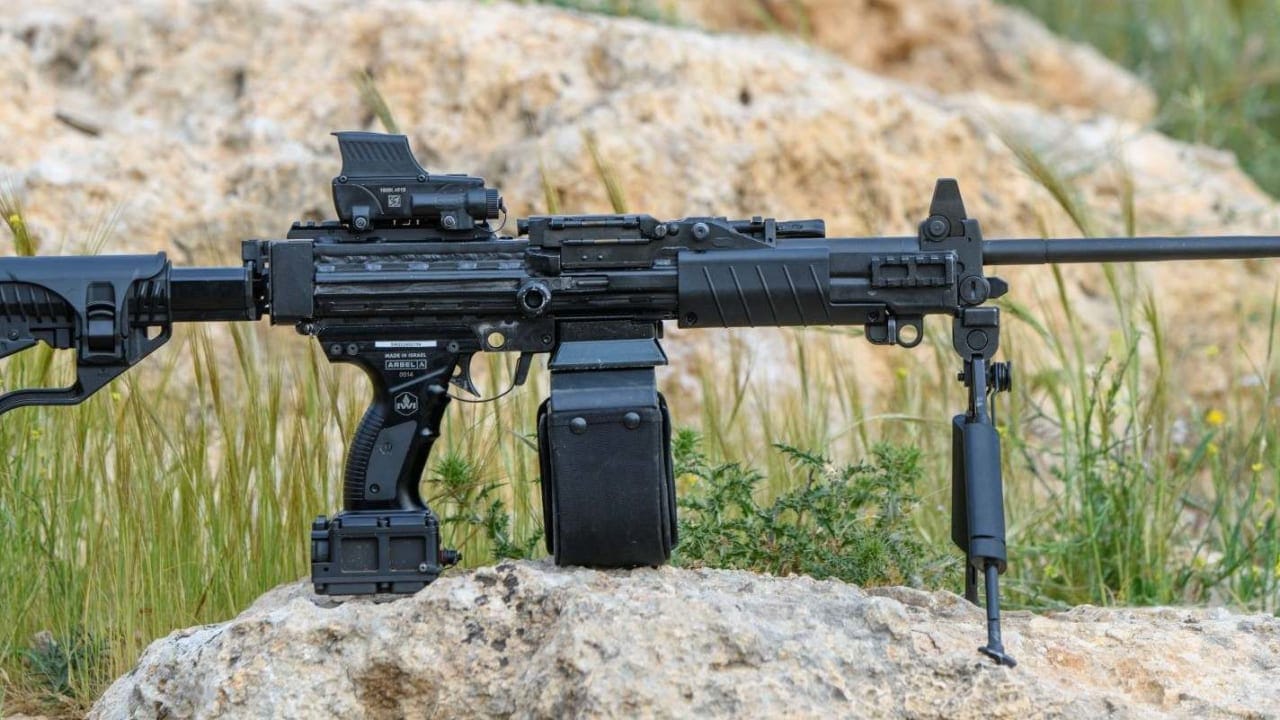
OCTOBER 26, 2026 08:16Updated: OCTOBER 26, 2026 08:18As Thailand approved a $104.4 million emergency defense fund to buy military equipment and reinforce defenses along the Cambodian border, IWI (Israel Weapon Industries) announced it delivered its ARBEL Anti-Drone System (ADS) to Thailand’s Defense Ministry.Thai forces have integrated the platform into their existing rifles after troops received on-site training from company officials.Developed by IWI after close to a decade of design work, the fire control technology transforms standard infantry rifles into precision-guided interceptors.“Small tactical drones have become a direct and growing threat to soldiers on the battlefield. We developed the ARBEL ADS to give soldiers an effective means of defending themselves against this evolving threat, while providing armed forces with a critical tactical advantage in an increasingly complex battlespace,” said SK Group’s vice chairman Ronen Hamudot.IWI's ARBEL anti-drone system transforms standard infantry rifles into precision-guided interceptors. (credit: IWI)Integrated directly into the AR-15 platform and IWI’s own ARAD assault rifles and Negev machine guns, ARBEL allows soldiers to engage threats, including aerial ones, using their existing weapons, optics, and ammunition with no additional gear required. Depending on the selected firing mode, it can hit targets up to 450 meters away using standard 5.56 mm ammunition.With electronic sensors and gyros, it simplifies the shooting cycle after the initial shot and enables effective target engagement within a window of opportunity of several seconds, typical of real combat situations. According to IWI, it significantly improves efficiency and lethality by increasing hit probability for static and moving threats by two to three times.Depending on the platform, the ARBEL system can be integrated into the lower receiver of the A-15 or mounted as an external unit on the grip of the Negev machine gun. The system adds only 900 grams to the weapon and meets MIL-STD-810 military standards, ensuring reliability under extreme environmental conditions.The Thai forces chose to integrate the system onto their existing rifles, which, according to the company, “enables militaries to upgrade their existing platforms locally without replacing their rifle inventories or procuring entirely new weapons.”Battery-operated, ARBEL’s power supply allows for 50 hours of continuous operation. It’s optic-agnostic, mission-configurable, and its built-in fire control system releases rounds when the shooter is stable on the target, depending on the operational scenario. IWI told Defense & Tech by The Jerusalem Post that the system compensates for and mitigates shooting errors typical of combative scenarios such as heavy breathing, fatigue, and stress.“As Southeast Asian militaries place greater emphasis on counter-drone capabilities, Thailand’s adoption of ARBEL ADS reflects this growing operational priority. We see rising demand across the region for solutions that can help soldiers meet this challenge,” said SK Group vice president Doron Korol, who oversees the Asia-Pacific region.According to the company, Thai military officials are in discussions with IWI about an additional order for the ARBEL ADS, and several other countries are at various stages of the procurement process. The company expects to announce additional deployments of the solution in the coming months.IWI's ARBEL anti-drone system (credit: IWI)Modernization plansEarlier in October, local media reported that Bangkok approved emergency defense funding to repair combat-damaged gear and purchase new weapons, including long-range Rampage standoff missiles manufactured by Elbit Systems and Israel Aerospace Industries (IAI), along with bunker-buster bombs and High Mobility Artillery Rocket System (HIMARS) artillery upgrades.According to a report in The Nation, the Royal Thai Air Force’s procurement plan includes 20 Israeli Rampage missiles, with an estimated value of approximately $30 million (1.04 billion baht), for use with the country’s F-16 fighter aircraft along with Elbit’s MPR-500 penetrating bombs and Lizard III laser guidance kits. Under the modernization plan, the Royal Thai Army will procure HIMARS and M777 howitzers to replace older artillery, along with Stryker armored vehicles.Thailand has been acquiring Israeli defense technology since the 1970s, and the relationship has only grown stronger with the transfer of knowledge to locally manufacture and produce certain weapons systems.Follow us on Google
Thailand receives IWI's ARBEL anti-drone solution
Full Article
Original Source
Read the full article at Jpost →KhanList aggregates and links to publicly available news content. We do not host full articles from third-party sources. Always verify important information with original sources.