
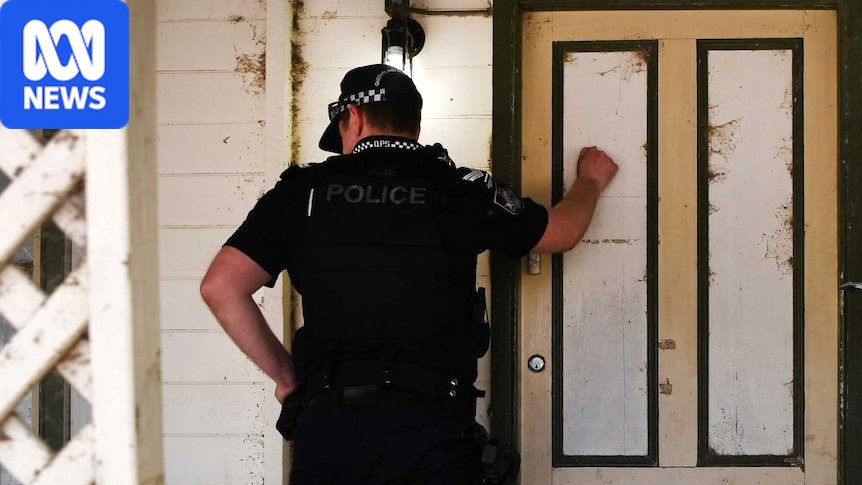
Queensland police took over four hours to reach a life-threatening domestic and family violence (DFV) call-out in May.Statistics revealed in budget estimates found it took almost 16 days on one occasion in March to respond to an urgent DFV call-out involving injury or an imminent threat.In May, the average call-out time for police to respond to a priority one DFV matter involving a threat to life was 42 minutes.The data dated back to January 2024, with the average priority one response time dropping as low as six minutes, including for the latest figures in June.Responding to the more than four-hour response incident, Acting Police Commissioner Brett Pointing said the figures provided no context.Brett Pointing said the figures provide no context. (ABC News)"In normal circumstances, you respond to a code one as fast as you can," he told budget estimates."That is the only figure in the whole table that's high, and it's impossible to comment on it unless you are able to talk to the officers who are involved."From January '24, code one, they're all, I think very, very impressive responses, that particular event would have a particular story to it."From January 2024 to 30 June 2026, there were almost 440,000 total call-outs for DFV assistance in Queensland.Police union president Shane Prior said resourcing had not kept up with demand."Police officers in Queensland never want to see a situation where a code one domestic and family violence job, which is clearly urgent, has to wait for hours after service," he said.Police union president Shane Prior said resourcing had not kept up with demand. (ABC News: Heidi Sheehan)"Police are bogged down, we can no longer continue and allow this to be the norm, because we're going to see more and more of this, and I fear that more people are going to die unless there are more urgent reforms."He said police were on average spending three to six hours at a DFV job, often due to red tape.Calls for help going unanswered for weeksThe average time to reach an urgent priority two call, defined as involving an imminent or present threat of injury, peaked this year in February at 48 minutes.In that same month, the longest time to reach a DFV call-out was more than 11 days.Mr Pointing again defended the work of police when questioned by the opposition."The circumstances of every case are different. It could be a thousand different hypothetical scenarios why police couldn't attend," he said."It would take a review of each specific incident to find out why that outlier was there."Mr Prior said it was "terrifying"."This is a symptom of what the community has come to expect of their police."If you want police to be mental health workers, social workers, prisoner daycare for Queensland Corrective Services, then the knock-on effect is that we're not going to be there to do the stuff that we need to do now."Police minister Dan Purdie said the government would continue to listen "to the experiences of frontline officers to ensure they have the laws, resources and support they need".
'Terrifying' four hour wait for police to reach life threatening DV incident
Full Article
Original Source
Read the full article at Abc →KhanList aggregates and links to publicly available news content. We do not host full articles from third-party sources. Always verify important information with original sources.