
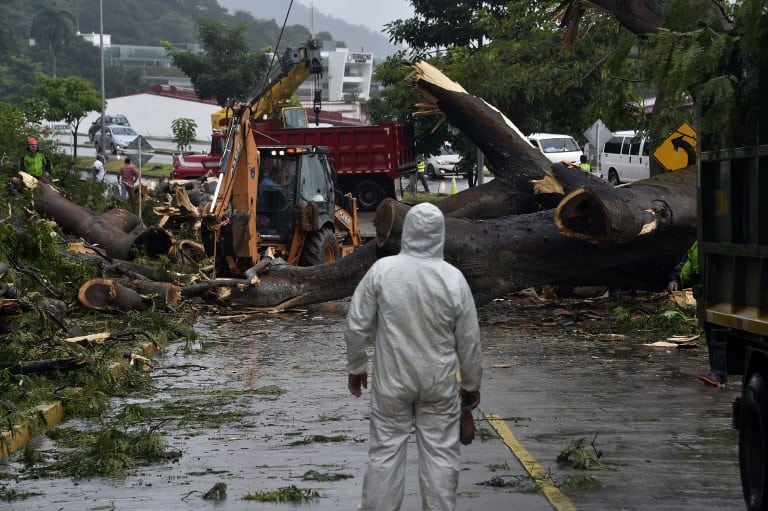
On November 24, 2016, Costa Rica lived through one of the most devastating natural disasters in its recent history. Hurricane Otto swept across the country’s northern region, claiming 10 lives, forcing thousands of residents from their homes and leaving entire communities struggling to recover. A decade later, the tragedy remains a powerful reminder of Costa Rica’s vulnerability to extreme weather, and of the solidarity that emerged in the aftermath. For generations, Costa Rica’s geographical location had largely spared it from direct hurricane strikes. Storms passing to the north often brought indirect effects, but Otto shattered the perception that the country was protected. It became the first hurricane on record to cross Costa Rican territory. Otto came ashore on the afternoon of November 24 in southern Nicaragua, just north of the border. The U.S. National Hurricane Center later concluded that it made landfall as a Category 3 hurricane with winds of about 185 kilometers per hour (115 mph), stronger than the Category 2 reported at the time. From there its unusual track carried it southwest across northern Costa Rica and out to the Pacific through the Gulf of Papagayo late that night, bringing torrential rain, destructive winds and widespread flooding. In the hardest-hit areas, about 200 millimeters (7.9 inches) of rain fell in six hours, roughly what normally falls in an entire month, according to figures the government released at the time. Upala, Bagaces and Bijagua were among the hardest-hit areas. Rivers overflowed, roads became impassable and landslides tore through communities on the slopes of the Miravalles Volcano. Six of the victims died in Upala and four in Bagaces, and three of the 10 were children. One of the most heartbreaking losses came near Guayabo de Bagaces, where four members of the same family were killed. Official figures put the number of people directly affected at 10,831. About 1,600 homes were damaged or destroyed, 2,778 kilometers (1,726 miles) of roads were damaged, thousands of residents sought refuge in emergency shelters and numerous communities were cut off. Yet amid the destruction, Costa Ricans showed extraordinary solidarity. Emergency responders, volunteers, community organizations and ordinary citizens mobilized to deliver food, clothing, shelter and essential supplies. Aircraft sent by Panama and the United States helped carry aid to communities isolated by the storm. The recovery required extensive reconstruction, including repairs to homes, schools, roads, bridges and other essential infrastructure. Beyond the material losses, Otto pushed Costa Rica to rethink its emergency preparedness and the risks that come with extreme weather. For the families who lost loved ones, the anniversary carries a meaning that goes far beyond statistics or reconstruction. November 24 remains a day to honor the victims, recognize the resilience of the affected communities and remember the nationwide solidarity that emerged during one of Costa Rica’s toughest moments.
Ten Years After Hurricane Otto, Remembering the Storm That Changed Costa Rica
Full Article
Original Source
Read the full article at Ticotimes →KhanList aggregates and links to publicly available news content. We do not host full articles from third-party sources. Always verify important information with original sources.