
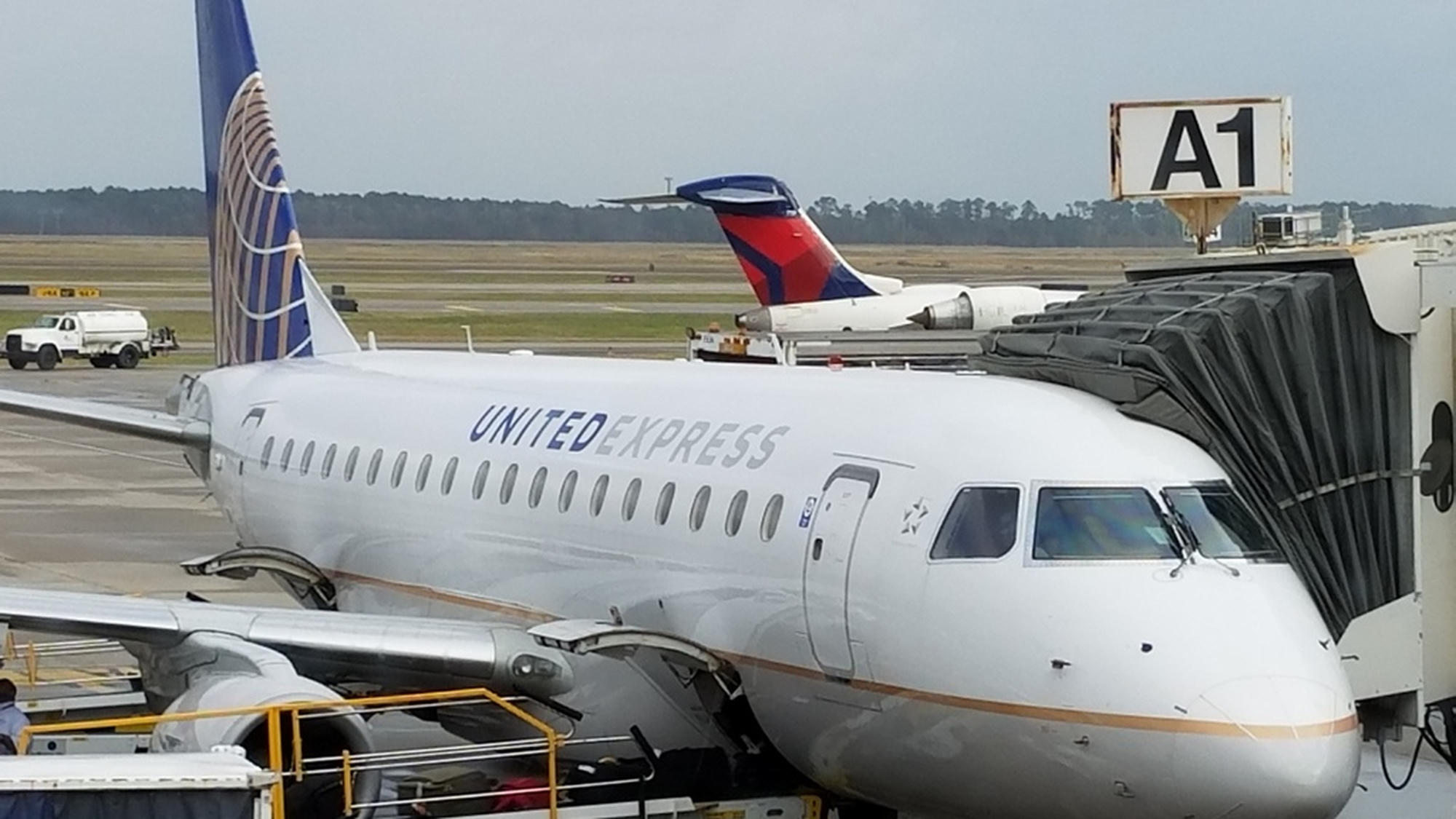
Pueblo, Colorado is bringing back a 6 a.m. flight to Denver on a route subsidized at $6.84 million a year. The winning airline bid forecast filling just 22% of seats, and Colorado Springs airport is only 45 minutes away by car. Denver is driveable! Starting November 1, Denver Air Connection will operate that early departure and a 9 p.m. return from Denver. The flights are scheduled for 50 minutes. Fares start at $97. The subsidy supports 12 weekly round trips. I’m not even sure that flying makes sense if you were just going to Denver when you factor the drive to the airport, check in, and getting from Denver to your destination on the other end. Denver is about a 2 hour drive away. This is meant to support connections, but plenty of connections are available at Colorado Springs – to Dallas – Fort Worth, Denver, Chicago O’Hare and Midway, Houston Intercontinental and Hobby, Las Vegas, Phoenix, San Diego, Atlanta, Salt Lake City and more. Colorado Springs is less than a 45 minute drive away from Pueblo. That’s closer than much of the Denver metro area is to their airport! While some passengers might prefer to clear security in Pueblo rather than Denver, adding that connection adds trip risk as well. There’s a reason that the recipients of the subsidy only think they can achieve a 22% load factor! I can see why a handful of passengers would buy this. I cannot see why the rest of us should pay for it so that they can. The current annual subsidy rate is $6,836,498, covering April 2026 through March 2027. DOT’s award order shows: 62,400 annual seats and 13,728 passenger trips, counting both directions. 22% load factor, modeling 78% of seats going empty. An average fare of $99 and first-year subsidy of approximately $470 per passenger trip. Those are bid assumptions. It’s a goal! The capacity calculation uses 50 seats per flight though the award allows both 30-seat Dornier 328 jets and 50-seat Embraer 145s. The passenger forecast works out to about 11 people per flight. At the bid’s first-year figures, a round trip meant roughly $940 in subsidy on top of the traveler’s tickets. DOT’s case for choosing Denver Air Connection included its connections with major airlines, community support for jet service (people like it!), and a lower subsidy than competing Breeze proposals. And this subsidy could be used to unlock even more subsidies because reaching 10,000 annual departing passengers from the airport means more federal airport funding. The Worst Awards Are For Airports With Another Airport Nearby The most expensive subsidy isn’t necessarily the worst award. A remote community without a road connection can have a stronger claim than a smaller award to an airport down the road from a well-connected one. Here are some of the most egregious awards. Subsidized airport Annual subsidy Nearby commercial airport Lancaster, Pennsylvania $5.17 million Harrisburg: 32 miles Owensboro, Kentucky $5.83 million Evansville: 43 miles Decatur, Illinois $6.43 million Champaign: 46 miles Muskegon, Michigan $7.28 million Grand Rapids: 51 miles Hot Springs, Arkansas $3.16 million Little Rock: 58 miles Then there’s Victoria, Texas, which I wrote about earlier this year. Its federal subsidy runs about $6.82 million annually. A local promotion offered residents another $100 to take a round trip. We subsidize the service, then offer people money to use the service we’ve subsidized. A Ten-Year Program, Nearly 50 Years Later Essential Air Service was part of the political bargain behind the Airline Deregulation Act of 1978. Airlines would gain the freedom to choose their routes and fares. Small communities worried about losing service would receive transition protection. Milton and Rose Friedman wrote “Nothing is so permanent as a temporary government program.” This was supposed to last ten years. Congress extended it, then made it permanent in 1996. The ten year transition has now lasted 48 years. The program’s budget initially declined as time went on. It was supposed to taper off. Spending went from $68.9 million in 1979 to $28.5 million in 1988, the year the original program was supposed to end. It later reached $50 million in 1998 and $286 million in 2018. The latest DOT budget tables put fiscal 2026 funding at $680 million: $513.6 million in the appropriated Payments to Air Carriers account$166.6 million in net overflight-fee funding. As I wrote while Congress was working on the 2024 FAA bill, lawmakers more than doubled the appropriated amount to about $348.5 million for fiscal 2024, and authorized roughly $340 million to $350 million annually through 2028. Subsequent appropriations went higher still. Congress Made It Easier For The Program To Waste Money The 2024 FAA reauthorization didn’t just authorize more money, it relaxed the standards for handing out money. Previously, communities within 210 driving miles of a medium or large hub generally faced a $200 subsidy per passenger limit, subject to waivers. Congress replaced that with a $650 limit inside 175 miles. The permitted subsidy more than tripled, while the geographic area subject to the tighter limit shrank. Congress also repealed the old 70-mile hub-distance eligibility restriction. Congress also suspended the minimum-boardings and per-passenger-subsidy eligibility tests for fiscal 2026, which ends September 30. The tests remain in the statute, but communities have been allowed to retain eligibility for this fiscal year without meeting them. This Is All Rent Seeking These programs have concentrated benefits and widely dispersed costs. An airport, its airline, local businesses, and elected officials have millions of reasons to defend an award. The cost to any one person paying for it is small enough that organizing against it rarely makes sense. Representatives of places that care intensely about the money have every incentive to seek seats on the committees controlling it. And members in those seats can deliver. Although much of the action is in the House, Republican Susan Collins, chair of Senate Appropriations, celebrated securing $513.6 million for EAS in the fiscal 2026 funding law, pointing to airports in Augusta, Bar Harbor, Presque Isle, and Rockland. Democrat Kirsten Gillibrand, the transportation appropriations subcommittee’s ranking member, had touted roughly $514 million in the Senate bill, naming the airports it would support in New York. There’s bipartisan agreement on having everyone help pay for something a few communities care a great deal about. And this isn’t a benefit targeted at people who can’t afford transportation. Business travelers and affluent vacationers qualify, too. Airline passengers skew higher-income. Once we brought Alaska into the union, we took on a state with places that don’t have a road to the next airport. There are Hawaiian communities where flying is a lifeline. Kalaupapa, on Molokai, has no road access from the rest of the island. There’s a case to consider those places. For a place like Pueblo, any transportation assistance should have to compete against the cost of a dependable ground connection to Colorado Springs. Topics on this page
“Temporary” Airline Subsidies Still Cost $680 Million A Year After 48 Years—Paying For 78% Empty Flights
Full Article
Original Source
Read the full article at Viewfromthewing →KhanList aggregates and links to publicly available news content. We do not host full articles from third-party sources. Always verify important information with original sources.