
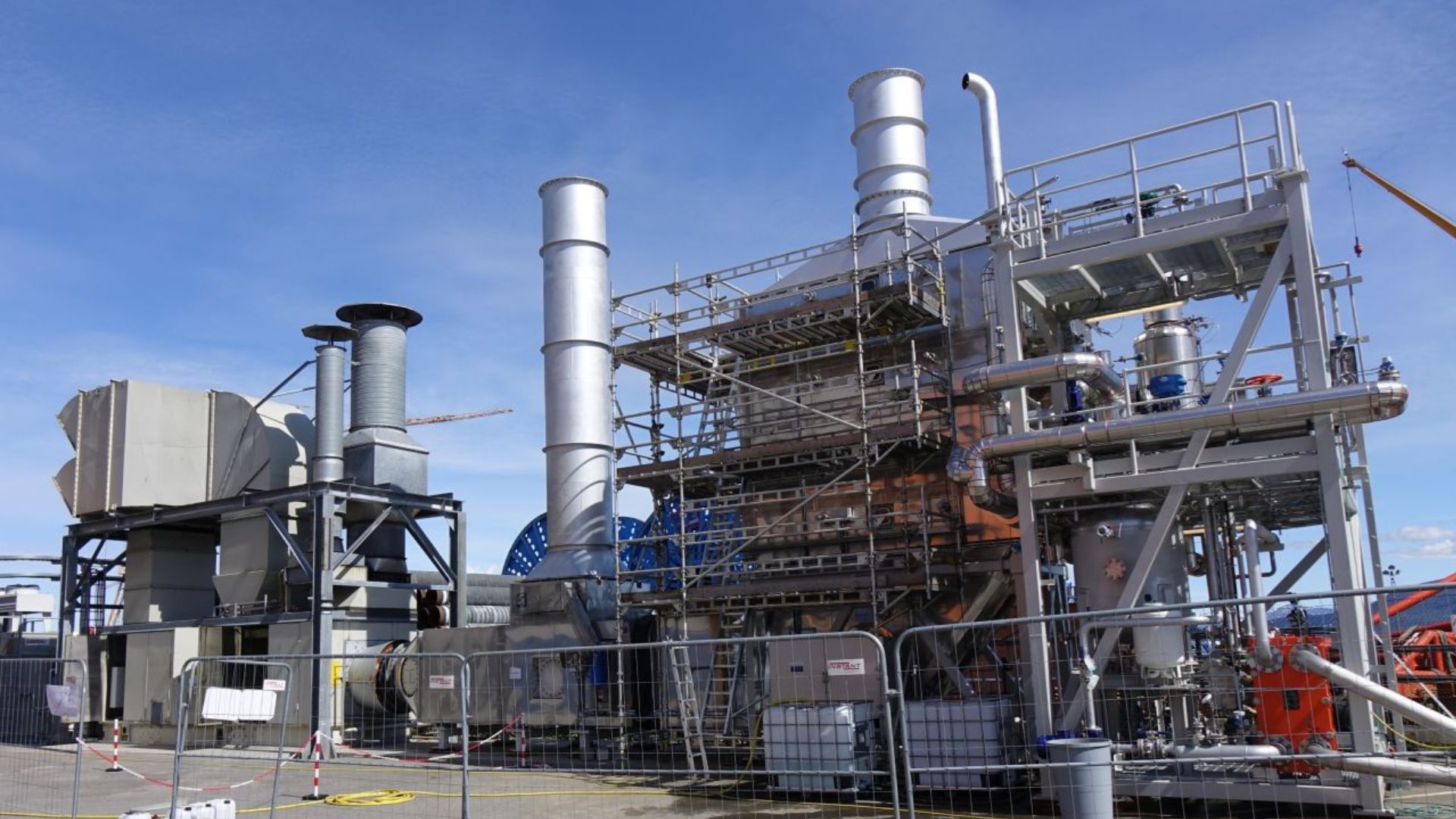
Norwegian technology company Techouse has completed full-scale testing of a compact steam generator designed to make combined-cycle power generation more practical on offshore oil and gas installations. The compact once-through steam generator (COTSG) was developed through a joint industry project involving TotalEnergies, Equinor and SINTEF Energy Research, with funding from the Norwegian Research Council. Sustainable Energy conducted testing at its test center in Stord, western Norway.Techouse says the technology could help offshore operators reduce fuel consumption and cut carbon dioxide emissions by up to 25% compared with conventional gas-turbine power generation. Turning waste heat into electricity Many offshore facilities generate electricity and heat using gas turbines. These systems release large amounts of hot exhaust, representing energy that can potentially be recovered rather than simply discharged. A combined-cycle system captures that exhaust heat to produce steam. The steam can then drive a separate turbine connected to a generator, producing additional electricity without requiring an equivalent increase in fuel consumption. The approach is already established on land, but offshore installations present a major engineering constraint: space and weight. Conventional once-through steam generators and other heat-recovery equipment can be large and heavy. Offshore platforms have limited deck space and structural capacity, while floating facilities such as FPSOs face additional constraints when new equipment is added. According to Offshore Magazine, Techouse developed the COTSG specifically to address that problem. The company says its earlier research indicated that combined-cycle systems could reduce CO2 emissions from floating and fixed offshore installations by 22–25% compared with conventional gas-turbine configurations. Depending on the installation, it estimates that could translate into annual reductions of 50,000 to 150,000 metric tons of CO2. Those figures are Techouse’s estimates rather than results from the latest testing campaign. Testing a 30-year service life The latest campaign focused on whether the smaller generator could withstand the demanding conditions expected during long-term offshore operation. The full-scale unit underwent performance testing as well as vibration, fatigue and thermal-fatigue testing. The tests included cyclic loading intended to assess whether the system could meet a targeted 30-year operating life. Techouse CTO Pål Kloster said the company had already achieved its objectives of making the generator smaller and lighter, with the latest testing focused on verifying its robustness and commercial potential. The company said the test produced positive results against its key parameters and that it is now analyzing the data collected during the campaign. The testing is complete, but the final analysis has not yet been completed. The reported results therefore represent a development milestone rather than proof that the technology is ready for widespread commercial deployment. Commercial launch planned for 2026 Techouse is targeting a commercial launch by the end of 2026. If deployed, the COTSG could potentially be used on fixed production platforms, floating production storage and offloading vessels (FPSOs), and other offshore installations that rely heavily on gas-turbine power generation.The company is also looking beyond fuel-efficiency improvements. Techouse says it plans to explore integrating the technology with carbon-capture systems on offshore platforms. The immediate goal, however, is simpler. Make the equipment needed to recover gas-turbine waste heat small and light enough to fit where offshore operators actually have room for it.Get the latest in engineering, tech, space & science - delivered daily to your inbox.Kaif Shaikh is a journalist and writer passionate about turning complex information into clear, impactful stories. His writing covers technology, sustainability, geopolitics, and occasionally fiction. A graduate in Journalism and Mass Communication, his work has appeared in the Times of India and beyond. After a near-fatal experience, Kaif began seeing both stories and silences differently. Outside work, he juggles far too many projects and passions, but always makes time to read, reflect, and hold onto the thread of wonder.
Techouse tests compact steam generator, targets 25% lower offshore CO2 emissions
Full Article
Original Source
Read the full article at Interestingengineering →KhanList aggregates and links to publicly available news content. We do not host full articles from third-party sources. Always verify important information with original sources.