Our product picks are editor-tested, expert-approved. We may earn a commission through links on our site. Why Trust Us?Getty Images/MH Illustration8 min readAS CAPTAIN OF a country’s soccer team, there is already tremendous pressure to perform. Now imagine the pressure of being the captain of a World Cup host country and one of the oldest players in the tournament. That’s the responsibility 38-year-old Tim Ream had on his shoulders during the 2026 FIFA World Cup.Team USA did not advance past the knockout rounds (and faced global controversy ahead of Belgium’s match when FIFA overturned Folarin Balogun's red card after a call with President Trump). But if you asked Ream, that disappointment had a silver lining—which may be just as valuable as the experience.Over the past two decades, soccer has been slowly gaining momentum in the US. A 2024 survey found it narrowly surpassed baseball as the third most popular sport, trailing behind basketball and American football. With the popularity of the World Cup in North America, Ream wants to continue that momentum and expand interest into Major League Soccer. One of the ways he’s doing that is through a partnership with AT&T where he’s connecting with fans and bringing them close to the action in time for the MLS All-Star game happening July 29.Ahead of the MLS All-Star game, Ream sat down with MH to discuss the World Cup, how he’s modified his training to stay in peak shape as an older player, and how he rebuilds confidence after a tough game.MEN’S HEALTH: Let’s talk about the World Cup that wrapped up mid-July. It attracted people from across the world, but as one of the host nations, it also spurred up interest here at home. How do you feel about the potential rise in the sport’s popularity after the tournament?TIM REAM: It's amazing to have all eyes of the soccer world and the sporting world on the country. Millions upon millions of people were watching soccer. Obviously the goal of a tournament is always to go as far as you possibly can. And to win. But there’s always a secondary goal of connecting with fans, and inspire generations of people to pick up the ball and play the sport.MH: Do you think it’s a temporary boost of interest or do you think the momentum of the World Cup will help in potentially having soccer surpassing the popularity of basketball and American football?TR: That's the age-old question, isn't it? How can you keep up momentum? How can you keep the attention on the sport? I don't think there's any doubt that the sport and popularity will continue to expand and grow. Could it one day be the first or second largest sport in the US? Absolutely. The World Cup was a good indication of how much it can grow in a short amount of time. Then it's about capturing that and keeping that momentum to different markets and different cities. As players, we need to continue to help grow the game and connect to more fans around the country.MH: What was it like to captain the national team for the World Cup, especially on home soil this time?TR: If you would ask me when I was 11, 12 years old, what is your dream? It would have been to play in a World Cup. I didn’t think I would get to be a captain. It's a huge honor. Not many people get to captain their national teams. And not many people get to captain their team at a home World Cup. It's probably one of the top honors that I've ever had in my long playing career.MH: Was there like a particular favorite game or a favorite moment in the World Cup?TR: There were a couple. In terms of actual gameplay, the first game against Paraguay was incredible. When we talk about one singular moment, the game in Seattle against Australia. After the game, being able to connect with 70,000 fans singing “Take Me Home Country Roads,”—there was something special about it. To all be in that moment feeling the same feelings of joy and excitement.MH: How did you handle pressure from fans and for yourself to take the team far into the tournament on home soil? TR: There’s no more pressure being put on the team than what you're putting on yourself. A lot of the talk within our team was that the pressure was to make the World Cup team and then be a part of the group that got to play on home soil. The saying holds true: pressure is a privilege. There's so many people who would love to be in the position that we found ourselves in, playing for our country, playing in a World Cup, and playing on home soil. It should be embraced more than shied away from, and that's the way I approach pressure.MH: The US was eliminated after the game with Belgium, how are you handling the online criticism at Team USA’s play for the match?TR: The online criticism comes with the job. It comes with being a professional athlete, and that's okay. It's one of those things where you know you have to understand that when you play good, people think you're the best. When you lose and you don't play well, people think you're the absolute worst. The truth is always somewhere in between. You're never the best when you win, and you're never the worst when you lose. That's just the way it goes.MH: How do you rebuild confidence after a tough game?TR: Honestly, you just go back to training. You put your head down and you work hard. As athletes, you have ebbs and flows, and there's always moments of confidence or maybe a little bit of hesitation. For me, it's getting back onto the training ground and doing what I love to do. That’s getting back to playing as soon as you possibly can. I equate it to riding a bike and having an accident where you fall. The longer you wait to play, the more you're going to think about it. The quicker you can get back to playing, the better off you're going to be and the more you can put things in the rearview mirror.MH: At 38, how are you maintaining your peak as an older player? Are there particular activities or exercises you prefer? TR: I do a lot of kinetics. They call it a kBox. So it's a kinetic movement where you're pushing one way but also being pulled in an opposite way. You get a lot of different movements in that way. I also do some more plyometric things where you have a little bit of weight loaded on top of me, and moving in a lateral direction or moving in a vertical direction. It's not just about using heavy weights. That's the misconception that you have to move heavy weights to maintain speed. It's just adding a little bit of resistance and moving against that resistance as fast as you can. I've really added that over the last three or four years in order to maintain as much as I possibly can.MH: Are there any recovery methods you like to prioritize after a match or after an intense training session?TR: Oh my gosh, we could be here all day. As you get older, there's so much more that you have to implement and add in. The key for me has always been that I've always had a pretty good recovery routine. Now I look at red light therapy, cold plunges, manual kind of soft tissue work, cryotherapy. With the US team over the summer, we had a thing called a Z bed, which was acoustic therapy and light therapy. Then I use the compression boots from Normatec. All of these things have been a go-to of mine now over the past year and a half in order to maintain a good level of recovery between training sessions and games.MH: Are there any recovery methods you’ve retired or found not as effective anymore?TR: That's a great question. One thing that I’m not overly doing is the compression kind of pants. A lot of people say wear the compression pants and leggings. I used to wear them all the time and I'll wear them every now and again, but it's not something that I’ll look to wear on a regular basis. Sauna also used to be a big one for me, and I found a few years ago that I didn't actually feel better for it. I felt more drained from it. So I dropped that one a few years back.MH: I want to switch gears and talk about MLS. How do you feel playing for MLS versus the Premier League?TR: One of the biggest differences is the travel. The US is a huge nation and you have to get on an airplane and fly. The closest game for [MLS club Charlotte] is Atlanta which is a 45-minute flight. The travel can catch up to you over the course of the season. Obviously, the level of players in the Premier League is very high. At every position there’s international quality players. So that's another difference.MH: Do you have a preference between the two?TR: I don’t think there’s a preference. Everybody goes to where they feel like they can play and contribute. I loved my time in the Premier League. I spent almost 13 years in England, and they were some of the best playing years of my career. The travel was shorter. You could ride buses everywhere and nothing was more than a couple hours. The level was fantastic. But then, traveling around the US, you get to go to different cities and play in front of friends and family everywhere you go. It’s unique and a great advantage as well.Courtesy of AT&TTim Ream at a meet-and-greet with fans.MH: Ahead of the MLS All-Star game, you're collaborating with AT&T. Can you tell me more about that partnership?TR: AT&T is about connecting people. The game is about connecting fans with each other, connecting fans with teams and players and markets. So it's a natural fit. I've talked a lot about how important connection is on and off the field. With the national team, it's something we're all passionate about.MH: For people mourning the festivities surrounding World Cup summer, the MLS All-Star Game may be a way to capture the soccer buzz again. What should people know before tuning in for the match?TR: The All-Star Game is a showcase for our sport. It's a showcase of all the different talent that is playing right here in the US. It's a great opportunity for people to watch, connect with different players—maybe players that they're not used to watching. It's a great showcase for the league and a great showcase for the sport of soccer to have an All-Star game here in Charlotte.This interview has been edited for content and clarity.Jocelyn Solis-Moreira, MS is the associate health & fitness for Men's Health and has previously written for CNN, Scientific American, Popular Science, and National Geographic before joining the brand. When she's not working, she's doing circus arts or working towards the perfect pull-up.
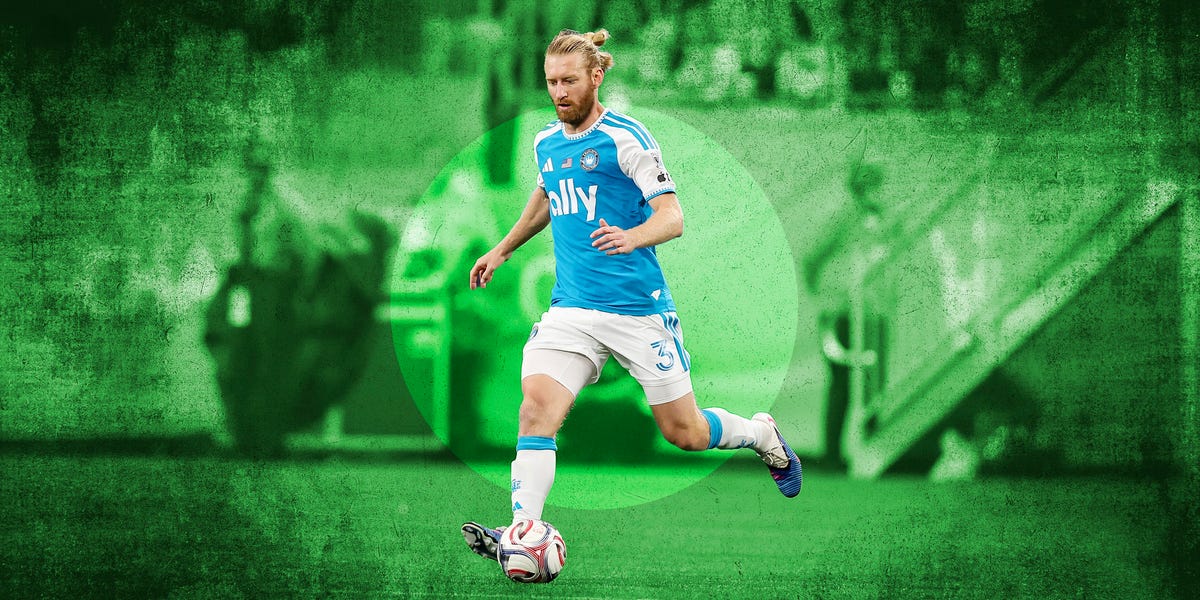
Team USA Captain Tim Ream Shares His Thoughts On the World Cup, Training, and MLS All-Star
Full Article
Original Source
Read the full article at Menshealth →KhanList aggregates and links to publicly available news content. We do not host full articles from third-party sources. Always verify important information with original sources.