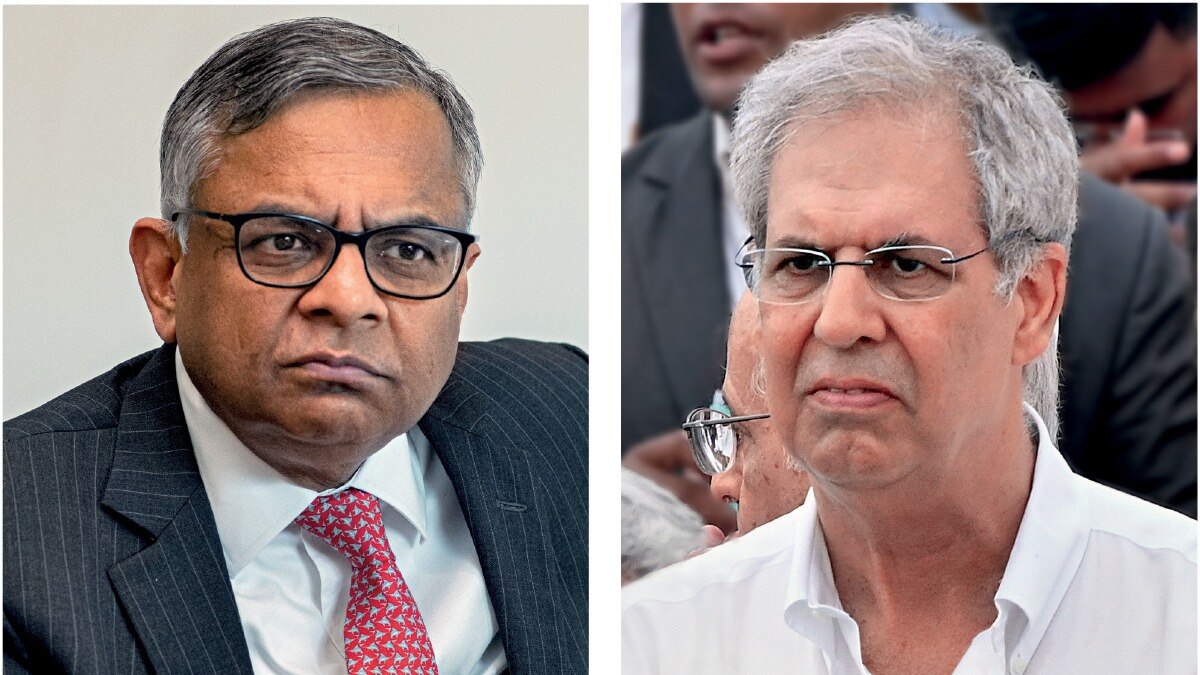
N. Chandrasekaran's decision to step down as Tata Sons chairman in February 2027 ends months of speculation, bringing the group's leadership question back in focus(NOTE: This article was originally published in the India Today issue dated August 24, 2026)Natarajan Chandrasekaran will step down as chairman of Tata Sons when his current term expires on February 20, 2027, ending months of speculation over whether he would be reappointed after a decade at the helm. The issue gained urgency because his reappointment as a director of Tata Sons, the holding company of the Rs 26.5 lakh crore Tata Group, was due to come up at the August 18 annual general meeting and was necessary for him to continue as chairman.In a statement on August 12, Chandrasekaran, 63, said that the Sir Dorabji Tata Trust and the Sir Ratan Tata Trust—the two principal trusts of Tata Trusts, which owns 66 per cent of Tata Sons—had unanimously recommended a five-year extension for him. The resolution had been placed before the Tata Sons board on February 24. “However, the proposal was not carried through because one of the board members did not support it; and in the absence of unanimous support, I chose to defer the decision,” it read.Although Chandrasekaran did not name anyone, the reference was widely seen as pointing to Tata Trusts chairman Noel Tata. Having initially backed a third term for Chandrasekaran, Noel later reportedly raised concerns over the performance of several group companies, heavy capital spending on new ventures such as semiconductors, and the group’s broader strategic direction. The split within the group’s top leadership became public last year when trustees Mehli Mistry, Pramit Jhaveri, Jehangir H.C. Jehangir and Darius Khambata opposed the reappointment of veteran industrialist Venu Srinivasan and former defence secretary Vijay Singh to the boards of the two principal trusts. The Centre had to intervene, with home minister Amit Shah and finance minister Nirmala Sitharaman calling Noel, Chandrasekaran and others to New Delhi for talks. Days later, Mistry resigned from key trusts.A major fault line within the Tata Group has been the proposed listing of Tata Sons. The RBI had classified Tata Sons as an “upper-layer” non-banking financial company (NBFC) in 2022, which would normally require listing within three years. Both Srinivasan and Vijay Singh are said to have been in its favour to raise the capital needed for the group’s expansion. So are shareholders such as the Shapoorji Pallonji Group, which owns over 18 per cent of Tata Sons. Others, including Noel, want to preserve the company’s private character to protect the group’s philanthropic legacy. In June 2026, the RBI retained Tata Sons on a new list of 17 upper-layer NBFCs, while noting that this does not affect the group’s pending application to surrender its NBFC registration.The question now is who will lead the Tata Group through this phase of uncertainty. In a statement, the Sir Dorabji Tata Trust said it “respects” Chandrasekaran’s decision and has begun the process of forming a selection committee to find a successor. Under Tata Sons’ amended Articles of Association, the Tata Trusts chairman cannot simultaneously serve as Tata Sons chairman. That rules out Noel unless he relinquishes his other role. This leaves the field open to an internal executive or an external professional.GROWTH AND ITS COSTSChandrasekaran took charge of Tata Sons in February 2017, months after the acrimonious removal of Cyrus Mistry. He oversaw a sweeping restructuring that regrouped similar businesses through mergers and demergers to improve the operational synergy across the group, including the merger of Vistara with Air India in 2024. He also pushed the group into new-age sectors. Tata Electronics committed Rs 50,000 crore to a semiconductor plant; Tata Power outlined plans to invest Rs 75,000 crore in renewables by 2030.“When Chandrasekaran assumed leadership in 2017, the Tata Group was already one of India’s most respected business houses. Yet what followed was a remarkable re-rating of its public market value,” says Deven Choksey, MD, DRChoksey FinServ. The market value of the group’s listed companies nearly tripled and revenues doubled by FY26 (see Tata Group’s Performance). Yet the impressive headline numbers conceal a more nuanced reality. “While the listed operating companies generated record profits, several of the group’s strategic investments continued to absorb substantial capital,” notes Choksey.The most demanding of these has been Air India, brought back into the Tata fold in 2022. In FY26, it reported a net loss of Rs 22,238 crore. The crash of its London-bound flight shortly after take-off from Ahmedabad in June 2025 intensified scrutiny of the airline’s legacy challenges, including years of underinvestment, labour unrest and an ageing fleet. More recently, on August 4, a Phuket-New Delhi flight suffered a sudden loss of altitude, and the pilot-in-command reportedly tested positive for marijuana. Air India has thus emerged as the clearest symbol of both Chandrasekaran’s ambition and the risks that came with it.- EndsPublished By: Yashwardhan SinghPublished On: Aug 19, 2026 17:58 IST
Tata Group: The search for a successor
Full Article
Original Source
Read the full article at Indiatoday →KhanList aggregates and links to publicly available news content. We do not host full articles from third-party sources. Always verify important information with original sources.