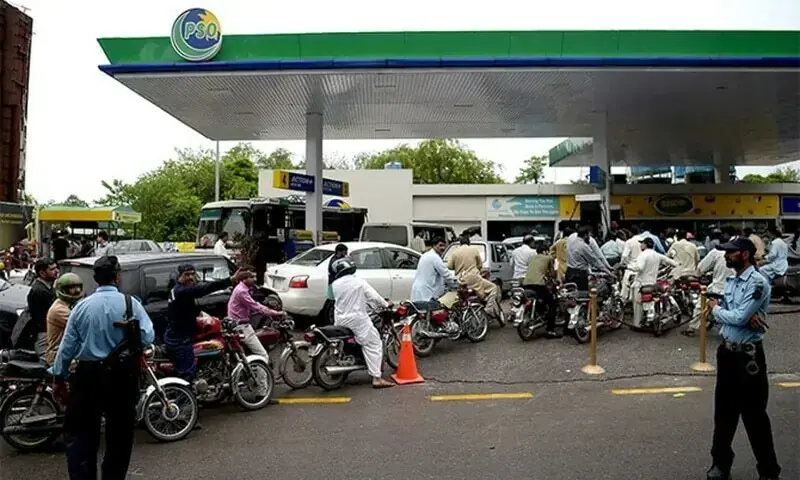
• Govt stands firm on petroleum pricing deregulation plan• Petroleum minister defends daily pricing, claims ‘transparent’ mechanism protects consumers from price shocks• Senate panel directs Ogra to submit proposal that addresses dealers’ concerns ISLAMABAD: Undeterred by public criticism, the government on Thursday indicated it could reintroduce targeted fuel subsidies within the next few days, with financial support from the provinces, if renewed tensions in the Middle East persisted, and stood firm on its plan to go ahead with petroleum price deregulation. “If this matter [renewed US-Iran attacks] does not end in a few days, we will bring back the targeted subsidy mechanism that we previously used to prevent the price shock from reaching the people,” Petroleum Minister Ali Pervaiz Malik said, recalling that the prime minister had initially provided Rs130 billion in fuel subsidies before bringing the provincial governments on board under the targeted subsidy mechanism. He said the prime minister and the entire government understood the difficulties being faced by common Pakistanis. Talking to journalists after attending a meeting of the Senate Standing Committee on Petroleum, the minister said real relief would reach the people only when the US-Iran war came to an end and global oil prices fell — for which Chief of Defence Staff and Chief of the Army Staff Field Marshal Asim Munir and Prime Minister Shehbaz Sharif were making efforts. Malik said that while Pakistan remained under an International Monetary Fund (IMF) programme and had limited financial resources, recovering legitimate fuel costs from consumers was the only option. Otherwise, he added, someone else would have to bear the burden if pricing was kept artificially controlled. He said the transparent daily pricing mechanism had been introduced in the interest of common people, transferring the impact of international prices gradually to the consumers instead of the major shocks that might have accrued as a result of weekly or fortnightly pricing. “We have tied our hands ourselves and handed over a transparent system to the people,” he said, adding that the Oil and Gas Regulatory Authority (Ogra) was presenting its “transparent working” on its website. He said the real benefit would reach the people when cheapest fuel reached the consumers through competition and transparency. Senate panel concerned Earlier, he told the Senate panel, headed by Senator Umer Farooq, that Ogra was setting petroleum prices in line with movement in the international market under a transparent formula. Senators gave a mixed feedback to the new pricing mechanism. Senator Amir Chishti appreciated the daily pricing system, while Senator Saifullah Abro described it as “slow poison”. The committee held a detailed discussion on the recently introduced daily petroleum pricing mechanism and questioned the rationale for replacing the previous fortnightly system. The petroleum minister said the federal government had “depoliticised” the pricing process by empowering Ogra, as the independent regulator, to determine petroleum prices. Ogra Chairman Nabeel Awan said petroleum prices were calculated using a seven-day rolling average of Platts international benchmarks. He added that the daily pricing mechanism protected consumers by spreading the impact of international price fluctuations over a seven-day period, thereby minimising sudden price shocks, especially due to the ongoing US-Iran conflict. The panel expressed serious concern over the high tax burden on petroleum products. Representatives of the Petroleum Dealers Association told the committee that frequent price revisions were creating operational difficulties for dealers. The committee chairman directed Ogra to engage all relevant stakeholders, including the dealers’ association, and submit a practical proposal to address their concerns. Pricing system examined On the other hand, a government committee constituted by the prime minister to review the petroleum pricing mechanism, and headed by the petroleum minister, examined the daily pricing system and “appreciated the daily pricing formula and the steps taken to enhance transparency as well as reduce volatility in the new petroleum pricing mechanism”, according to an official statement. The sub-committees constituted by the main committee presented their findings and recommendations on various aspects of the pricing mechanism. The KPMG consulting firm also presented its report comparing petroleum pricing and taxation structures across the region. The minister directed oil marketing companies (OMCs) should be held responsible for ensuring end-to-end digitisation of the petroleum supply chain to improve transparency, traceability, efficiency and accountability, in line with directives issued by the prime minister in December last year. The meeting also deliberated on the moratorium on establishing new OMCs and its implications for competition, investment and market structure. It was resolved that the inland freight equalisation margin (IFEM) pool also required a wholesome review, given its role in maintaining uniform fuel prices across the country and its dissolution in case of deregulation. The issue of windfall tax also came under discussion. It was decided that the Finance Division, in consultation with the Federal Board of Revenue (FBR) and the Petroleum Division, would present a report on the matter at the committee’s next meeting. The committee decided to continue deliberations on the recommendations of its subcommittees and formulate a comprehensive roadmap for reforms in the petroleum sector aimed at promoting transparency, competition, efficiency and consumer protection. Published in Dawn, July 31st, 2026 Follow Dawn Business on X, LinkedIn, Instagram and Facebook for insights on business, finance and tech from Pakistan and across the world.
Targeted fuel subsidy may return if Gulf tensions persist
Full Article
Original Source
Read the full article at Dawn →KhanList aggregates and links to publicly available news content. We do not host full articles from third-party sources. Always verify important information with original sources.