
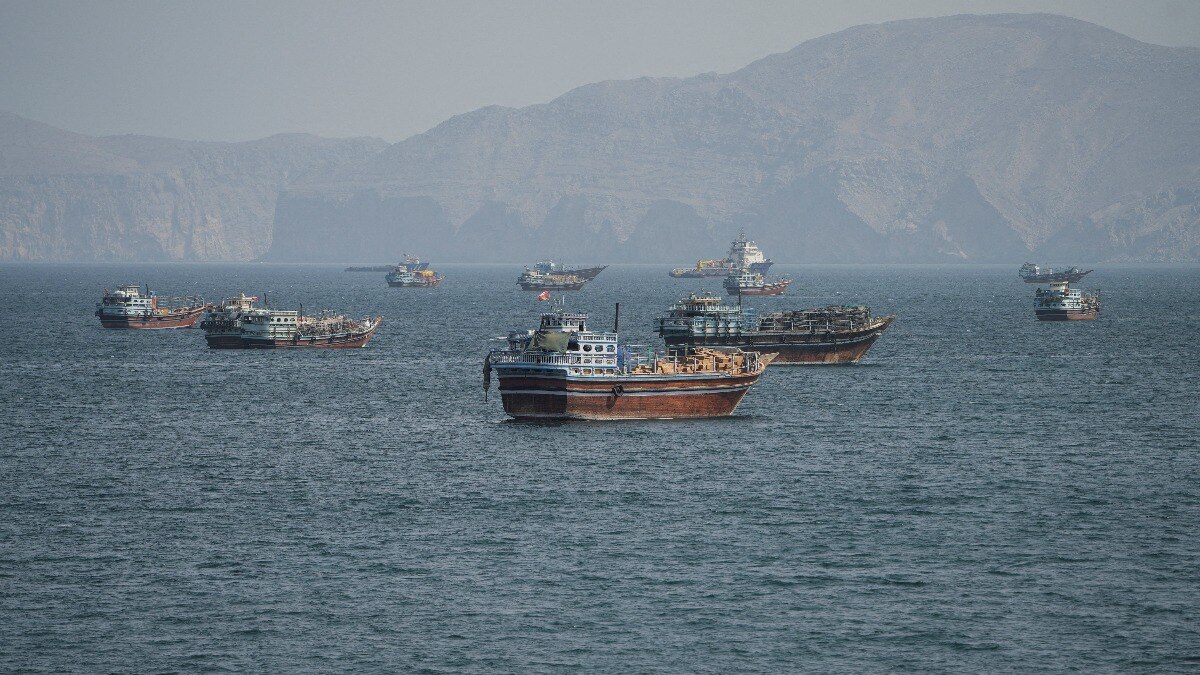
A tanker carrying 27 Indian seafarers was hit by limpet mines in the Strait of Hormuz on October 30, marking the first successful use of the small, adhesive explosives in the waterway since the US-Iran war began. The mines were attached to the tanker's hull by a small craft, triggering an engine-room fire.Vessels at the Strait of Hormuz, as seen from Musandam, Oman, October 2, 2026. (Reuters)New Delhi,Oct 30, 2026 21:36 ISTThe Strait of Hormuz appears to have entered a new phase of maritime warfare, with the Panama-flagged tanker MT LOUISE 1, carrying 27 Indian seafarers, hit by limpet mines on October 30. The attack marked the first successful use of explosives in the critical waterway since the US-Iran war began in February, Reuters reported, citing maritime sources. It triggered a fire in the vessel's engine room and temporarily disabled the tanker, though all crew members escaped unharmed, Union Shipping Minister Sarbananda Sonowal said.Sonowal also confirmed that another vessel, the Liberia-flagged very large crude carrier (VLCC) MT ARZANAH, carrying two Indian nationals, came under a projectile attack in the strait on October 29. All 29 Indians aboard the two ships were safe, with no injuries reported.In a post on X, the minister said the government was monitoring the situation and coordinating with the ship management companies to ensure the safety and wellbeing of Indian crew members."On Oct 29, Liberia-flagged VLCC MT ARZANAH, carrying 2 Indian nationals, and on Oct 30, Panama-flagged crude oil tanker MT LOUISE 1, carrying 27 Indian seafarers, were targeted in projectile attacks in the Strait of Hormuz," Sonowal tweeted. The attack on Louise 1 involved a small craft attaching two limpet mines to the tanker's hull before moving away, maritime security Reuters reported, citing sources. The crew put out the fire, and no environmental damage was reported. The vessel later resumed its journey.The UK Maritime Trade Operations (UKMTO), a British naval agency, said the incident took place on Thursday about 25 nautical miles (46 km) north-east of Khasab in Oman. Its advisory did not identify the vessel. However, three maritime security sources assessed that the ship was Louise 1 and that limpet mines had been attached to its hull. It was the first known successful use of such devices in the area since the conflict began, reported Reuters, citing sources.Despite the damage, Louise 1 resumed its journey after the fire was extinguished.A separate attempt involving limpet mines in September had failed because the devices did not detonate, they added. The identity of those behind Thursday's attack remains unclear.The incident has raised fresh concerns about the vulnerability of commercial vessels passing through the Strait of Hormuz, a key global oil export route. Greece-based maritime risk management company Marisks said the apparent ability of a small boat to approach a moving tanker, attach explosives and retreat posed a serious security concern, particularly in the strait's crowded shipping channels.Marisks said limpet mines were introduced in the region in 2017 and were subsequently used against tankers in the Strait of Hormuz. The explosives are inexpensive and readily available, it said, making their deployment from a small craft a low-technology and cost-effective method of attack.- Ends
Tanker with 27 Indians aboard hit by limpet mines in first such Hormuz attack
Full Article
Original Source
Read the full article at Indiatoday →KhanList aggregates and links to publicly available news content. We do not host full articles from third-party sources. Always verify important information with original sources.