
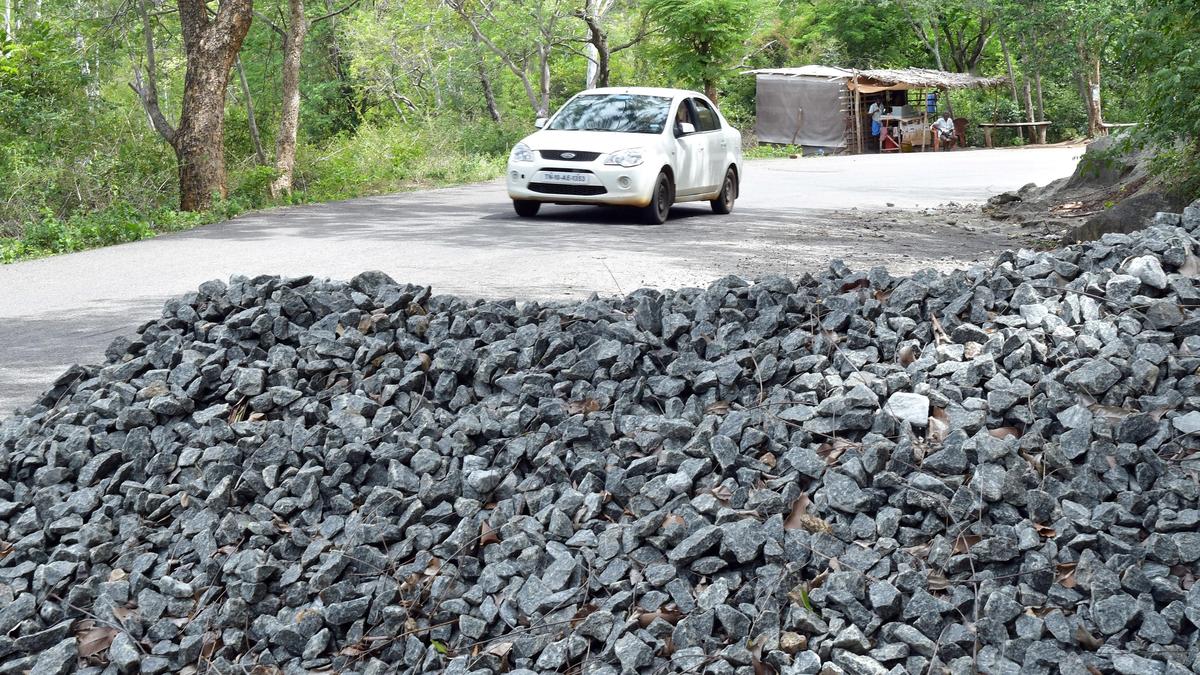
The court also quashed an order passed by the Director of Geology and Mining on July 27, 2026 imposing a temporary ban on transportation of rough stones and their aggregates to other States, except to Puducherry and the Karaikal region to ensure adequate availability in Tamil Nadu. Representational image. File | Photo Credit: G. Karthikeyan The Madras High Court on Tuesday (November 17, 2026) declared as unconstitutional Rule 3A of the Tamil Nadu Prevention of Illegal Mining, Transportation and Storage of Minerals and Mineral Dealers Rules, 2011 which empowers the Director of Geology and Mining to impose a temporary ban on transportation of minerals to other States.First Division Bench of Chief Justice Sushrut Arvind Dharmadhikari and Justice G. Arul Murugan held that the rule, inserted by way of an amendment on July 9, 2026, was unconstitutional and also ultravires the provisions of the Mines and Minerals (Development and Regulations) Act, 1957, a central legislation under which the rules had been framed.Consequentially, the judges also quashed an order passed by the Director of Geology and Mining on July 27, 2026 imposing a temporary ban on transportation of rough stones and their aggregates to other States, except to Puducherry and the Karaikal region for a period of three months, that was later extended by another three months from October 27, in order to ensure adequate availability in Tamil Nadu.The orders were passed on a batch of writ petitions filed both in the principal seat of the High Court in Chennai as well as its Madurai Bench challenging the constitutional validity of Rule 3A introduced through an amendment to the statutory rules on July 9, 2026 as well as the consequential temporary ban order passed by the Director of Geology and Mining.Rule 3A had empowered the Director of Geology and Mining to regulate the transport of rough stones including Khandas, boulders, size reduced (broken or crushed) materials including M-Sand, metal jelly, ballasts, mill stones, hand chakais and building and road construction stones across the border to other States, which may include imposition of temporary ban, to ensure their availability for adequate supply within the StateHowever, a host of crusher and quarry owners associations as well as individual owners of such facilities had approached the High Court contending that the newly-introduced statutory rule was ultravires Articles 301 (Freedom of trade, commerce and intercourse throughout the territory of India) and 304(b) (power of a State legislature to impose reasonable restrictions on the freedom of trade, commerce or intercourse in public interest).The petitioners had also contended that the statutory rule was ultravires Section 23(C)(1) of the Mines and Minerals (Development and Regulation) Act, 1957, a central legislation which empowers the State governments to frame rules for preventing illegal mining, transportation and storage of minerals. Published - November 17, 2026 12:46 pm IST
Tamil Nadu government cannot ban transportation of minerals to other States, rules Madras High Court
Full Article
Original Source
Read the full article at Thehindu →KhanList aggregates and links to publicly available news content. We do not host full articles from third-party sources. Always verify important information with original sources.