
NOVEMBER 8, 2026 09:05If art, regardless of discipline, is going to maintain its prerequisite cutting edge, there has got to be an injection of new blood from time to time.Yasmin Gariv embraces that view wholeheartedly and is putting it into good entertaining practice as artistic director of the Fluorescent – Vertigo Jerusalem festival, which takes place in Jerusalem and down the road at Kibbutz Netiv Halamed-Heh, at the home of the Vertigo dance company, November 9-13.Notwithstanding her tenderness of years, all of 26, Gariv is now into her third stint in charge of programming of the annual event she founded.This year’s offering, which is supported by the Jerusalem Foundation and the Jerusalem Municipality, confirms she is a firm believer in keeping things fresh and on the creative edge, and giving budding artists – choreographers and dancers alike – a golden opportunity to strut their nascent stuff. The forthcoming festival is officially the third full-blown edition, although it was preceded by a smaller water-testing debut with no thoughts of the future.The festival embraces movement by the less able-bodied with an intriguing work, ‘Break A Leg,’ by Sharon Fridman. (credit: Nimrod Eitan Peled)Fluorescent is, in fact, a default development spawned by Gariv’s frustration with banging her head against a brick wall.“As an artist, a choreographer, I was continually submitting my work to festivals, and I kept on being turned down,” she recalls. “Then a friend of mine said we should do something ourselves.”Getting the show on the roadVertigo was a natural go-to starting point for Gariv and her pal.“Sigal [Rot] from Vertigo was my teacher in high school, and we knew the people from Vertigo, and that they are very open to new ideas.“We got in touch with them. We told them we weren’t asking anything from them other than to give us the use of their studio. We said we were planning on putting on some evening shows and nothing more.”The ball was well and truly set in motion after those initial hesitant baby steps.“We didn’t know if people would turn up to see us, but it was fine in the end,” Gariv notes.That was fine for a one-off escapade. She and her co-initiator had had a dream and gone for it with gusto. And Gariv had exorcised some of her pent-up aggravation at having her quest for choreographic expression repeatedly stymied.However, there was more on offer where that came from, at least for Gariv.“A year later, my friend said that running a festival was not for her. But I wanted to carry on. I felt there was something very exciting about the festival. We established a festival for young artists, only young artists.”Before anyone comes up with plaintive claims of ageism, Gariv qualifies that epithet.“‘Young’ means young in terms of experience,” she explains, adding there was a degree of remedial prioritization to her programming ethos. “This was for artists who hadn’t had works shown at festivals in Israel, who hadn’t built up a résumé. It was for people who were new on the scene.”And so Fluorescent came to be, in earnest.It’s all fine and dandy having some fanciful notion, however long-cherished and heartfelt, but it is an entirely different ballgame making it happen.Artistic realms are indeed a wonderful thing, and a boon to our spiritual – and, by projection, physical – well-being, but even artists have to put bread on the table. For that you need hard cash.There was a little of that in the offing for Gariv, enough for her to believe she could give the festival a real chance of becoming a bona fide corporeal reality.“A year later we got a small budget from the Jerusalem Municipality, thanks to Vertigo, and we thought we needed a name [for the festival].”Lighting up the dance floorThe illumination moniker was prompted by venue circumstances.“We chose ‘Fluorescent’ because the shows took place in a studio, with fluorescent lighting,” comes the self-explanatory reasoning. “We thought that was pretty cool,” Gariv chuckles.There is a deeper, artistically existential aspect in there, too. “We dancers always say we dance under the lighting, and we give our heart and soul to it. We are always under the fluorescent lighting and working hard.”In truth, the forthcoming edition of the festival is not a purely artificially lit affair. After the successes of the last three years, Gariv decided it was time to spread the venture’s programmatic wings. She – justifiably – proudly rolls out the numerical and logistical collateral.“The festival has grown threefold. We now have five days, 14 shows, and 27 artists. We have outdoor shows as well as indoor ones. But the main change is that it is now not just a dance festival.”The disciplinary flex comes directly from the artistic director’s evolving bio.“In recent years, I have become a circus artist, too,” she reveals. “So we have made the transition to a multidisciplinary festival, with the emphasis on contemporary dance and circus art, performance art, and music.”It was a natural development. “For me it’s really exciting because it reflects my own growth as an artist, and there is the growth of the festival, which go together.”Sounds like a seamless fit.According to Gariv, that also answers a market need.“When I got into the contemporary circus art domain, I saw there are lots of gifted artists here – the scene is developing – but there was no contemporary circus festival for adults in Israel. There weren’t many platforms for presenting the art form here.”Any artistic-entertainment proposition that comes with a “contemporary” tag can leave large sectors of the cultural consumership raising an eyebrow or two, and with the fear of having to contend with something beyond their comfort zone.That, says Gariv, does not apply to the latest addition to her professional toolbox.“First, I recommend to everyone to come to our festival, to see and experience and be surprised. But circus art has the advantage of having a sort of wow factor to begin with. That is integral to it, and draws people even if they are not from the specific field. So I believe that it [circus art] can do well in Israel.”Getting in on the circus actGariv says the move from dance into circus art performance was both smooth and natural for her.“Circus performance is dance, too – aerial dance,” she posits.It is, she says, basically just a matter of switching the corporeal onus from the legs to the arms. That, of course, requires some upper body muscle building.“I use a metal hoop which weighs about 9-10 kilos,” she advises. That’s quite a schlep. “I recently performed in South Korea, and I took my hoop with me.”That engagement resulted from Gariv’s participation in the international dance showcase which takes place annually at the Suzanne Dellal Centre in Tel Aviv in front of artistic directors and other professionals from relevant artistic areas, from all over the world.The hope is that some of the acts the visitors see will convince them to consider slotting some of the Israeli artists in their various festivals and other events dotted around the globe.Happily, Gariv, whose CV to date includes a two-year stint with an Italian dance company, got the nod and was able to strut her stuff to Korean audiences and, in so doing, possibly convey to Korean culture consumers the notion that there are Israelis who add beauty to our lives.That presents a very different image of this country compared to the one they get via their news outlets. That suggests a win-win scenario for everyone.Like the rest of us, artists, too, continue to bear the scars of that cataclysmic day just over three years ago now. That, Gariv says, comes through in her life and her work.“As a dancer, I have changed a lot since October 7. There is an added depth to the movements I make. But I think everyone, everyone in Israel who experienced that, is not the same.”For an artist who uses her body as a means of conveying her artistic ideas, that necessarily has to affect the way she expresses her creative ideas.“When you change as a person, you change as an artist,” she declares.That, no doubt, will be palpably evident right across the five-day program in Jerusalem and Netiv Halamed-Heh, particularly in view of the festival’s stated intent, which includes “facilitating a direct encounter between the artists and the audiences.”I asked Gariv for some enlightenment on the way she and her co-professionals aim to achieve that.Dance for allThe festival is clearly not tailored to the type of ambiance John Lennon so famously mocked when The Beatles appeared at the Royal Albert Hall in London, in 1963.Before the Fab Four’s last number, Lennon asked the audience for help, cheekily suggesting that the people in the cheaper seats clap their hands, while the others “just rattle their jewelry.”Fluorescent is a grassroots endeavor for everyone, regardless of societal stature or bank balance.“The [majority of the] shows take place in studios. When you go to a studio show, you are sitting right in front of the dancers; you see their sweat and their facial expressions. It’s not like sitting in front of the stage at the opera house, and you catch some sort of silhouette [of the performers].“With us, you really live the show. You can even feel the tremors of the floorboards, as the dancers jump and move about.”Having been in the audience over at the kibbutz, I can attest to that alluring sense of intimacy.Gariv set her artistic directorial sights on crafting an added-value experiential consumer package.“There is the [physical] proximity between the audience and the artist, and there are all sorts of connections in the festival,” she notes.“There is a dance workshop for everyone, and a salsa dance slot in which anyone can participate. And there’s an outdoor salsa show. We want to get the members of the audience moving a bit,” Gariv laughs. “That’s the idea.”She wants to spread the word as wide and as far as she possibly can.“We’d like to introduce new sectors of the public to contemporary dance and art. We want people to know there are good things happening here.”Amen to that.Simply put, Gariv wants us all to have a good time and, while we’re at it, let our hair down. And why not?A quote variously attributed to the likes of Mark Twain, National Baseball Hall of Fame inductee Satchel Paige, and celebrated American educator William Purkey, urges us to: “Sing like no one is listening. Love like you’ve never been hurt. Dance like nobody’s watching.”The result of that laissez-faire philosophy is that you – as the quote suggests – “live like it’s heaven on earth.” Shaking a leg or two is clearly a good idea for us all.While she says that, as a professional dancer, she understandably doesn’t subscribe to the idea of going through her paces unobserved – that would be defeating the point of her whole entertaining exercise – she gets a kick out of sharing her love with the layman.“When I dance with someone who is not a trained dancer, I feel like I am passing to them a ball full of energy. It’s a two-way discussion. I always end up getting people up on their feet and dancing,” she chuckles.“When I dance at parties and weddings, you’ll see, in the end, everyone gets up and follows what I do. For me it’s a way to communicate and to give something to someone else.”First airingsGariv says she is looking forward to the third edition of Fluorescent, and is eagerly anticipating catching the premieres in the lineup.“There are brand-new works which we will see for the first time, together with the audience. That is part of the festival credo, to allow artists to present new creations.“They send in videos of themselves, explaining the rough outlines of the work they are putting together, and then the artistic jury decides which make it into the festival.”That sounds like a commensurately daring approach to adopt for a definitively down-to-earth venture.As befitting a vehicle for getting young choreographers out there into the public eye, the accent is also very much on the future.“We want to allow young artists to advance themselves. We hope that, in a few years’ time, the youngsters who appear at our festival will perform at the biggest festivals in the country, and we will have the satisfaction of having offered them their first opportunity.”With an albeit seasoned professional 26-year-old at its head, there is a decent chance that Fluorescent will lead the way into new artistic domains and keep the discipline buzzing.“Israeli dancers are the best in the world,” Gariv announces unceremoniously. “Before Oct. 7, there was hardly a dance festival in the world without Israelis on the program.“But we have to keep it fresh. Older artistic directors might feel it is more important to preserve the culture and to look after the veteran dancers. But we also need younger artistic directors. I represent something a lot younger that pays attention to young artists. We need both.”Fluorescent may not feature any of the old guard, such as peerless, still active 87-year-old dancer-choreographer Rina Schenfeld, but there will be a much-needed invigorating breath or two of fresh air blowing in Jerusalem and at Netiv Halamed-Heh next week.For tickets and more information: vertigo.org.il/dance-education/festivalfluo-2Follow us on Google
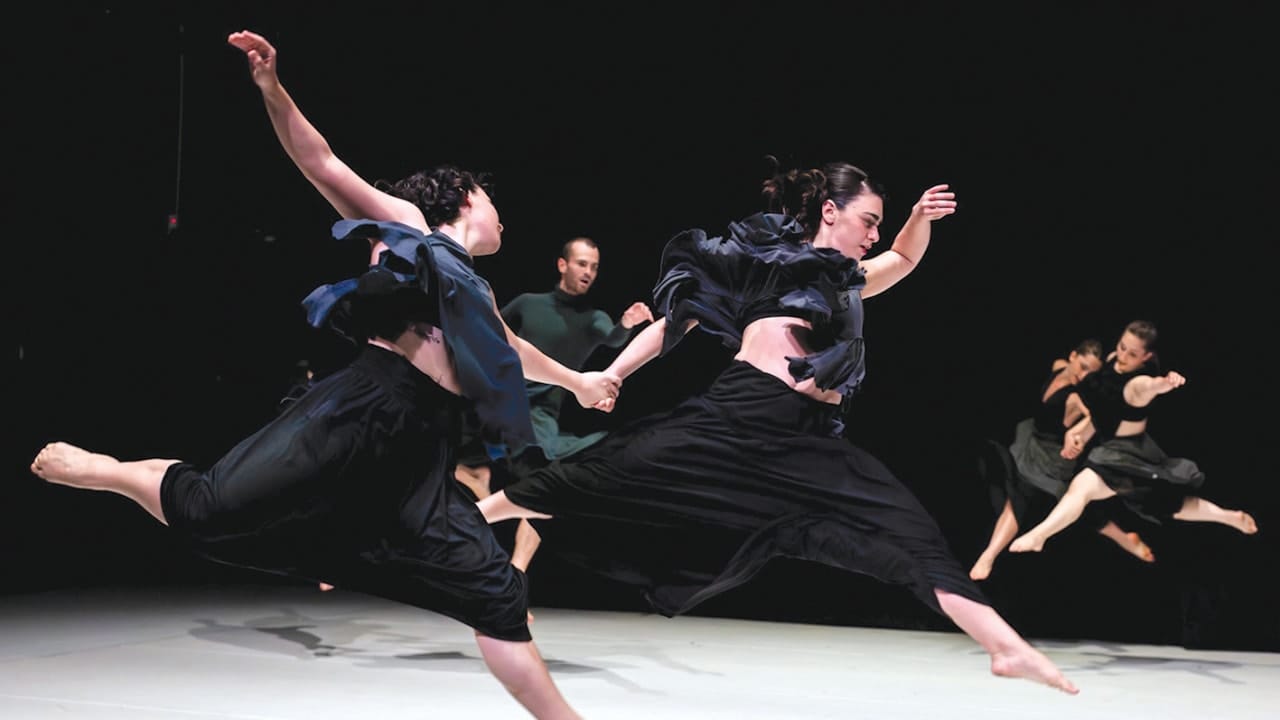
Taking to the air: The fourth Fluorescent – Vertigo Jerusalem festival
Full Article
Original Source
Read the full article at Jpost →KhanList aggregates and links to publicly available news content. We do not host full articles from third-party sources. Always verify important information with original sources.