
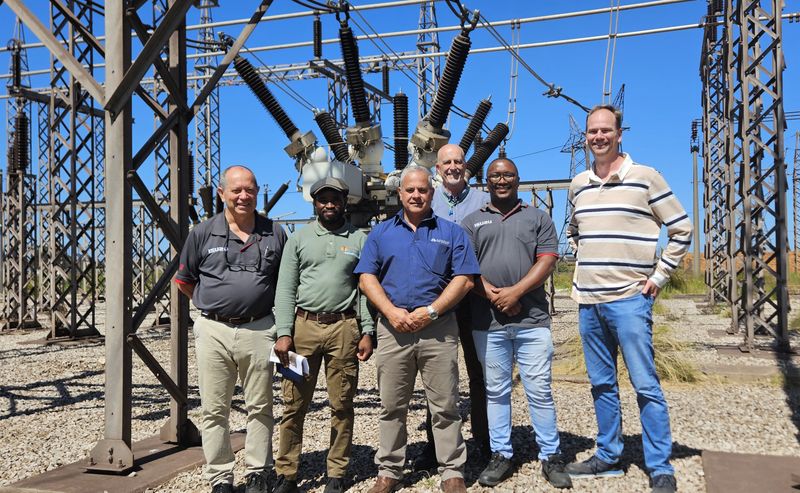
Last month, one of Nelson Mandela Bay’s automotive giants burnt close to R400,000 in diesel to keep their backup generators running and their assembly lines ticking during an unexpected 15-hour power outage.While this was an extreme incident, it was not isolated and compounded Isuzu Motors South Africa’s diesel expenses, which are in the region of R1-million for the year. The incident reignited ongoing concerns from local businesses over the city’s ailing electricity infrastructure, which is worsened by persistent vandalism and theft. Particular concerns were raised about one of the city’s major energy facilities, the Swartkops Substation, which has been continuously targeted over the past three months.But rather than wring their hands and watch their operations costs skyrocket just to literally keep the lights on, businesses in the areas fed by this substation took it upon themselves to identify the challenges and address them proactively.Through an initiative, driven by the Nelson Mandela Bay Business Chamber’s cluster in the Deal Party and Struandale industrial regions, close to R1-million was raised towards security upgrades around the Swartkops facility.Some businesses already contributed towards surveillance cameras and a dedicated patrol to keep a close eye on the substation and surrounds, and the latest investment will go towards installing adequate perimeter fencing around the crucial infrastructure.With a donation of R500,000, the Ezethu Development Trust was the biggest contributor to the project. Other contributors included S&N Rubber, Isuzu Motors South Africa, Autocast, BASF and Continental Tyre SA, while the business chamber’s geographical cluster has committed to covering any additional costs required to complete the project.As their organisation specialises in business investment in and around Nelson Mandela Bay, Ezethu Development Trust chairman Odwa Mtati said they understood the need for practical interventions to address the ongoing frustrations caused by the sporadic power disruptions.“We recognise the devastating impact that repeated power disruptions have on businesses, their employees and the broader local economy. Our contribution is an investment in protecting critical infrastructure, supporting business continuity and helping to mitigate the ongoing risks facing businesses in Deal Party and Struandale. Collective action“We believe that collective action is essential to safeguarding the economic activity and jobs that depend on reliable electricity supply,” said Mtati.The business chamber said last month’s 15-hour outage resulted in millions of rands in unexpected additional operational expenses and disrupted production schedules that potentially jeopardised contractual commitments and resulted in workers being placed on short-time.The outage’s impact went far beyond the outage itself, but caused disruptions in productivity and supply chains which ultimately affected job security across the broader business network. “Critical infrastructure is the backbone of our economy. When a substation is vandalised and electricity supply is disrupted, the consequences ripple through businesses, production lines, supply chains and livelihoods. Protecting this infrastructure is fundamental to economic resilience, investment confidence and job security,” business chamber CEO Denise van Huyssteen said. Nelson Mandela Bay Business Chamber CEO Denise van Huyssteen. (Photo: David Harrison) “What makes this initiative particularly encouraging is that our clusters have translated concern into action. They have brought businesses together, engaged the relevant municipal departments, mobilised substantial financial contributions and are helping to protect infrastructure vital to two important industrial areas. This is what meaningful collaboration and business leadership looks like.”Municipal spokesperson Sithembiso Soyaya said strategic partnerships between government and the private sector were critical as they enabled the city to provide sustainable and reliable services to communities and businesses. “This partnership is based on an existing memorandum of agreement with the business chamber to work with the municipality in maintaining and securing some of the critical infrastructure across the metro. Electricity infrastructure is one of the focus areas, with fighting vandalism and improvements of security as key deliverables.”Nelson Mandela Bay Municipality spokesperson Sithembiso Soyaya. (Photo: Facebook / Nelson Mandela Bay Municipality) He said the Swartkops Substation was a practical example of how government and the private sector could work together to protect infrastructure critical for economic sustainability and service delivery. “Vandalism and the theft of critical infrastructure, like the facility at Swartkops, remain among the municipality’s most urgent challenges. Substations and other electricity infrastructure are increasingly targeted by vandals and criminals involved in the theft of copper and other valuable metals,” Soyaya said.However, Van Huyssteen said they needed to make a clear distinction between business that supported solutions and assuming the responsibility of protecting public infrastructure. “Our members are prepared to contribute to a better-functioning metro, but they cannot be expected to continually fund the protection of municipal assets. The municipality must fulfil its responsibility.”Van Huyssteen said the municipality needed to implement a comprehensive security plan focused on critical electricity infrastructure across the metro, which should integrate the basics, manpower and technology. Such a plan must include the installation and maintenance of perimeter fences, security personnel to monitor and respond in case of emergencies, and surveillance equipment to continuously keep eyes on the critical infrastructure.The chamber said this initiative also highlighted the value of its 12 geographical clusters, which provided stakeholders with a localised platform to identify shared challenges and explore solutions.While some challenges were broader issues that affected the entire city, the clusters provided an opportunity for businesses to discuss challenges unique to their areas and find practical answers. DM
TAKING THE INITIATIVE: Businesses pool funds for Gqeberha substation’s R1m security upgrades
Full Article
Original Source
Read the full article at Dailymaverick →KhanList aggregates and links to publicly available news content. We do not host full articles from third-party sources. Always verify important information with original sources.