
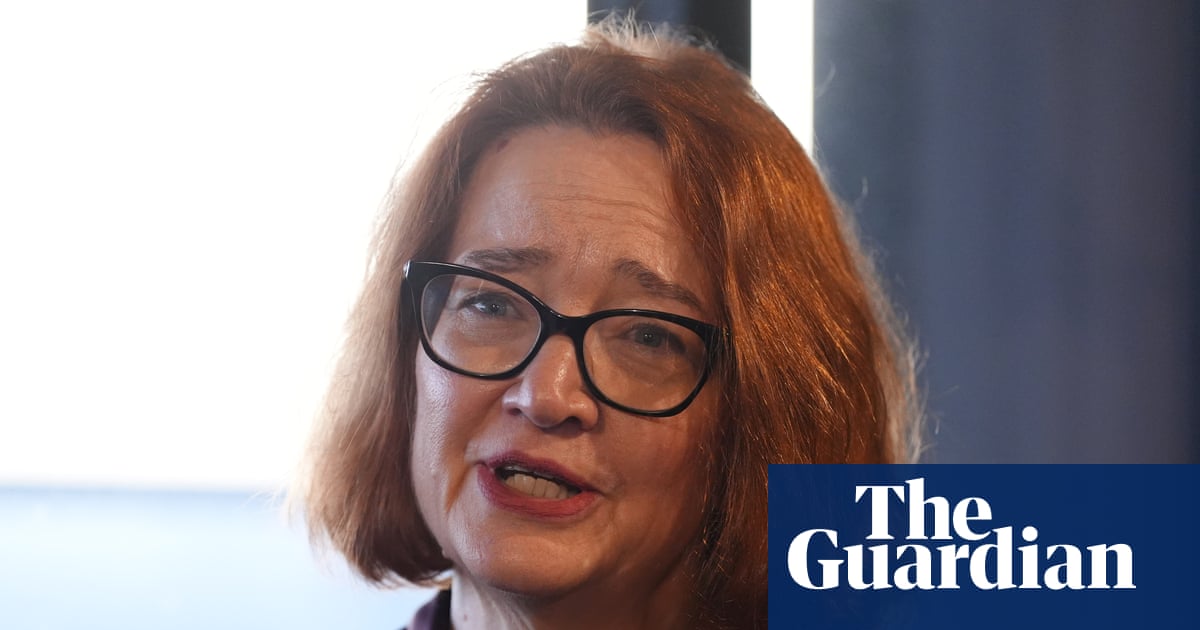
The head of the UK’s equalities watchdog has urged people to “take the temperature down” on reaction to guidance issued on single-sex spaces.Mary-Ann Stephenson, the chair of the Equality and Human Rights Commission (EHRC), appearing before MSPs in Holyrood, said “misinformation” over the body’s guidance had created “more anxiety among people”.The guidance was released earlier this year after a ruling by the supreme court that sex in the Equality Act 2010 referred to biological sex.The ruling has caused concern among transgender people in Scotland, with some choosing not to seek medical attention as a result, according to organisations who also appeared before the Scottish parliament’s equalities, human rights and civil justice committee on Thursday.Stephenson told the committee: “It is really clear that there are significant numbers of trans people, including, particularly, maybe younger trans people, who feel very, very anxious at the moment and I think that some of that is to do with the fact that what they thought the law entitled them to, it turned out wasn’t the case.”She added: “I think that some of this is about the way in which the code has been characterised and talked about in really inflated language. Saying that it excludes all trans people from public life, that there’s going to be genital checks to ensure people’s access to services. I can understand feelings are high, people are upset, but actually, it doesn’t help.“What it does is create more anxiety among people about things that actually the law doesn’t say, the code doesn’t say, and I think it’s incumbent on all of us to try to take the temperature down a little bit in this area and to try to recognise that at the heart of the Equality Act is trying to build a society where everybody is able to live with dignity and have access to the services they need, not to face discrimination.”The guidance has had an effect on various areas of life for transgender people, according to organisations who support them, including access to leisure facilities and healthcare settings.Florence Oulds, the policy and public affairs coordinator at the charity Scottish Trans, told of cases in which people had refused to go to hospital.skip past newsletter promotionafter newsletter promotion“We are aware of at least three trans people we’ve spoken to and other trans people we’ve heard evidence from who have not gone to hospital, against medical advice, because they are concerned about where they’ll be placed on a ward,” she told MSPs. “I think that’s a very common sentiment.”Oulds also claimed the guidance lacked clarity, saying the code of practice was “just fundamentally a very confusing and difficult document to follow”.Oulds said the EHCR “often instructs organisations to seek legal advice but there does seem to be an unbelievably wide range of legal advice in this area, often completely conflicting. I have heard from organisations who are trans-inclusive, want to do the right thing, want to see if they can remain trans-inclusive while still remaining in the law, who have spent lots of money on legal advice and not really got anywhere.”Stephenson said she “would disagree with that interpretation” and added: “I think the code is actually quite straightforward.”
‘Take temperature down’ over guidance on single-sex spaces, head of UK equalities body urges
Full Article
Original Source
Read the full article at Theguardian →KhanList aggregates and links to publicly available news content. We do not host full articles from third-party sources. Always verify important information with original sources.