
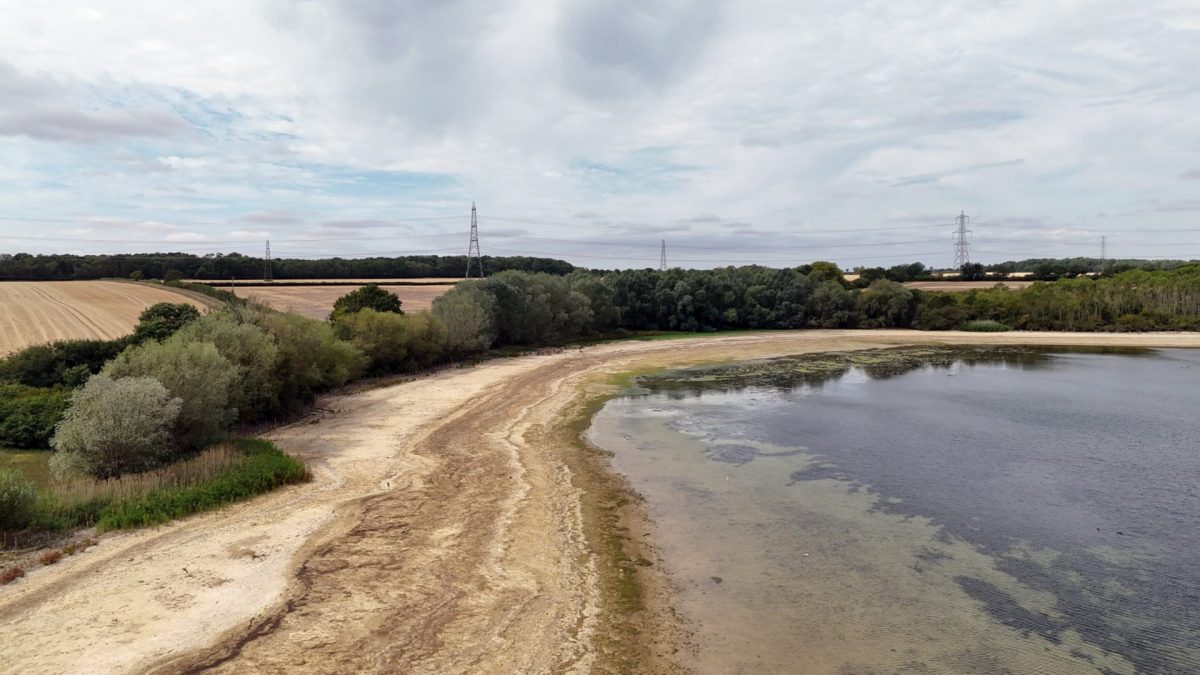
People in England are being asked to take shorter showers and stop rinsing their dishes as a drought was declared across half of the country. Seven areas in the south of England entered drought status on Wednesday as authorities expressed concerns around the public water supply. Current reserves should be enough to last the coming months, the Environment Agency (EA) said, but members of the public have been urged to do more to reduce their water use. Shorts Turning off the taps when brushing teeth or shaving, taking shorter showers and fixing a leaking toilet are among the actions recommended by the EA. Households have also been urged to avoid pre-rinsing dishes before putting them in the dishwasher and to opt for a “low flow” shower head that could save up to 90 litres of water over 10 minutes. “We are currently using water faster than nature can replenish it,” said Helen Wakeham, director of water at the EA, describing the situation as “exceptionally serious”. “We want everyone to stay safe and hydrated during the hot weather but every drop we can save is a drop more for nature and agriculture,” she added. Southern England has seen only one per cent of its long-term average rainfall for July, and no substantial rain is currently forecast for the coming weeks. However, campaigners criticised water companies for failing to prepare for climate change. “Water companies have known for years that climate change means drier summers and more frequent droughts, yet they failed to invest in the infrastructure needed to cope, from fixing leaks to managing abstraction responsibly,” said James Wallace, CEO of River Action. It’s estimated that by 2055, England will need to find an additional five billion litres of water per day to meet demand, which is more than a third of the 14 billion litres of water put into the public system.However, around a fifth of this supply is currently lost to leaks. Experts broadly agree that it would take another year of dry weather for Britain’s supplies to run low enough for water companies to introduce formal rationing measures, such as limiting how much water people can use. However, the ongoing heatwaves are causing localised shortages in places like Kent as companies struggle to treat water quickly enough to meet demand and the dry ground causes pipes to burst.Concerns were also raised about the long-term stability of Britain’s water supply given the increasingly rapid changes to our climate. Dr Jonathan Paul, professor in Earth Science at Royal Holloway, University of London, said declarations of drought were becoming increasingly common due to the “whiplash effects” of climate change, which is seeing Britain experience wetter winters and drier summers. He said the “biggest problem” was the long-term supply of water from aquifers, underground layers of rock and sediment that store groundwater. “You’ll have a situation like what you see in the Middle East, in Turkey, in parts of the USA, where aquifers essentially become out of use because there’s not enough water in them, and the water that is there gets increasingly polluted,” he said. Paul Tompkins, deputy president of the National Farmers Union, said the “extreme conditions” were “making it harder, riskier and more costly to produce the nation’s food”. Zoe Quiroz Cullen, head of climate and international policy at the Wildlife Trusts, said drought was the “number one” climate pressure it was facing on its nature reserves. She said there have “already been examples of fish loss” and impacts on other aquatic species that are having “knock-on effects higher up the food chain”.
Take shorter showers to ration drought-hit water supplies, public urged
Full Article
Original Source
Read the full article at Inews →KhanList aggregates and links to publicly available news content. We do not host full articles from third-party sources. Always verify important information with original sources.