
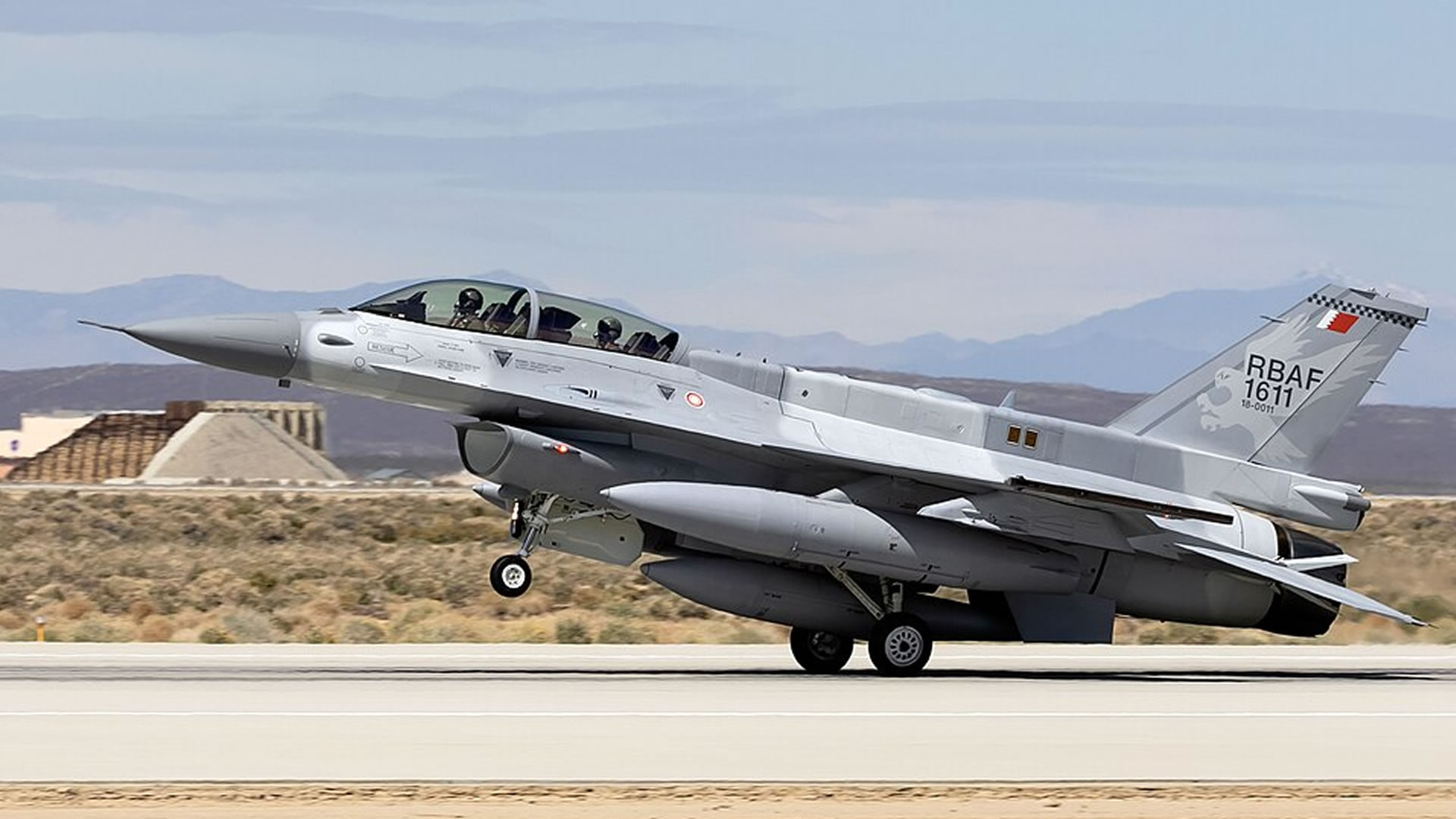
Taiwan has taken receipt of its first two of a batch of F-16 Block 70 “Viper” (F-16V) fighters from the United States. Part of a larger $7.76 billion deal for 66 airframes, the two aircraft arrived at Chihhang Air Base in the eastern county of Taitung on Friday (September 2). This deal was first signed back in August of 2019 under the first Donald Trump Administration. However, delays in actual delivery have meant that only the first batch has been delivered this year. According to reports, these two aircraft themselves were also delayed. They were initially expected to arrive in late August, just before a planned state visit by Chinese President Xi Jinping to the United States. As for the plane in question, this is a variant of the venerable F-16 and is a heavily modernized version featuring, among other features, APG-83 Active electronically scanned array (AESA) radar. It also has modern avionics and longer-life airframes. Taiwan receives the first of 66 new F-16Vs Taiwan, for its part, already operates many older 1990s-era F-16A/B Block 20 airframes, most of which have been upgraded over time. Some of these include packages that put them on par with the latest F-16V standard. So, these are not entirely “new” aircraft for the country, but are the first additional, freshly minted planes. When delivery of the additional aircraft is complete (set for the end of 2026), Taiwan will then operate a fleet of more than 200 or so. Arrival of the aircraft has been both hailed and criticized by Taiwanese politicians, however. Taiwan’s ruling Democratic Progressive Party (DPP) welcomed it, while the opposition leaders, on the other hand, question the delay and absence of the additional 64 aircraft to date. “Two have arrived; the remaining 64 must arrive on time,” opposition Kuomintang legislator Ma Wen-chun said. At the current rate of delivery, it is questionable whether the 2026 deadline for all planes will be met. As for the cause of the delay, it appears to be a combination of production-line relocation and supply chain disruptions. There are also some interesting features of the actual delivery of the first two as well. According to reports, they both left the US mainland on August 17. From there, they reached Joint Base Pearl Harbor-Hickam in Hawaii on August 21. But why the delay? It was then expected for them to fly onward to Taiwan “within days” but they instead remained grounded at the base for about 6 weeks. No official explanation has been offered, but technical issues, bad weather, or unavailability of refueling tanker aircraft could be plausible explanations. Another possibility that has been proposed is that Washington wanted to avoid a “politically sensitive” delivery shortly before Xi’s state visit. However, this is just speculation. The delay of the purchased F-16s is, however, not the only delayed arms deal between the two nations. There is another $14 billion arms package yet to be honored by Washington as well. For Taiwan, then, the arrival of two new F-16Vs is certainly welcome, but it is hardly the end of the story. With another 64 fighters still outstanding and a separate $14 billion arms package awaiting approval, the real test of Washington’s commitment will not be the arrival of two jets, but whether the rest follow.Get the latest in engineering, tech, space & science - delivered daily to your inbox.Christopher graduated from Cardiff University in 2004 with a Masters Degree in Geology. Since then, he has worked exclusively within the Built Environment, Occupational Health and Safety and Environmental Consultancy industries. He is a qualified and accredited Energy Consultant, Green Deal Assessor and Practitioner member of IEMA. Chris’s main interests range from Science and Engineering, Military and Ancient History to Politics and Philosophy.
Taiwan’s first two US-made F-16V jets finally arrive after mysterious six-week Hawaii pause
Full Article
Original Source
Read the full article at Interestingengineering →KhanList aggregates and links to publicly available news content. We do not host full articles from third-party sources. Always verify important information with original sources.