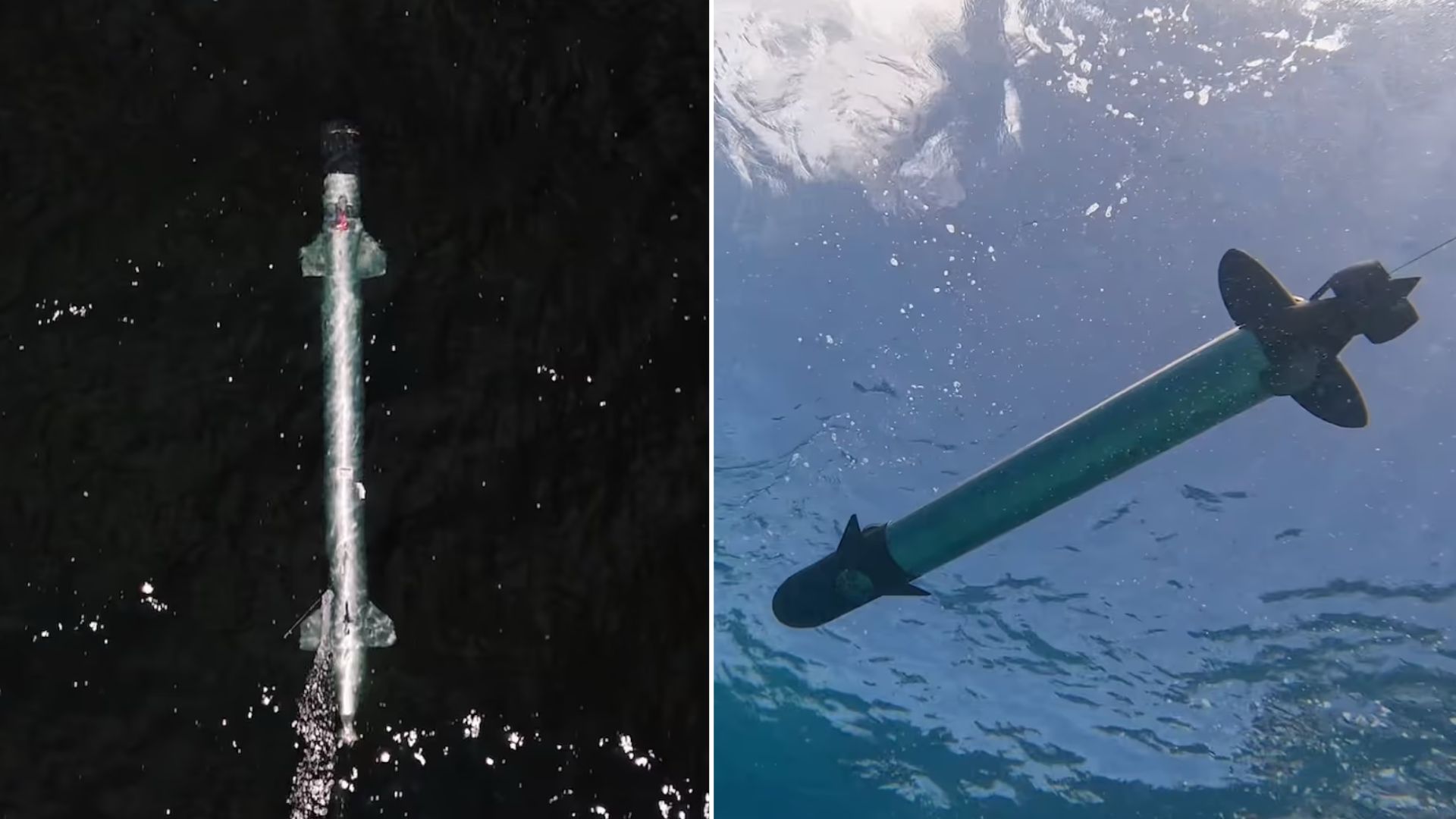
Taiwan is partnering with U.S. defense startup Vatn Systems to develop autonomous underwater vehicles (AUVs), adding another layer to the island’s growing focus on unmanned systems for maritime surveillance and defense. The agreement was signed between Vatn and Taiwan’s government-funded National Chung-Shan Institute of Science and Technology (NCSIST). Under the memorandum of understanding, the two sides will explore AI-enabled command-and-control systems, autonomous underwater vehicles, and a local supply chain and maintenance network for the technology. The partnership is intended to combine Vatn’s undersea autonomy technology with Taiwan’s research and industrial capabilities, according to NCSIST. Vatn CEO and co-founder Nelson Mills said the company aims to develop affordable autonomous underwater systems for the U.S. and its allies and deploy them at scale. AUVs for a wider range of missions One of the systems involved in the partnership is Vatn’s Skelmir S12, a relatively low-cost and modular AUV that can be configured with different ranges, sensors and levels of precision depending on the mission. The agreement calls for exploring the fielding of the S12 in Taiwan, according to SCMP. Autonomous underwater vehicles can perform missions without exposing crews to the risks associated with operating manned vessels in contested or difficult underwater environments. Their applications can range from seabed mapping and infrastructure inspection to maritime surveillance and mine countermeasures. For Taiwan, the technology also offers a way to expand its underwater capabilities without relying exclusively on large and expensive platforms. The Defence Post reported that Vatn is also developing other undersea technologies, including SIGURD, an autonomous mine-countermeasure system, and a lower-cost inertial navigation system designed for underwater and surface operations where GPS is unavailable. Building Taiwan’s underwater drone capabilities The Vatn agreement is part of a broader effort by NCSIST to develop Taiwan’s autonomous underwater capabilities while working with foreign technology companies. NCSIST is also cooperating with U.S. defense technology company Anduril Industries and is acquiring its Dive-LD autonomous underwater vehicle. The system can reportedly operate at depths of up to 6,000 meters (19,685 feet) and remain underwater for around 10 days at low speed. According to SCMP, NCSIST officials expect experience with Dive-LD to help develop expertise in autonomous navigation, sensor integration, modular payloads and lower-cost production. At the same time, Taiwan is pursuing indigenous underwater technology through its Huilong program. That effort has produced a 30-meter-long, 100-ton prototype intended to establish technologies that can be developed further through cooperation with U.S. companies. NCSIST has described the approach as a two-track strategy. Leveraging foreign systems and expertise while developing critical technologies, including underwater sensors, domestically. Why underwater drones matter Taiwan’s interest extends beyond military operations. AUVs can inspect undersea cables and other critical infrastructure, map the seabed and support offshore industries. The same basic capabilities can also support military missions such as reconnaissance, mine hunting and underwater surveillance. That dual-use nature is one reason unmanned underwater systems are becoming increasingly attractive. Instead of building a single highly specialized platform, modular AUVs can potentially carry different sensors and payloads for different missions. The Vatn partnership therefore goes beyond acquiring another underwater drone. It gives Taiwan a pathway to work on autonomy, command and control, local sustainment and production while expanding the number of unmanned systems available for operations beneath the surface.For an island whose security depends heavily on its surrounding waters, that underwater capability could become an increasingly important part of its maritime defense architecture.Get the latest in engineering, tech, space & science - delivered daily to your inbox.Kaif Shaikh is a journalist and writer passionate about turning complex information into clear, impactful stories. His writing covers technology, sustainability, geopolitics, and occasionally fiction. A graduate in Journalism and Mass Communication, his work has appeared in the Times of India and beyond. After a near-fatal experience, Kaif began seeing both stories and silences differently. Outside work, he juggles far too many projects and passions, but always makes time to read, reflect, and hold onto the thread of wonder.
Taiwan partners with U.S. on 200 nm range submarine drone tech for maritime defense
Full Article
Original Source
Read the full article at Interestingengineering →KhanList aggregates and links to publicly available news content. We do not host full articles from third-party sources. Always verify important information with original sources.