
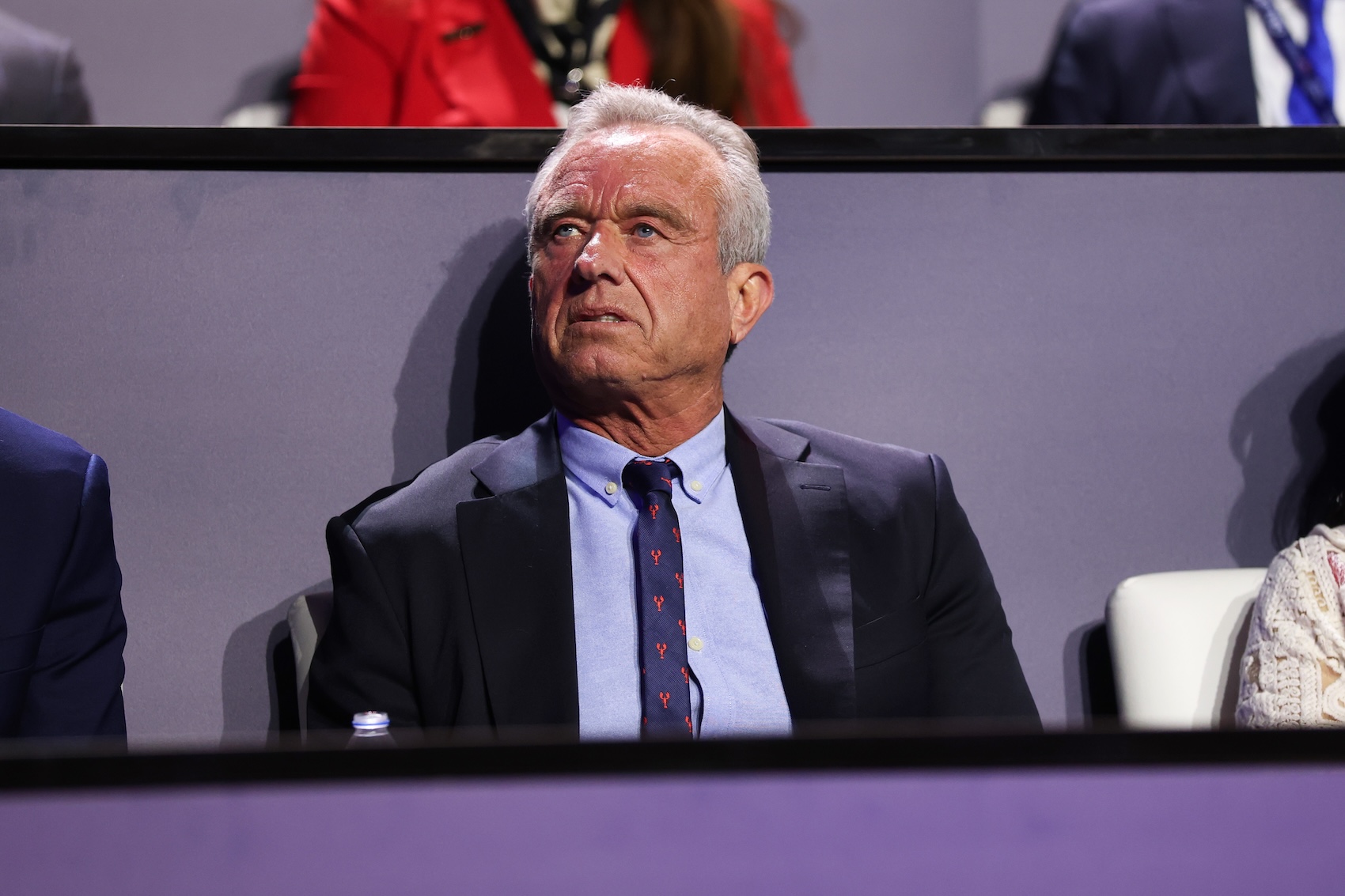
analysis Sen. Warren is using Taco Bell’s outbreak response to ask why federal agencies couldn’t communicate as clearly Published September 13, 2026 9:00AM (EDT) U.S. Health and Human Services Secretary Robert F. Kennedy Jr. watches the program on the first day of the 2026 Republican National Convention (Kevin Dietsch/Getty Images) On Friday, federal health officials finally put an end date on the largest Cyclospora outbreak in U.S. history. Nearly 13,000 people across 21 states had been sickened, 570 hospitalized and two had died after an outbreak linked to shredded iceberg lettuce from Taylor Farms. The CDC declared the outbreak over; the FDA, meanwhile, is still trying to determine exactly how the lettuce became contaminated. There are plenty of unsettling facts to choose from in the accounting of this summer’s outbreak. But one of the stranger ones is that, somewhere along the way, Taco Bell became a model of competent public-health communication. That assessment did not come from Taco Bell. It came from Sen. Elizabeth Warren. Less than a month before the CDC officially closed the book on the outbreak, Warren sent U.S. Secretary of Health and Human Services Robert F. Kennedy Jr. a letter asking him to account for how the federal response had gone so badly. “I write regarding the administration’s calamitous response to the biggest outbreak of cyclosporiasis in U.S. history,” Warren wrote in the Aug. 13 letter to Kennedy, whose Department of Health and Human Services oversees the FDA and CDC. She argued that the federal handling of the crisis had been “marred by missteps that raise serious questions about its decision-making,” and asked whether those failures were the result of “incompetence and corruption.” Warren also raised questions about Taylor Farms’ political contributions and lobbying, though her letter did not establish that those connections altered the government’s response. “Indeed, Taco Bell provided earlier and seemingly clearer guidance to consumers than the Food and Drug Administration (FDA), CDC, and other federal food safety agencies,” Warren wrote. She was referring to a particularly confusing stretch in July. “Four days after Taco Bell removed certain fresh produce items from their menus in a handful of states due to rising cases of cyclospora,” Warren continued, “the CDC linked the outbreak to an ‘unknown source.’” There is something genuinely disorienting about reading all of this in a Senate oversight letter and arriving at Taco Bell as the comparatively lucid party. But Warren’s comparison was not simply a good line. By the time federal agencies were still publicly trying to identify the source of the outbreak, the fast-food chain had already started taking food off its menus. The way The Wall Street Journal described what happened next, Taco Bell essentially built a lettuce war room. Once public-health officials alerted the company on July 14 that its shredded iceberg appeared to be connected to the outbreak, executives began holding late-night virtual meetings and gathering at the chain’s California headquarters, coordinating with franchisees, intercepting shipments and getting the suspect lettuce out of restaurants. Within 72 hours, Taco Bell said the affected Taylor Farms product had been removed nationwide. It was an unusually intense mobilization around an ingredient whose primary job is ordinarily to provide a little cold crunch between seasoned beef and sour cream. Meanwhile, the official story was considerably harder for an ordinary person contemplating lunch to follow. On July 16, the FDA and CDC linked the outbreak to shredded iceberg served at Taco Bell restaurants. The next day, FDA traceback converged on Taylor Farms. Then came what appeared to be the evidentiary smoking gun: a lettuce sample that tested positive for Cyclospora. A day later, FDA scientists withdrew the finding. It was a false positive. Want more great food writing and recipes? Sign up for Salon’s free food newsletter, The Bite. Federal officials stressed that this did not suddenly exonerate the lettuce. The FDA said its epidemiological evidence and traceback continued to converge on Taylor Farms’ shredded iceberg, calling the evidence supporting the recall “overwhelming.” Taylor Farms emphasized the other part: there was no longer a confirmed positive product test. However, the context was unusually combustible. Taylor Farms and its leadership had given heavily to conservative political organizations, including a $1 million contribution to MAGA Inc., a pro-Trump super PAC. As scrutiny of the outbreak intensified, company representatives also met with White House officials, prompting Rep. Robert Garcia, the ranking Democrat on the House Oversight Committee, to seek records about whether the company had attempted to influence the FDA investigation. Warren raised similar questions in her letter. Neither inquiry established that political access changed the government’s response, but the sequence invited obvious questions: regulators and Taylor Farms were publicly disagreeing about what the evidence meant while lawmakers were asking what, exactly, had been discussed behind closed doors. Taco Bell and the federal government were, of course, solving very different problems. The FDA had to conduct epidemiological interviews, laboratory testing and traceback through a sprawling produce supply chain; Taco Bell could act on suspicion and pull an ingredient. But the chain was hardly in an enviable position. Because some of the earliest and largest illness clusters were associated with its restaurants, “Taco Bell” became shorthand for the outbreak long before “Taylor Farms de Mexico” meant anything to the average person contemplating a Crunchwrap. By July 16, federal officials had identified 1,644 illnesses among people who reported eating at the chain, with ingredient-level analysis strongly pointing to iceberg lettuce. So after the lettuce war room came the other half of crisis management: talking to people. On July 17, Taco Bell posted the corporate-crisis equivalent of pulling up a chair. “We want you to hear it from us,” a Notes-app-style message on Instagram began. The chain told customers that the affected Taylor Farms lettuce had been removed and invited them, with almost startling confidence, to come back. The response was revealing. Taco Bell customers have spent years participating in a running joke about what the chain supposedly does to the human digestive system; faced with an actual gastrointestinal outbreak, many simply folded the news into the bit. Online, people joked that a Cheesy Gordita Crunch remained worth the risk and treated their loyalty to the chain almost as a point of honor. Taco Bell seemed to understand the relationship. Rather than retreat into antiseptic corporate language, it followed the safety message with another language its customers understood: cheap Taco Bell. On July 22, it offered a lettuce-free Enchirito for $1; days later came a $1 Mexican Pizza, another lettuce-free favorite. The deals were plainly commercial — restaurant traffic had taken a serious hit — but they also functioned as a kind of reassurance campaign: the dangerous lettuce was gone; here was something you already loved, conspicuously without lettuce, for a dollar. All of which would make for a fairly charming case study in corporate crisis management if Warren’s comparison were not so pointed. Kennedy has spent his tenure at HHS arguing that Americans deserve to know more about what they eat. The MAHA project has explicitly emphasized stronger food oversight and greater transparency around the food supply. Which is what makes the Taco Bell comparison sting: after federal investigators had done the genuinely difficult work of epidemiology, testing and traceback, ordinary consumers were still sorting through corrected results, competing claims and caveats about what the evidence did and did not prove. Increasingly, Americans seem accustomed to doing that sort of detective work themselves. Only weeks later, the administration announced a large influx of unusually cheap imported ground beef before publicly identifying all of its sources, leaving enough of an informational vacuum for unsupported horse-meat rumors to flourish online. The rumor was false; the dynamic was familiar. When official information leaves a blank space, consumers fill it. Suspicion is difficult to aim in only one direction. Ask people to scrutinize food companies, labels and regulatory assumptions, and eventually they will scrutinize the regulators, too. Taco Bell did not have to determine how a microscopic parasite entered an international lettuce supply chain. The FDA did — and its investigation is still continuing even though the CDC has declared the outbreak over. But the government also has a responsibility Taco Bell does not: to be the place consumers can turn when the answer is complicated. For one strange stretch this summer, the clearer answer came from the drive-thru. Related Topics ------------------------------------------ Related Articles
Taco Bell exposed RFK Jr.’s food-safety failure
Full Article
Original Source
Read the full article at Salon →KhanList aggregates and links to publicly available news content. We do not host full articles from third-party sources. Always verify important information with original sources.