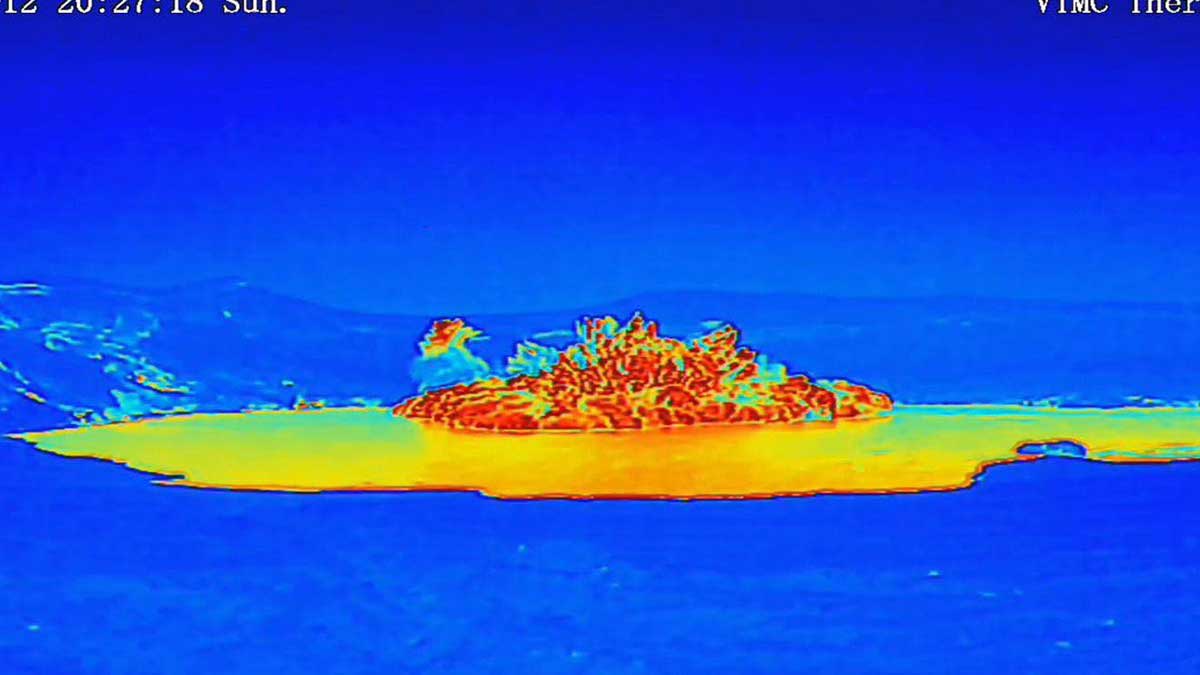
An ash-laden, steam-rich plume rises from Taal Volcano’s Main Crater during a minor phreatomagmatic eruption on Sunday night, July 12, 2026. The eruption lasted about three minutes and sent the plume approximately 1,200 meters into the air before drifting northeast. — Screengrab from Phivolcs-DOST LUCENA CITY — Taal Volcano in Batangas produced a minor phreatomagmatic eruption on Thursday morning, July 16, marking the second such event recorded this month, the Philippine Institute of Volcanology and Seismology (Phivolcs) reported. This type of eruption is triggered when water interacts with magma. In its morning bulletin, Phivolcs said the eruption occurred at the volcano’s main crater at 7:30 a.m. and lasted about two and a half minutes, based on seismic, infrasound, and visual observations. Article continues after this advertisement READ: Taal Volcano logs 3-minute phreatomagmatic eruption No upwelling of hot volcanic fluids was observed in the main crater lake, and no volcanic smog, or “vog,” was detected during the monitoring period. The main crater is located on Taal Volcano Island (also known locally as “Pulo”) in the middle of Taal Lake. The latest activity followed a three-minute phreatomagmatic eruption recorded on July 12. Phivolcs also documented five similar eruptions in June. The agency explained that a phreatomagmatic eruption occurs when rising magma comes into explosive contact with water, producing steam and fragmented volcanic material. This differs from a phreatic eruption, which is caused solely by the rapid heating of groundwater or surface water by magma, lava, or hot rocks. Article continues after this advertisement In its latest 24-hour monitoring report, Phivolcs said Taal Volcano emitted an average of 289 metric tons of sulfur dioxide per day on Wednesday and Thursday, a sharp increase from the 59 metric tons recorded on Tuesday — the volcano’s lowest daily sulfur dioxide emission so far this year. The previous lowest daily average was 78 metric tons, recorded from Jan. 1 to 8, while the highest sulfur dioxide emission this year reached 5,287 metric tons on June 4. Article continues after this advertisement Phivolcs also observed moderate emission of volcanic plumes that rose about 600 meters above the main crater before drifting north-northeast. Despite the brief eruption, Taal Volcano remains under Alert Level 1, indicating low-level volcanic unrest. However, Phivolcs reminded the public that Alert Level 1 does not mean the volcano has returned to a normal state or that the possibility of future eruptive activity has been eliminated. Your subscription could not be saved. Please try again. Your subscription has been successful. The agency stressed that Taal remains in an abnormal condition and urged the public to continue observing all precautionary measures around the volcano. /das
Taal Volcano logs second phreatomagmatic eruption this month
Full Article
Original Source
Read the full article at Newsinfo →KhanList aggregates and links to publicly available news content. We do not host full articles from third-party sources. Always verify important information with original sources.