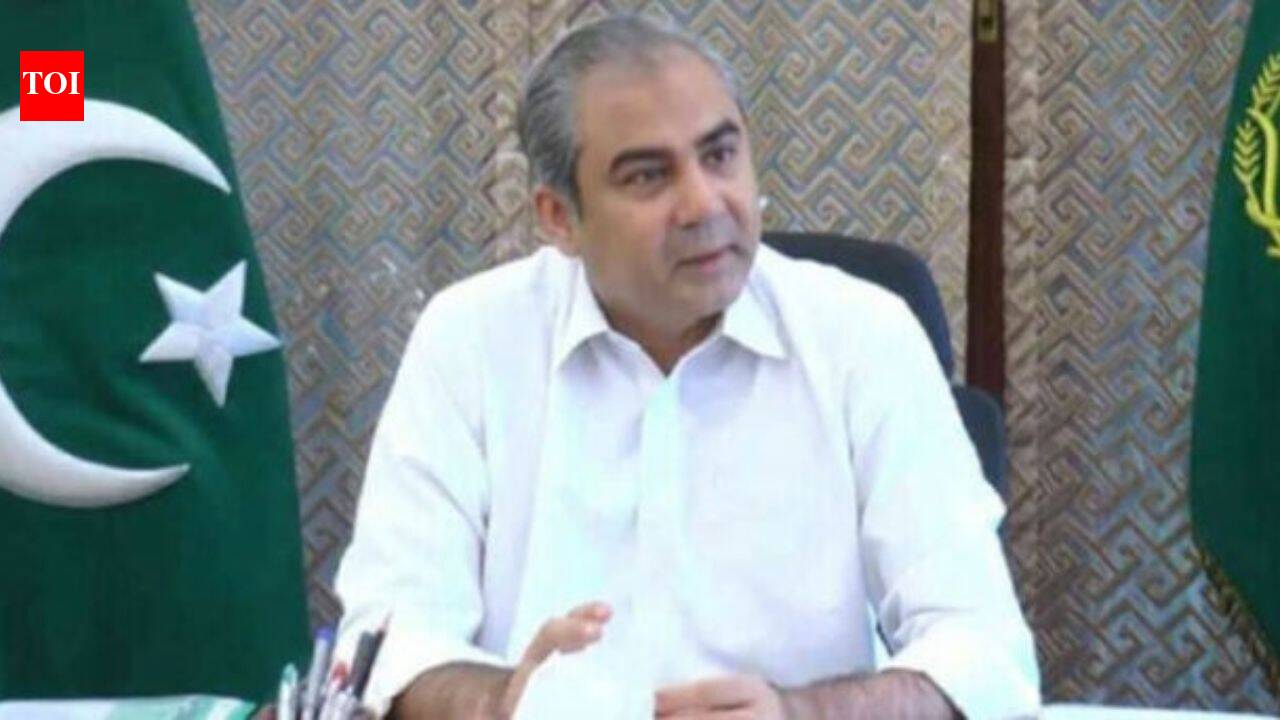
Pakistan interior minister Mohsin Naqvi on Thursday declared that the country's governance system had "collapsed", calling for the creation of new administrative units or provinces and urging political parties to reach a consensus on sweeping constitutional and governance reforms. He warned that without structural changes, Pakistan would remain trapped in recurring political and economic crises.Addressing the Pakistan Economic Summit 2026 in Islamabad, Naqvi said Pakistan's decades-old governance model had failed to deliver justice, economic opportunities or effective public services. He argued that decentralisation and the emergence of new leadership were essential to reform the country."Whether you agree or not, the system we have been living under has collapsed."Naqvi said repeated attempts to fix Pakistan's problems within the existing framework had failed, adding that the same debates would continue even a decade later unless the country's governance structure was fundamentally reformed."I believe the people responsible for bringing Pakistan to its current state are sitting in this hall," he said, adding that if a system had failed to function effectively for 70 to 80 years, there must be fundamental flaws in its design.Calls for new provinces and decentralisationThe interior minister said the solution lay in decentralising governance through the creation of additional administrative units or provinces, arguing that local ownership would improve governance and allow new political leadership to emerge."The solution is only one.""You will have to take [the matter of] administrative units, provinces or whatever you may call it, to the public.""Unless units are made and they take ownership, and a new leadership comes, this will not happen."Naqvi urged all political parties to negotiate a comprehensive reform agenda instead of continuing with what he described as an outdated governance structure."All political parties should sit together in a single room, whether for a day, a month or a year. They will have to settle every issue of their country, including new units and provinces.""Unless they do so, unless they sit together and change this, this country will remain in the same condition, regardless of how many seminars and functions you hold."'Biggest supporter' of democracyWhile describing himself as "the biggest supporter" of democracy, Naqvi argued that democratic governance could take different institutional forms and said Pakistan should not remain tied to a system that had consistently underperformed."We all want democracy. I am the biggest supporter of democracy and will remain so. But there are five or six systems within democracy. Yet we insist that no matter what happens, we must continue dragging along the same one."He also criticised policy failures, saying Pakistan continued to import agricultural commodities such as wheat despite being an agricultural country.Naqvi acknowledged the long working hours of Prime Minister Shehbaz Sharif but argued that the government remained focused on crisis management instead of long-term reforms."I have seen Shehbaz Sharif work 12 to 14 hours a day. He could even work 18 hours a day, but we are only firefighting.""Until you correct the basics of this country while adhering to the spirit of democracy, this will remain the same."Youth want jobs, not handoutsNaqvi said Pakistan's young people were demanding merit-based employment, transparent recruitment and equal opportunities rather than welfare schemes or financial assistance."We think giving youngsters stipends of a few thousand rupees a month or tablets will make them happy, but ask them what they really want.""Their only demand is merit-based jobs and employment opportunities. They are not asking you for tablets or a few thousand rupees every month."According to the minister, Pakistani youth had the potential to earn between $2,000 and $4,000 per month if provided with the right opportunities.'Cockroaches' remarkReferring to a term that has recently been used for Gen-Z in the wake of student protests in India, Naqvi warned that growing frustration among young people should not be ignored."If these 'Cockroaches' get united, they can turn everything upside down."He said the government should address the aspirations of young people before dissatisfaction intensified, arguing that their primary demands centred on merit-based jobs and equal opportunities.Business community urged to back reformsNaqvi also called on Pakistan's business community to play a more active role in reforming the country's political system, arguing that industrialists and traders had long been intertwined with politics."One gives funding of Rs500 million before elections, or the other gives Rs100 million or Rs50 million."He questioned why business leaders preferred financing political candidates instead of contesting elections themselves."Why don't businessmen enter politics? You are willing to fund politicians, but consider entering politics yourselves to be something shameful. You will have to stand up for yourselves."Mounting debt concernsHighlighting Pakistan's fiscal challenges, Naqvi likened the federal government's finances to a household beginning every month already burdened with debt."The condition of this federal government is such that we make our budgets in the negative, and we discuss how much debt we have to incur this year.""[...] We will take more debts, but we will not correct things."He said leaders across the political spectrum understood the country's structural problems but had repeatedly failed to implement reforms, urging all stakeholders to build consensus on a long-term governance overhaul.
'System has collapsed': Pak minister warns of power of 'cockroaches'
Full Article
Original Source
Read the full article at Timesofindia →KhanList aggregates and links to publicly available news content. We do not host full articles from third-party sources. Always verify important information with original sources.