
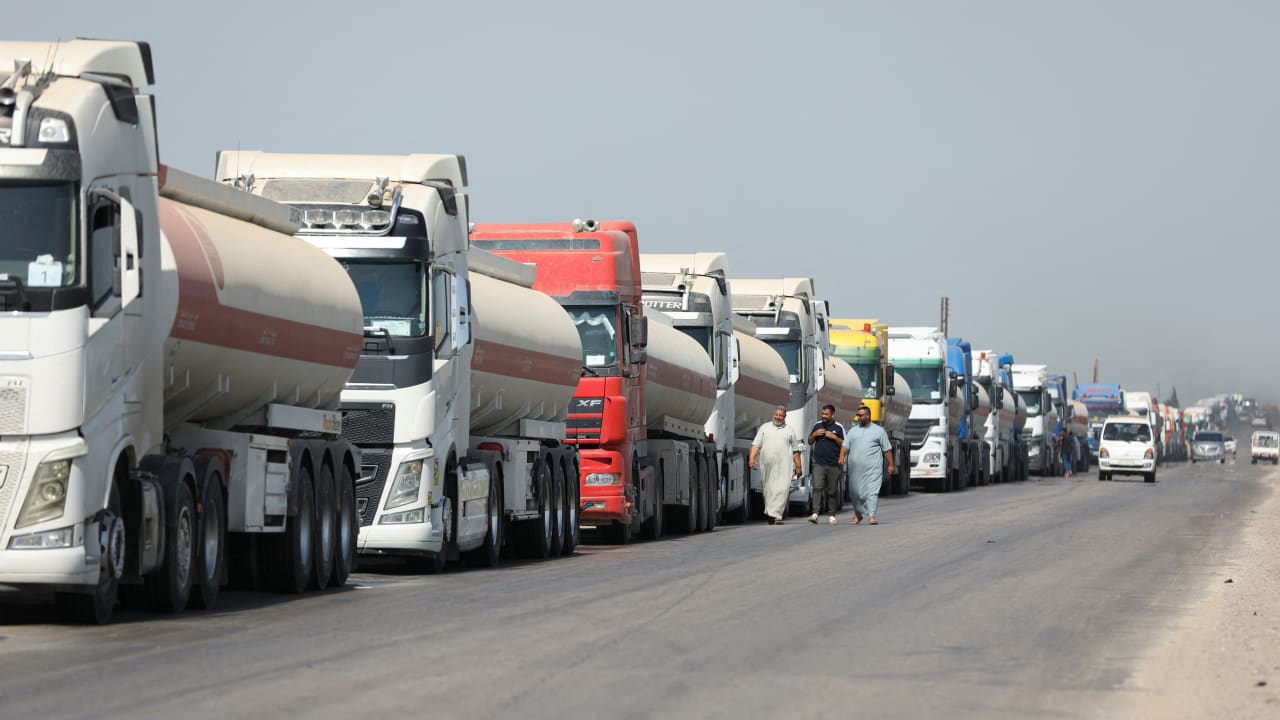
SEPTEMBER 3, 2026 16:11US President Donald Trump posted on Truth Social that Syria acting as an alternative to the Strait of Hormuz would be “great.” He commented after a headline at The Washington Post noted that Syria was “eyeing role as Middle East hub, offers options to bypass Hormuz.” This comes as US and Iran tensions grew this week with the US carrying out airstrikes and Iran attacking Jordan, the Kurdistan Region of Iraq, the UAE, Kuwait and other countries.The White House has been signaling that it is not interested in a deal and doesn’t trust Iran. However, reports also say the US prefers the conflict to remain contained and not escalate too much. This means that the US has to walk a narrow line between appeasing Iran and not carrying out massive strikes again. Meanwhile, in Israel, officials are warning of possible escalation and warning Iran not to attack Israel. As such, the region continues to sit atop a potential volcano, with many sensitive issues relating to Iran remaining unresolved.There are increasing plans for Syria to serve as a way to transfer oil to the Mediterranean. However, a recent report from Reuters noted that “Iraq's plans to export oil via a pipeline through Syria to avert future disruptions in the Strait of Hormuz will likely require four years of construction and cost at least $15 billion, sources with knowledge of the project told Reuters.” The report added that the idea was receiving “initial support for feasibility studies from a consortium including Chevron.”In June, Syria’s Syrian Petroleum Company signed a deal with ConocoPhillips and energy firm Novaterra to rehabilitate gas fields in Syria. The deal also covers developing a new gas field. In July, ConocoPhillips posted that it had “announced it has agreed to terms with BP to acquire a 42% interest in BP Energy Company of Kirkuk Limited (BP ECKL), supporting the ongoing redevelopment of four large-scale, currently producing oil fields in the Kirkuk area of northern Iraq. The agreement is expected to be signed as part of Iraqi Prime Minister Ali al-Zaidi’s official visit to Washington, D.C.”There is an old pipeline from 1952 that links Iraq’s Kirkuk with Baniyas in Syria on the coast of the Mediterranean. However, it will take time to repair it and make it relevant. Until then, Iraq and other countries need to ship energy supplies overland via truck. The Washington Post noted that “day and night, 5,000 hulking trucks carrying oil from the Persian Gulf rumble across this stretch of barren desert as if in a caravan snaking its way toward the Mediterranean Sea.”US President Donald Trump speaks during a meeting with travel executives in the Oval Office at the White House in Washington, DC, US, September 2, 2026. (credit: REUTERS/EVELYN HOCKSTEIN)Damascus seeks international partnerships amid reconstruction pushThis week, Syria focused on economic advancement and continued outreach to other countries. For instance, around fifty companies from Saudi Arabia participated in a fair in Damascus. “Around 1,000 entities and companies from 60 countries are participating in this year’s Damascus International Fair, which runs through Sept. 4,” Syrian state media noted.In addition, Syria met with delegations from Denmark and Germany. “Minister of Foreign Affairs and Expatriates Asaad Hassan al-Shaibani met Wednesday with a delegation from Germany’s Federal Ministry for Economic Cooperation and Development, headed by State Secretary Niels Annen, to discuss ways to strengthen economic and development cooperation between Syria and Germany and support national recovery and reconstruction priorities,” SANA state media added.Syria’s President also met the German delegation. “President Ahmad al-Sharaa held a roundtable meeting at the People’s Palace in Damascus with Niels Annen, State Secretary at Germany’s Federal Ministry for Economic Cooperation and Development, and a number of heads and managers of German companies and members of the Syrian-German Business Council,” SANA added.Syria is also working to rehabilitate Mezzeh airport and use it for civilian aircraft. Mezzeh had been used by the Assad regime’s military in the past.Regarding the energy trade, the article in The Washington Post added that “the trucks began shuttling between the refineries of southern Iraq and the Syrian port of Baniyas in April, initially as an experiment by Iraqi oil exporters seeking to circumvent the Strait of Hormuz after cargo traffic in the waterway was stopped by the US-Israeli war with Iran.”The article quoted Ahmad Qubbaji, the deputy chief executive of Syrian state-owned Syrian Petroleum Corporation. It notes that this company will operate the new pipeline and that Qubbaji noted that the “final contract is expected to be signed in September by a consortium that includes Houston-based Chevron, TotalEnergies of France, and Syrian and Qatari investors. The group is discussing security measures, including using drones and other advanced surveillance technology, to monitor the pipeline, which will also have security backing from the United States, Qubbaji said.”From Venezuela to Syria, Trump pursues new energy corridorsUS President Trump’s support for Syria as an oil transfer hub comes in the wake of a major deal in Venezuela. The White House posted on August 31 that “in the biggest oil deal in world history, President Donald J. Trump has secured US majority control of more than 65 billion barrels of proven oil reserves in Venezuela - vastly expanding our current US territorial proven reserves of roughly 46 billion barrels. This deal secures our energy dominance for the next century - all at zero cost to the United States.” The White House added that “the deal, signed by Secretary of State Marco Rubio and Secretary of War Pete Hegseth, gives the US government powerful governance rights, economic ownership, and guaranteed low-cost off-take from a new private Venezuelan oil champion, which will be the second-largest private oil company by reserves in the world.”This comes as the US is also involved in helping tankers move through the Strait of Hormuz. US Central Command is trying to keep the straits open despite Iran’s threats. Gulf News reported on September 3 that 40 ships had been able to move through the Strait. “CentCom escorts record 18 million barrels of oil through Hormuz as US-Iran strikes flare.”This illustrates how the White House is focused on enabling trade through the Strait of Hormuz while securing energy deals in Venezuela and potentially in Syria that could pave the way for the future.Follow us on Google
Syria’s oil corridor plans take shape as Trump looks beyond Hormuz - analysis
Full Article
Original Source
Read the full article at Jpost →KhanList aggregates and links to publicly available news content. We do not host full articles from third-party sources. Always verify important information with original sources.