
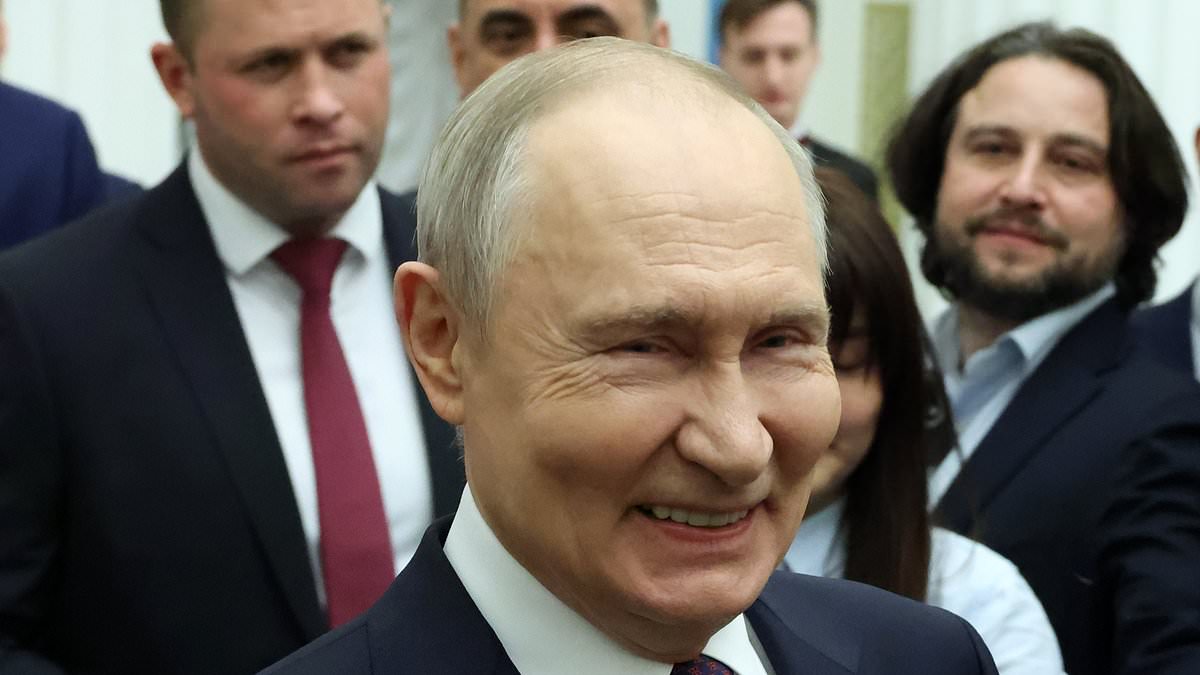
Switzerland is set to vote on whether to end its co-operation with Nato after a Moscow-backed 'peace' campaign has called for the country to reject war and abandon its Western military ties. Swiss voters will decide in a referendum next month whether to approve this more restrictive form of neutrality that would block their country from imposing economic sanctions or cooperating with Nato.Posters featuring doves of peace and asking voters to reject war have appeared across the Alpine nation in a campaign that has won the backing of the Kremlin but has raised fears that it could isolate Switzerland from its European neighbours.Opinion surveys suggest voters will reject the proposal, with one recent poll showing 62 per cent against to 36 per cent in favour, but with campaigners for change outspending supporters of the status quo, the gap could narrow, said pollster Fabio Wasserfallen.Swiss neutrality, internationally recognised since 1815 and part of the country's constitution since 1848, kept Switzerland out of both world wars.But this status is under threat after Switzerland imposed sanctions on Russia over its 2022 invasion of Ukraine, said Christoph Blocher, a veteran politician and backer of the Right-wing Swiss People's Party (SVP) which supports the campaign.'Switzerland has not had a war for 200 years because it has remained permanently armed and neutral,' Mr Blocher told Reuters in an interview.The terms of Swiss neutrality are not explicitly spelled out in the constitution. Its scope is defined by the 1907 Hague Convention, which says neutral countries must not allow military use of their territory and be impartial between belligerents. The new form of neutrality would block their country from imposing economic sanctions on countries such as Russia (Pictured: Vladimir Putin) Posters featuring doves of peace and asking voters to reject war have appeared across the Alpine nation (Pictured: Zurich)Mr Blocher, who has led successful campaigns against closer ties with the European Union, said neutrality was being undermined, with Russia now seeing Switzerland as a party to the conflict because of the sanctions.'A third world war may not be that far away, and then it will matter whether we are credibly neutral or not,' he said.Russia's foreign ministry has weighed into the debate, with spokeswoman Maria Zakharova criticising Switzerland in a social media post for aligning its sanctions with those of the EU.'In legal terms, 'flexible neutrality' means no neutrality at all,' said Zakharova, who is herself under Swiss sanctions.The campaign wants the constitution to stipulate that Switzerland cannot join or co-operate with any military or defence alliance, unless attacked, and that it refrain from joining any sanctions unless approved by the United Nations.The Swiss government and most political parties apart from the SVP oppose the proposal, with Foreign Minister Ignazio Cassis saying it would harm national security and prevent it from training with Nato.'We'd only be able to issue verbal condemnations but take no concrete action, that would certainly cause a major problem with our neighbours,' Mr Cassis told a press conference.The government's legal experts said there was no need to change what they call a successful formula, which recently has seen Switzerland ban overflights by US military aircraft during the Iran conflict. 'Neutrality is clearly defined and understood around the world,' said Franz Perrez, head of international law at the foreign ministry.'Implementing these measures would not make Switzerland more neutral.'Laurent Goetschel, a political scientist at Basel University, said the campaign's posters saying 'No to war, yes to neutrality' could sound attractive to voters who may not fully understand how neutrality was applied.'Neutrality is not a dogma,' he added. 'It makes sense for Switzerland to be neutral, but the way it handles it should be up to the discretion of the government and not fixed in the constitution.'The referendum will take place on September 27.
Switzerland will vote on whether to end co-operation with NATO following Moscow-backed 'peace' campaign
Full Article
Original Source
Read the full article at Dailymail →KhanList aggregates and links to publicly available news content. We do not host full articles from third-party sources. Always verify important information with original sources.