
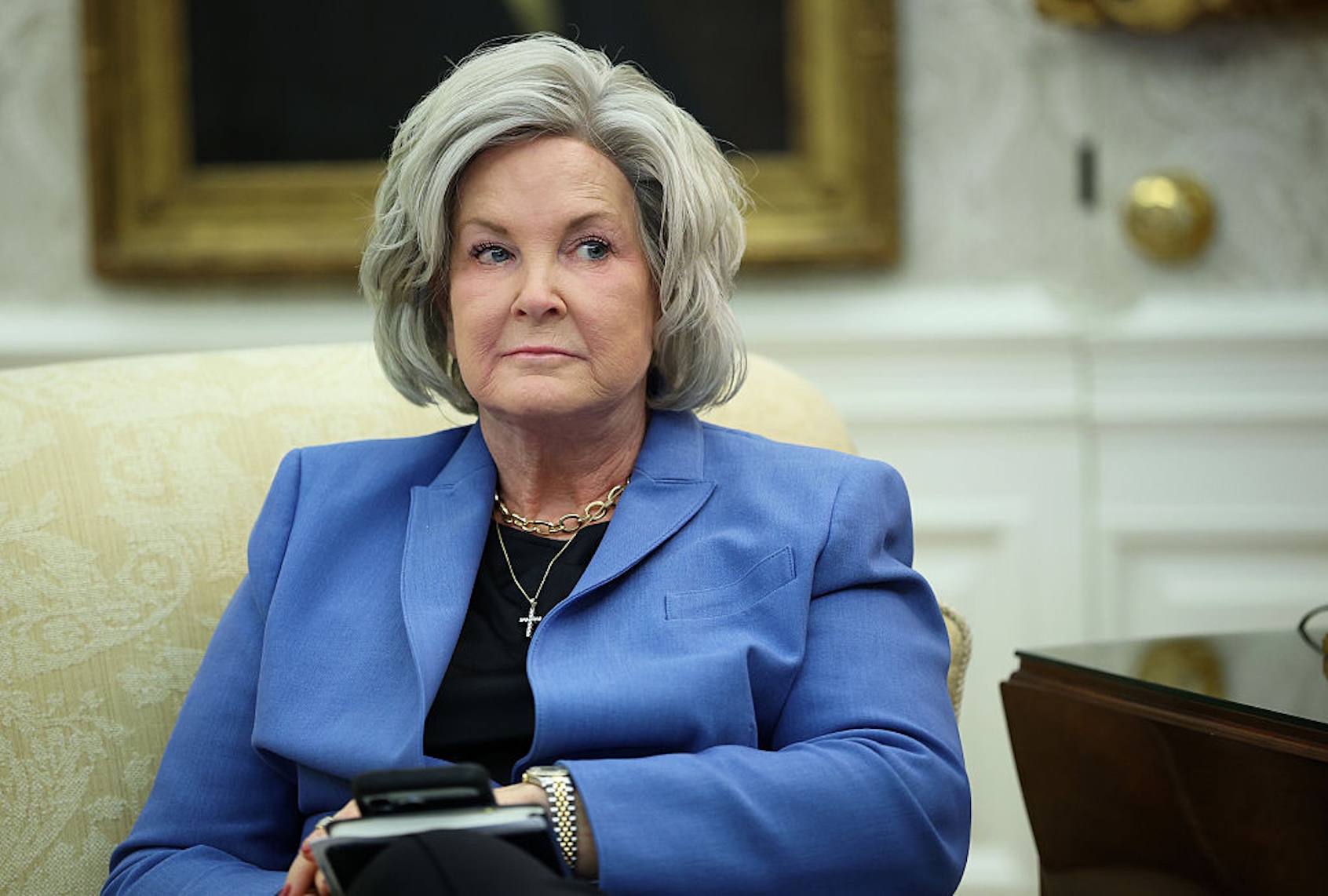
commentary The White House chief of staff has done little to rein in the president's worst impulses Published September 20, 2026 9:00AM (EDT) White House chief of staff Susie Wiles looks on during a "Beautiful, Clean Coal" event in the Oval Office on June 4, 2026. (Kevin Dietsch/Getty Images) There are always power centers in any White House. Certain people have their own little fiefdoms or specific knowledge of how government bureaucracy works, which gives them a leg up in internecine battles. Some offices or Cabinet posts are just imbued with more power than others. The Treasury secretary, for example, is always going to have more juice than the secretary of agriculture, just by virtue of their respective portfolios. But there is no job that has traditionally been more powerful than White House chief of staff. The role of the position is multi-faceted, managing the flow of information to the Oval Office and keeping them from becoming distracted by people pushing their own agendas and distorting the president’s understanding of the facts. The chief of staff has hiring and firing power over the West Wing, basically running the day-to-day operation of the presidency. Mediating disputes among the executive branch’s advisers and officials before they reach the president is also an important part of the job. But most importantly, the chief of staff should be the president’s most trusted adviser, willing to provide an honest assessment and opinion on all the important issues that reach the Resolute Desk. No president has a more checkered past with chiefs of staff than Donald Trump. In 2017, as a complete political novice, he brought in a GOP party hack, Reince Priebus, who quickly proved himself to be completely unprepared to deal with an egomaniac like Trump. Priebus was fairly swiftly given the heave-ho in favor of retired Gen. John Kelly, who was serving as secretary of homeland security. He was expected to whip the White House and the chaotic president into shape. While Kelly tried his best, he proved to be no match for the force that was Javanka — Jared Kushner and Ivanka Trump, the president’s son-in-law and daughter — and others who had forged a personal relationship with Trump and wielded influence, no matter how hard Kelly tried to discipline the operation. After the four-star general couldn’t tame the Trump White House, they ended up with a bucket of lukewarm chamomile tea by the name of Mark Meadows, who is probably best remembered as the man who sat on his couch scrolling through his phone while insurrectionists stormed the Capitol on Jan. 6, 2021, simply saying the president wanted to be alone. “It used to be a fairly stiff competition for the worst chief of staff in history,” according to Chris Whipple, author of “The Gatekeepers,” the definitive book on the subject, “but Meadows absolutely owns it.” Still, there were others. Until Meadows, most people would have considered H.R. Haldeman, Richard Nixon’s very loyal chief of staff, to be the lowest rating. After all, Haldeman actually did time for his crimes in service of Nixon’s infamous abuses of power. George H.W. Bush’s right-hand man, John Sununu, was known to be a terrible manager and a terrible boss, while Don Regan, who served in the Reagan administration, handled the disastrous Iran-Contra scandal badly and alienated the very powerful Nancy Reagan, which in the end proved to be fatal to his employment in the West Wing. According to Whipple, the consensus is that Howard Baker, Reagan’s final chief of staff, and Dick Cheney, who served Gerald Ford, were considered competent, but the “gold standard” is James Baker, Reagan’s first chief, and Leon Panetta, who brought much-needed organization and discipline to the chaotic early days of Bill Clinton’s presidency. Wiles will no doubt be credited with maintaining discipline among the staff far better than those who served in the first Trump White House. But the job is about more than discipline, and on that scale, Wiles is little better than Meadows. Susie Wiles, Trump’s current chief of staff, won’t be included in that pantheon, even though the president’s second term is a very different operation than the first. Following his loss to Joe Biden in 2020, Trump and his inner circle spent their four years in the wilderness figuring out what they wanted to do if they got back into power and devised a strategy to get it done. According to New York Times journalists Maggie Haberman and Jonathan Swan, authors of the book “Regime Change,” the massive leaks that characterized the first term have given way to a tightly controlled administration run by a group of devoted loyalists. Their fealty appears to be voluntary, and Wiles will no doubt be credited with maintaining discipline among the staff far better than those who served in the first Trump White House. But the job is about more than discipline, and on that scale, Wiles is little better than Meadows. As the first female chief of staff in history, she does deserve credit for running, along with Chris LaCivita, Trump’s successful 2024 campaign, an operation that, at least for him, was relatively professional and buttoned up. After his win against Vice President Kamala Harris, Wiles was the logical choice to follow him into the White House. She seems to have found the key to managing Trump, which is to not manage him at all. (One imagines his mother reached the same conclusion around the time he reportedly gave his second-grade music teacher a black eye because “he didn’t know anything about music.”) Want more sharp takes on politics? Sign up for our free newsletter, Standing Room Only, written by Amanda Marcotte, now also a weekly show on YouTube or wherever you get your podcasts. Whipple interviewed Wiles eleven times for a major feature in Vanity Fair, and she was incredibly frank, letting it be known that she didn’t think much of Vice President JD Vance, characterizing him as an opportunist and a “conspiracy theorist.” She also called Russell Vought, the director of the Office of Management and Budget — and the author of much of Project 2025 — a “right-wing absolute zealot.” But Wiles also revealed that she doesn’t see her job as one in which she tries to help the president sort through all the options and do the hard job of offering her unvarnished advice, even when it’s something Trump doesn’t want to hear. Wiles denies that she is an enabler, but it’s clear that Vance was right when he told Whipple that she sees her job as a “facilitator,” which simply means that she makes sure the president’s disordered trains of thought run on time. She even more or less admitted it herself when she said that she only has difficult conversations with the boss over “little things.” Wiles revealed that she doesn’t have “these seminal moments where you have to go in and tell the president what he wants to do is unconstitutional or will cost lives. I don’t have that.” That pretty much says it all. And one has to question whether Wiles challenges him on the little things either. After all, in addition to a list of cronies and sycophants, Trump appointed her to the board of the John F. Kennedy Center for the Performing Arts. If she had any clout, you would think she could have talked him out of his petty obsession of adding his name to a living memorial to a revered, slain president — a disgusting act of desecration. But with Trump, there’s nothing too small on which to fixate and, in any case, this crusade to remake Washington, D.C., in his own image overwhelms all other concerns, including economic crises and war. In other words, Susie Wiles has no influence over Trump at all. Just like Mark Meadows, she’s essentially sitting on a couch and scrolling on her phone while the world burns. Related Topics ------------------------------------------ Related Articles
Susie Wiles is Trump’s chief enabler
Full Article
Original Source
Read the full article at Salon →KhanList aggregates and links to publicly available news content. We do not host full articles from third-party sources. Always verify important information with original sources.